
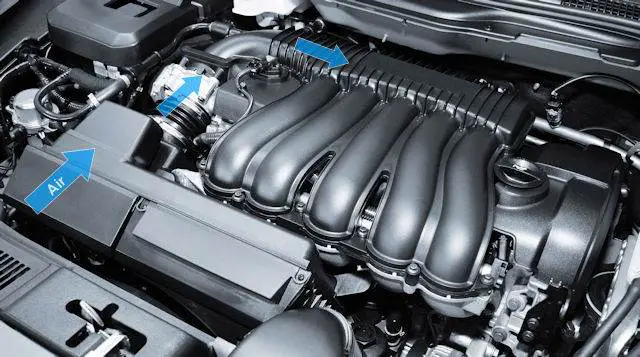
Over time, grime and other carbon deposits cover various car components. One such part in this category includes an intake manifold. If the name makes you think, get clear answers from experts indicating the purpose and procedure for cleaning the intake manifold.
What is the purpose of the intake manifold?
The main function of the intake manifold is to evenly distribute the air and fuel combustion mixture to all cylinder intake ports of the engine.
Indeed, it acts as a combustion area for fuel and air, to optimize engine performance and efficiency.
In the event that carbon builds up inside this intake manifold, the fuel/air ratio will become unbalanced, leading to increased fuel consumption, air pollution, and power loss.
Therefore, if the intake manifold is not functioning correctly, it must be cleaned immediately.
Systematic procedure for cleaning the intake manifold
To your great surprise, the intake manifold can be cleaned without the help of a professional (only if the person is comfortable and confident, just do it).
And, in this regard, here are some simple steps, explaining how to clean an intake manifold without removing it from the car.
Tips and Warnings
Park the vehicle in a ventilated space to avoid suffocation caused by exhaust gases.
1. Prepare the necessary tools
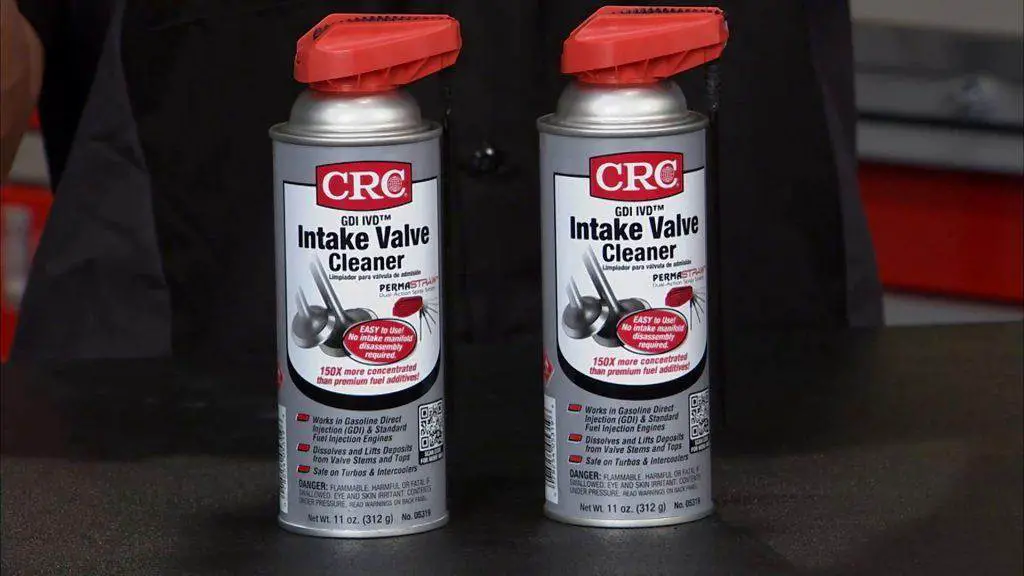
Powerful Foaming Cleaner – This intake manifold cleaner is specially designed to safely remove grime, gum, varnish, and other carbon deposits in the throttle body and intake manifold.
Clean Microfiber Cloth – Necessary to remove excess liquid from the car engine.
(Household) Gloves – To protect your hands from engine heat and harmful chemicals.
Basic Mechanical Tools – Such as wrenches and screwdrivers for removing hoses/tubes.
2. Detach the throttle body and air intake duct
Here, disconnecting the throttle body does not mean removing it from the car engine. Rather, it is the separation of the throttle body from the air intake tube.
Point to remember: During this action, keep the engine off.
3. Clean the throttle body
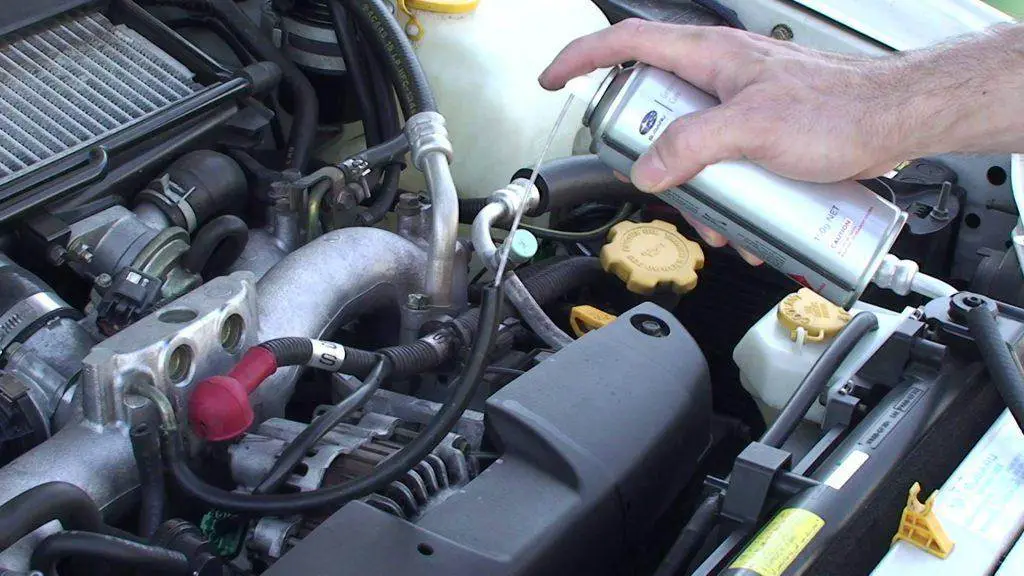
Next, spray the powerful foam onto the throttle body and then wipe off the excess liquid on its plate using the cotton cloth. Finally, reattach the air intake tube to the throttle body.
4. Wipe the dirt from the intake manifold
Like the throttle body, the vacuum hose is also first detached from the intake manifold. This step in today’s how to clean an intake manifold tutorial is necessary for spraying powerful foam into the intake line.
Then, let the sprayed foam settle inside the line for five minutes. Then, reconnect the intake manifold to the vacuum hose.
During this process, spray the foam when the engine is at high idle and let the engine be off when the sprayed foam stabilizes.
Overall, this systematic process of cleaning an intake manifold, if performed successfully, will surely make the engine run at its peak performance.
FAQ on Intake Manifold Cleaning
- Is it safe to clean the intake manifold?
The most crucial reason to regularly clean your intake manifold is to avoid damaging the engine.
Even the smallest particles can cause damage to your components, making repair difficult. The simplest method to avoid this is to keep your intake manifold and filters clean at all times.
- How to clean aluminum intake manifolds?
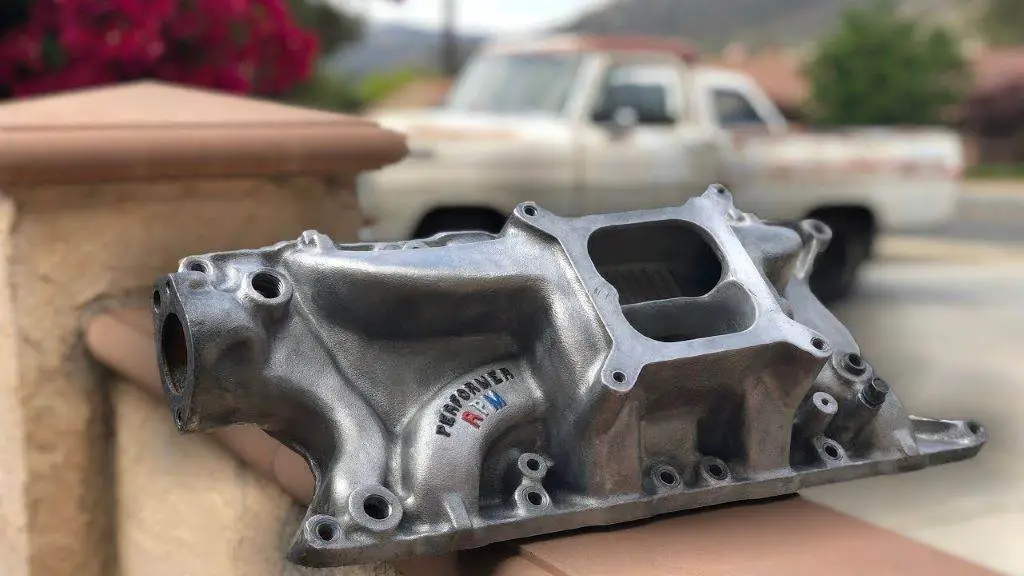
Aluminum intake manifolds were particularly popular on earlier automobiles because they were much lighter than cast iron manifolds and performed significantly better in terms of heat dissipation.
Cast aluminum, on the other hand, attracts oil and dirt like no other metal, and cleaning it can be a headache if you want it to shine like before.
To clean an aluminum intake manifold, you must first remove it, then choose your degreaser and brush. Once everything is in place, all that’s left is to soak, scrub, rinse, and repeat until the manifold is clean enough.
Here is a more detailed tutorial for cleaning aluminum intake manifolds:
- Soak the intake manifold with water
We have already explained how to remove an intake manifold and prepare it for cleaning, so now it’s time to soak it.
Spray the manifold with the degreaser of your choice from our selection and let it sit for about five minutes. If you are using brake cleaner or oven cleaner, increase the time to one to two minutes.
- Brush the intake manifold
After the manifold has sat for a while, brush it to remove hard particles or oil stains that have risen to the surface. Be careful to get into all the ridges and wrinkles and use small brushes or Scotch Brite pads, depending on what you are using.
- Clean the manifold
After properly brushing the entire intake manifold, rinse it with water to see what it looks like. If you still see stains, repeat this step as many times as necessary.
It’s also a good idea to experiment with new brushes and cleaning solutions if the tools you are currently using are not working.
- Is cleaning the intake manifold beneficial for car performance?
Removing carbon deposits, oil, and debris during intake manifold cleaning can help your engine receive the correct amount of air and fuel, resulting in increased power and acceleration and making it easier to handle difficult terrain.
- Can carburetor cleaner be sprayed into the intake manifold?
Spraying carburetor cleaner into the air intake can cause irreversible damage, so only use it in areas where inhalation is safe.
Your car will appreciate you taking the time to ensure you use these tools appropriately. Avoid shortcuts and let your automobile breathe freely again.
- What is the best cleaner for an aluminum intake manifold?
The best cleaners, degreasers, and solvents we discussed include brake cleaner, oven cleaner, and Purple Power, with Purple Power beating the others only because it is inexpensive and specially designed.
However, there are other excellent cleaners, such as OxiSolv.
- Is it possible to polish an intake manifold?
You can use successively finer polishing cones to polish the inside of the intake manifold. Finish with a 120 to 180 grit flap wheel to polish. Consider the benefits of using a longer rod to reach deeper into the manifold.
- How often should you perform intake cleaning?
It is recommended to clean your intake valves every 30,000 to 40,000 miles. If you detect signs such as poor acceleration, black smoke from the exhaust, or rough idle, you should inspect the valves.
You should also regularly inspect your intake manifold; if it is dusty, the valves are probably dirty too.
Watch this video by Adorian E Bismarck to learn more about a simple way to clean dirty objects or carbon buildup on the intake manifold (not for plastic ones).
Conclusion
All engines lose some of their power over time, and dirty internal components and carbon buildup are two of the main culprits. One of the first things to do if you want your car to run as well as when it was new is to clean and maintain it properly.
Fortunately, assuming there are no significant carbon deposits, it is a rather simple task. In this situation, your only option is to remove the intake manifold along with possibly additional components such as the exhaust manifold and EGR valve.