
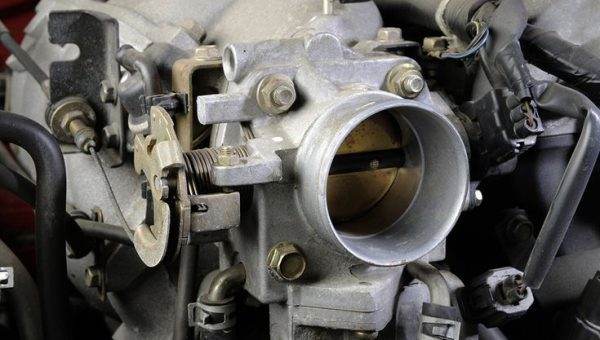

Did you know that an air control valve is typically a place where high-density carbon accumulates, which will prevent fuel flow and stop your engine from running efficiently? Periodic cleaning of this small valve is therefore an important step to avoid rough driving and save your money. In this article, we will quickly show you how to clean the idle air control valve on your fuel-injected vehicle. Some vehicles are built a bit differently, but the process is generally the same.
What is an IAC Valve?
The idle air control valve is a part commonly installed in fuel-injected vehicles with the function of allowing your engine to idle efficiently rather than stalling when your car stops. Often, an IAC is attached to the engine throttle. And its purpose is to regulate the airflow into your engine and help create a smoother idle.
The IAC controls the amount of air entering the engine in a cyclical manner. This process is accomplished by regulating the airflow through a bypass circuit around the throttle to increase or decrease the idle speed. Increasing the volume of air flowing in the bypass circuit around the throttle increases the idle speed.
When we talk about engine idle speed, it is the engine’s rotational speed when the driver’s foot is not on the accelerator pedal. When the throttle is closed, the engine’s main intake manifold is closed. So a bypass is necessary to prevent the engine from stalling.
We cannot deny that an IAC valve is a very important component in a car’s engine. A problem with the IAC valve can lead to major issues with your engine. To keep this valve always in good working condition, cleaning the idle air control valve is a key factor.
How to Clean the Idle Air Control Valve?
Over time, the IAC valve will accumulate carbon that clogs or dirties this valve, and the consequence is less airflow entering your engine. At that point, you will have 2 options: replace an idle air control valve or clean it, depending on the condition of this valve you will make the right decision. However, did you know that an IAC valve is one of the most expensive components used in your engine system?
So you can absolutely save a large sum of money from buying a new valve by cleaning the existing one. If you wish to perform this process yourself, it is important that you consult your car’s owner’s manual when you intend to clean the IAC valve. You won’t want to cause further damage, and the manual should provide you with accurate information on how to properly clean the valve.
However, if you cannot find the relevant information, here is a step-by-step guide on how you should work with most vehicles when cleaning an IAC valve. But before starting a process, you must ensure the engine is off and completely cooled down, or you can disconnect the negative battery cable:
Step 1: Locate the Position of the Idle Air Control Valve
Step 2: Detach the Air Intake Hose and Filter Housing
The next step is to use a screwdriver to loosen and remove the screws used to secure the filter housing. In this step, you should also disconnect the electrical line associated with the MAF sensor in case your vehicle has issues! However, be careful with the part of the plastic tab that secures the harness.
Do not break it because the wire leading to the harness will detach. And that will cost you much more time to handle and will be more complicated than cleaning the air valve. The harness is prevented from shaking using this plastic tab. Our advice: Make sure not to mess up all the wiring and hoses. After removing the air intake, you can reach the idle air valve. If you still cannot find it, you can refer to the vehicle’s manual.
Step 3: Remove All Clamps Connected to the IACV
Detach all clamps holding an IAC valve. Remove the old gasket (no need to scrape it as it is a metal gasket). In this step, you will find the throttle body, and your task is to place a small hole or passage inside.
Step 4: Clean the Idle Air Control Valve
Use a brush to remove dirt on the surface of the valve. When cleaning the inside of the valve, you will need specialized detergents like carburetor cleaners. Wipe or spray the inside of the triangular face to clean any deposits to ensure no carbon residue remains. Spray carburetor cleaner on the pointed end of the valve. Try not to get cleaners into the valve housing as this could cause damage.
Continue spraying the cleaners until you see that all carbon or debris has been removed. Remember that not all carbon cleaners are suitable for all vehicles and components. You should only use the products if you are sure they will not cause any harm. After completely removing the carbon, the air valve should be reassembled in the detached position, and the harness attached to its original position.
Step 5: Test by Starting Your Car
The best way to check your engine after completing the cleaning process is to let your car start and then idle for a few minutes. Once everything is properly reinstalled, you can now start your car and listen to how it idles. If dirt was a problem, you should now notice the improvement in sound, and your car will run smoothly. At that point, it means your mission is successful; otherwise, you will need to redo the above steps once more. After cleaning and it’s still not effective, it’s time to replace the idle valve. You should buy spare parts from reputable stores to avoid purchasing counterfeit or poor-quality products.
Here are some other frequently asked questions about an IAC:
How to Test an IAC Valve?
There are many ways to help you test the idle air control valve, such as starting your car, testing an IAC with a multimeter, an OBD scanner, or a voltage test light. We believe the simple method you can use to test the IACV is to turn on your car and listen to the engine idling. A fully functional valve will sound even and smooth, and you won’t notice any “bursts” of sound or speed. Additionally, you can use a multimeter, but this method will be a bit complicated.
You need to set the multimeter unit to Ohms, after that, place the red wire on one terminal of the IAC valve and place the black one on the other terminal. If your IAC valve is working properly, the resistance will range from 7 to 25 Ohms, depending on your vehicle. Any other number is a warning sign of a bad IAC valve. To learn more about the process of testing your IAC valve, you can read another article on our site:
What are the Symptoms of a Bad Idle Air Control Valve?
It is important to be aware of the symptoms of the idle air control valve when it goes bad. These include stalling, poor acceleration, increased RPM, or a check engine warning light on your dashboard. If you notice any of these signs, you should immediately test or check if your IAC valve has faults. It is important to know the recommended idle range to give the exact diagnosis because this data will depend on your engine type.
What Happens If You Unplug the IAC Valve?
You can absolutely unplug the IAC valve, and it should not cause damage if you unplug it while the engine is idling. However, the IAC valve plays an important role in maintaining airflow for combustion at idle. So there is a risk when removing this valve causing undesirable effects.
Final Thoughts
An IAC valve may not function properly because it is dirty and requires cleaning maintenance. During combustion, carbon and debris can deposit on the IAC valve, and this can accumulate over time. When contamination builds up inside the idle air control valve, the IAC can then become faulty and not function as it should. Cleaning all accumulated debris or contamination can help you get the IACV back into working order.
In this article, we explained how to clean the IAC valve by removing it. If you want to learn how to clean the idle air control valve without removing it, there will be several guides available online that you can refer to. Although the idle air control valve is designed to last the lifetime of your car, damage and debris can sometimes cause problems. Cleaning this valve is a very useful way to keep your car running efficiently.