
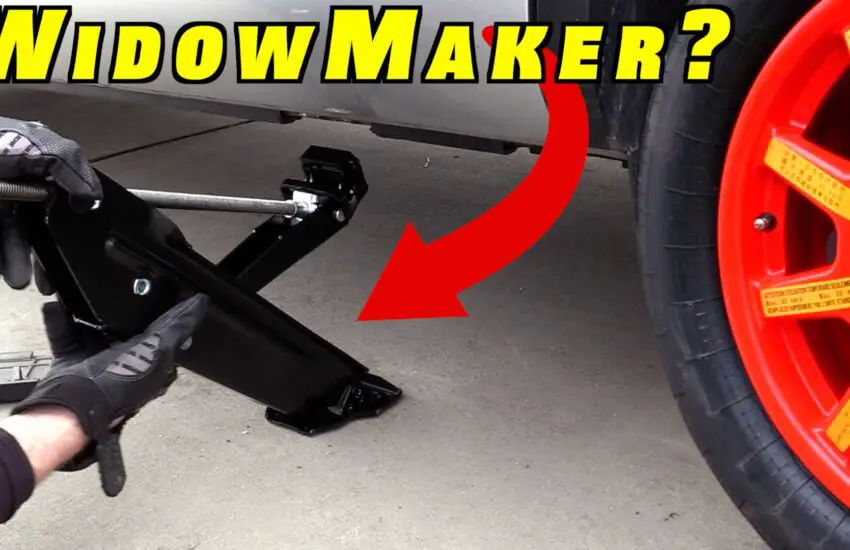
Changing a wheel and correctly using the VW jack is an essential skill for every driver. Alarmingly nicknamed “The Widowmaker”, the VW jack has a reputation that precedes its use. Yet, replacing a flat tire is a roadside repair task within everyone’s reach, provided safety steps are strictly followed. This guide explains the procedure for using this tool confidently and changing your wheel quickly.
Why is the VW jack nicknamed the “Widowmaker”?
The original jack supplied with Volkswagens is a scissor jack model. Its dramatic nickname, “Widowmaker”, was given due to its potential instability if improperly positioned or used on soft ground. Its relatively small base and limited lifting height require particular attention to avoid any accidents. Understanding this risk is the first step towards safe use.
Equipment needed to change your wheel
Before starting, gather all the equipment: the VW jack, the wheel wrench, the spare wheel (space-saver or full-size), and wheel chocks (or a large, solid rock). Ensure your vehicle is on perfectly hard, flat, and stable ground. Absolutely avoid surfaces made of dirt, grass, or on a slope.
Step-by-step procedure for safely changing a wheel
1. Vehicle preparation and securing
Firmly apply the handbrake and engage a gear (or “P” for automatic transmissions). Turn on your hazard warning lights. Place a chock in front of and behind a wheel opposite the one you are going to change to block the vehicle.
2. Correct positioning of the VW jack
Locate the specific lifting point on your VW’s sill. This is a notch or reinforced area located behind the front wheels or in front of the rear wheels. Position the jack’s hook precisely on this notch. This is THE most important rule to avoid dangerous slipping.
3. Loosening the nuts and lifting the car
Loosen the nuts on the wheel to be changed slightly before lifting the car. Use the wrench and apply leverage if necessary. Then, operate the jack handle to lift the vehicle slowly and steadily. Lift just high enough for the wheel to clear the ground by a few centimeters.
4. Removing the wheel and fitting the space-saver
Unscrew the nuts completely, remove the flat tire, and replace it with the spare wheel. Hand-tighten the nuts in a criss-cross pattern to ensure correct initial placement.
5. Lowering the vehicle and final tightening
Carefully lower the car with the jack until the tires rest on the ground. Remove the jack. Tighten the nuts firmly with the wrench, still following a star pattern. Stow your flat tire and equipment.
Mistakes to absolutely avoid
Never crawl under a vehicle supported only by the jack. Do not use the jack on unstable ground. Do not position the jack anywhere under the body: use only the designated lifting points. Avoid raising the vehicle more than necessary.
Conclusion: a simple operation with the right precautions
Although its nickname is alarming, the VW jack is an effective tool when used cautiously and according to instructions. By following this guide, you will turn a stressful situation into a simple formality. The key to success lies in strictly adhering to safety rules, particularly the choice of ground and the exact positioning of the jack.