
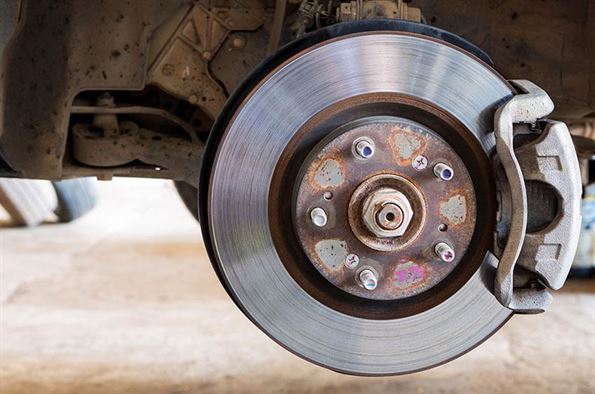
Do you know how to bleed ABS brakes? Bleeding is necessary when replacing an ABS modulator or other hydraulic components. It may not be necessary during a wheel-level hydraulic repair, but you must be careful not to let air into the system. You need to bleed brake systems when air bubbles enter the system during a repair or replacement task.
An anti-lock braking system (ABS) tolerates air bubbles and contaminated fluids less than a non-ABS system. An ABS hydraulic pump uses thousands of psi to push brake fluid through tiny valves. Contaminated fluid can easily damage the valves and pump, so you should never delay when the system needs to be bled. Although bleeding ABS brakes is difficult because the high pressure in the pump whips the air bubbles and brake fluid into a foamy substance.
The Need for ABS Brake System Bleeding
We already mentioned that the system needs to be bled due to air bubbles present in the system. But how do these air pockets form inside the system?
Well, whenever the brake lines are opened to repair or change certain parts such as wheel cylinders, calipers, or ABS units, air enters the system.
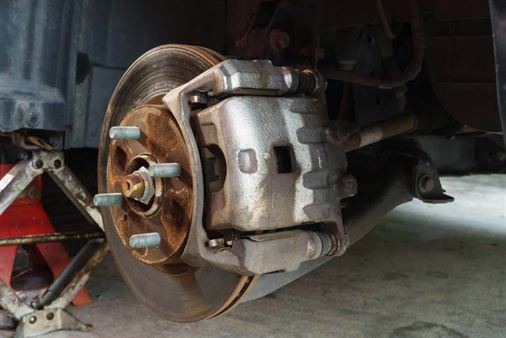
When there are air pockets inside the lines, the brake pedal feels spongy and the whole system feels unbalanced. For this reason, brake bleeding is mandatory for any brake work. Skipping it would lead to various braking problems after some time, as without bleeding, you not only let the air pockets remain but also push contaminants through the system.
Flushing the brake fluid every two to three years is part of the regular maintenance schedule. This will keep the system free of contaminated fluid and air bubbles.
How to Bleed ABS Brakes: A Technique for All Types of Units
Bleeding involves removing air pockets and replacing the old fluid. The old fluid must be changed because polluted fluid absorbs moisture from the air and lowers its boiling point. Such degradation affects braking performance.
Things You Will Need
- A few 8-ounce cans of brake fluid
- Plastic tube
- Car jack and jack stands
- A turkey baster
- A hex key
- Cloths or microfiber towels
- Spacer
- A small bottle
- Gloves and safety glasses
The ABS Brake Bleeding Procedure
Before removing bolts and loosening nuts, you will need to prepare for bleeding the brakes. This includes lifting the vehicles and removing all four wheels. You can also work by keeping the wheels in place, but lifting the vehicle high enough to be able to use a wrench on the bleed valves.
Loosen the Bleed Valves
After preparing the vehicle, your first task is to loosen the bleed valve bolts. Use a hex key for the job. If the bolt threads seem rusty, spray some penetrating oil the day before. This will make the job easier as you can break the corrosion with a few light taps with a hammer.
Be careful when doing this as these small hollow bolts can break if you apply excessive force. If this happens, you will need to replace the wheel cylinders or brake calipers (depending on the vehicle model), meaning a loss of time and additional money.
Carefully loosen the bolts so they don’t break. Leave them closed without removing them completely. Let’s move on to the next step: how to bleed ABS brakes.
Remove the Old Fluid
Use the turkey baster to remove the old fluid and deposits from the master cylinder reservoir. Use a lint-free cloth to remove sludge from the reservoir. Be extremely careful when handling brake fluid as it is corrosive. An accidental spill on a painted surface will immediately dissolve the paint. You should also wear gloves so they don’t touch the skin.
Bleed the ABS System
Take a piece of plastic tube (any type of cheap tube will do) and push one end onto the brake bleed bolt. The other end will go into a small bottle filled with an inch or two of fresh brake fluid. This little trick will prevent air from re-entering the caliper or brake cylinder.
By releasing the line pressure, the pedal will move from its position. To prevent this, place a spacer under the pedal. Then, fill the master cylinder reservoir with new, clean fluid and close its opening by replacing the cap. Otherwise, every time you release the pedal, fluid will spurt out through the reservoir opening.
You will need an assistant during this bleeding process. At this point, ask them to press the brake pedal with a force you would apply to stop the vehicle at a traffic light. Tell them to maintain pressure while you turn the bleed bolt a quarter turn.
This would force some contaminated fluid out through the end of the tube going into the bottle. Close the bleeder when the flow stops completely. Then, ask the assistant to release pressure on the pedal.
This is how to bleed ABS brakes. However, you are not finished yet. Repeat this process until clean fluid comes out of the bleeder. After that, tighten the bleed bolt and move to the next wheel to repeat this same procedure.
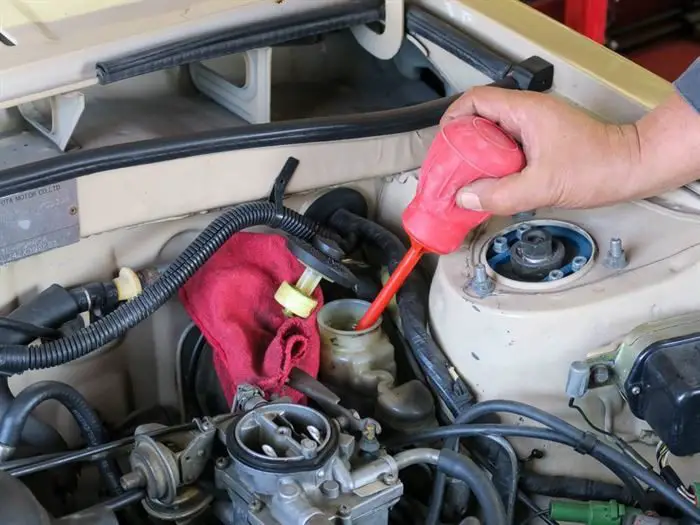
Throughout this entire process, keep filling the reservoir with fresh fluid. Never let the fluid level drop below half of the reservoir. Otherwise, air could enter the master cylinder.
Furthermore, you must not skip any of the bleeding steps, as this could draw air into the caliper.
Bleeding with a Scan Tool
Many ABS modulators are not equipped with bleeders. In this case, use a scan tool to operate the pump and valves. How to bleed ABS brakes with a scan tool?
The scan tool is mainly needed to activate the pump and operate the valves to bleed those areas. For example, the Ford version of the EBC 310 requires an NGS scan tool for bleeding. This tool helps operate the dump valves and activate the pump so that it becomes possible to bleed those areas.