
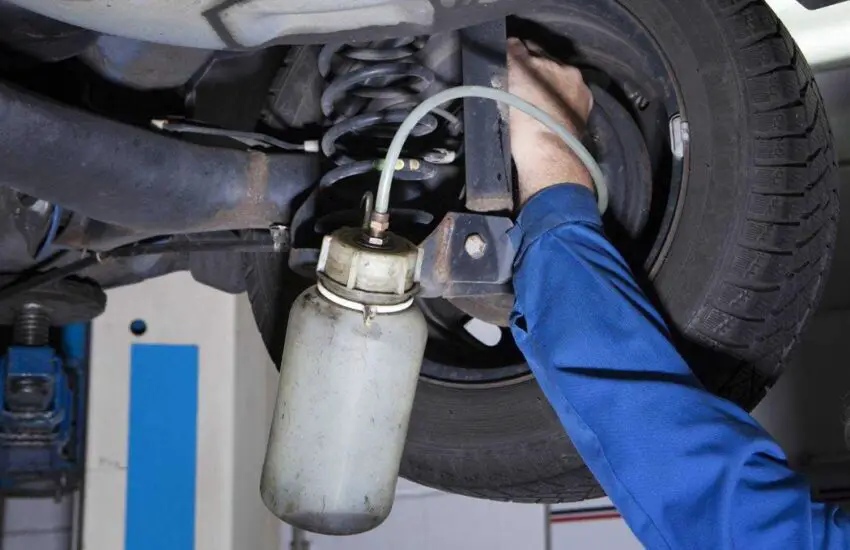
Indeed, most drivers do not think about brake maintenance. All customers come to repair their brakes only when the brake is broken or not functioning. Even if you take care of the brake pad and replace it frequently, you still need a brake fluid flush. So, do you know how much brake fluid to flush? If you don’t know, don’t worry, we are here to help you.
But first, do you know what a brake fluid flush is?
What is a brake fluid flush?
As you know, the brake is not just a brake; it consists of many functional parts. Typically, a car is equipped with disc brakes at the front and disc or drum brakes at the rear. Everything is connected by a system of hoses and tubes that connect the brake at each wheel to the master cylinder. The parking brake, brake booster, and anti-lock system are also part of the overall braking system.
When you need to press the brake pedal, the piston pushes against the master cylinder. Through the connected tube, the master cylinder forces brake fluid to the brake at each wheel. At disc brakes, the fluid is forced into a caliper. The caliper presses the fluid against a piston that squeezes the brake pads against the disc and forces the wheel to slow down or stop. At drum brakes, the fluid is forced into the wheel cylinder and then pushes the brake shoes against the drum to stop at the wheel.
So you know the function of brake fluid; it is important to contribute to the smooth running of the braking process. But as the components of the braking system deteriorate over time, rust, dust, or other flaking debris can land in your brake fluid, making your brake less functional. This happens, and you know you need to flush the brake fluid.
A brake fluid flush involves removing all the old, dirty brake fluid from your system and replacing it with fresh, clean fluid. This process is important for every car to ensure its proper functioning. So now you know what brake fluid flushing is, let’s move on to how much brake fluid to flush!
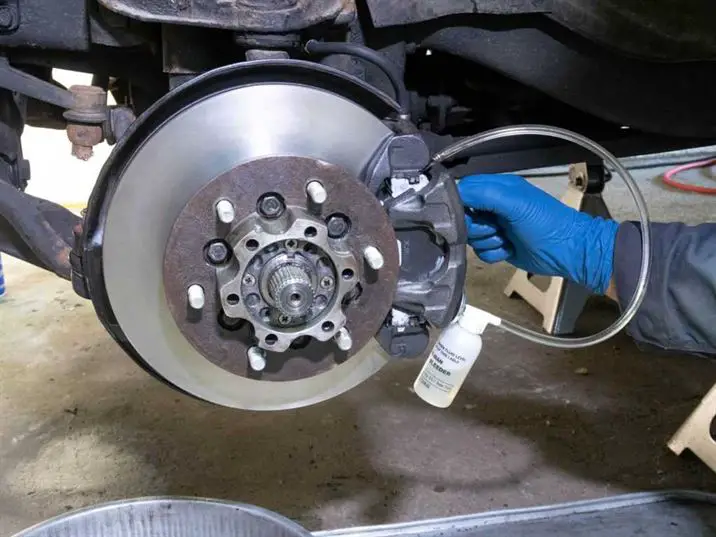
A brake fluid flush involves removing all the old, dirty brake fluid from your system and replacing it with fresh, clean fluid. This process is important for every car to ensure its proper functioning. So now you know what brake fluid flushing is, let’s move on to how much brake fluid to flush!
How much brake fluid to flush?
No one expects to face a car with broken brakes. But when it happens, you need to know what to do. Someone came to us and asked how much brake fluid did I need to flush. Indeed, you need to know how much brake fluid to flush. Thanks to this, you can change the situation.
It is believed that the answer to the question of how much brake fluid to flush is 500 ml. For the normal car whose fluid is closer to the Min but still contains a lot, 500 ml is enough to perform a flush on a set of bicycle brakes (front and rear). And this is only true in the case where the brake fluid is not contaminated. If the old brake fluid is particularly dirty or discolored, we recommend completely flushing the old fluid and replacing it with new. In this case, you may need additional fluid, usually close to 1 liter. A good rule of thumb is to flush your brakes approximately every 30,000 miles (48,280 kilometers).
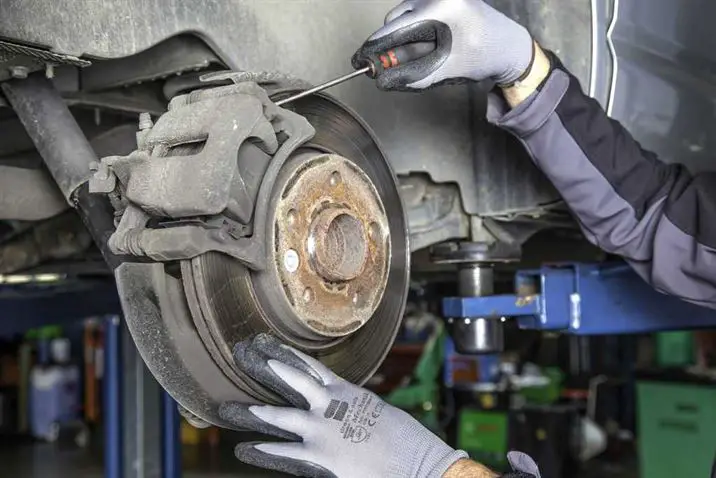
When replacing brake pads, it is very important that the old fluid is removed and does not contaminate the system. The correct procedure is to open the purge valve and allow the old, dirty fluid to escape before inserting the new pads. Once the new pads are in place, the reservoir should be filled, then the new pads should be set by pumping the pedal, ensuring the reservoir remains full at all times.
It all depends on how much brake fluid to flush. Keep in mind that it is important to use the correct amount of fluid. Now let’s talk about the importance of brake fluid flushing.
Is brake fluid flushing really necessary?
As we usually talk to customers, don’t think about your brakes until they stop working, but you must take good care of them. You will replace the pads and resurface the rotors if necessary. Yet, when your mechanic recommends flushing your brake system, do you think you should do it or save money?
As we mentioned above, by that time, the brake has deteriorated, and the brake fluid has done the same. The rubber of the master cylinder valves, calipers, and wheel cylinders deteriorates. Apart from that, moisture can also enter the system. This leads to rust, which leads to more unpleasant particles in your brake fluid. Moreover, the fluid itself can age and wear out. All this adds up to a braking system whose efficiency is compromised and braking power is reduced.
When the brake fluid is contaminated with impurities, you put the entire engine at risk. Therefore, brake fluid flushing is very important to ensure the proper functioning of your car. Do not hesitate when you need to replace new fluid; otherwise, you give the car a chance to wear out as quickly as possible.
To learn more about the brake fluid flushing process, watch this video:
How often do you need a brake fluid flush?
Do you know that every 16,000 to 25,000 km, the car will have to brake more than 75,000 times? This shows that the frequency of brake use in vehicles is very high. Therefore, you must periodically check, flush, and replace the brake fluid.
Many car manufacturers recommend that brake fluid flushing and changing be done approximately every 2 years. If you often drive your car long distances, in harsh conditions, you may change the oil earlier. Currently, many new cars are equipped with brake fluid sensors. If the brake fluid level is too low, the car will automatically alert the driver.
Summarize
You can answer the question of how much brake fluid to flush. What you need to do is frequently check your car’s brakes to ensure they are working well. Otherwise, entrust your car to a trusted mechanic; the specialist will help you diagnose the problem. Check out other maintenance tips to better understand your car problem and know what to do when needed.