
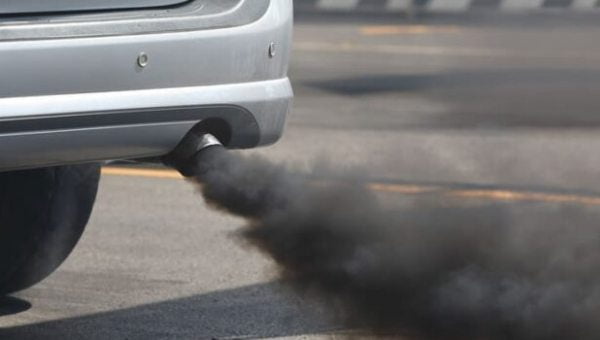

UNCHECKED CO2 AND OTHER GASES CAN HARM THE ENVIRONMENT AND YOUR WALLET
- 1 Unchecked CO2 and other gases can harm the environment and your wallet
- 2 UK Emission Limits – Car Tax and MOT Requirements
- 3 How Can I Reduce My Car’s Emissions
As I sit here typing, the latest California wildfires have already destroyed an area the size of Connecticut and are raging with no sign of stopping. In Brazil and Australia, vast areas of forest and wilderness have been reduced to ashes in the last 12 months. Closer to home in Europe, sweltering summers are reaching record temperatures year after year. For most scientists, and much like many students on Friday afternoons, all of this is undeniable proof of the catastrophic effects of climate change. This not only impacts the natural world; The emission of greenhouse gases into the atmosphere has already hit drivers hard.
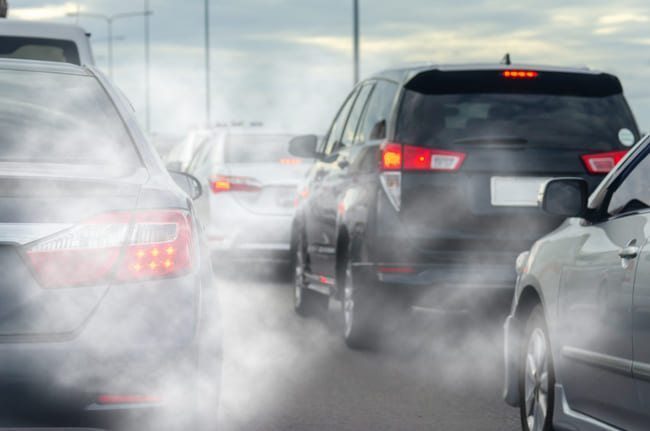
In April 2019, the European Commission announced its intention to reduce overall CO2 emissions by ⅓ and stated that the automotive industry was one of the top three contributors to global warming. Although CO2 has already been reduced by 30% by major car manufacturers over the past two decades, the EU now requires that by 2021 all new cars produce 95 g of CO2/km (grams of CO2 per kilometer) and reduce it to 70 to 80 by 2025. The latest data from the International Council on Clean Transportation (ICCT), however, showed that new cars sold in the EU in 2019 had average CO2 emissions of 122 g. CO2/km, 1 g/km more than in 2018, measured on the new European driving cycle (NEDC). From 2019, average fleet CO2 emissions will need to fall by 11.9% per year to comply with the 2021 target.
Under the CO2 legislation, manufacturers exceeding the targets must pay a penalty for each car registered, which amounts to €5 for the first g/km beyond the limit, €15 for the second g/km, €25 for the third, and €95 for each subsequent gram. These costs will inevitably hit the consumer at some level, whether through price increases for more efficient catalytic converters or features to reduce CO2 emissions, or simply manufacturers adding the penalty cost to the car’s price. From 2019, stricter penalties will be introduced; each excess gram costs €95.
What else does all this mean for the average driver? Governments have consistently introduced new emission standards over the last 30 years and the Euro 6 standards introduced in September 2015 mean that the carbon emission limit for all cars is now 95 g/km of CO2. They also required levels of carbon monoxide (CO), nitrogen oxides (NOx), particulates or soot from diesel cars (PM), and hydrocarbons (HC). These restrictions clearly have an impact: MOT failures related to light commercial vehicle emissions increased by 116% between May 2018 and February 2019, compared to the same period the previous year.
All of this is important for motorists because the CO2 levels emitted by your car can significantly increase your tax rate if you do not meet these new standards, and you can fail an MOT (Ministry of Transport) test if the emissions of other gases are also outside the limits, meaning you cannot legally drive your car and face a £1000 penalty if you do. Therefore, taking CO2 emissions into account when purchasing a vehicle is vitally important, as is trying to reduce emissions as much as possible.
In addition to these environmental and legal reasons for wanting to reduce your emissions, having high CO2 emissions can also have financial implications – your fuel consumption will be higher, and your vehicle’s performance will be reduced. Increased CO2 emissions are normally an indicator that the fuel in the engine is not functioning properly and may need cleaning. Increased emissions can also be a symptom of other problems with your car. Therefore, it is essential to understand the amount of CO2 your car produces and what it might be showing you.
UK EMISSION LIMITS – CAR TAX AND MOT REQUIREMENTS
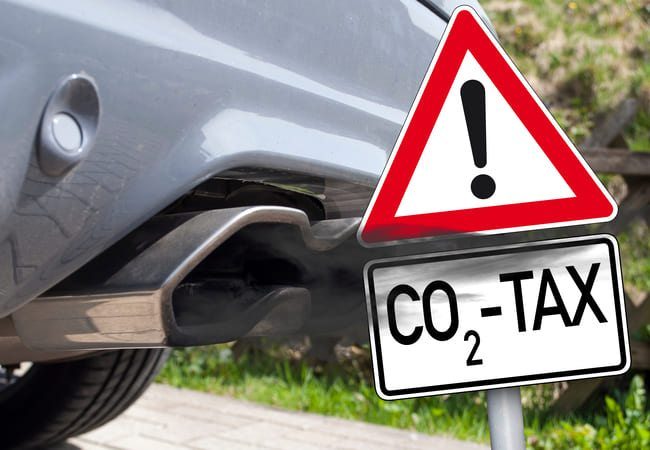
CO2 emissions have a direct impact on the amount of vehicle tax you have to pay. For vehicles already in circulation before April 2017, tax rates are entirely calculated based on their CO2 emissions. Any car with an official rating below 100 g/km of CO2 is exempt from car tax. These include cars with efficient petrol and diesel engines, as well as the growing number of electric cars and hybrid vehicles, which combine an electric motor with a petrol or diesel engine for better economy.
Cars emitting more than 100 g/km of CO2 pay a sliding scale tax from £20 per year to £555. The amount you pay depends on the band you belong to, with each band being a range of CO2 emissions (e.g., 101-110g/km of CO2).
For cars registered after April 2017, a completely different tax system applies. The first year’s tax – when a car is new – is based on the CO2 emissions listed by your vehicle’s manufacturer, which is not included in your car’s purchase price and is therefore often overlooked, but it can significantly increase the cost of your car. There are 13 tax bands, based on CO2 emissions, ranging from 0 (for electric cars), where the tax is free, to over 255 g/km, which costs £2070. An average car will incur a tax rate of £165. Diesel cars are further penalized under this system and are placed in a band higher than their emissions, to increase their taxation cost.
After the first year, drivers pay a flat rate of £140 per year. Only vehicles with zero CO2 emissions from their exhaust – those powered by electricity or hydrogen – are exempt.
Other emissions (CO, HC, PM, and NOx) do not contribute to your road tax, but they play a major role in your car passing its MOT, and without an MOT, you are not legally allowed to drive your vehicle. The limits for a petrol car vary, but most cars have a CO limit of 1.00 g/km (grams emitted per kilometer), an HC limit of 0.10 g/km, and a NOx limit of 0.08 g/km (there is no limit for PM). A similar diesel car has a CO limit of 0.50 g/km, a NOx limit of 0.25 g/km, a combined HC and NOx limit of 0.30 g/km, and a PM limit of 0.025 g/km.
HOW CAN I REDUCE MY CAR’S EMISSIONS
So it is clear that emissions can be very costly for drivers, which is why it is essential to try to reduce all emissions as much as possible. By reducing emissions, you will get better performance, better fuel MPG, and it will help the environment.
Here are some of the best ways to easily reduce your car’s emissions.
- Maintain your engine – if parts of an engine are not working properly, it can lead to excessive emission levels. Broken or damaged pistons, cylinder rings, or gasket heads can result in greater production of CO2 and other combustion products.
- Check or repair your catalytic converter – exhaust gases pass through a catalytic converter before exiting through the exhaust pipe. This converter makes the gases less harmful through a chemical redox reaction, and if it is not working, it can lead to high emission levels.
- Faulty control system – if the emission control system is not working, the car’s engine may not receive the correct air and fuel mixture. A reduction in airflow leads to high emissions.
- Use better fuel – try premium instead of regular. Premium fuels often contain cleaning agents or additives that help remove dirt from the engine, which is why they should improve efficiency and reduce emissions.
- Use a cleaning agent – something like an engine flush or an injector cleaner can help remove deposits from the engine and help working parts function as they should.
- Change your oil and use the right type – engine oil is what allows your engine to function properly. It lubricates, cleans, cools, and prevents wear. You must change it regularly to ensure it continues to do this essential job, and you should consult your vehicle’s manual for recommended maintenance intervals and make sure to regularly check your engine’s oil level.
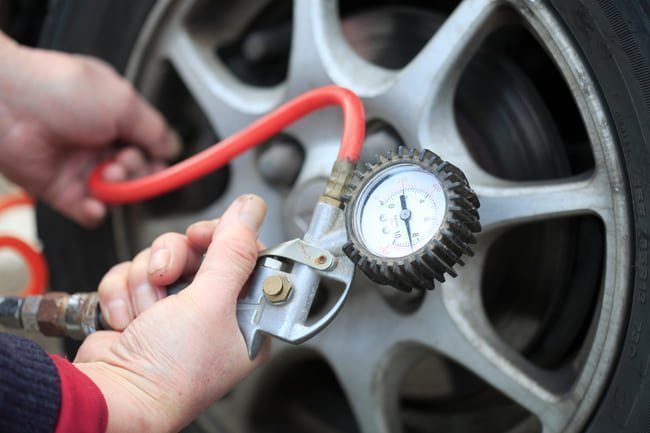
- Check your tire pressure and keep them optimally inflated – According to Michelin, a tire loses about 1 psi (0.076 bar) per month, but other factors can speed up deflation. Low tire pressure increases fuel consumption and CO2 emissions, with a tire under-inflated by 20% reducing economy by about 20%.
- Turn off your air conditioning – air conditioning makes the engine work much harder to keep you cool, so using it of course increases emissions. If the day is incredibly hot, you can turn the system on until you reach a comfortable temperature, then turn it off again, turning it back on intermittently if needed.
- Remove roof racks unless necessary – Remove items that impact your car’s aerodynamic efficiency and create drag.
- Reduce your idling time – It’s better to idle than to restart the engine. That’s what we’ve always been told. However, recent studies have shown that idling for 10 seconds wastes more fuel than restarting your car. The next time you’re stuck in traffic and the wait is likely to last more than 10 seconds, it’s worth it for you and everyone in the area to turn off your engine.
- Change your driving style – shifting gears as early as possible and not revving your engine can reduce emissions, as well as braking earlier and slowing down. All of this will also reduce wear and tear.
- Change the air filter – When an air filter is blocked, the airflow to the engine is reduced, which can lead to a ton of problems. If an engine does not have enough oxygen, deposits will build up, causing premature wear. Again, check the recommended maintenance intervals for the optimal time to change the filter, but you should change it more frequently if you live in a dusty area or in prolonged dry conditions.