
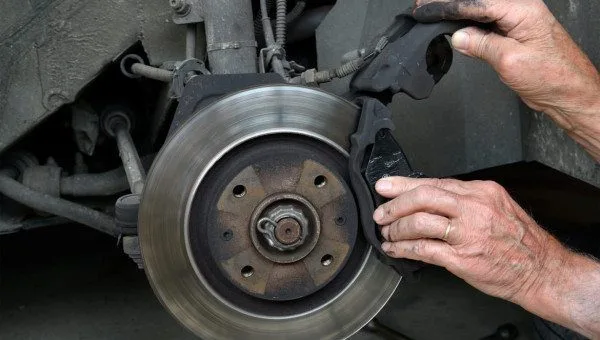
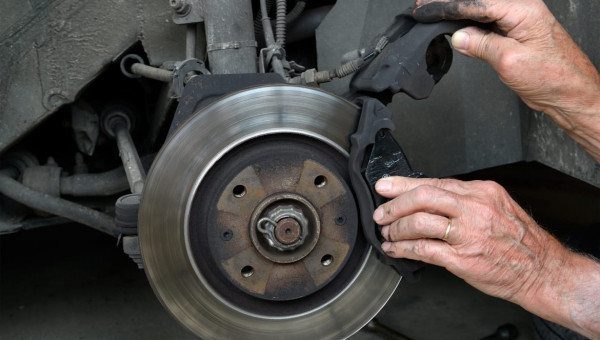
When a driver applies the brake pedal to stop their vehicle, brake pads are the friction material that is pressed against the discs that rotate with the wheels. They eventually wear out and need to be replaced.
The number of years or miles before this happens depends on where and how you drive, as well as the type of pads.
The pads are mounted in brake calipers that have an inspection hole on the top that allows you to check the thickness of the pads on both sides of the disc, also called the rotor. On some vehicles with aluminum alloy wheels, you can check the outer pads with the wheels in place, but in most cases, you will need to lift the car and remove the wheels to look at the pads on both sides.
Mechanics use different guidelines to determine when to replace the pads. New pads range from about 3/8 inch to 1/2 inch thick when new, depending on the vehicle. Some shops recommend replacing the pads when they are about 1/4 inch, others say 1/8 inch or when only 20 to 25 percent of the original thickness remains. The danger of letting the thickness become too low is that once the pads are worn out, the metal backing plate on which they were mounted will be pressed against the rotor, usually damaging the rotor beyond repair.
Many mechanics measure the pads the old-fashioned way – with a ruler – or use tools designed to inspect and measure pad thickness. Another way to check is to have exact replacement pads on hand for comparison.
Because brakes are such an important driving safety feature, pad thickness should not be the only concern. A repair shop will also measure the thickness of the rotors and whether they and the pads are wearing evenly. Uneven pad wear can be caused by sticking slide pins or caliper pins; the calipers may need cleaning, lubrication, or replacement. In all these cases, replacing the pads alone will not solve all the problems.