
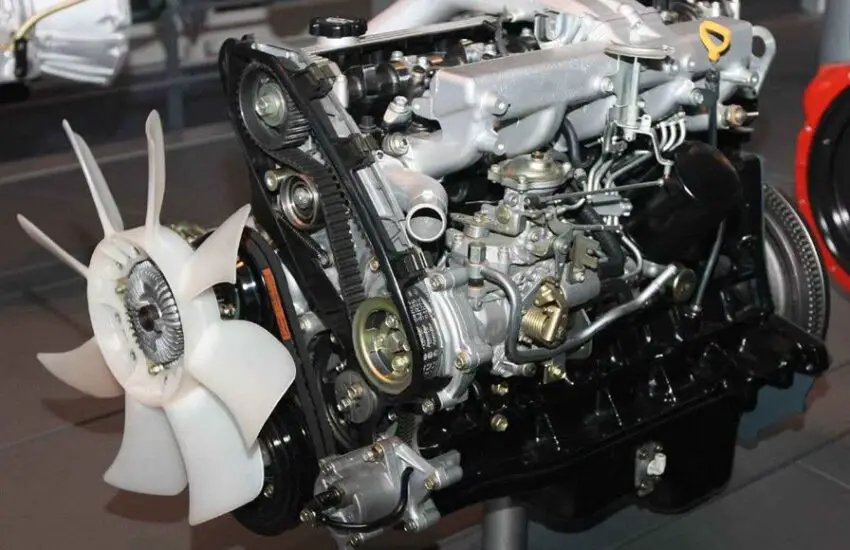
How a Fan Clutch Works in a Car, Hey gearheads! Today, we’re going to discuss a critical but often overlooked part of your vehicle: the fan clutch. Many people don’t know what a fan clutch is or how it works. Well, we’ll look at the inner workings of a fan clutch and see how it helps keep the car engine cool. So buckle up because we’re about to take a ride into the world of automotive engineering.
What is a Fan Clutch For?
Fan clutches are one of those parts you don’t really think about until they stop working. But it’s usually a big problem when they go out. That’s because the fan clutch is responsible for regulating the engine temperature by controlling the amount of power transmitted to the car’s cooling fan. Simply put, the fan clutch prevents the engine from overheating.
Fan clutches operate using a thermostatic formula. It doesn’t engage when the engine temperature is average, allowing the cooling fan to freewheel. This way, the engine warms up quickly, reducing unnecessary load. On the other hand, the clutch engages the fan when the temperature rises, which cools the engine.
How a Fan Clutch Works
So, how does it work? Well, let’s take a look at the anatomy of a fan clutch.
The main function of a fan clutch is to maintain the on/off operation of the fan in the cooling system. The fan engages when the engine overheats or the car is moving slower than it should. It disengages once the engine temperature has dropped to an average level. It also stops spinning when the car is moving at a speed that pushes air through the radiator.
There are two types of fan clutches: thermal and non-thermal. Thermal ones are the most efficient, while non-thermal ones are more economical.
Thermal Clutch Mechanism
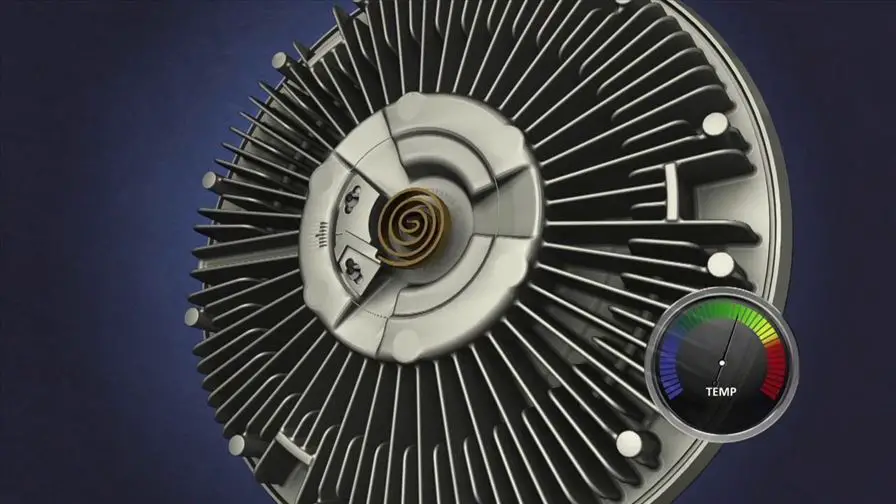
This clutch uses a bimetallic spring to detect temperature changes. Depending on the volume of air passing through the radiator, the spring expands or contracts.
When the car is idling or moving slowly, there isn’t enough airflow to cool the engine. This causes the engine to generate more power and heat, making the spring expand. This opens a valve to a chamber containing liquid silicone. This fluid enters the clutch and engages it at 70 to 90 percent of the water pump speed. The rotation of the fan clutch speeds up the car, forcing a high volume of air through the radiator.
The airflow cools the spring, which contracts and disengages. It slows down the cooling fan, making it spin at 20 percent of the water pump speed. This process is repeated in a cycle to maintain the correct engine temperature.
Non-Thermal Clutch Mechanism
A non-thermal fan clutch engages repeatedly and spins at about 30 to 60 percent of the water pump speed. Its price is lower than a thermal clutch, but it’s less effective at cooling the engine at low speeds. It also cannot provide long-term service.
Conclusion
A fan clutch is an essential part of your car’s cooling system. It prevents the engine from overheating, thus avoiding serious damage to the car. So, if the fan clutch starts to fail, make sure to repair it as soon as possible.