
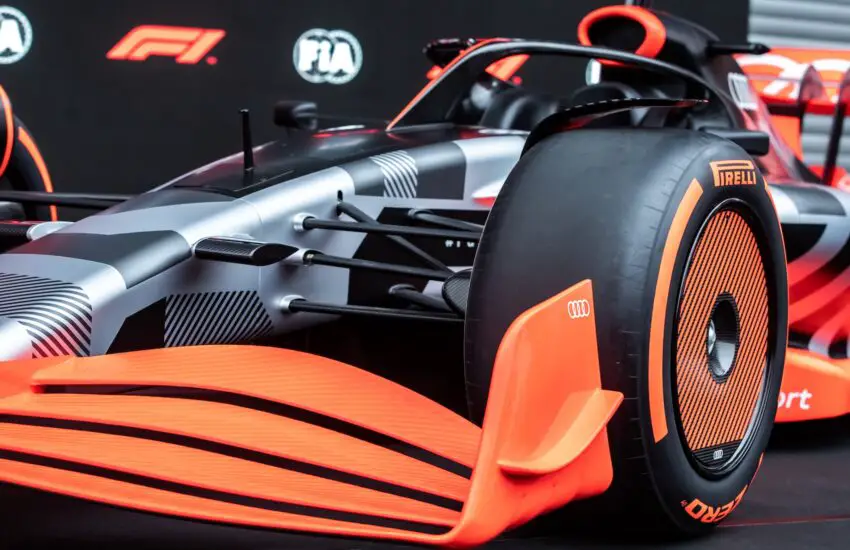
F1 2026 cars will be over a second slower per lap, according to initial FIA simulations. Despite this finding, the governing body states that this performance drop is not a cause for concern, a position that is sparking debate within the Formula 1 community.
Simulations predicting a significant slowdown
Teams are already working hard on the new technical regulations that will come into force in 2026. At this stage, they can only rely on data gathered from simulators and wind tunnels to predict the behavior of their future cars. And these predictions indicate a notable drop in performance.
Nikolas Tombazis, the FIA’s Single-Seater Director, confirmed to Motorsport.com that current simulations predict lap times up to 1.5 seconds slower than current F1 cars, partly due to new aerodynamic designs. He specified: “At the launch of the regulations, the new cars will be between one and two and a half seconds slower. […] but we do not expect lap times to be a talking point.”
FIA surprised by the importance given to lap times
Tombazis’s reaction to the concerns of drivers, teams, and fans is, to say the least, surprising. The experienced engineer, who has worked at Benetton, McLaren, and Ferrari, simply shrugged, saying he was “surprised” and stating that “it actually doesn’t matter.”
He justified his position: “I am a bit surprised by the importance given to lap times. The sport has gone through various phases where cars were slower or faster. Once you get used to it, it’s fine. […] I really don’t think lap times will be a factor once people get used to these cars.”
A debate about the very essence of F1
This lack of concern from the FIA raises questions. How can it be that the pinnacle of motorsport no longer cares about pure performance and the pursuit of speed? If the goal is no longer to go faster, what will the competition focus on? Energy and tire management may take precedence over pure attack, a major philosophical shift.
A cyclical evolution, but increased complexity
As Tombazis rightly points out, F1 has experienced performance drops in the past, often induced by regulation changes for safety reasons or to meet new technological challenges. So, it won’t be the first time that newer cars are slower than their predecessors.
The sticking point remains that these new 2026 cars are presented as being much more complex and much more expensive to develop. The paradox is therefore seeing ultra-sophisticated cars arriving that, ultimately, will post less impressive lap times. The central question remains: for you, is lap time important?