
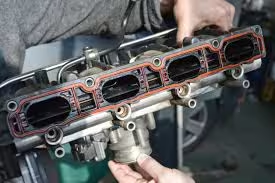
An internal combustion engine can suffer from a problem such as an exhaust manifold leak. Imagine the toxic fumes produced by the engine returning inside the car. Deadly, isn’t it? The exhaust manifold prevents these gases from returning to the vehicle. So it’s bad news, not only for the engine but also for the people inside the car, when the exhaust manifold has a leak.
If you suspect a leak in the exhaust manifold, you must immediately proceed with the repair. Any delay will only lead to more significant damage, such as to the catalytic converter, meaning more expensive repair work.
Symptoms of an Exhaust Manifold Leak
So, how do you know if something is wrong with this component? The warning signs are quite easy to detect: you hear a ticking noise or smell exhaust gases coming from the engine compartment.
Perform a visual inspection if you detect any of these signs. Black soot around the downpipe connection and the manifold is a nearly foolproof way to know there is a leak. Here are other symptoms:
- Burning smell in the engine compartment
- The engine makes excessive noise
- Reduced acceleration power
- Poor fuel efficiency
Reasons for an Exhaust Manifold Leak
Gas leaks from the manifold damage surrounding components over time. The list of damages they cause is as follows:
- Slower warm-up time (which directly affects the fuel consumption rate)
- Affect the functions of the oxygen sensors
- Cause incorrect fuel mixture
- Disruption of EGR valve functions
- Burnt exhaust valves
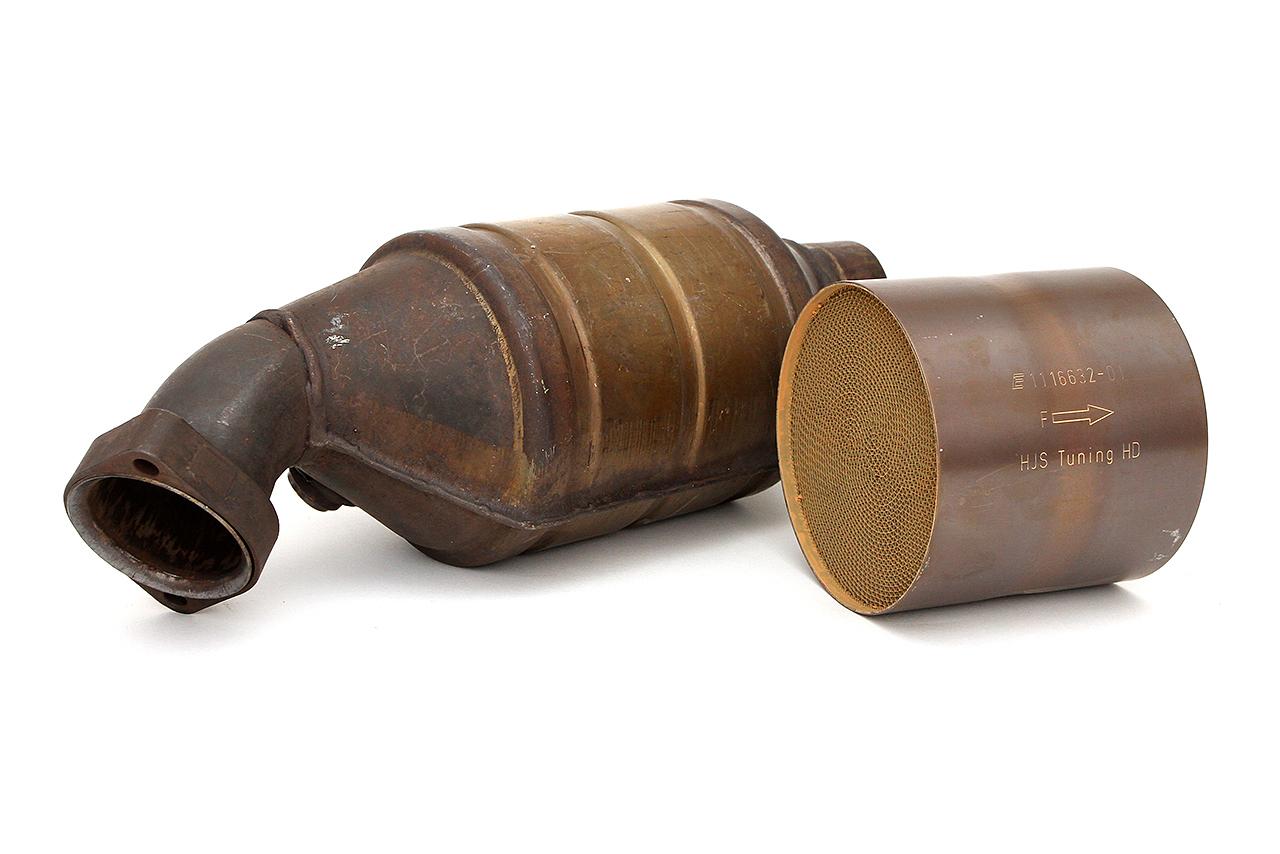
- Premature failure of the catalytic converter
The occurrence of these problems depends on the location of the leak. The risks of damage are lower when the leak is away from the catalytic converter and the engine.
The common reasons for an exhaust manifold leak are:
A Leak in the Manifold Gasket
Due to extreme heat, the metal of the gasket undergoes continuous expansion and contraction. This can cause a leak in the gasket, leading to bigger problems over time. The manifold gasket is responsible for sealing the entire exhaust system. A leak means the system is not properly sealed, which affects the car’s handling and performance.
When the gasket no longer functions, you will hear a noise in the exhaust when starting the car. But this noise will disappear after a while.
Cracked Manifold
The cause of manifold cracks is similar to that of a gasket leak. It starts as a hairline crack and creates noise when you start the vehicle. But it disappears after a few minutes once the manifold metal expands after being heated, which automatically seals the crack.
However, the crack gradually enlarges over time and the exhaust noise becomes persistent. You must repair it before it gets to that point.
Loose/Broken Bolts or Studs
A broken or loose mounting stud or bolt can cause a leak in the manifold. These bolts and studs wear out due to continuous heating and cooling cycles, creating a crack or hole in the manifold.
How to Repair an Exhaust Manifold Leak
As we saw earlier, an exhaust manifold must withstand intense heat and undergoes constant heating and cooling cycles. This is why it suffers from leaks, cracks, and other problems.
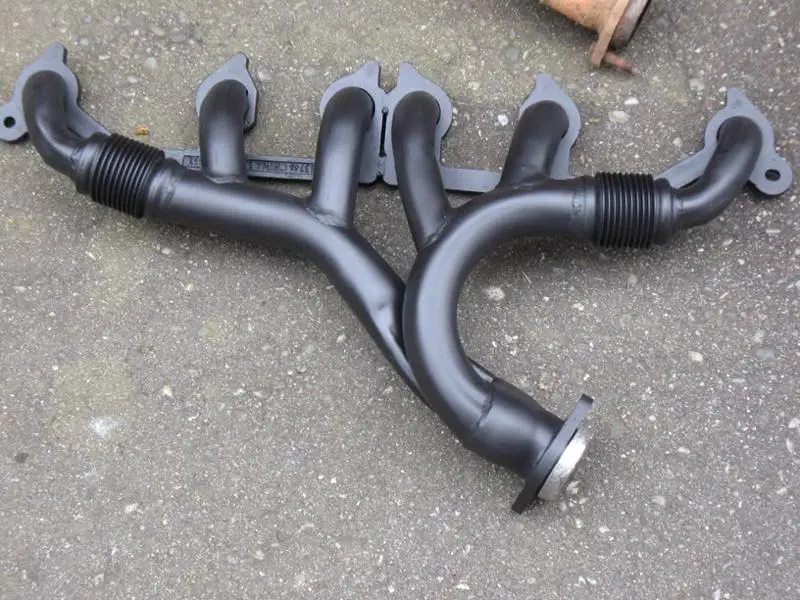
How to solve this problem? Well, you need to replace it with a new one. This guide will show you the safest way to perform this task.
What You Will Need
- A new exhaust manifold gasket
- Ratchet, wrenches, and socket set
- Torque wrench
- A jack and jack stands
- Degreaser and penetrating oil
- Towels and shop gloves
- Repair manual
Replacing the Exhaust Manifold: Steps to Follow
Before starting the repair or replacement, you must prepare the vehicle. This involves allowing enough time for the engine to cool down and disconnecting the negative battery cable.
The car must be parked on a flat surface (a garage would be an ideal place) and then set the parking brake. Lift the car off the ground using a jack and then place it on the jack stands.
You are ready. Now, move on to the repair work:
Check the Leak
This is important because you don’t want to have to deal with another leak after already handling one. So, examine the engine and the exhaust manifold to see how many leaks there are. Look under the hood to check if oil is leaking into the manifold.
WARNING
- The engine must be cold during the inspection, as the manifold and other components could be burning hot. If you haven’t had time to cool the engine, at least wear a pair of safety gloves.
Remove the Bolts
After locating the leak or leaks, you can proceed with the repair work. In this step, you will remove the bolts that hold the manifold in place. Remove the engine cover or heat shields using a ratchet and sockets to access the bolts. You may need to disconnect the dipstick tube or the EGR valve intake hose for full access to the manifold.
The manifold is attached to the engine cylinder head using two large bolts. You may need to use wrenches, as they are supposed to be tight. To make the process easier, apply penetrating oil to the bolts and let them soak for at least 15 minutes.
Remember to apply slight pressure when loosening them, as excessive force can damage them or, worse, break the bolt head. If they still seem tight, spray oil again and try a few minutes later.
Replace the Manifold/Gasket
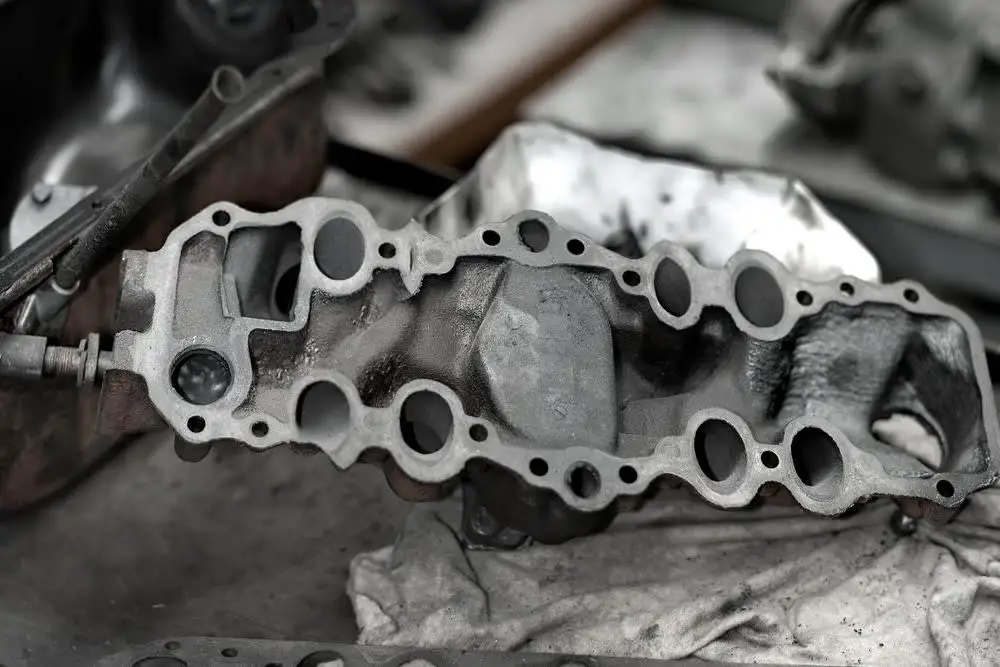
Remove the manifold from its housing, but do not remove it completely from the engine if you only need to replace the gasket. Slide the gasket out and insert a new one into the cylinder head slot.
Replacing the manifold is a lengthy and delicate operation as it needs to be completely disconnected from the engine. In this case, it is better to take the car to the mechanic.