

An engine that sputters at idle or during acceleration can be very annoying. Here are some common causes and how to fix them.

Among all the things you can face while driving, engine sputtering is one that can cause a lot of worry. Once it starts, it’s hard to know if the car will reach its next destination or not. Yet, there are sometimes simple solutions to fix the problem, even if it seems like a major issue.
In this guide, we cover the most common reasons why the engine sputters. We also show you some ways to resolve this issue and answer your main questions.
Common Reasons Why Your Car’s Engine Sputters
The engine can sputter due to faulty spark plugs, a clogged fuel filter, or a defective fuel pump. It also happens with a vacuum leak or a dirty MAF sensor. You may also want to check for clogged fuel injectors, a faulty catalytic converter, or a bad oxygen sensor.
Let’s examine these possibilities a bit more in-depth.
1. Bad Spark Plugs
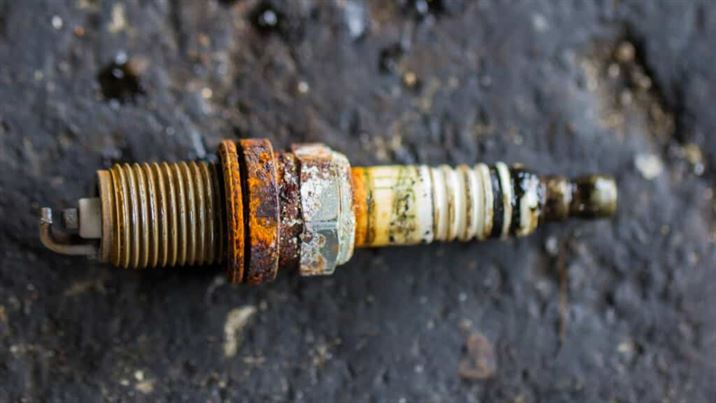
The most common reason the engine sputters is that it needs a tune-up. Spark plugs are one of the most important parts to replace during a tune-up because they don’t last forever. Depending on the type of spark plug you use, you may only get 30,000 miles out of them.
However, platinum and iridium plugs can last 100,000 miles without being changed. Regardless, carbon buildup can foul the plugs and cause the engine to sputter, so you should start by checking these parts first. If left unaddressed, the engine may start misfiring.
2. Clogged Fuel Filter
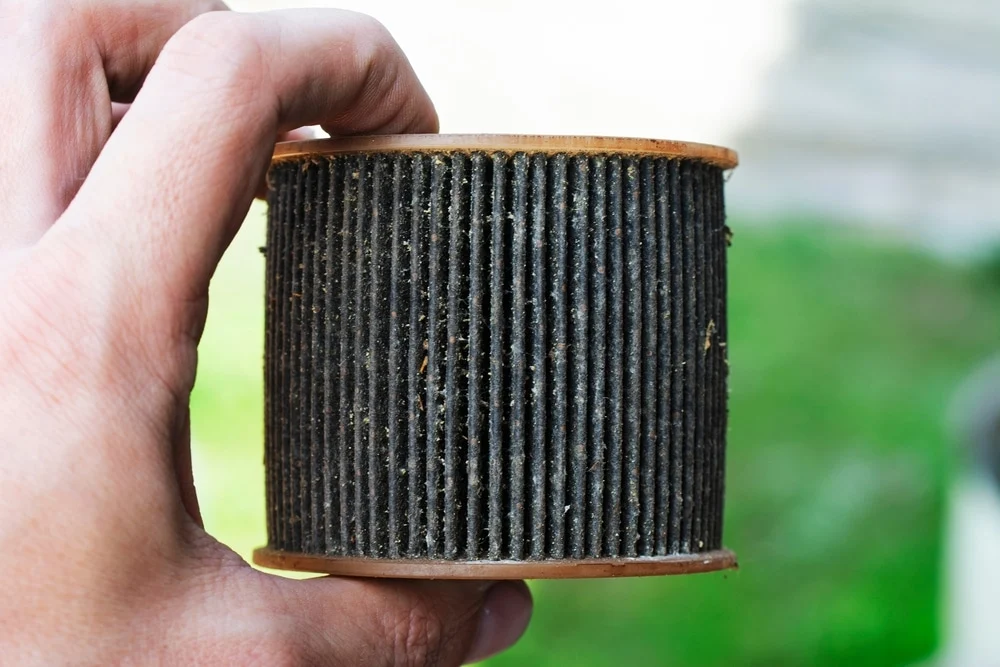
Sputtering can also occur due to a problem with the fuel system. Within this system, there is a fuel filter that is meant to be changed periodically. Over time, it fills up with contaminants, debris, and dirt that it has trapped and prevented from reaching the engine.
However, when the filter is clogged, the engine lacks fuel and may start to sputter. The engine will act as if it’s not getting fuel, even if your fuel gauge shows a full tank.
3. Bad Fuel Pump
The fuel pump is not a part that needs to be replaced during regular maintenance, but it can fail. Since the pump is necessary to move fuel from the tank to the engine, any problem can lead to engine starvation.
The pump can fail if you continuously let your tank run low and it starts sucking debris from the bottom. It can also fail simply due to old age.
4. Vacuum Leak
Since the engine operates like an air pump, a complete vacuum system helps it function. If any of the hoses or parts lose vacuum or create a leak, the engine won’t get what it needs to run.
The engine will inject unmeasured air, leading to a faulty air-fuel mixture. Again, the engine weakens and sputtering occurs.
5. Dirty or Faulty MAF Sensor
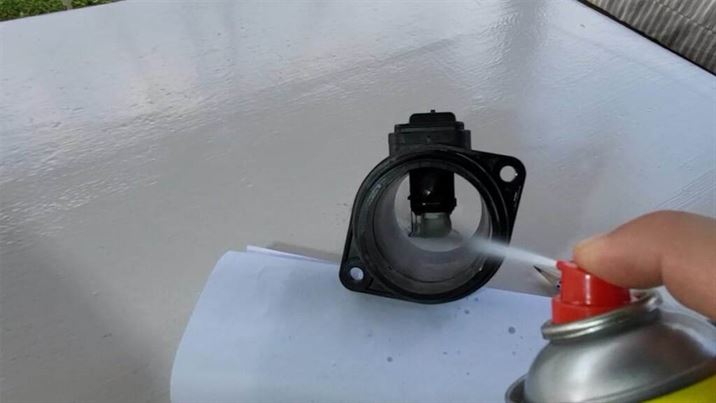
The Mass Air Flow (MAF) sensor is responsible for monitoring all incoming air to ensure there’s enough in the combustion chamber. This helps create the perfect air-fuel ratio in the engine.
If the MAF sensor sends inaccurate data to the Engine Control Unit (ECU), the wrong mixture ends up in the engine. If the results cause less fuel to be injected, the engine starves and starts to sputter.
6. Clogged Fuel Injectors
Injectors are another essential part of the fuel system. Their job is to spray a steady stream of fuel into the engine. The amount of fuel injected is determined by sensors and the ECU.
If the fuel injectors are clogged or dirty, fuel cannot flow properly. The engine starts to sputter when it fails to get a sufficient amount of fuel.
7. Bad Catalytic Converter
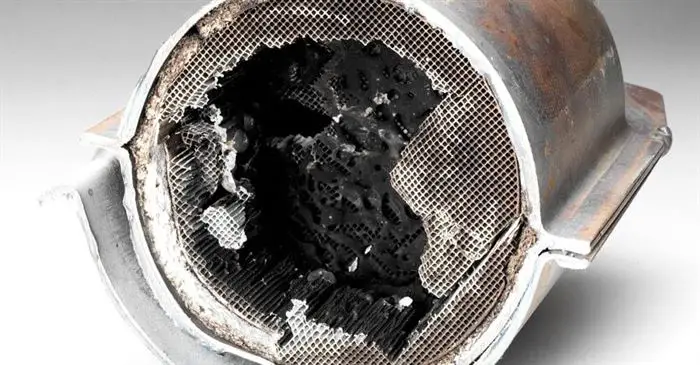
The catalytic converter is essential to the emissions system. However, it also tends to clog over time, especially if the air-fuel mixture isn’t correct.
Since the exhaust needs a clear path to exit the tailpipe, a clogged converter can cause a backup. When exhaust can’t escape, your engine suffers. You may notice sputtering and lack of acceleration until you fix the clog.
8. Bad Oxygen Sensor
The same results occur when the oxygen sensor is faulty. Since this sensor is needed to check the amount of oxygen from the exhaust gases, any inaccurate data provided to the ECU can alter the mixture in the combustion chamber.
More air may be injected, leading to a lack of fuel. Without fuel, the engine will sputter, just as if the car were running out of gas.
How to Fix a Sputtering Car Engine
Once you know what’s wrong with the engine, it’s easy to fix. Start by reading the fault codes. Then, check and replace the spark plugs or diagnose the fuel pressure. You can also look for vacuum leaks or clean the MAF sensor. Otherwise, you may need to call a professional mechanic.
Here are some suggestions to get you started.
1. Read the Fault Codes
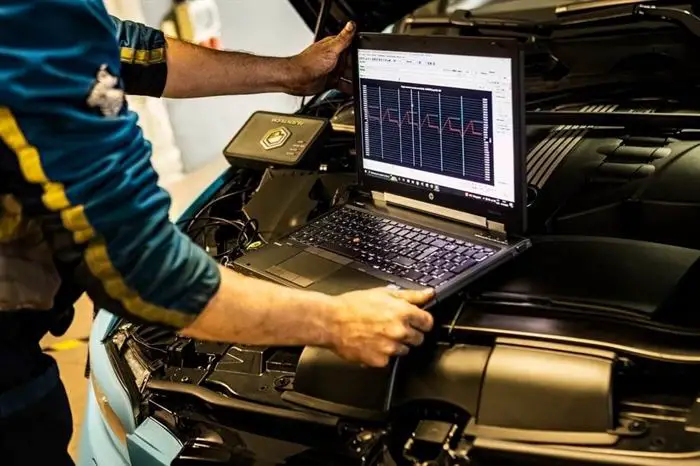
The first step in determining any car problem is to read the DTCs. If the Check Engine light is on, you can be sure a code has been set in the computer. With your compatible scanner, you can see the meaning of the codes.
Not all of them are easy to understand, which is why we offer a fault code library for your reference. If there are too many to look at, reset the codes and take the car for a short drive. The most recent codes will be reset, making it easier for you to figure them out.
2. Check the Spark Plugs
If you haven’t changed the spark plugs in a while, you’ll want to take a look at them. Here are some basic steps to consider.
- Remove the spark plug and inspect it visually. If it looks new, there’s nothing wrong with the plug.
- If the plug has damaged electrodes, you may not have used the correct octane fuel. Replace the spark plug.
- If there’s carbon buildup on the plug, you might be able to clean it. Use a spray cleaner for the spark plug and a wire brush.
- Use a spark plug tester to determine if they need to be replaced.
When choosing a new set of spark plugs, you might prefer to upgrade to a set of platinum or iridium plugs, which guarantee a longer lifespan.
3. Check the Fuel Pressure
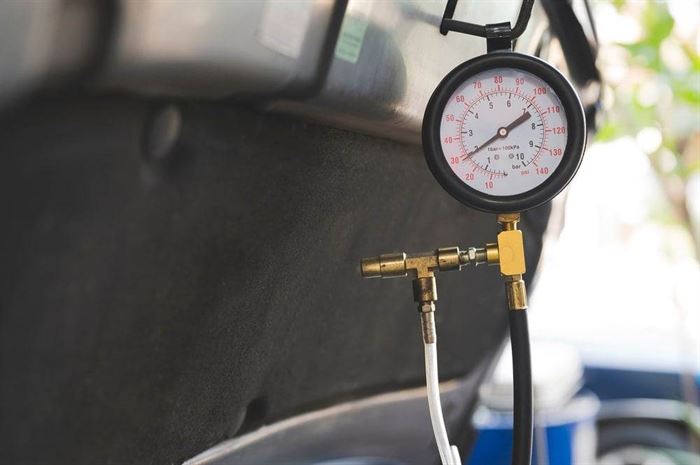
Use a fuel pressure tester to check how much fuel is flowing. The proper specifications will be listed in your service manual, as they differ by model.
For example, older throttle body systems may run on only 10 psi, while multiport injection systems may show 60 psi. Even the same vehicles with different model years can be different. For instance, the 1996 Corvette LT1 V8 shows 40 to 42 psi, while the 1997 LS1 V8 should be at 58 psi.
If there’s a fuel pressure issue, you need to determine where the problem is coming from. Perhaps you just need to replace the filter or need a new pump. Otherwise, you might be able to clean the injectors with an additive and be on your way.
4. Look for Vacuum Leaks
It’s not always easy to find a vacuum leak, but some steps can help.
- Start by finding the vacuum lines and connections. You can find a diagram in your service manual.
- Visually inspect the lines and connection for any obvious issues. If there’s a crack or disconnection, you can replace it quickly.
- Take a propane torch and run it along the lines without lighting it. If the idle increases, you know you’ve found your fault.
You can also use carburetor cleaner to test for a leak. Follow the same steps as with the propane torch. Just be careful not to spray a surface that could ignite the cleaner or the propane torch.
5. Clean the MAF Sensor
If the MAF sensor is causing problems, you might be able to clean it. Follow these steps.
- Disconnect the sensor. Make sure the engine is off and the keys are removed from the ignition. Perform this step only when the engine is cold.
- Slide the sensor out of the mounts holding it in place.
- Clean the sensor with a product intended for the MAF sensor.
- Let the sensor dry completely.
- Reinstall it and tighten the mounts.
If cleaning didn’t solve the problem, you may need to replace the sensor.
6. Contact a Professional
If you can’t figure out the problem or don’t know how to fix the fault, contact a professional. Whenever the engine sputters, you want to fix it immediately.
As professional mechanics, we’ve seen far too many people ignore the problem and it turned into something serious. If you don’t want to end up stranded on the side of the road or facing expensive repair bills, it’s best to have it checked out the first time it sputters.
Is Engine Sputtering Bad?
Not necessarily. Sputtering indicates that the engine isn’t getting the fuel it needs. In some cases, the repair is simple and won’t take much time. However, it could be something more serious, which is why professional diagnosis is needed to avoid further issues.
How Do I Know If My Engine Is Sputtering?
A sputtering engine can occur to varying degrees. At first, you might just feel like it’s hesitating or lacking power, especially during acceleration. In extreme cases, sputtering can turn into misfires or backfires, which are even more serious.
Can Low Oil Cause Sputtering?
Low engine oil levels won’t normally cause the same type of sputtering sensation as a lack of fuel. However, low oil levels can lead to misfires. Worse, without the right amount of oil, the engine lacks the lubrication it needs and damage will surely follow.
Is Sputtering a Misfire?
Not necessarily. Sputtering could just be due to a lack of power or delayed acceleration. It feels like the engine is stumbling when pushed. However, when sputtering becomes more severe, it can turn into misfires or backfires, which are much more alarming situations.
Can Spark Plugs Make Your Car Sputter?
Yes, when spark plugs are fouled or defective, your engine can start to sputter because one or more cylinders aren’t functioning properly. This condition is also known as misfiring, which can damage the engine and must be addressed promptly.
Conclusion
At the first signs of engine misfiring, you should immediately have the vehicle inspected. Even if it’s just a slight sputter at first, the problem can quickly become major. While the engine is fuel-starved, you’re allowing more wear than necessary.