

You’ve probably heard the phrase “riding the clutch.” It’s a term often used by driving school instructors, and you’ve likely sensed it’s a bad driving habit, but what exactly is the clutch and why should you care about it?
“Riding the clutch” refers to unnecessarily keeping the clutch pedal partially depressed. To help you understand why this is bad for your car, we’ll explain the role of the clutch, proper clutch control techniques to show the consequences of riding the clutch, as well as ways to break this bad habit. Avoiding riding the clutch is not only a fundamental aspect of driving but also of properly maintaining your beloved vehicle. Why? Keep reading to find out.
Riding the Clutch: Why Should I Care?
Simply put, in any vehicle equipped with a manual transmission, the clutch is the mechanical device that transfers rotational power from the engine to the transmission, meaning to the wheels. To do this, it connects the shaft coming from the engine and the shafts that turn the wheels.
The clutch is a crucial component because the engine generates power all the time and has parts that are constantly spinning, but the wheels do not spin constantly, and when they do, they may not spin at the same speed as the engine parts. That’s where the clutch comes in. The clutch allows the car to accelerate, slow down, or come to a complete stop without stalling the engine.
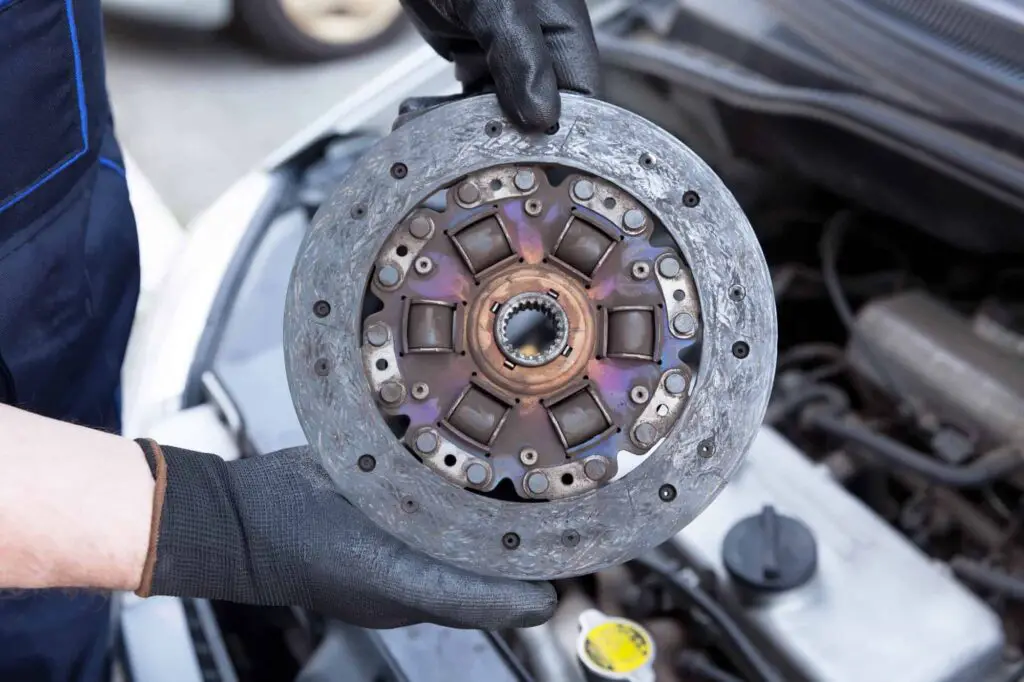
To facilitate gear changes, the clutch temporarily interrupts the connection between the wheels and the engine long enough for you to shift gears to accelerate or decelerate. It can also be said that the overall purpose of a clutch is to maximize the efficiency of the system by controlling the connection between rotating parts moving at different speeds.
The clutch/transmission system has many parts. If you master clutch control, a well-treated clutch can last up to 80,000 miles. But if you have the bad habit of “riding the clutch” as well as others like riding the clutch in certain situations, you will need to replace these parts much sooner, sometimes as soon as you reach 35,000 miles. And that won’t be cheap.
The Principle of Clutch Control
In a vehicle with a manual transmission, the basic principle of smooth clutch control is to fully disengage the clutch when shifting gears by pressing the clutch pedal to the floor with your left foot, and then to re-engage the clutch by lifting the pedal to release it completely. Full disengagement before re-engaging will prevent the gears from clashing and thus allow you to shift smoothly.
When the clutch pedal is fully depressed and the clutch is fully disengaged, there is no longer a direct connection between the engine and the transmission shaft, so no torque is transmitted from the engine to the wheels. In the re-engagement phase, when you completely remove your foot from the pedal, the connection is complete again between the engine and the transmission shaft. The engine can now directly transfer torque to the transmission shaft.
During a proper gear shift, the clutch pedal should be released quickly to re-engage the engine to the transmission shaft. When the engine and transmission shaft re-engage and their speeds equalize, you will feel a distinct jerk, characteristic of a manual transmission vehicle.
However, in some situations, the clutch is intentionally released slowly. In this case, the clutch disc will “slip” against the flywheel, and this amount of friction will allow the engine a smoother transition to its new rotational speed.
Here, the clutch disc will be partially engaged and the transmission shaft will therefore only receive a fraction of the engine’s rotational power. This is commonly referred to as “slipping the clutch” or “feathering the clutch.”
Such regular slipping of the clutch disc against the flywheel causes clutch wear that is similar to the wear of a brake pad during braking. Admittedly, some wear is natural and unavoidable, but you can still minimize it with better clutch and shifting techniques.
The general rule is to release the clutch as close as possible to the correct engine speed for the gear and vehicle speed. That is, when upshifting, you will need to let the engine speed drop before releasing the clutch for a smoother transition. Conversely, when downshifting, you will need to increase the engine speed with the accelerator before releasing the clutch. A smoother transition directly results in minimal clutch wear and reduced maintenance costs.
What Does Riding the Clutch Mean?
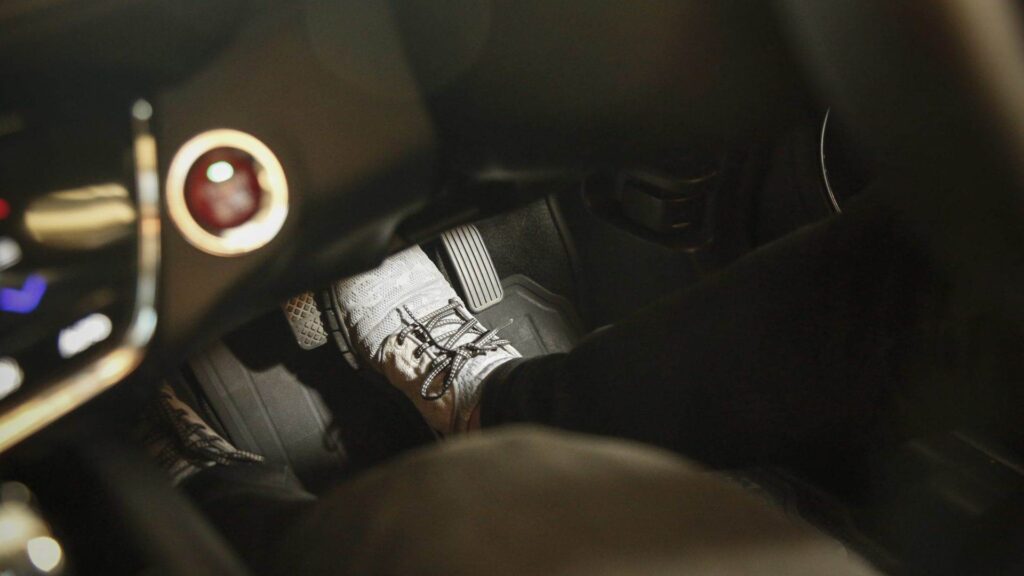
In a vehicle with a manual transmission, riding the clutch refers to the practice of unnecessarily keeping the clutch partially disengaged. This usually happens when a driver fails to remove their foot from the clutch pedal after changing gears.
This results in the clutch disc slipping against the flywheel and some of the engine’s power not being transferred to the transmission and wheels. The friction between the clutch disc and the flywheel creates heat and eventually causes premature wear on your clutch.
Habitually resting your foot on the clutch while driving instead of on the floor or on the dead pedal is a bad habit to get into. It’s a very common habit among beginner drivers, but it’s not limited to learners only. Riding the clutch is something anyone can do while driving.
You should keep your foot away from the clutch at all times, unless you need to start your car, shift up or down gears, and come to a stop. Even if you think no pressure is applied when the foot is simply resting on the clutch pedal, it certainly is.
Although this light pressure is not enough to allow the clutch disc itself to slip, it is enough to keep the release bearing against the release springs. This causes the bearing to keep spinning, leading to premature bearing failure.
Thus, treating your clutch pedal as a footrest can lead to extra strain and wear on certain components. And since the clutch is considered a wear item just like tires and brakes, clutch wear will not be covered by your new car’s warranty. You will eventually need to repair or replace your clutch much sooner, and that’s not cheap.
The cost of repairing a clutch can range from $500 to $2,500, depending on the make and model of your car. Clutch replacement is more affordable if you own a Japanese economy car, and will be much more expensive for performance cars, exotic cars, and European models.
It is worth noting that while riding the clutch is a bad habit to get rid of, many drivers regularly and effectively use this technique in traffic jams, as it is easier to control the throttle and acceleration at very slow speeds. The clutch is also intentionally used when driving in reverse, as the distance to travel is short while full engagement of reverse gear results in too high a speed.
Another note is that riding the clutch should not be confused with “coasting” or “freewheeling,” a common practice where the clutch is pressed all the way down, allowing the car to roll either downhill or by inertia, or to roll into a parking space or over speed bumps by inertia. While this technique is not damaging to the car, it can be considered a tricky way of driving since you won’t be able to accelerate quickly if needed.
How to Avoid Riding the Clutch
Automatic transmissions are undoubtedly convenient, especially in city traffic. But a manual transmission continues to win hearts for the pure, unadulterated driving pleasure it offers. However, it is not as convenient as an automatic transmission, so you will need to learn to find a balance in your driving. If you want to enjoy your manual transmission, you must develop good habits to properly care for your clutch.
It takes some effort to break the ingrained habit of riding the clutch. It might take you a bit of practice to feel like you’ve really gotten the hang of it, but it’s worth it, both to avoid premature and costly replacement and to acquire good driving habits.
Now that you understand the meaning of riding the clutch, you need to learn how to avoid doing it.
If you have a habit of riding the clutch, the biggest clue that you are causing excessive wear to the clutch is a distinctive burning smell from the clutch discs as they slip on the gearbox shaft. If you notice this smell, adjust your position accordingly.
Automatic or Semi-Automatic Gearbox
There are several ways to avoid riding the clutch in a manual car, but the other way to avoid it completely is to buy a car with an automatic or semi-automatic gearbox. With no pedal to rest your foot on, and thus more footwell space, you will never have to worry about riding the clutch and paying for expensive repairs if the clutch fails prematurely.
Adjust Your Driving Position
One reason for riding the clutch could be a poor driving position. If you sit too close to the pedals, you may not have enough legroom to place your left foot in a comfortable position elsewhere and you might end up unintentionally resting it on the clutch pedal.
To fix this, you need to find ways to adjust your driving position. The best way to do this is to press the clutch pedal with your leg locked in a completely straight position, then move the seat until you are pushing the clutch pedal against the bulkhead in the driver’s footwell. Once the seat is adjusted, remove your foot from the pedal and you should have enough legroom to comfortably move your foot away from the clutch pedal and rest it on the floor.
Many cars are equipped with a dead pedal (footrest) which makes it much easier to avoid riding the clutch. However, if you are driving a car with a cramped footwell, see if you can place your foot behind the clutch pedal. This is not ideal, but at least one can drive without touching the clutch pedal too much.
Use Neutral More Often
The general rule for manual transmission vehicles is to use neutral more and the clutch less. You need to have your foot on the clutch to start your car, to shift up or down gears, and to come to a stop. Otherwise, keep your foot off the clutch.
When going down a slope, downshift and use your brakes or shift into neutral and use your brakes to slow down. In traffic, plan for a greater distance between your car and the one in front of you and ride a bit more with the flow of traffic.
When stopping at a red light, do not leave your car in gear as this would cause unnecessary wear on your clutch. When you leave your car in gear while stopped, you are essentially pressing the three main parts of your clutch against each other: the spring, the bearing, and the diaphragm.
Instead, release the clutch, put your car in neutral, and use your brake until the light changes. This allows it to relax and avoid excessive wear.
Shifting Gears: Be Quick and Decisive
When you need to change gears, try to look far down the road so you have the opportunity to anticipate obstacles you will encounter. The goal is to try to maintain a constant speed rather than shifting gears from time to time.
Also be decisive and quick. Don’t linger when shifting gears. This is a common problem for new drivers when they are first learning to drive a manual vehicle. Shifting gears only takes a few seconds. The longer you press the clutch pedal with each gear change, the more unnecessary pressure and wear you put on your clutch.
Even if the gear shift happens in the blink of an eye, you will shift gears multiple times during an average journey, which can add up very quickly over time.
Use the Handbrake When Parking
Whenever possible, you should use the handbrake to secure the car when you park instead of leaving your car parked in gear. Leaving a vehicle parked in gear puts pressure on the clutch even when the engine is off. Instead, using the handbrake will reduce the pressure on the clutch disc when you are not driving, so less wear in the long term.