
With advances in technology and especially in vehicle technology, cars have seen significant benefits over the years.
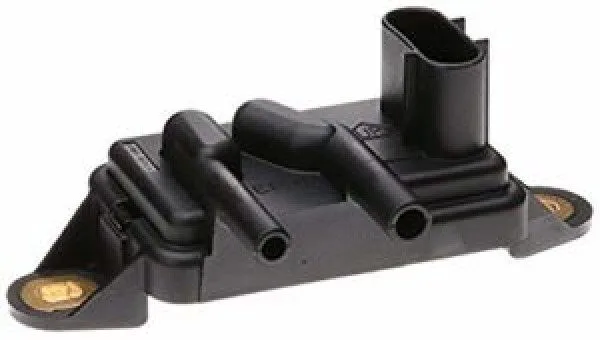
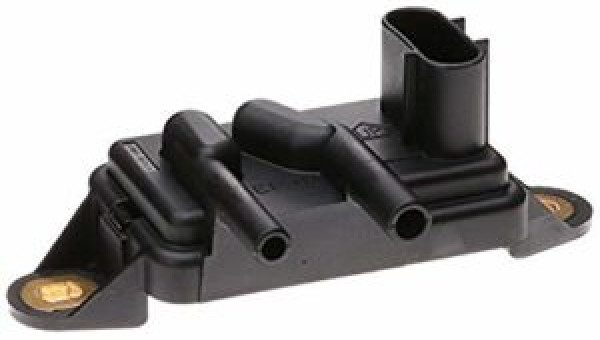
A modern car now has so many electronic parts and sensors that manage much of how your car runs and burns fuel. Among all these sensors, one is the DPFE sensor. DPFE stands for “Delta Pressure Feedback of EGR” whose purpose is to monitor the pressure changes of the EGR.
All this may seem very confusing since even many car enthusiasts don’t usually hear the name DPFE or EGR, but don’t worry because after reading this, you’ll have a clear idea of this sensor and what it does.
In this article, we will go over the function, symptoms, troubleshooting, and replacement cost of the DPFE sensor.
What is a DPFE Sensor?
As we just mentioned the name, the DPFE sensor is called Delta Pressure Feedback of EGR. We will talk about EGR later. The DPFE sensor is one of the components of your engine that is there to monitor all the air that returns to the air intake from the exhaust. Yes, you heard that right. To improve efficiency, cars use the air that comes out of the exhaust, also called exhaust air, to burn it again. Its operation can be compared to a turbo system. The turbo unit contains a turbine inside that is powered by the exhaust gases released by your car. This exhaust air drives the turbine which, in turn, sucks in fresh and cooler air from the intake much faster and with a lot of force, giving your engine a good boost.
Although the DPFE sensor is directly related to the exhaust gases, it does not manage the supply of exhaust air. This part is controlled by the EGR system, which we will discuss later in this article. The DPFE sensor, however, is what monitors the pressure difference in the air and the amount of air that was entering the engine and gives feedback to the EGR system based on the readings, hence the name “Delta Pressure Feedback of EGR.”
In a way, the DPFE sensor informs the EGR of how much air to let in given the situations.
The DPFE sensor checks the pressure of the exhaust air and the pressure changes using an orifice. The output obtained by the sensor is then converted into an analog signal. This signal is then sent to the car’s computer system to compare it with previous readings and manage the EGR accordingly for optimal airflow. From there, the computer sends a signal to the EGR system to control the exhaust air. The main purpose of the EGR system is to reduce the amount of nitrogen oxide released by the engine as a result of combustion.
EGR System
The faulty diesel EGR valve, which stands for “Exhaust Gas Recirculation,” is a mechanism that precisely controls what its name indicates. The EGR system consists of a valve that controls the exhaust air returning to the engine. The exhaust gases are reused based on the fuel combustion factors. The fact is that the fuel and air mixture made by the carburetors or throttle body is not burned entirely each time, and some is released from the exhaust as gas that is not 100% burned. Recirculating this unburned gas ensures that it is burned again and completely the second time, improving energy efficiency and, most importantly, controlling the car’s emissions.
An unburned mixture leads to the production of various harmful gases, including nitrogen oxide, which are released into the atmosphere. Since many states have now legislated and specified the allowed emissions, the proper functioning of the EGR system has become mandatory.
The EGR system is quite simple, having a single valve that opens and closes to the amount indicated by the car’s computer. Older vehicles have mechanical EGR valves, also called pneumatic valves, while modern cars have electronic EGR systems precisely controlled by the vehicle’s computer.
Main Functions of an EGR Valve
To reduce throttle loss on gasoline engines.
Increase engine life by preventing extreme engine temperatures due to precise fuel combustion.
Reduce emissions.
What Happens if the DPFE Sensor Fails?
Like other parts, sensors tend to fail eventually. Although this is rare for such sensors, some factors can lead to their premature failure. Since the job of the DPFE sensor is to provide an accurate reading to the EGR, when the sensor fails, it will give incorrect readings. If the DPFE sends false signals, the EGR system will not work properly. If the EGR system does not work properly, the PCM valve that controls the amount of air to mix with the fuel will start to make a lean mixture of air and fuel.
The sensor failure will eventually cause a lean mixture from the PCM, thinking that the circulation of exhaust air has decreased.
Bad DPFE Sensor Symptoms
There are many different signs to look for when dealing with a bad DPFE sensor. Here are some of the most common symptoms.
1. Reduced Engine Performance
If you start to notice that your car begins to idle and shake because of it, it may mean that the DPFE sensor is not working as it should. In such cases, the engine also hesitates when you press the accelerator and you feel a loss of engine power.
2. Check Engine Light Comes On
If you experience the above issues and the check engine light comes on at the same time, it could mean that your engine control unit has detected a problem with the DPFE sensor. When the check engine light is on – it doesn’t necessarily have to be a problem with the DPFE sensor, but it could be.
3. Your Car May Fail the Emission Test
This is probably the simplest symptom to look for. If your vehicle fails the emission test, you may have a problem with the DPFE or EGR system.
Troubleshooting and Testing the DPFE Sensor
If you have some knowledge of cars and troubleshooting, you can test the DPFE sensor and its wiring yourself at home. Here are some simple things you can check yourself using a multimeter and basic knowledge of its use.
Check the Vacuum Hoses: Check for cracks or broken hoses between the EGR and the DPFE sensor.
Check the Wiring: Use a multimeter and measure the signal, ground, and voltage. Make sure you have 5 volts on the voltage wire and proper grounding. If the signal/voltage is not in the range of 0.2 to 4.8 volts, P1400 or P1401 will set.
Measure for an Open Circuit or Short Circuit in the DPFE Sensor: Use a multimeter
Check the EGR Valve: Check for clogged pipes or a stuck EGR valve