
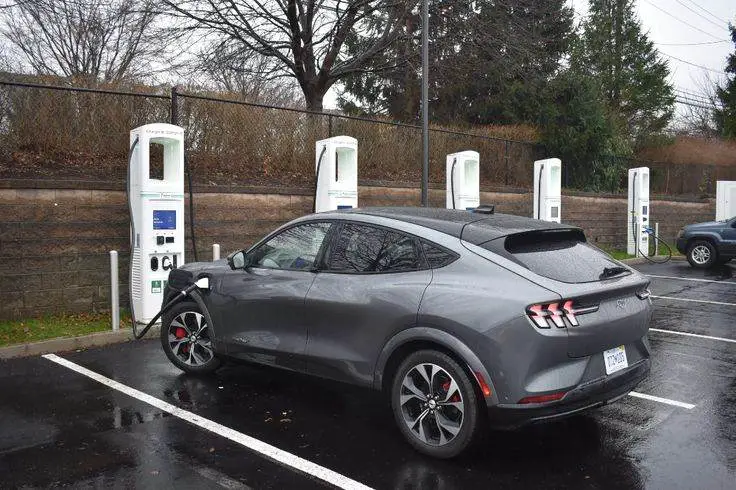
Engine oil is an extremely important factor that helps your car operate more efficiently. So, do these types of oils work in electric cars? Or simply put: do electric cars need an oil change? This concern will be clarified in our article.
Do Electric Cars Need Oil Changes?
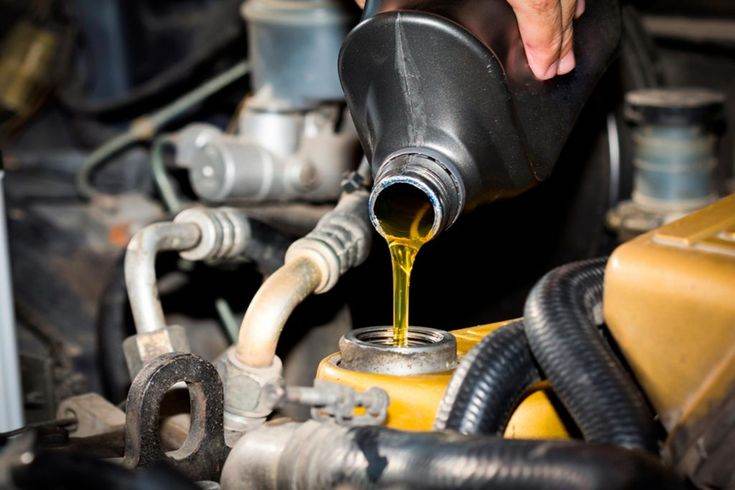
Traditional gasoline and diesel engines require oil to lubricate the many moving parts of the engine as well as the transmission. The pistons, valves, and other engine parts must slide smoothly against each other at very high speeds, so oil is added to the engine to lubricate these close interactions.
Adding oil to the engine will prevent overheating. Over time, microscopic metal particles accumulate in the oil from all the engine contacts, so it is necessary to change the oil and provide new oil for the engine to run better. If you do not change the oil, the engine will wear out quickly and reduce the car engine’s lifespan.
But on the other hand, in an electric vehicle, none of this happens. Unlike internal combustion engine vehicles, electric cars operate using batteries and electric motors. There are no engine pistons, valves, or moving parts that require lubrication, so oil changes are not necessary for electric vehicles.
Electric vehicles are an important goal for the automotive industry, paving the way for a greener future. Electric vehicles do not need to use engine oil to lubricate moving parts like internal combustion engine cars. So “Do electric vehicles need oil changes?”
Our answer is “Electric cars do not need regular oil changes.” Instead, new fuel sources are being sought to optimize the performance of electric vehicles and help reduce the problem of environmental pollution. However, if the vehicle is a gasoline/electric hybrid vehicle and it still has the same engine as a conventional vehicle, it will still need an oil change.
Only electric vehicles do not need to change engine oil. Although oil changes are not necessary, electric vehicles still need to change other fluids such as coolant, brake fluid, and transmission oil.
Which Parts Do You Need to Lubricate on Electric Cars?
The powertrain of the most popular electric vehicle has eliminated up to 20 moving parts compared to an internal combustion engine vehicle. Therefore, maintenance will be increasingly simpler, but there are still important parts of electric vehicles that need to be lubricated. Electric vehicle lubricants are manufactured based on research into the specific properties of electric motors to achieve superior performance.
Electric vehicle lubricants have higher technical requirements than internal combustion engine oils. They are made with the aim of ensuring vehicle specification performance, improving anti-wear performance, reducing friction, increasing performance, electrical and insulating compatibility, as well as cooling the electric motor and battery system.

EV Battery Cooling System
For the operation of electric vehicles, battery temperature is a big issue, so lithium-ion batteries are the part that needs to be checked and have coolant added periodically. Because electric cars, if not guaranteed for their cooling capacity, can lead to a very dangerous fire and explosion situation. This is the most important category in electric car maintenance.
Like the coolant in gasoline and diesel cars, drivers must regularly check and add battery coolant for electric cars to ensure the most stable and safest operation. Many electric cars have caught fire, perhaps because owners let the batteries overheat. So, keeping the coolant at the standard level is the best method.
Lubricating the Electric Motor
The electric motor not only helps the vehicle operate and move but also plays a role in energy regeneration. It can be simply understood that when using the brake or decelerating, the powertrain generates electrical energy and recharges it into the battery, thereby increasing the vehicle’s performance. Electric vehicle models can be equipped with one or more electric motors to form a drive system similar to cars using internal combustion engines such as FWD, RWD, AWD, etc.
Compared to gasoline engines with hundreds of components that need to be checked periodically, the electric motor has a much simpler structure. However, this is not a reason for users to be subjective in controlling and maintaining electric motors. Some tasks to pay attention to when maintaining this part include: cleaning the motor; checking and lubricating bearings and electrical conductors.
EV Transmissions
Most electric car gearboxes today are single-speed gearboxes, with a much simpler structure than manual transmissions and the automatic transmissions of cars using internal combustion engines (some electric car models don’t even have a transmission). Due to such a simple structure and lubrication with high-quality synthetic oil, the electric car’s gearbox is almost free from worrying damage and has great durability. Thus, this part does not require too much time and expense in electric car maintenance.
The category that requires the most attention when maintaining electric car gearboxes is the lubricating oil. Vehicle owners only need to check, top up, and replace the lubricating oil if necessary to ensure ideal performance and avoid damaging mechanical components.
The Brake Pads
Electric cars use regenerative braking with a mechanism of reversing the electric motor to slow down the wheels. Thus, the brake pads will not wear out as much as the brakes on gasoline and diesel cars. Even so, brake pads are still an item that requires electric vehicle owners to periodically check and add brake fluid, albeit with a lower frequency than internal combustion engine cars.
When the brake pads and discs are pressed together to stop, hydraulic fluid is present in normal cars. The function of this fluid absorbs water from the air over time. If the oil is not flushed regularly, it can corrode the braking system. This means that electric vehicles still need regular fluid changes. Brake fluid must be replaced every two years on most major electric vehicles such as Tesla vehicles or changed every 5 years for Nissan brand vehicles.
Other parts: when talking about lubrication for electric cars, attention must also be paid to some other details that do not require high frequency such as the airbag safety system, brake fluid, cabin air filter, system lights, steering components, and suspension.
Summary
Do electric cars need oil changes? Electric vehicles absolutely do not require oil drains, oil changes, or regular maintenance. However, the internal parts of the car also have little need for replacement or repair because there are very few moving parts inside.
Different from gasoline cars, which have internal combustion engine oil and many parts such as spark plugs, valves, fuel tanks, mufflers, drive belts, hoses, catalytic converters, etc., electric cars only use a simple single-speed transmission. Therefore, when comparing the cost of use and oil changes, it can be seen that using electric cars is more economical. If you are considering purchasing an electric vehicle, the information in this article may be useful to you.