
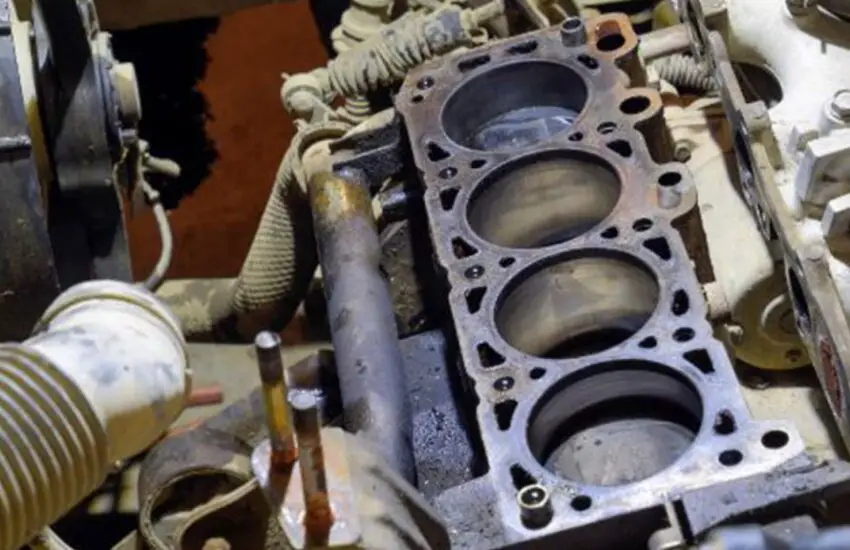
Do you have a blown head gasket? Discover the causes of blown head gaskets, how to repair a blown head gasket, and whether you can drive with a blown head gasket. We will also look at why a blown head gasket ruins an engine and how long can you drive your car with a blown head gasket?
A car’s head gasket plays an essential role in the proper functioning of a car’s engine, and if your car’s head gasket is blown, it can cause very serious damage to the car and even lead to major repairs.
What does blowing a head gasket mean?
A head gasket is a mechanical seal sandwiched between the surfaces of the engine block and the cylinder heads. The main purpose of the head gasket is to help contain the combustion process so you can have a functioning engine since it is part of the combustion chamber. Secondly, the head gasket provides a physical extension of the fluid passages from the head to the block.
Being so close to the combustion process, the head gasket must be strong. Most contemporary gaskets are made from steel, composite materials with copper used in high-performance applications. Head gasket sets are quite affordable despite the importance of this part. Removing the cylinder head can be very labor-intensive, hence the high cost of replacing a head gasket.
What causes head gaskets to blow?
Usually, the head gasket forms a kind of seal between the engine block and the cylinder head. The head gasket must seal both the high-pressure and exceptionally hot combustion gases and the engine coolant whose temperature can vary significantly. It is normal for head gaskets to develop leaks over time due to the wide temperature range and a relatively large surface area. Head gaskets can blow regardless of your vehicle model or the type of head gasket used.
The head gasket seals the coolant passage from the atmosphere and the combustion chamber, meaning you cannot see much of the head gasket on a vehicle with an installed engine. Symptoms of blown head gaskets can be difficult to diagnose because much of the gasket cannot be seen without disassembling the engine. A simple visual inspection will not prove a leak at the head gasket, so it is essential to know the other symptoms so you can perfectly identify a head gasket problem.
Symptoms of a blown head gasket
- External coolant leak from under the exhaust manifold
- Emission of white smoke from the exhaust pipe
- Engine overheating
- Bubbles in the radiator or bubbles in the coolant overflow tank
- Weak cooling system
- Milky white oil
- Fouled spark plugs
Let’s now look at the symptoms one by one.
External head gasket leak
An external head gasket leak could cause coolant to leak from under the intake or exhaust manifold. This can only occur when the engine is fully warmed up. You might be able to identify the leak as a head gasket leak if there are no other cooling passages or pipes near the head gasket. But this may require you to add UV dye to the coolant and then observe if there are other cooling passages nearby. You can carefully locate the head gaskets with a UV light to spot the leak.
White smoke from the exhaust
In most cases, head gasket leaks are internal to the engine, allowing coolant to flow into the combustion chamber on each intake stroke. When this happens, the coolant burns with the combustion process and appears as white smoke emitted from the exhaust. White smoke may excessively come out of the exhaust when this occurs.
Engine overheating
It is normal for your engine to overheat after longer drives if your head gasket is blown. This is due to the lack of coolant because your engine is consuming it. Engine overheating can cause many problems, the major issue being the expansion of metal components beyond what they were designed for, which can cause cracks and distortions. This can cause irreversible damage to seals and gaskets.
Bubbles in the radiator
A leak from an internal head gasket allows exhaust gases to enter the coolant, in addition to allowing coolant to enter the combustion chamber. This can result in bubbles forming in the radiator or coolant reservoir. The coolant may appear to be boiling even when it is cold. Bubbles form when exhaust gases are forced into the cooling system during the combustion process.
Weak cooling system integrity
A leak in your head gasket, pressurizing your cooling system, and inspecting for pressure loss can prove that your head gasket is blown. Yet, this is not a completely convincing test because there could be other leaks you are unaware of.
White or milky oil
The leaking coolant seeps into your combustion chamber, causing it to flow past your piston rings into your oil. Oil and water can mix over time, giving the oil a milky white appearance. You can check this on your dipstick and around your engine’s oil cap. The mixture of water in your oil will reduce the oil’s effectiveness in lubricating your car. A lack of adequate lubrication will lead to wear on your cylinder walls and crankshaft and camshaft bearings.
Fouled spark plug
Burning coolant in your combustion chamber will leave tiny white deposits on your spark plug, usually around the ground strap and electrode. A fouled spark plug may not be a conclusive symptom of a blown head gasket, as other issues can cause these white deposits.
How to prevent head gasket failure
Head gasket failure can be avoided in several ways:
- Keep combustion chamber pressures as low as possible. For turbocharged or supercharged vehicles, ensure your boost level is set to the factory setting.
- Make sure your engine has no pre-ignition due to carbon buildup.
- Maintain a low engine RPM to reduce stress and heat on your head gasket and avoid revving your engine at high RPM.
- For cars with a manual transmission, avoid downshifting to slow the car and match the RPM to reduce head gasket pressure.
- If you are rebuilding an engine, reduce the risk of a blown head gasket in the future by using properly lubricated head studs and tightening them according to the proper sequence to the correct torque setting.
What is the cost to repair a blown head gasket
The cost to repair a blown head gasket can vary significantly from one vehicle to another. Cost factors include:
- Damage to the head or block
- Number of cylinder banks
- Overhead cam engines VS pushrod engines
- Other replaced components
It is mainly the labor cost that makes head gasket repair expensive. The cost can therefore vary depending on the complexity of the job. A “V” style engine has 2 cylinder heads, so the repair cost will be high because the gasket of both heads will need to be replaced. Furthermore, an engine with overhead camshafts adds the complexity of removing the timing belt or chain, thus making the job more complicated. For a pushrod engine, the repair may not be too expensive since it only requires removing the rocker arms and pushrods. Machine work can add a lot of expense to a head gasket job, so it is essential to know the extent of the damage to the cylinder head or block to calculate the cost of repairing your head gasket.
Additionally, you should note that other parts may need to be replaced when repairing a head gasket, such as other gaskets, seals, parts, or water pump.
Avoid driving with a blown head gasket as it could damage the engine.
Does a blown head gasket ruin an engine?
Yes. A blown head gasket can damage an engine. Ignoring the symptoms of a blown head gasket can lead to problems such as a coolant leak. This could damage the catalytic converter. It can cause leaks in the engine oil, erosion of lubrication, which can damage the engine.
So, can a car still run with a blown head gasket? That’s the next area we look at?
Can you drive with a blown head gasket?
No. It is not advisable to drive with a blown head gasket, as it can foul the spark plugs and make your engine inefficient due to the deposits left by burning coolant. Coolant and combustion gas leaks can lead to high temperature gradients causing erosion of the leak area and possible cracks. The hot gases and cold coolant passing through the gasket hole can erode the metal cylinder head or even the engine block. This can make the cost of repair quite high.
How long can you drive your car with a blown head gasket?
It depends if there is coolant in the oil or if the oil looks milky. Gray smoke coming out of the exhaust pipe at startup may mean that coolant is leaking into the cylinders. Coolant burning in the cylinder can lead to long-term destruction of the rings and other parts. However, if the damage hasn’t lasted too long, you can get a Bar’s leak head gasket repair and pour it into the coolant tank. Be sure to follow the instructions. This should allow you to use it for a year or more depending on the condition of the gasket. You can also get a gasket kit, which is usually not expensive. It’s difficult to remove, but not impossible, or you may need to take the head to a machine shop if it is damaged.
How to start a car with a blown head gasket?
Watch this video to see some actions to take if you are trying to start your car with a blown head gasket.
Conclusion
Head gasket failure can be prevented by avoiding overheating your engine. Check the radiator and coolant overflow tanks whenever you check your oil level. Add coolant if necessary and immediately check for any mysterious fluid loss. Check radiator hoses for cracks or fraying and replace them at the first sign of damage.
Also check for any fluid leaks under your vehicle and any strange smoke. Note that the symptoms of a blown head gasket vary from vehicle to vehicle depending on the engine and the specific way the gasket is failing. Note that the gasket may still fail despite all your efforts; you should not expect it to last forever due to its construction and the environment.