
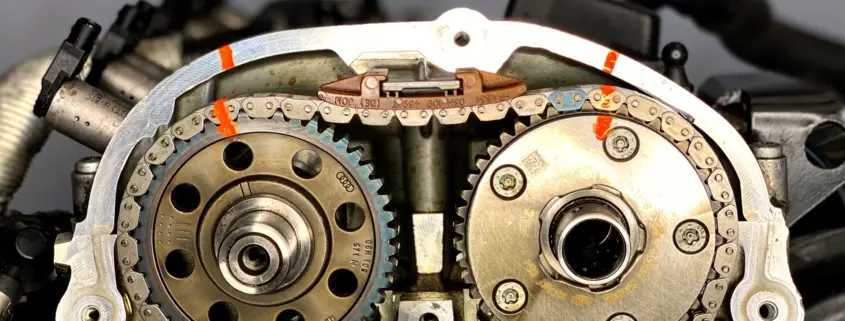
Replacing the timing chain is a crucial procedure for 2.0-liter TSI engines. Timing chain failures, as well as tensioner failures, are indeed very common on 2.0t TSI engines, whether in Volkswagen or Audi vehicles. These failures often manifest as a faulty tensioner or wear and elongation (stretch) of the chain itself. This guide explains the procedure for replacing a timing chain on a TSI engine, how to time it correctly, and how to synchronize the balance shaft.
Why the TSI Timing Chain is a Critical Point
TSI and TFSI engines are known for their performance, but one of their historical weak points remains the timing system. A failing tensioner or an overly worn chain can lead to camshaft desynchronization, ultimately causing serious engine damage. It is therefore essential to intervene at the first warning signs, such as a metallic rattling noise during a cold start.
Key Steps for Replacement and Timing
1. Preparation and Removal of the Old Chain
The first step is to set the engine to Top Dead Center (TDC) and securely lock the timing sprockets. Then, remove the various accessories and the timing cover to access the chain. The removal of the old timing kit (chain, tensioner, guides) must be done carefully.
2. Installation and Timing of the New Chain
Installing the new timing chain is a precision operation. It is imperative to scrupulously follow the timing marks for the camshafts and the crankshaft. Use the engine-specific timing tools to perfectly lock the shafts and ensure perfect synchronization.
3. Timing the Balance Shaft
On many TSI engines, a balance shaft must also be retimed after the procedure. This step is crucial to ensure proper engine balance and avoid any vibration once the engine is reassembled. A dedicated tool is usually necessary to position this shaft correctly.
Conclusion
Replacing the timing chain on a TSI engine is a complex operation that requires method, appropriate tools, and great precision. Incorrect timing can be catastrophic for the engine. If you do not have the necessary experience or tools, it is highly recommended to entrust this task to a qualified professional.