
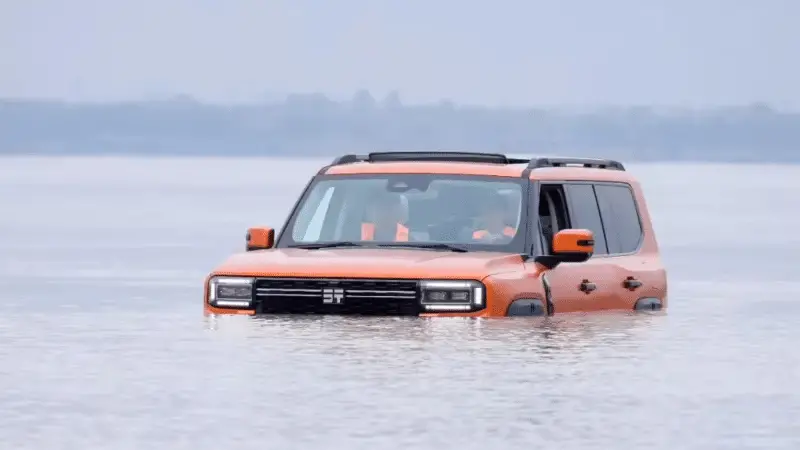
Revolutionary Amphibious Capabilities Demonstrated
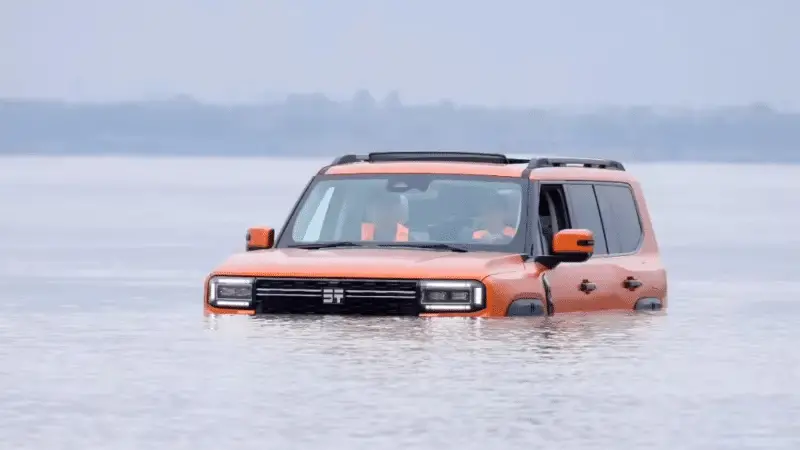
Chinese automaker Jetour has successfully demonstrated the remarkable amphibious capabilities of its Zongheng G700 plug-in hybrid SUV by completing an unprecedented crossing of the Yangtze River. This groundbreaking achievement showcases the vehicle’s ability to transition seamlessly from land to water navigation, marking a significant milestone in automotive engineering.
Advanced Water Navigation System
The Zongheng G700 employs a sophisticated water propulsion system that enables stable aquatic movement. Unlike conventional vehicles modified for water use, this SUV was designed from the ground up with amphibious functionality integrated into its core architecture. The vehicle maintains full operational capabilities while navigating waterways, with sealed compartments and specialized buoyancy systems ensuring safety during aquatic transitions.
Hybrid Powertrain Performance
Powered by an advanced plug-in hybrid system, the G700 delivers impressive performance both on roads and in water. The electric motor components have been specially engineered to function efficiently in aquatic environments, while the combustion engine provides extended range for longer journeys. This dual-environment capability makes the vehicle particularly suitable for regions with challenging terrain and frequent water obstacles.
Practical Applications and Market Position
This amphibious SUV addresses specific transportation needs in areas where water crossings are common, eliminating the dependency on bridges or ferries. The demonstration across one of China’s major rivers proves the vehicle’s reliability in real-world conditions. While amphibious vehicles have existed in niche markets for decades, the Zongheng G700 represents the first mass-market oriented SUV with genuine dual-environment capabilities from a major manufacturer.
The successful Yangtze crossing establishes new benchmarks for vehicle versatility and opens possibilities for future automotive innovations. As urban flooding becomes more frequent in many regions, such amphibious technology could become increasingly relevant for everyday transportation needs.