
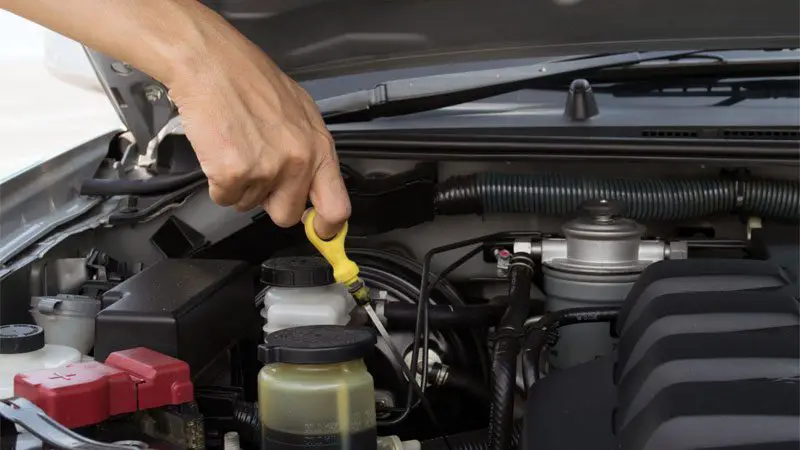
Should you check transmission fluid when it’s hot or cold?
Checking your transmission fluid is essential to prevent serious and costly damage on the road. But is it important that you check it hot or cold?
It’s important to do it right, as incorrect fluid levels can lead to transmission problems. Read on to learn the ideal time and technique for inspecting your transmission fluid.
When to Check Transmission Fluid
Check When Hot or Cold?
As a general rule, you’ll want to check the transmission fluid only when the engine is fully warmed up and idling.
When the vehicle first starts and the engine is cold, the transmission fluid is condensed and hasn’t yet begun to circulate fully through the system. Once warmed to operating temperature and idling, the fluid circulates through all components requiring lubrication and expands to a normal state that the dipstick can accurately measure.
Turning off the engine allows the fluid to drain into the pan, giving you an incomplete picture of the actual operating levels.
Why is there a Hot and Cold mark on the dipstick?
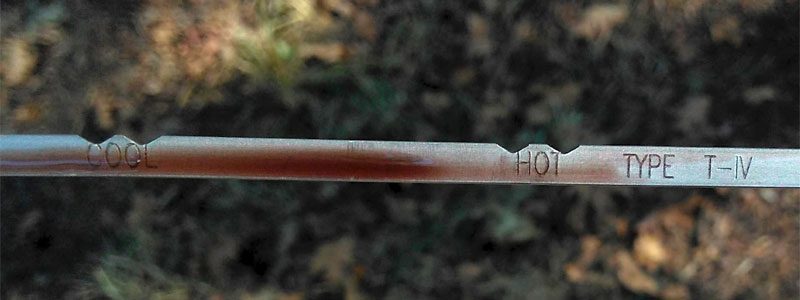
The “cold” mark on the transmission dipstick primarily serves as a factory fill line to ensure there is enough fluid from the start to prevent any damage at initial startup. It does not necessarily indicate a recommended minimum fluid level for continued operation after leaving the production line.
The dipstick’s “hot” mark instead reflects the target operating level for which the transmission was designed. So, while the cold mark provides the factory with a safety net for newly built transmissions, the hot mark is the one to pay attention to when checking your fluid.
Follow the Vehicle Manufacturer’s Guidelines
With so many different combinations of vehicles and transmissions, be sure to follow your vehicle manufacturer’s instructions exactly. Testing procedures may differ slightly between makes and models. Some specify having the vehicle running and idling in park, while others want it in neutral or perhaps after a few minutes of spirited driving.
Consult your owner’s manual for the proper gear selector setting, engine state, required temperature conditions, and any other special conditions to check before pulling that dipstick. Precise steps lead to accurate readings.
Correctly Checking Transmission Fluid Level
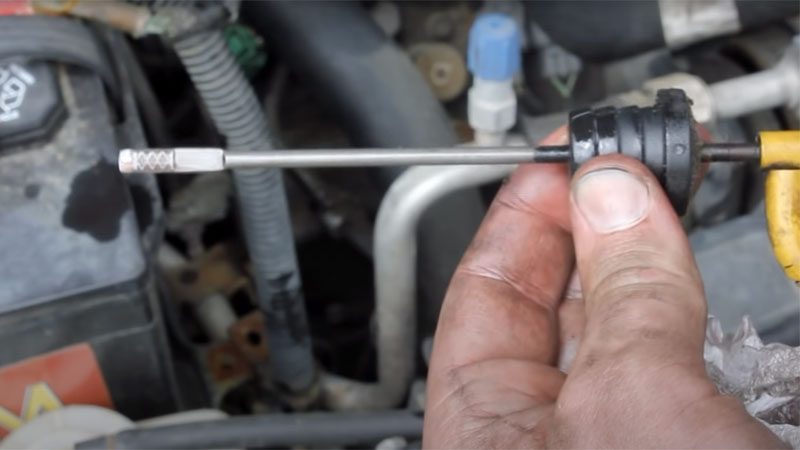
Follow these steps for the most accurate results when checking fluid levels in your transmission:
1) Warm Up the Vehicle
Run your vehicle until the engine reaches its operating temperature and the transmission is warm. Cold fluid will provide unreliable readings on the dipstick. Operating temperature ensures the fluid has expanded to the appropriate level for measurement.
It’s a good idea to cycle through all gears (from 1st to reverse) several times. This allows the fluid to flow into all internal valves and passages, thus filling the entire system. Cycling the transmission through all gears ensures everything has first reached its maximum capacity.
Some car manufacturers may even specify that you drive your vehicle as usual for a few minutes, so consult that owner’s manual.
2) Shift to Park
When parked on a level surface with the engine idling, put your automatic transmission in the park position and engage the parking brake. Keep your engine idling at all times during the process.
3) Locate the Dipstick
The location of the transmission dipstick handle can vary by vehicle make and model. Some are found near the engine oil dipstick, but others may be elsewhere under the hood. Consult your owner’s manual or perform an online search to find the transmission dipstick equipped in your vehicle.
4) Remove the Dipstick
Similar to checking your engine oil, fully remove the transmission dipstick and wipe any fluid residue from the end using a clean cloth. This prepares the marked end for an accurate fluid level reading without any leftover fluid or dirt.
5) Reinsert and Remove
Fully reinsert the dipstick into place, then remove it again. This allows you to get a true snapshot of the current operating fluid level, rather than the residual fluid left on the dipstick from your initial removal.
6) Assess Fluid Color and Level
First, check that the transmission fluid itself appears healthy – clear, red, or pink, without dark coloring or strong, strange odors. Then note where the fluid level sits.
Most transmission fluid dipsticks will have a hot (or warm) range, a shaded area, notches, or dots indicating the proper fluid level. That’s where you want to be. Again, check with your owner’s manual to ensure you are correctly interpreting the fluid level marks.
7) Adding Fluid
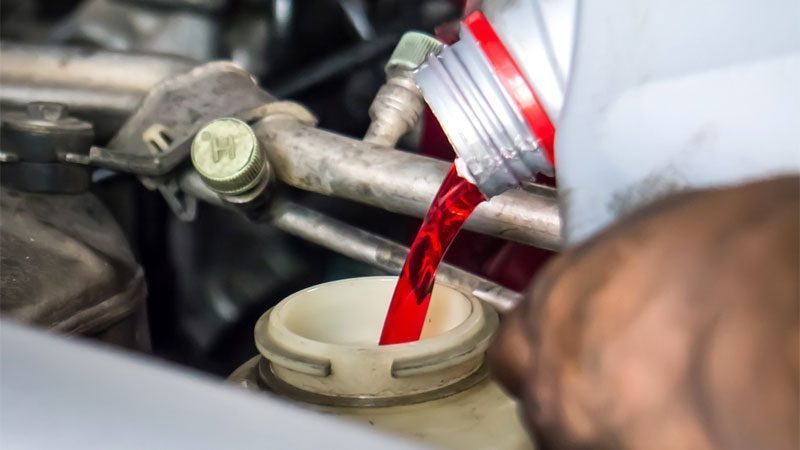
If your transmission fluid level falls below the correct level, you will need to add transmission fluid to bring it to the appropriate levels.
FAQ
Where can I find the transmission dipstick in my vehicle?
Finding the transmission dipstick in your vehicle is usually a fairly simple process, although the exact location may vary slightly by make and model. Here are some tips to locate it:
- Consult your owner’s manual. The manual will clearly state where to find the transmission dipstick. It might be labeled and placed near the engine oil dipstick, or stowed elsewhere.
- Look near the engine. In most front-wheel-drive vehicles, the transmission dipstick handle will be located towards the front of the engine compartment, near the radiator or battery. Rear-wheel-drive dipsticks are usually found closer to the firewall.
- Identify by shape or label. Most transmission dipsticks have a ring or loop on the top of the handle, whereas the engine oil dipstick is straight. Some have “TRANS” printed directly on the handle. Be sure to remove the correct one.
- Feel the texture. Some transmission dipsticks (but not all) often have grooved metal or plastic handles, as opposed to the smooth engine oil dipstick. This helps differentiate by touch.
- Follow the transmission lines. If you’re still unsure, trace the metal lines going to and from the transmission. This usually leads directly to the dipstick location. The tube will be firmly mounted nearby.
What is the difference between the transmission fluid level when checked hot versus cold?
Checking the fluid level when the engine is hot provides the most accurate measurement of how much fluid is actually reaching all internal components under normal operating conditions.
When the transmission is hot, the fluid expands and circulates more freely, essentially giving you a “full” reading that reflects the amount present once everything has reached temperature. Cold fluid tends to measure lower, being denser and contracted, and will not reveal if there is sufficient volume present to properly fill the transmission once the entire system reaches operating heat and pressure.
Ultimately, you want to mimic the actual operating state rather than just a static cold measurement.
What should I do if my car doesn’t have a transmission dipstick?
Some newer vehicles no longer have a physical dipstick for owners to check the transmission fluid level at home. Often, they use a sensor to measure fluid levels and display a warning message for low fluid. If your car doesn’t have a transmission dipstick, try these instead:
- Consult your owner’s manual. A few models without a dipstick may have another way to check the transmission fluid, such as a plug on the transmission itself. Your manual will tell you if and how this can be done.
- Look for a fill tube. Cars without a dipstick often have a fill tube with markings instead. The car must be running and warmed up to read this tube correctly.
- Rely on an auto technician. If there is no owner-accessible check method, then the fluid requires periodic inspection by a mechanic or service technician. They have the necessary tools to check the levels.
- Inspect based on intervals. With no way to personally check the fluid, rely on drain intervals based on age and mileage instead. Today, most transmissions don’t need changes more often than 60,000 to 100,000 miles.