


Car engines operate by combusting an air/fuel mixture. Spark plugs are used to provide the necessary spark for ignition. This will then move the pistons and crankshaft.
However, inefficiencies can lead to more fuel being supplied to the engine than necessary. When this happens, we say the engine is running rich.
Having a rich fuel car means you are spending a lot on fuel. Therefore, it is necessary to repair your rich running engine as soon as possible.
Causes of Engine Running Rich
- Faulty MAF Sensor
- Faulty O2 Sensor
- Faulty MAP Sensor
- Faulty Engine Coolant Temperature Sensor
- Faulty Intake Temperature Sensor
- Faulty Fuel Pressure Regulator
- Faulty Fuel Injector
This can explain many reasons why an engine runs rich, as there are so many parts in an engine that can affect the fuel mixture.
Here is a more detailed list of the most common causes when your engine is running well.
Faulty MAF Sensor
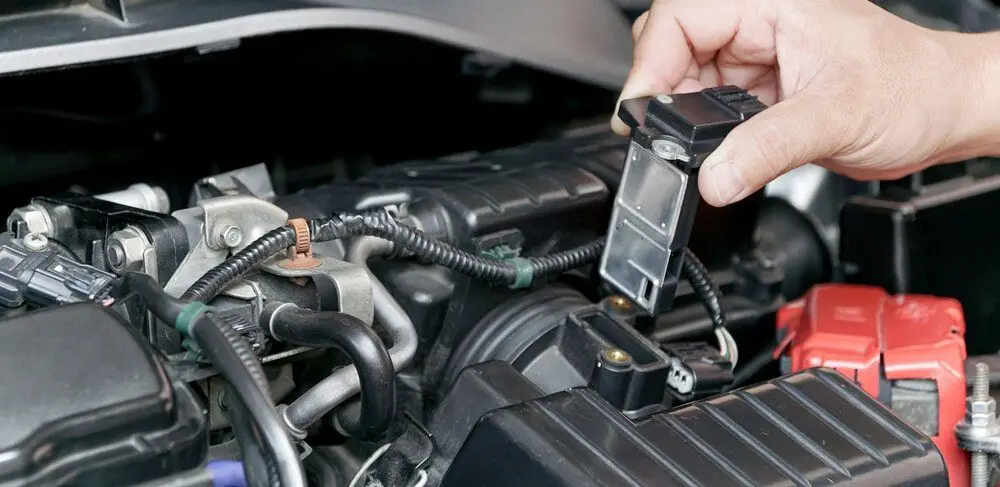
A faulty MAF sensor is the most common cause of an engine running rich.
The MAF sensor calculates the air entering the engine, then calculates the air-fuel mixture to add. If it is dirty or malfunctioning, it will cause the engine to run too rich or too lean.
If the MAF sensor is faulty, it will calculate the wrong amount of air entering the engine and add too much or not enough fuel.
Faulty O2 Sensor
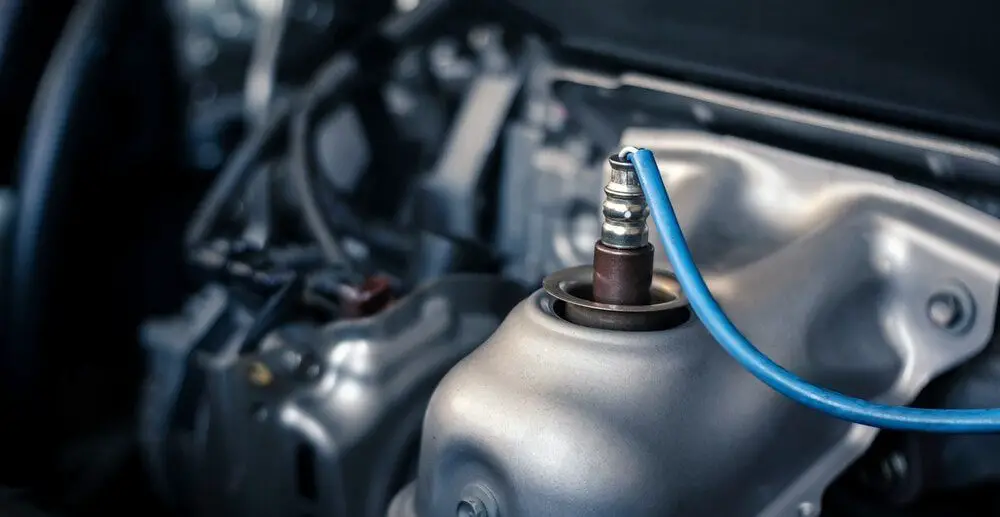
O2 sensors are located on the exhaust pipe to detect the air-fuel mixture from the previous combustion.
If the O2 sensor gets information suggesting a lean mixture, it will tell the engine control unit to add more fuel during the next combustion and vice versa.
If it is faulty and tells the engine control module to add more fuel, even if the air-fuel ratio is good, it can cause a rich fuel mixture. A faulty O2 sensor can make the engine run too rich.
Faulty MAP Sensor
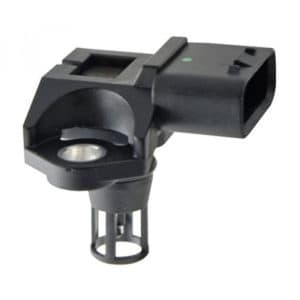
In some cars, they have a MAP sensor instead of the MAF sensor. There are also cases where you can have both a MAP and MAF sensor.
The MAP sensor calculates the air-fuel mixture based on the air pressure in the intake manifold. If you have a MAP sensor, it is absolutely worth checking this part.
Diagnosing the MAP sensor is quite easy with a diagnostic tool as you can check the pressure it displays when the engine is off, which should be the same pressure as our air pressure.
Faulty Engine Coolant Temperature Sensor

When the engine is cold, the engine needs more fuel to operate properly. It is the job of the engine coolant temperature sensor to measure the coolant temperature to identify when it needs to add extra fuel to the engine.
If the engine coolant temperature sensor is faulty, you can get a mixture that is too rich.
Faulty Intake Temperature Sensor
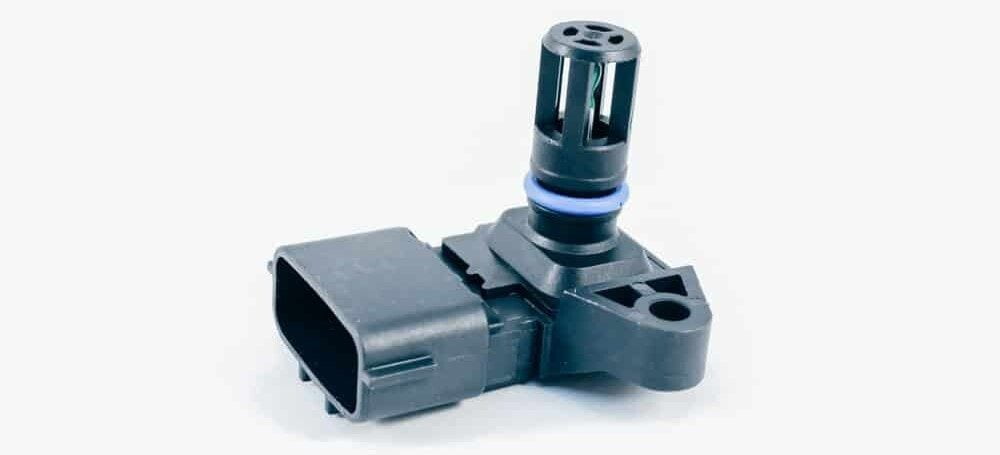
The intake temperature sensor calculates any additional fuel that needs to be added or restricted based on the temperature of the air entering the engine.
The intake temperature sensor is often installed inside the MAF sensor and cannot be replaced separately.
Faulty Fuel Pressure Regulator
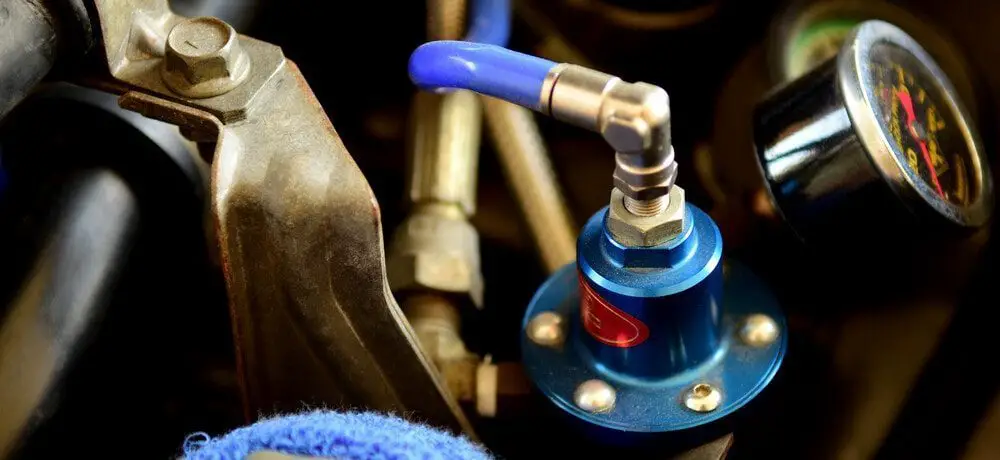
A faulty fuel pressure regulator will result in fuel pressure that is too high or too low. This can cause a mixture that is too rich.
You will also want to check the fuel pressure regulator’s vacuum hose to ensure there are no leaks around it.
Faulty Injector
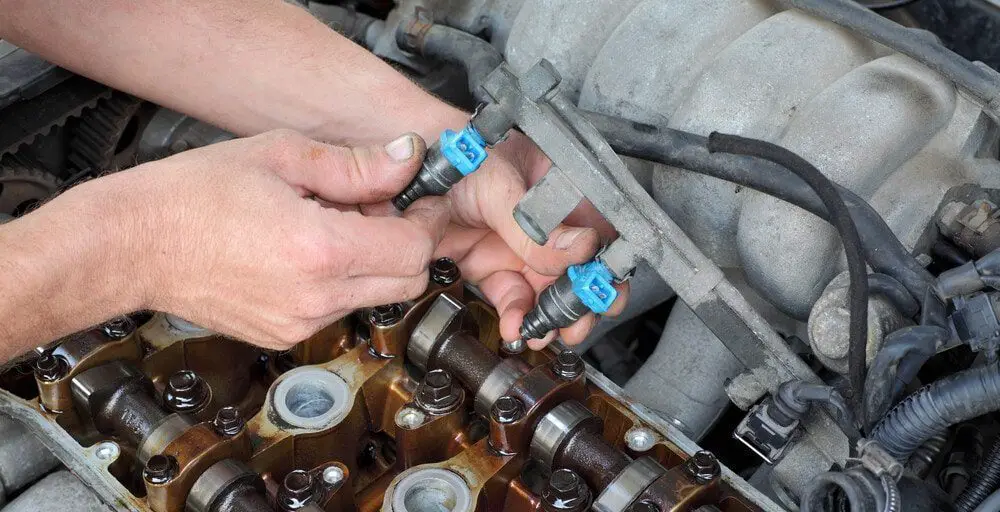
Injectors are the ones that manage the amount of fuel entering the engine. If an injector is not flowing as it should or is stuck open, it can cause a rich mixture in your engine.
7 Symptoms of an Engine Running Rich
- Check Engine Light
- Fuel Smell from Exhaust
- Constantly Refilling Your Gas Tank
- Poor Engine Performance
- Black Smoke from Exhaust
- Sooty Spark Plugs
- High Carbon Monoxide Content
If you think your engine is running with a rich mixture, you need to check a few things to confirm it.
Here is a more detailed list of the most common causes when your engine is running well.
Check Engine Light
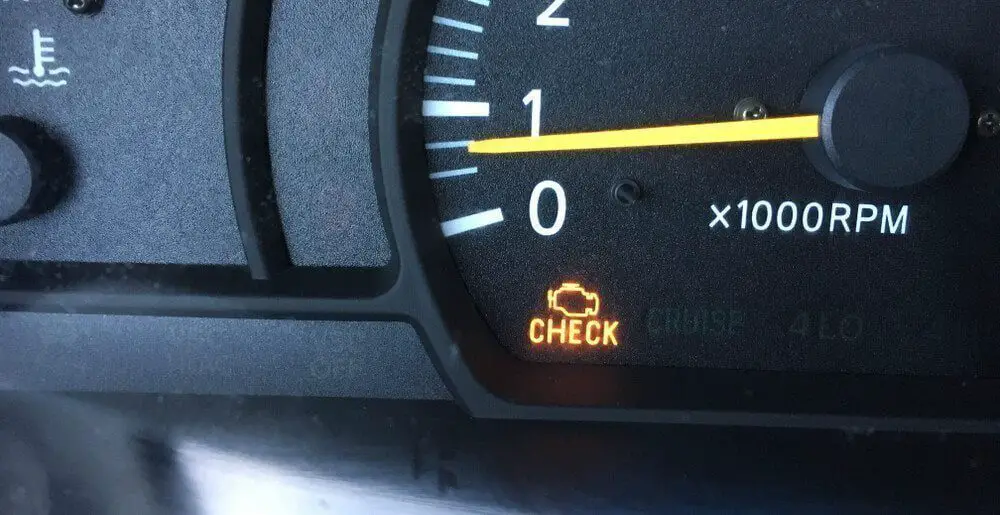
When the fuel/air ratio is high, the check engine light comes on.
The engine control module monitors all sensors, and if a sensor in your car is not working properly, it will turn on the check engine light on your dashboard.
Fuel Smell from Exhaust

If excess fuel is heading to the combustion chambers, it means some of it will not be completely ignited.
The catalytic converter has a way to remove some of this fuel, but it will find its way into the exhaust system when in excess. Unburned fuel smells like rotten eggs.
Constantly Refilling Your Gas Tank
One of the symptoms of a running engine is that you are not getting the proper fuel consumption. This is because the car does not need all the fuel supplied. However, it is normal to spend more on gas in winter or when carrying heavy loads.
Poor Engine Performance
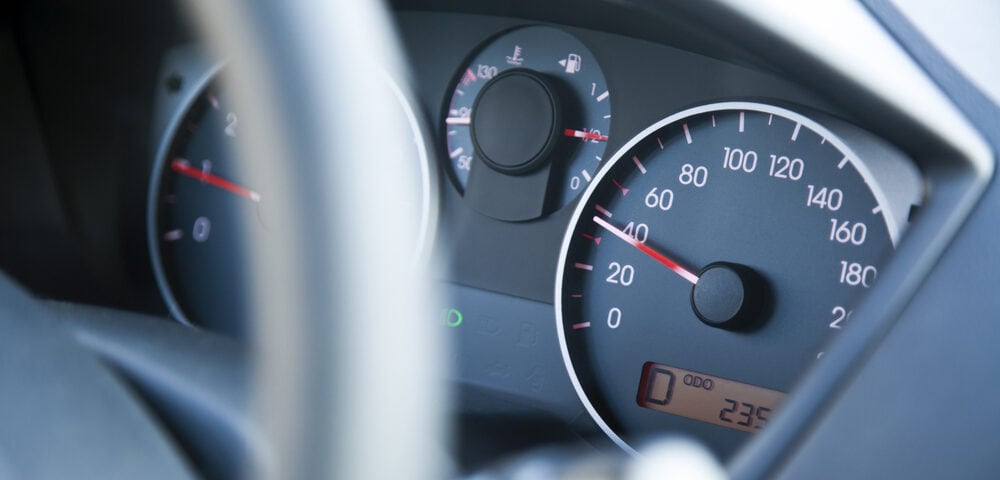
For your car’s engine performance to be normal, there must be the right amount of fuel/air mixture. The assumption is that if there is an overflow of fuel, the car will move faster. This is not the case because the excess fuel does not burn.
When you experience issues with the air/fuel ratio, the car’s performance is poor. Additionally, you will notice that whenever your car is idling, the RPMs keep moving erratically.
Black Smoke from Exhaust

When your engine is rich, it will cause poor emissions. A rich air-fuel mixture will create black smoke, which will then come out of your exhaust pipe.
If your exhaust pipe makes you feel like you have a diesel engine, but you don’t, it’s really time to check the air-fuel mixture.
High Carbon Monoxide Content
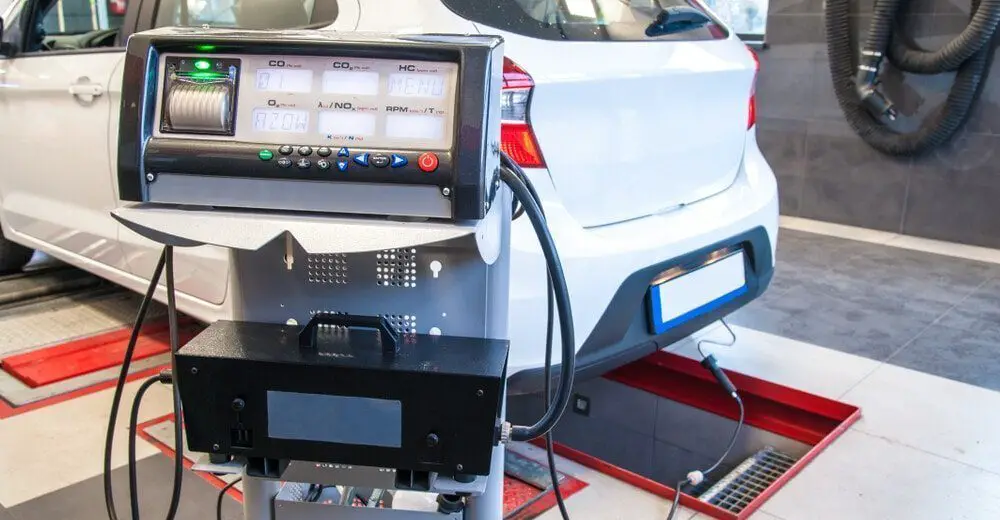
Carbon monoxide is a dangerous exhaust gas. The catalytic converter works overtime to remove any trace of carbon monoxide in the exhaust. When your car’s engine is rich, it means you are producing more gasoline.
This can be dangerous when you are in a closed, poorly ventilated room. You also risk failing state-sanctioned emissions tests.
Sooty Spark Plugs
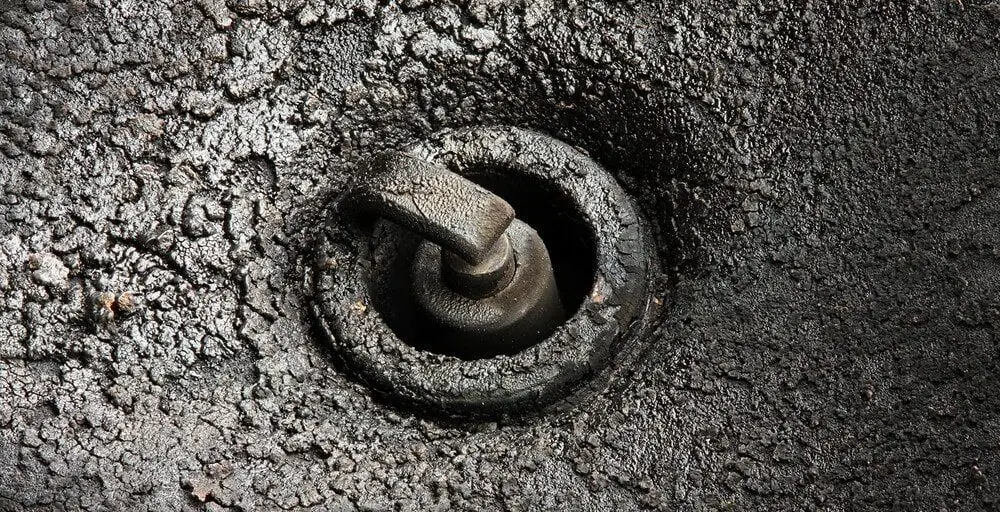
If your engine is running rich, the spark plugs accumulate black deposits at the bottom. This prevents them from working efficiently. The soot will find its way to other engine parts, causing further damage.
The unburned fuel eventually ends up in the catalytic converter, and due to the number of impurities, it will clog it. Over time, you will be forced to dismantle and replace it.
Engine Running Rich Diagnosis

Diagnosing a rich engine is really not that simple. It often requires diagnostic skills if you want to waste money on simply replacing parts.
This is how a professional would do it, and you might need additional tools to do so.
- Connect an OBD2 scanner and check the associated fault codes. If you find another fault code regarding another sensor, start your diagnosis at the sensor level.
- Check the live data values of the O2 sensor. Is it showing that it is constantly decreasing the amount of fuel? Then it’s probably not a fault with that sensor.
- If you have access to an emissions control tester or an external air-fuel meter, connect it and check the actual air-fuel meter. If it shows that the fuel mixture is lean, while the O2 sensor tells us the engine is rich and removing fuel – there is a problem with your O2 sensor and it needs to be replaced.
- Check the values of all temperature sensors like coolant and air temperature.
- Check the values of the MAF sensor or MAP sensor if you have one. Replace if faulty.
- Check the fuel pressure and ensure the pressure is not too high at idle or acceleration. Check the fuel pressure regulator or vacuum hose if it is too high.