
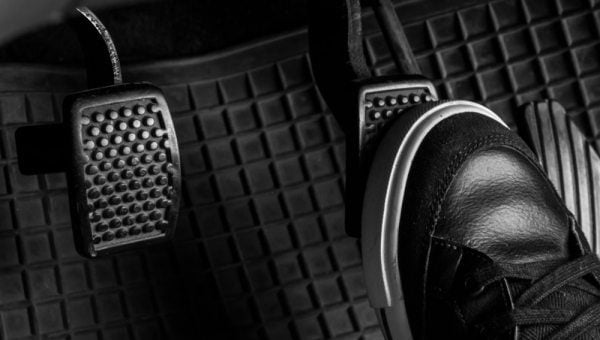

You can ignore many small problems when it comes to cars, but you should never ignore problems with the brakes.
If you notice that your brake pedal goes to the floor when the engine is running, you need to be very careful about this. This can lead to the complete disappearance of the braking function!
Therefore, it is certainly not recommended to continue driving your car if you experience something like this. But what causes it and how can you fix it? Let’s find out!
Causes of Brake Pedal Going to the Floor When Engine is Running or Starts
- Brake Fluid Leak
- Faulty Brake Master Cylinder
- Faulty Brake Booster
- Air in the Brake System
- Low Brake Fluid Level
These causes are the most common reasons why this problem can occur. Here is a more detailed list of the common causes of the brake pedal going to the floor when the engine is running or when starting the car.
Brake Fluid Leak
The most common reason this happens is that you have a brake fluid leak somewhere in the brake system. This is often due to a rusty brake line, but it can also be seal leak issues at the caliper pistons.
Brake fluid leaks are often very visible on the floor; however, if you have seen a puddle of fluid on the garage floor, it is definitely time to look for brake fluid leaks.
When you press the brake pedal with a fluid leak, the brake fluid flows out. When the brake pedal comes back up, it will suck in air through the leak instead, which will make your brake pedal very spongy.
Faulty Brake Master Cylinder
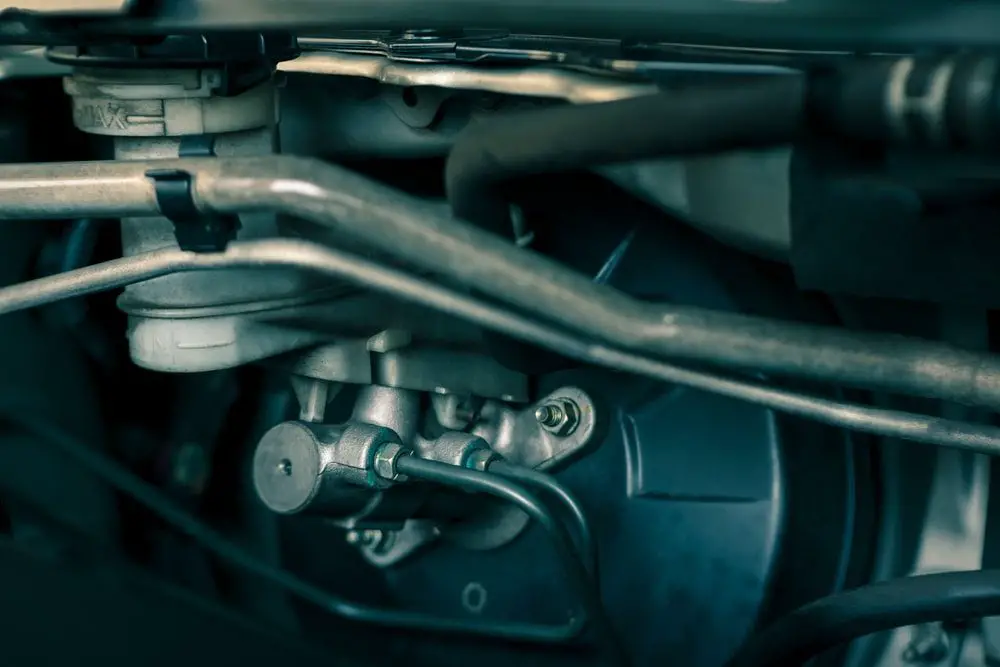
Another common reason your brake pedal goes to the floor when the engine is running is caused by a faulty brake master cylinder. The brake master cylinder is located behind the brake pedal on the other side of the engine compartment firewall.
The purpose of the brake master cylinder is to push brake fluid to the caliper pistons to reduce the vehicle’s speed.
The brake master cylinder has a seal around the push piston, and if this seal starts to leak, the brake pressure will return from the other side of the piston when you press the brake pedal.
This will cause a constant loss of pressure from your brake pedal when you press it, which will feel like a spongy or sinking brake pedal.
Faulty Brake Booster
Between the brake master cylinder and the brake pedal, you will find the brake booster. The brake booster uses a vacuum to increase braking power when you touch the brake pedal.
If you have ever driven a car without a functional brake booster, you know how much pressure it requires without it.
If your brake pedal starts to build pressure very low, but feels very stiff once it gets near the bottom, you likely have a problem with your brake booster. It is not very common for the brake booster to fail, but it does happen on some car models.
Air in the Brake System
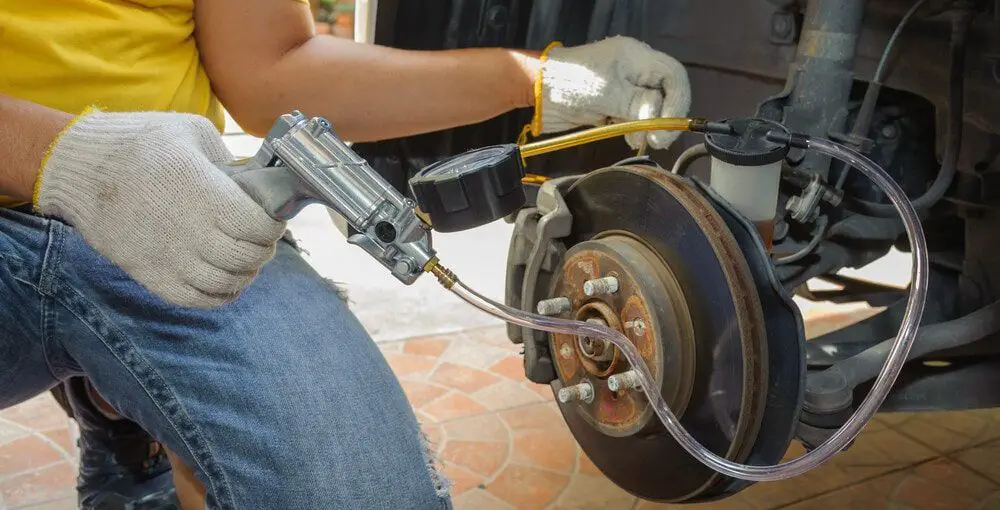
Have you or someone else recently replaced something in the car’s hydraulic brake system without performing a proper brake bleed afterwards? Then that might be your problem!
Air is compressible, unlike brake fluid. Therefore, the brake system must be completely free of air for quick pressure build-up, and not to get a spongy brake pedal.
The only way to remove air from the brake fluid system is to bleed it properly.
Low Brake Fluid Level
If you have a brake fluid level warning light on your dashboard, it is definitely time to check the brake fluid level.
If the brake fluid level is low, air can enter the brake system when you take sharp turns, for example. What happens with your brake system when you have air inside, we discussed in the previous section.
If your brake fluid was so low that air enters the system, simply refilling it would not be enough. You need to bleed the brake system again.
How Do You Fix a Brake Pedal That Goes to the Floor When the Engine is Running?
Now that you know the common reasons why your brake pedal might sink to the floor, you probably want to know how to diagnose and how to fix this problem. So let’s get started.
- Look for External Leaks: Check everywhere under your car for any sign of brake fluid leakage. Check the brake lines, hoses, and brake calipers. The most common leak comes from rusty brake lines, but can come from bad rubber seals in the caliper pistons. Replace the leaking part.
- Check Brake Fluid Level: Check the brake fluid level in the engine compartment reservoir and fill it to MAX if necessary. If the fluid level was really low, there is a risk of air in the brake system, meaning you need to bleed it.
- Bleed the Brake System: The next step is to bleed the brake system to remove all the air from it. You can find it in this video to discover the complete process of bleeding the brake system at home.
- Disconnect the Brake Booster Vacuum Hose: Disconnect the vacuum hose from the brake booster and try pressing the brake pedal again. If the problem persists, you likely have a faulty brake master cylinder.
- Check or Replace the Brake Master Cylinder: Remove and inspect the brake master cylinder for any signs of seal damage. For most brake master cylinders, you cannot buy the seal alone – so you need to replace the brake cylinder.
- Inspect or Replace the Brake Booster: The final step is to inspect and replace the brake booster if you see anything suspicious with it. However, if everything else seems fine and you are 100% sure there is no more air in the brake system, there is a high chance the brake booster is the faulty part.
FAQ About Brake Pedals
Why does my brake pedal go to the floor when I start my car?
The most common reasons your brake pedal sinks to the floor when you start your car are a brake fluid leak, a faulty brake master cylinder, or a faulty brake booster.
How do you know if the master cylinder is bad?
The easiest way to determine if the brake master cylinder is faulty is to remove the vacuum hose from the brake booster. If the pedal still sinks, it is likely due to a fluid leak, air in the system, or a faulty brake master cylinder. The only way to know for sure is to visually inspect the seal inside it.
How do I know if my brake booster or master cylinder is bad?
Disconnect the vacuum hose from the brake booster. If the problem is gone when you press very hard on your brake pedal, you likely have a faulty brake booster. If the problem persists, you likely have a bad brake master cylinder.
Why Does My Brake Pedal Go To The Floor After Bleeding?
It happens that you did not perform the procedure correctly. You must close the air bleed screws before releasing the brake pedal; otherwise, air will be sucked into the system before you close the bleed valve.