
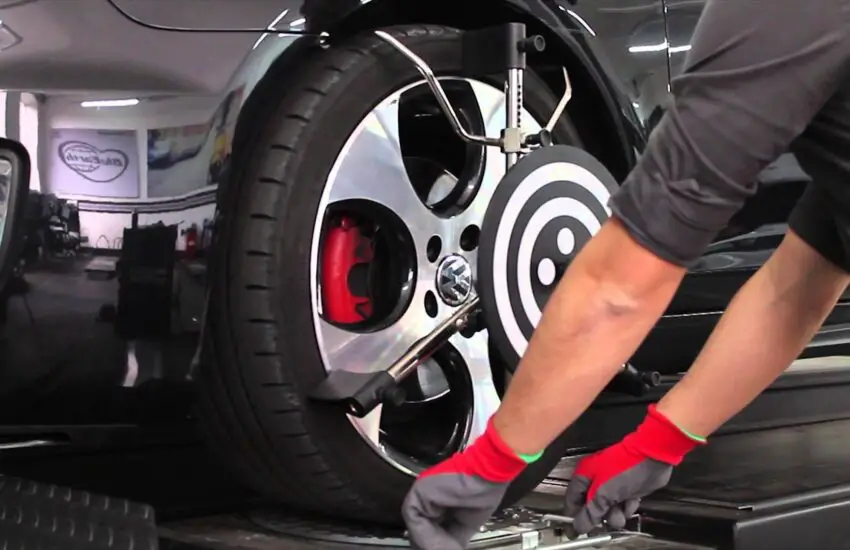
Your car’s alignment can be affected by poor roads and potholes. Driving a poorly maintained vehicle can have serious consequences. It is imperative to have your wheel alignment checked every 8,000 to 9,000 km. The first symptom of poor alignment is uneven tire wear. Proper alignment ensures excellent handling, extends tire life, and ensures the vehicle steers correctly. Additionally, it allows for significant fuel savings, as the car requires less energy to move forward.
Why is wheel alignment so important?
Precise alignment is crucial to keeping your vehicle in perfect condition. It directly influences your safety, driving comfort, and your wallet by avoiding premature and costly wear.
Signs that indicate a need for alignment
Premature and uneven tire wear
This is the most obvious sign. A tire that wears out faster on one side than the other indicates a problem with the camber or toe angle. It is recommended to have the alignment checked every 1,600 km (1,000 miles), especially if you frequently drive on rough terrain.
Steering wheel vibrations
If your steering wheel shakes or vibrates abnormally while driving, it often means the tires are not rolling straight and are pulling in opposite directions. Poor alignment can also cause the vehicle to pull to one side, making it difficult and dangerous to drive in a straight line.
Drifting off course
When you briefly release the steering wheel, the car tends to “pull” strongly to the left or right instead of staying straight. This drift is caused by improper adjustment of the camber and caster angles.
What is a full 4-wheel alignment?
A full adjustment involves precisely checking and correcting three main angles on all four wheels: camber, caster, and toe. This service also includes checking tire pressure and overall condition, as well as inspecting the suspension. Proper 4-wheel alignment improves tire durability, safety, and steering precision. A well-aligned vehicle is easier to drive and stop, thus protecting you and other road users.