
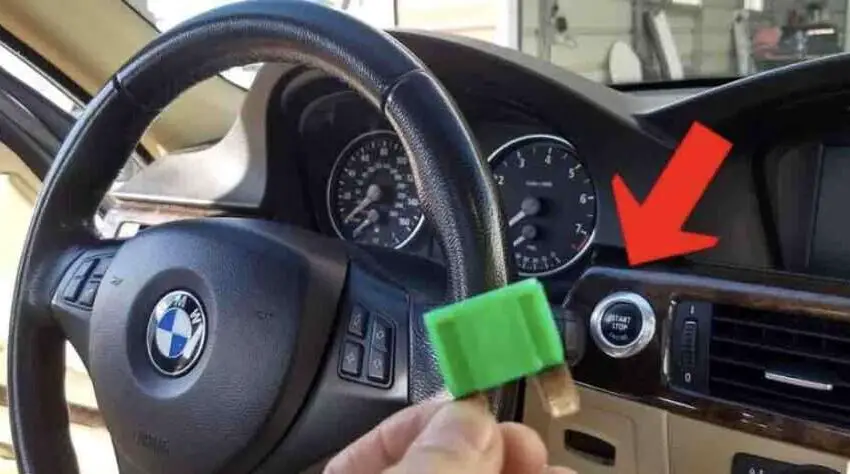
The electrical architecture is the indispensable lifeline of any vehicle. Indeed, all vehicles are essentially electronic in design. Compared to any electronic machine, the quality of its functional installations in its primary compartments, such as the body, chassis, communication protocol, and powertrain, depends solely on electrical parts like cables, sensors, relays, the battery, fuses, to name just a few.
However, the efficiency of the ignition switch is undoubtedly vital in the vehicle because it is responsible for controlling and primarily activating all your car’s electrical systems.
Thus, a malfunction or potential failure of the ignition switch would cause 95% of most electrical problems, or even all of them, in any case. Furthermore, a faulty ignition switch could also stop your engine or cause a complete breakdown while you are driving, thus putting you in a dangerous situation.
Nevertheless, this informative guide will help you with answers and solutions to these specific questions; can you start a car with a faulty ignition switch, what are the common ignition system problems, what are the symptoms of a bad ignition, and more.
Be patient; let’s get started right away!

Can You Start a Car with a Faulty Ignition Switch?
Yes, of course, you can! You would need a jumper cable to restart your vehicle since you have discovered that the ignition switch is faulty. So far, this is done effortlessly if you follow the tips below.
Here is the procedure for you!
- Open your vehicle’s hood.
- Locate the ignition coil and the battery.
- Attach the jumper wire to the positive terminal of your battery, on the positive side of the coil. This process will supply electrical power to the dashboard that would be needed to start the engine.
- Connect the starter solenoid to the battery’s positive terminal.
- Disconnect the ignition switch cable from the solenoid.
- Using a screwdriver, short-circuit the solenoid’s positive terminal to where the ignition switch connects.
Invariably, activating the solenoid will start the car. Furthermore, the steps above are also applied: how to start a car with a bad ignition switch.
What are the Common Ignition System Problems?
Ignition system problems are very annoying and could cause the craziest electrical issues in your vehicle. This device part must be constantly improved, updated, and maintained to ensure your vehicle’s safety. However, I will elaborate below on some common ignition system problems, if things go very wrong.
1. The Car Stalls While Driving
Perhaps if your vehicle stalls or shuts off when it shouldn’t, the cause is a faulty ignition system (switch). At that moment, the dashboard lights go out along with the vehicle’s engine; indeed, there is no doubt that your ignition switch is faulty.
2. Flickering or Flashing Dashboard
Suppose you observe the dashboard lights or other accessories flickering or turning on and off sporadically. You wouldn’t need a mechanic to tell you that your ignition system is terrible, particularly the ignition switch’s connection plate.
3. The Key Doesn’t Engage the Ignition
In a situation where you insert the key and turn the cylinder with the intention of getting to your destination, unfortunately for you, the ignition doesn’t engage. Perhaps you have charged the battery; then it’s the ignition that is at fault.
4. The Car Doesn’t Start
Placing the key in the ignition should make it turn as if it’s always on. So far, it signals the starter to turn the ignition switch.
Ultimately, if the electrical part connecting the circuit when you turned the key is struggling, there is no signal to the starter because it is faulty. The lack of connection at the starter and ignition will not start your vehicle.
Can a Bad Ignition Switch Cause Electrical Problems?
Of course, yes! A bad ignition switch causes electrical problems such as: shortening the vehicle battery’s lifespan (or even completely draining the battery), which could lead to the malfunction of other electrical components like the radio and windshield wipers.
Similarly, a bad ignition switch also causes stumbling situations even at low speed, the engine mastering the brakes because it would cause your vehicle to jerk during hard acceleration, and many others.
How Do I Know If I Need a New Ignition Switch?
As a driver, you must be very sensitive to reacting to changes that have occurred in your vehicle when seeking to know the cause and the solution you would propose. That said, if your car starts having difficulty starting or doesn’t start, a decrease in power at high speed, poor engine performance, reduced acceleration, increased fuel consumption, complex freewheeling to stop, etc. Ultimately, you observe these telltale signs that your ignition switch is about to go bad.
Always have your vehicle inspected to avoid tampering with your vehicle’s electronic components, as they are expensive.
What are the Symptoms of a Bad Ignition?
Invariably, the problems of a bad ignition are apparent and can range from: Flickering interior lights, the vehicle starting and stalling suddenly, the engine not starting, a silent starter, a complex situation turning the key, the key stuck in the lock hole, and much more. Nevertheless, I have explored these symptoms in this same guide. Be patient to get all the necessary information.
What Happens When Your Electronic Ignition Fails?
However, the failure of an electronic ignition would be anything but something you might prefer. But in case of a problem, the electrical systems and their components will also fail since the electronic ignition switch is the main activator of all other electrical compartments, such as the ECU, ignition coil, regulation and operation of the spark plugs, and its correct firing. So far, if things go wrong, your vehicle’s engine will stop completely and other problems could also arise.
Can a Faulty Ignition Switch Drain Your Battery?
Yes, it can drain your battery! A faulty ignition switch can drain your vehicle’s battery if that vehicle is not in use. Similarly, when your car is not running, idle electrical systems such as temperature gauges, throttle markers, and computer-controlled airflow fans (ECM) work hard to maintain as low a voltage as possible for these sensitive devices.
To the extent that the alternator keeps all electrical devices charged even when you don’t need them. Thus, this constant task consumes more than 10% even when you are not driving, as idle power consumption uses higher levels than operating systems.
How Do I Test My Ignition Switch?
In today’s automotive world, diagnosing or testing electrical components is never as complex as it was over 30 years ago. Therefore, you would test your ignition switch using the multimeter. All thanks to technological progress. Discover the tips for using the multimeter below.
- Put the ignition in the off position.
- Attach the multimeter’s positive cable to the negative power wire of an unpainted vehicle part.
- Start the vehicle and monitor the reading on the multimeter precisely.
- If the reading is below 90%, your ignition switch is bad, but if the opposite is the case, your ignition switch is healthy and functional.
Simple, right?
Conclusion
To summarize this article, the ignition switch, the most functional electrical part of your vehicle, must always be checked to be in good condition for the effective and efficient starting of your car. However, it causes almost all electrical problems in vehicles in our contemporary era when it becomes faulty.
It is possible that ignition switch problems stem from factors such as broken springs, worn ignition switch contacts, and temperature issues, which could prevent you, as the driver or vehicle owner, from even getting your car out of the garage or in a dangerous spot.
However, you can get out of this annoying situation by effectively studying and digesting the work above. Ensure to perform regular maintenance and diagnostics of suspected electrical components when seeking the help of a professional mechanic or your owner’s manual.