
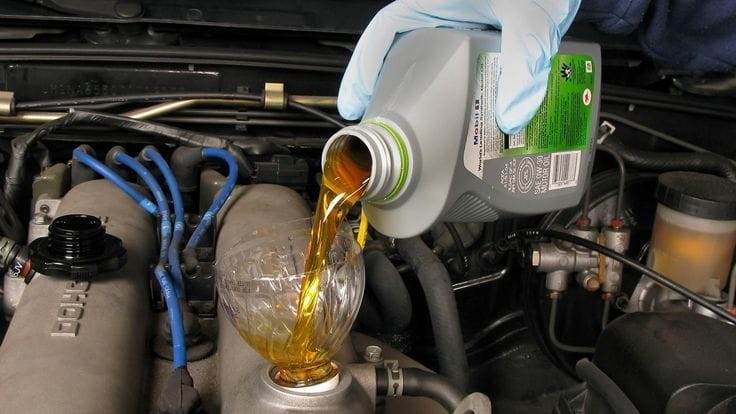
The last time you checked the transmission fluid, you noticed that there was a small bubble forming on the fluid and that it would be difficult to read the dipstick exactly. Although they may seem harmless, they have an impact on the fluid’s efficiency.
If more bubbles appear on the fluid, it’s a sign telling you that there is a problem with the car’s transmission. Whatever their origin, bubbles in the transmission fluid are a worrying problem that requires special attention.
What Causes Air Bubbles in Transmission Fluid?
We are sure that every driver knows how transmission fluid works in your car. This fluid is a lubricant that lubricates, reduces friction, prevents rust, etc., to help the gears inside the transmission operate smoothly.
Furthermore, transmission fluid also has the role of cooling the transmission components, keeping them at the permitted temperature. Especially for cars with automatic transmission, the transmission fluid is also involved in the operation of the hydraulic clutch. Therefore, ensuring the quality of the transmission fluid is key to maintaining your transmission and vehicle in good condition.
To do this, drivers must regularly check the transmission fluid for abnormal conditions. And air bubbles in the transmission fluid are one of the phenomena we want to mention in this article. What causes these bubbles and how does it affect the quality of the transmission fluid? Continue reading:
Overfilling the Transmission with Fluid
Everyone knows that transmission fluid has a great influence on the engine’s lifespan and the vehicle’s performance. Therefore, many drivers often pour a little extra when changing the fluid because everyone thinks that “too much is better than not enough.” However, too much of anything is not good. When overfilling, exceeding the level specified in the manual, the residual fluid has no room to circulate.
Thus, when the car’s engine runs, the gears turn, and the excess transmission fluid will be mixed with air. And foam appears. As you probably already know, foamy fluid cannot do a good job of lubricating the machine parts. This situation lasts a long time, leading to overheating. Even gradually damaging the parts of your car’s transmission and engine.

Fluid Level Too Low
The phenomenon of low transmission fluid is that the amount of oil is below the specified level or the fluid has started to deteriorate. At that moment, the parts inside the car’s transmission box are quickly worn and damaged, especially the seals and gaskets. This makes the car’s transmission almost impossible to operate at full capacity, causing damage to the vehicle, and even a risk of fire and explosion due to an oil leak.
Car seals are mainly made of rubber; they are both subjected to high impact forces and high temperature changes, so they are quickly worn, cracked, broken, torn… when your transmission doesn’t have enough fluid. This allows external factors: dust and air to infiltrate the transmission, which contaminates your fluid and creates air foam. In case of a severe seal leak, the car will lock up, slip, and be damaged. Therefore, car owners must pay attention to checking the rubber seals and should replace new seals when the vehicle has been driven for 10,000 km.
The Filter is Clogged
As its name suggests, a transmission filter is a component that helps remove impurities from the transmission fluid. The transmission fluid becomes bubbly due to a damaged transmission filter. It is possible that the filter is clogged or the filter is not installed correctly. This might be the reason you are sucking air into your transmission.
Mixing Transmission Fluid with Other Additives
During maintenance or fluid change, other additives such as chlorine, soda, or borax may be mixed with the ATF. When mixed with these compounds, they can create a new fluid totally unsuitable for your engine. And that’s what causes bubbles in the transmission fluid. Furthermore, using transmission fluid that is not according to the manufacturer’s recommendations can also lead to foam formation and more serious consequences that can damage your transmission. Using the wrong transmission fluid can affect the performance and lifespan of the transmission. Many car manufacturers already have their own fluid for their models because differences in viscosity and heat resistance can be factors that can distort the operation of the gearbox.
Transmission Pump Failure
The pump is an important part of your car’s transmission. The main responsibility of this component is to circulate the transmission fluid throughout the gearbox system and maintain the proper pressure. When the PT shows signs of damage, it will cause internal contamination of the transmission fluid by allowing air to enter the transmission system.
How Do Air Bubbles Affect the Transmission Fluid in the Car?
Many drivers think that bubbles in the transmission fluid are a simple problem and easy to ignore. However, the consequence can be very serious; it will damage your gearbox and can cost you thousands of euros to replace the entire system:
When air bubbles appear and accumulate in your transmission fluid, the gearbox cannot do the job of transferring heat easily, and the heat from its moving components is concentrated in the areas where friction occurs. When this phenomenon combines with the oxygen from the air, it can ignite the fluid. In this situation, drivers can smell a strange odor due to burnt fluid, and if you check the transmission fluid, you will see it turning a brown color. Replacing all the fluid is an unavoidable thing.
This can cause aeration of the transmission fluid, or you can call it “aeration.” Aeration is done by bubbles in your transmission lines and integrating into the fluid. Aerated fluid can cause many problems in a hydraulic fluid and lubrication system. These bubbles will move throughout the gearbox system and hinder the fluid’s efficiency, which will give the components enough air to cause damage and friction.
How to Remove and Prevent Bubbles in Transmission Fluid?
If your transmission fluid starts to form small bubbles, you can follow these methods to get rid of this problem:
Get Rid of the Old Fluid
When you are not careful and let other additives seep into the transmission fluid or use the wrong type of fluid, causing air bubbles, the best remedy is to replace all the fluid.
- First, you need to check the color to know whether the fluid needs to be changed or not. If your car’s fluid is red or pink or light brown, it can still be used. If it is dark brown, milky brown, or has an unpleasant/burnt smell, the fluid must be changed.
- Preheat the engine before flushing the fluid. Draining the fluid in an automatic transmission is more complicated than in a diesel, so you need to flush the fluid at the bottom of the pan and also in the torque converter.
- Add new transmission fluid recommended by the manufacturers.
The way to change car transmission fluid in each vehicle is different, so you must pay attention to know how your car should be changed. For some vehicles, it is necessary to completely change the fluid, but in some other types, only the lost fluid needs to be added and not replaced.
Check the Fluid Level
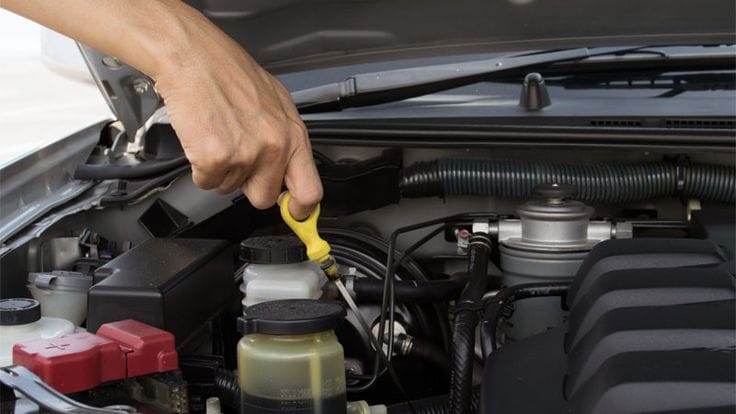
Inspect the transmission fluid to know if the fluid level is too high or too low.
- In this case, if you check that there is too much fluid in the reservoir, you can remedy it by extracting the surplus fluid. There are two ways to help you perform this process: the first is to drain it from the bottom and the second is to suck it out from the top. You can easily drain the fluid by unscrewing the drain plug. The advantage of this method is that it doesn’t cost you too much money to do it. But it will take a lot of time to prepare, and you don’t know exactly how much fluid you are draining. To limit these disadvantages, the second method will help you. Using a fluid transfer pump makes it much easier to remove the excess fluid. You can also use a temporary pump made of a large syringe and a rubber tube. Using these 2 methods can help you reach your ideal transmission fluid level.
- Unlike overfilling the fluid, you can easily fix the problem when the transmission fluid is low by adding more fluid until it reaches the proper level. On your car’s transmission, there are many details that are subject to friction as much as the engine. Transmission fluid is an indispensable catalyst, helping to lubricate, cool, and protect the internal components for stable operation. If there is a shortage of transmission fluid, the car will run very poorly and even suffer significant damage as well as many possible dangerous problems. You can pour more fluid by removing the dipstick, placing a funnel, and adding fluid to the reservoir. Remember to note the level to ensure the transmission fluid is full (but not too much).
Inspect the Seals, Gaskets, and Filters
Seals, gaskets, and filters are the main parts and play an important role in your car’s transmission. When you detect something happening to these components. You must replace them as soon as possible. Or you can take your car to the mechanic to have it checked and repaired. Make sure the filter and seals are securely fixed and in good condition.
In some situations, when your seal is damaged or broken, you can use the additive: head gasket sealant to quickly repair leaks on the burst head gasket. However, when using this additive, you must follow and check the usage instructions for this product. When poured into the vehicle, it can react with heat by leaving powder deposits that accumulate over time.
Final Thoughts
Maintaining the transmission fluid at the proper level and ensuring the quality of this fluid not only helps the car run better and more powerfully but also increases the lifespan of your gearbox. And bubbles in the transmission fluid are a growing concern, which we think all drivers should check while driving because it can directly affect the fluid’s efficiency.
In the article, we shared with you the cause and a few methods to help you solve this problem. With this guide, we hope you will have a deeper knowledge to know how to fix it when you encounter this situation.