
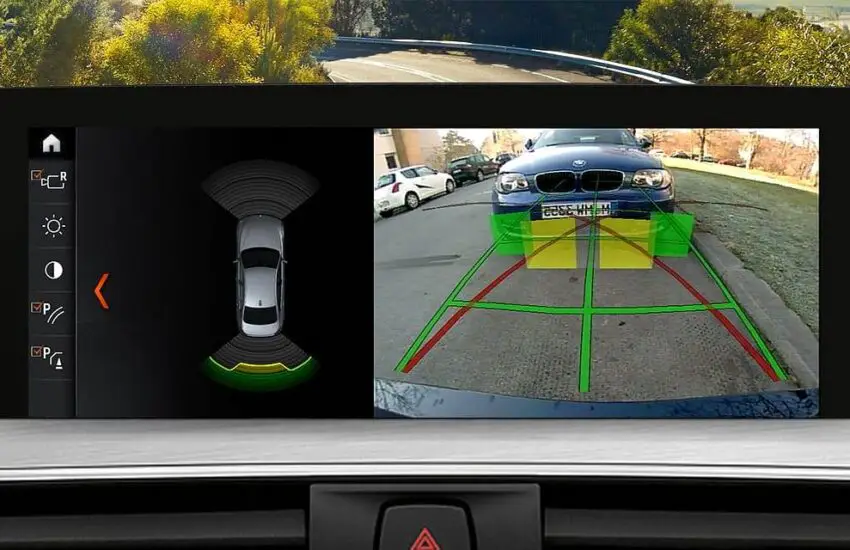
The automotive industry has come a long way. Not too long ago, the main safety features of a car only included 3-point seat belts, airbags, traction control, and anti-lock brakes. Today, there are so many cutting-edge technologies designed to keep you as safe as possible on the road that not all car owners know everything that comes with their vehicle.
This article on car reviews will explain the most useful and sophisticated safety features you should consider before buying a car, depending on the type of driver you are. That said, remember that a fully attentive driver beats even the most advanced technologies. So, put away your phone and never answer a call or text while driving.
Parking Assist or Parking Guidance System
Even experienced drivers dare not lose their concentration when attempting the challenging quest of parallel parking. If you don’t give it 100% of your attention, you will hit nearby cars or bump the curb. Manufacturers know this well and have developed another super convenient technology to make street parking less nightmarish: parking assist.
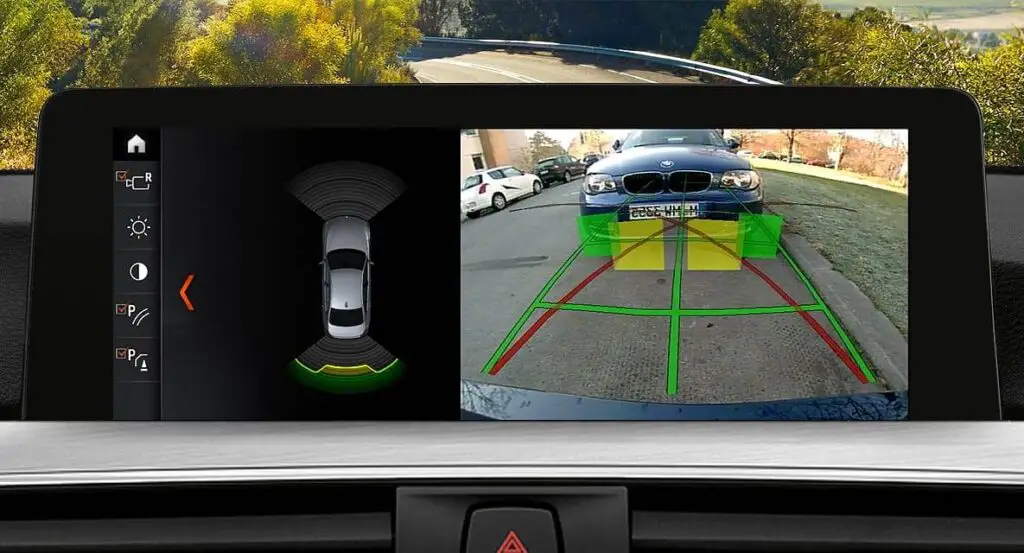
This feature also goes by different names, including parking guidance system, parking aid, parking assistance, and active parking assist. Parking assist is an automated function that uses computer processors linked to multiple sensors, including ultrasonic sensors, as well as camera-based solutions and other technologies that might be too high-tech to explain here, to steer the car into a tight parking spot with minimal assistance from the driver. Yes, you read that right. Like, at the push of a button. All you have to do is watch. This technology is useful for both reverse parking and parallel parking.
In short, the processor uses the many special sensors to determine the steering angle and displays this information on the touch screen. When the vehicle is put into reverse, the rearview camera is activated so the driver can see behind, and the parking assist function is engaged.
As for parallel parking, when the driver shifts into reverse and selects the parallel parking button, the parking spot will appear on the screen with a grid of lines and several adjustment arrows. Simply adjust on the screen, and once the ideal alignment is set, just press the OK button, release the steering wheel, and press the brake pedal. As the car reverses into the designated space, slowly release the brake.
Blind Spot Monitoring
While there are car features nowadays that are borderline unnecessary, blind spot monitoring can be considered a must-have. Particularly useful when turning, a visual or audible warning alerts you when a vehicle is in your blind spot. This will make turning and lane changes much easier.
Safe Exit Assist
This safety feature, as seen in the recently introduced Hyundai Santa Fe SUV, is intended for families with young children. The safe exit assist is an extension of the blind spot monitoring system. It uses sensors and cameras to detect when vehicles and moving objects in general are approaching from behind and temporarily prevents children from opening the rear doors. It is gaining popularity among parents of young children.
360-Degree Camera
You might know that all vehicles sold in the U.S. market are required by law to have backup cameras. They are used for entering and exiting parking spots, as they act as an extra pair of eyes that can look into the driver’s blind spots. We are in 2021, and automakers have upped the game with 360-degree camera systems offering superior visibility.
This technology can go by many names given by different manufacturers, such as bird’s eye view, multi-angle view, surround view, and surround vision. The system essentially uses multiple cameras, which are displayed on a single dashboard screen, allowing the driver to have a 360-degree overview of their surroundings.
You might think your backup camera is adequate, but if you have to navigate crowded parking lots daily, this advanced camera system will make your life much easier. Another nightmare for every driver, namely parallel parking, will also become much more manageable.
Forward Collision Warning (FCW)
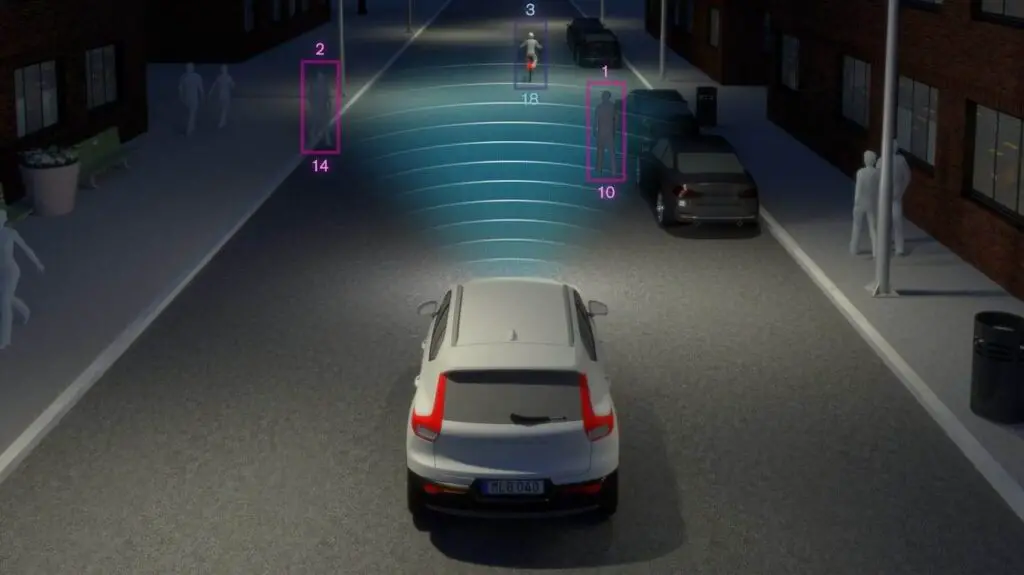
Since we’ve already talked about blind spot monitoring, it’s natural to follow up with forward collision warning. As the name suggests, this technology is designed to alert drivers if they are too close to the car in front of them and any other potential forward impact hazard.
It uses a combination of cameras, radar, and laser to detect obstacles ahead of you, their speed, trajectory, and the distance between them and your vehicle. Taking all this information as input, coupled with your own vehicle’s speed. If the distance with a preceding vehicle decreases too rapidly, it will alert the driver with an audible or visual signal.
Besides collisions during turns, rear-end collisions with a vehicle ahead of you are a very common type of car accident (think of how many times you’ve spotted front and rear damage on cars in the parking lot), and they can happen very quickly partly due to how fast they can occur. You just need to let your mind wander for a few seconds, and before you even realize it, the vehicle ahead stops or slows down, and you would brake too late.
Pedestrian Detection
This technology is like a hybrid between older forward collision warning and automatic emergency braking systems. A pedestrian detection system, as the name implies, is specifically designed to detect pedestrians and cyclists using multiple radar sensors and cameras.
The system can actively monitor the distance and direction of any pedestrian or cyclist heading towards the vehicle. If necessary, it will alert the driver and automatically apply the brakes to avoid an impact.
Anti-lock Braking System (ABS)
Sudden braking can cause uncontrolled wheel skidding, which will cause the driver to lose control of the vehicle. As the name suggests, an anti-lock braking system is an automated safety feature that keeps a car’s wheels rotating instead of locking up, thus preventing uncontrolled skids and allowing you to maintain control during an emergency stop.
Automatic Emergency Braking (AEB)
Certainly, there are times when you need to brake suddenly to avoid a collision with a passing pedestrian, a wild deer, or a broken-down vehicle on the road. However, hazards can arise so quickly, and you might not react in time. For emergency situations like this, or a deer on the roadway, automatic emergency braking (AEB) is designed to help stop your vehicle safely, or at least minimize the severity of the accident.
When a potential forward collision hazard is detected by the multiple sensors and cameras, an AEB system automatically applies the brakes. This is fully automatic, to make up for any delay in human reaction time.
As mentioned above, frontal collision is among the most common types of car accidents. Aware of the importance of the AEB system, 20 major automakers have committed to making the system mandatory by 2022. The U.S. Insurance Institute for Highway Safety (IIHS) estimates that these systems will reduce 28,000 cases of frontal collision per year by 2025.
Lane Keeping Assist
You may have also heard of the term “lane departure warning,” which should not be confused with “lane keeping assist.” The lane departure warning function was introduced earlier, so it is now more common and standard. That said, lane keeping assist has been widely used nowadays for its usefulness, so it is now almost as popular.
Lane departure warning systems were designed to prevent distracted or tired drivers from unintentionally leaving their lane, which happens more than you think. When the car leaves its lane, there will be audible and/or visual alerts on the car’s mirrors to warn the driver.
However, if you change lanes intentionally, these alerts can be annoying. This is how lane keeping assist is more advanced. The visual and/or audible signals only activate if the vehicle crosses into another lane without the driver turning on the turn signal. So, you are only warned if you are crossing lanes due to distraction or when you forgot to turn on your blinker when changing lanes, which is another common driving mistake.
The latest lane keeping assist systems offer more safety assurance: they even automatically correct the car’s steering to gently bring the car back towards the center of the lane it is in.
Electronic Stability Control
There are several instances where you can lose control of your vehicle, such as a sudden swerve to avoid a head-on collision or when you underestimated the sharpness of a curve. In extreme maneuvering situations, which are very common, the electronic stability control (ESC) system can be a real lifesaver. Also called electronic stability program (ESP) or dynamic stability control (DSC), it is a computerized system designed to maintain a car’s stability.
ESC is beneficial in many ways. In case of sudden and extreme steering, it can automatically engage the brakes to prevent the vehicle from going off the road or steering into the wrong lane. Additionally, in case of loss of traction, it can detect difficult driving conditions and help the vehicle regain stability using various measures, including reducing engine power to slow the car down safely.
Adaptive Cruise Control
Traditional cruise control systems are a convenient feature for maintaining a constant speed on the highway. They essentially take over the car’s accelerator to maintain a constant speed set by the driver. However, they can be cumbersome to use off the highway, i.e., in traffic jams when every vehicle is not moving at the same pace or at a somewhat constant speed.
Manufacturers have pushed conventional cruise control a bit further to make it “adaptive” to the actual speed of surrounding traffic at a given moment. Adaptive cruise control (ACC) systems use a set of built-in sensors to detect the distance between your vehicle and the one ahead, then maintain a safe gap by automatically accelerating or braking if necessary.
When the car ahead slows down, your car also slows down, but without you having to adjust anything. In the event that the car ahead brakes, many ACC systems even bring your car to a complete stop without you pressing the brake pedals. This means extra help in avoiding front collisions and much less stress in frustrating traffic jams.
All-Wheel Steering
It should already be known that the rear wheels do not always turn in the same direction as the front wheels, that is, before the invention of four-wheel steering or all-wheel steering systems. This system allows all four wheels to turn in the same direction, thus improving steering response time, overall maneuverability, and vehicle stability at higher speeds.
All-wheel steering technology is a particularly useful feature in emergency situations when it’s easy to lose control of your vehicle, such as when a pedestrian appears unexpectedly, or turning on wet or icy roads, driving on rough terrain, being stuck in a snowy or icy area while driving.
Not just in emergencies, but you will also easily regain stability when hitting a pothole or can drive in strong winds with minimal sway. Another advantage of this technology that many drivers are unaware of is when you need to change lanes quickly on the highway while using cruise control. All-wheel steering allows for a smooth lane change with minimal steering wheel rotation and minimal acceleration while maintaining your speed.
Another benefit of an advanced four-wheel steering system is improved braking, and a representative example is the Acura RLX sedan equipped with a precision all-wheel steering system, which controls the wheels to point inward for a sharp and stable stop.
Differential
When a vehicle turns, the outer wheels need to spin faster than the inner wheels to cover more ground in the same time. Therefore, all cars must have two crucial components: the differential and the drive shaft. They allow the four wheels to rotate at different speeds by distributing different amounts of engine torque to each wheel.
The front differential is located between the two front wheels and serves to distribute engine power to the front wheels, while the rear differential is located between the two rear wheels and serves to distribute engine power to the rear wheels. Each differential actually consists of a set of gears to do the job.
The front differential is directly connected to the engine, since the engine is located at the front of the car. Meanwhile, since the engine is far from the rear wheels, the drive shaft is needed to connect the engine to the rear differential and transfer engine power to the rear differential. In general, a drive shaft is a mechanical part used to connect other components of the system that cannot be connected directly due to distance or other reasons.
Limited Slip Differential
The limited slip differential is an upgrade of the conventional differential system aimed at helping the car quickly regain stability in wet and slippery conditions. It does this by reducing the engine power sent to the wheel losing traction while increasing the power sent to the other wheels with good traction.
In other words, it redistributes torque from the wheel that is spinning or lifting off the ground to the other wheels. Meanwhile, with standard differentials, if one wheel spins or lifts off the ground, it will spin while the wheels in contact with the ground will remain stationary. More control and stability also means less tire wear.
If you want to check if your car has this handy feature, lift it and spin one of the rear wheels. If the other wheels spin in the same direction, then your car indeed has a limited slip differential system.
Adaptive Headlights
Driving at night is something every driver wants to avoid. Limited visibility is an added headache on winding roads. This is where the adaptive headlights feature comes into play. Standard headlights always point in one direction, so when you turn, the headlights illuminate the side of the road. Meanwhile, with advanced adaptive headlights, you will actually see where you are heading.
Adaptive headlights use sensors to measure the driver’s steering inputs and then adjust the angle of the headlights relative to the road ahead accordingly, so the driver can have a better view of where they are going.
OBDII
Every modern vehicle has this industry-standard port. It is designed to provide access to the Engine Control Unit (ECU) data for onboard diagnostics. You can plug a diagnostic tool into the OBD II port to get a readout of your car’s status. This port is used by many application manufacturers for car diagnostic and performance review apps.
OBD II is very convenient and widely used, for example, when a driver notices a problem with their vehicle and wants to understand what’s wrong before taking the car to the mechanic.
All modern vehicles are equipped with this port. Specifically, all cars and light trucks manufactured in the United States after January 1, 1996, were required by law to have OBD II. It has also become a standard feature for many major automakers. If you’re unsure, look for a sticker or plate under the hood that says “OBD II Certified” or “OBD II compliant.”
Facial Recognition Software
2021 wouldn’t be 2021 without facial, fingerprint, and voice biometrics. You may have heard of the new 2021 Cadillac XT4 designed for the Chinese market, which comes with a host of high-tech features, including a new facial recognition system, called Face ID, as well as fingerprints and voice for access, ignition, and control.
If a Cadillac is too far out of your reach