
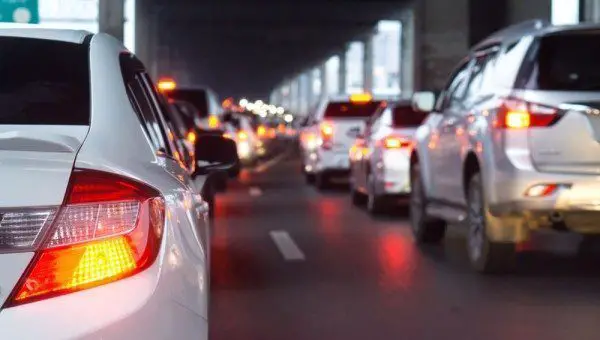

Tail lights are necessary for night driving. They are in place so that other drivers can spot you from behind and so that they can brake at a safe distance from you if you stop.
Driving at night without brake lights or tail lights can therefore be extremely dangerous. The problem is that you often cannot tell if your tail lights and brake lights are faulty.
Therefore, it is necessary for your tail lights and brake lights to work. But sometimes, there are occasions when one of them works and the other does not. Why is that?
We will discover below that there are several reasons why this can happen.
Reasons Why Your Brake Lights Are Not Working
brake lights
Your vehicle’s tail lights are working fine, but when you press the brakes, the brake lights do not come on. This is a strange problem because essentially the connections for both lights come from the same source. Either one light shines brighter than the other, or the tail lights go out completely when you press the brakes.
Whatever your problem, there is a reason for it and there is a solution. Let’s take a look at the reasons for such a failure:
1. Bad Bulbs
tail lights
New cars often use LED lights for tail lights. But if you have an older car, you want to check the bulbs.
A blown or melted bulb is the most fundamental reason for a faulty brake light. If the bulb used in the brake light is defective, it will not work when you press the brakes. In this way, your tail light will work but when you brake, your brake lights will not work. You can check and fix this problem by opening your car’s trunk and removing the rear cover of the tail lights.
Unscrew the cover using a screwdriver set and remove the bulb by pressing and turning, then check if it is blown. If the bulb has turned black or the small filament inside is broken, you need to buy a replacement bulb with the same specifications and install it in the same way you removed the old bulb.
Sometimes, the same bulb is used for the tail light and the brake light. If this is the case, another problem is haunting you. This brings us to the second reason why you might find yourself in this situation.
2. Faulty Brake Light Switch
A bad brake switch is a very common problem when your brake lights are not working. A small switch is installed on your brake pedal to inform you when the pedal is pressed.
You can test the brake light switch with a multimeter to ensure that the pins are connected / 0 ohms when you press or release the switch. There are good videos on YouTube explaining how to do this.
3. Blown Fuse or Fuse Box
All electronic equipment in a car is powered by electricity through wires that go through a fuse box. Modern cars have two or more fuse boxes. There is often one under the dashboard and one under the hood.
You need to take out your vehicle’s manual and know the location of your brake light fuse. It is likely that due to an electrical surge, the brake light fuse has blown. Identify the appropriate fuse and replace it with a similar fuse.
4. Bad Wiring
In rare cases, there may also be a broken wire somewhere. This can be difficult to find because the wiring inside the brake light system can run from the front of the car to the rear.
A good way is to measure the voltage at the tail light when you press the brake pedal, and do the same at the brake pedal switch. If you do not get voltage on one of the brake light switch wires, there is an electrical supply problem; either a fuse or a broken wire.
An Easy Way to Check These Components
- Check if you get voltage at the tail light bulb when you press the brake pedal.
- Check if you have grounded the bulb.
- If you have both ground and voltage – your bulb is broken or there is corrosion.
Check if you have 12 volts at the brake pedal switch. If not, there may be a blown fuse or a broken wire. (In rare cases, some cars use ground through the brake pedal switch, which makes this more complex). Consult a wiring diagram to find out. - If you have 12 volts at the brake pedal switch – check if you get 12 volts when you press the switch. If not, you have a broken brake pedal switch.
- If you have 12 volts out of the brake pedal switch but no voltage at the tail lights – there is a broken wire or corrosion between the brake pedal switch and the tail lights.
Inspect the wiring
If you have checked all the things listed above, the only thing left is to inspect the wiring. It is possible that rodents have chewed on the wiring inside your car or that the wiring has deteriorated over time. Check all connections and make sure everything is properly linked.
Check a wiring diagram to identify the wires to follow and measure.
Corrosion is also one of the main reasons why wiring becomes faulty. Over time, moisture from rain and snow seeps into the small places where the wiring and fuse box are located. This moisture can give rise to rust which can disrupt the entire electronic circuit.
Check the Turn Signal Switch
In some vehicles, the brake light switch is powered by a single circuit that also includes the turn signal. This is not the case in all cars, so check a wiring diagram to see if the wires go through the turn signal switch.
Find the wire that connects the brake light and the turn signal switch and replace it. It is very likely that this action will solve your problem. Otherwise, you have no choice but to visit a mechanic or an electrician.
Conclusion
Since there are many reasons why the brake light fails while the tail light works, it is difficult to decide what the source of the problem is. In such cases, it is always better to consult the vehicle’s user manual or, if you have money set aside, a mechanic.
You might have limited knowledge of electronics and rather than solving the problem, you might escalate it. A mechanic, on the other hand, is qualified to do such work. Mechanics also have the proper equipment to test and solve your brake light problem.