
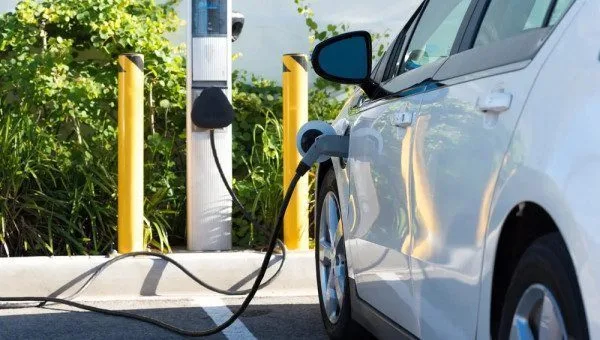
Discover how your electric vehicle’s battery works to maximize its lifespan and efficiency – and whether replacement is covered by the manufacturer’s warranty.
Electric cars contain rechargeable lithium-ion batteries designed to produce high-energy outputs. They continue to weigh significantly less than what their energy density would imply and reduce the overall emissions released by cars. Plug-in hybrids include charging capabilities as well as gasoline compatibility for fuel. Many non-hybrid electric cars advertise their “zero-emission” capabilities.
Electric vehicles (EVs) get their name from running on electricity rather than gasoline. “Refueling” translates to “charging” the car’s battery. The mileage you get on a full charge varies by the electric vehicle manufacturer. A car with a 100-mile range driven 50 miles each day would have a so-called “deep discharge” of its battery, which discharges 50% each day – a number difficult to catch up with using most home charging stations. To cover the same distance, a car with a higher full-charge range would be more ideal as it experiences a “shallow discharge.” Shallower discharges reduce overall electric battery degradation and help it last longer.
Even with the smartest purchasing intentions, an electric vehicle will eventually need replacement like an SLI (starting, lighting, and ignition) battery car. Regular car batteries are nearly 100% recyclable, and electric batteries are about to match a reusability score of 96%. However, when it comes time to replace your electric car’s battery, if it is outside the vehicle’s warranty, it may be the highest price you pay for your car’s maintenance.
Electric Car Battery Replacement
Due to the high price of an electric battery to begin with (it takes up the majority of your payment for the EV itself), purchasing a replacement can be costly. To counter this, most electric vehicle manufacturers offer a warranty for battery repair or replacement. Within a certain number of miles or years, and if the battery no longer charges above a certain percentage (usually 60 to 70%), it is eligible for replacement by the manufacturer. Be sure to read the fine print when receiving services – not all manufacturers will reimburse work done on a battery performed by a technician outside the company.
Some popular electric vehicle warranties include:
BMW i3: 8 years or 100,000 miles.
Ford Focus: 8 years or 100,000 – 150,000 miles depending on the state.
Chevy Bolt EV: 8 years or 100,000 miles.
Nissan Leaf (30 kilowatts): 8 years or 100,000 miles (24 kW only covers 60,000 miles).
Tesla Model S (60 kilowatts): 8 years or 125,000 miles (85 kW includes unlimited miles).
If it seems that your electric vehicle is no longer fully charging or appears to drain faster than expected, a battery or battery maintenance may be needed. A qualified mechanic can often do the work and may even offer you a refund for your old battery. The majority of its components can be recycled and reused for future use. Make sure your vehicle’s warranty covers work done outside the manufacturer to save on service payments.
Factors Affecting Battery Lifespan
- Lithium EV batteries operate in cycles. One charge and the resulting discharge count as one cycle. As the number of cycles increases, the battery’s ability to hold a full charge decreases. Fully charged batteries contain the highest possible voltage, with built-in battery management systems to prevent the voltage from exceeding its operating range and temperature. In addition to cycles, which the battery is designed to withstand for a significant duration, factors detrimental to the battery’s long lifespan include:
- Extremely high or low temperatures.
- Overcharging or high voltage.
- Deep discharges (battery drains) or low voltage.
- Frequent high charging currents or discharges, meaning too many fast charges.
How to Increase Battery Lifespan
To extend your electric car battery’s lifespan, follow these 7 best practices:
1. Do not leave the battery at full charge. Leaving it at full charge strains the battery too often and degrades it faster.
2. Store in a garage. Keep your electric vehicle in a garage or temperature-controlled space as much as possible to avoid extreme temperatures.
3. Plan outings. Pre-heat or pre-cool the EV before heading out if you haven’t unplugged the car from your home charging station. This practice helps you avoid using the battery while driving.
4. Use eco mode, if available. Electric vehicles with “eco mode” will shut off the car’s battery when stopped. It acts as a battery saver and helps minimize your vehicle’s overall energy consumption.
5. Avoid speeding. Battery efficiency tends to decrease when you exceed 50 miles per hour. When possible, reduce your driving speed.
6. Avoid hard braking. Hard braking uses the car’s conventional brakes. Regenerative brakes activated with gentle braking save battery energy, unlike friction brakes.
7. Plan vacation settings. Set the charge level to 50% and leave the EV plugged in during your long trips, if possible.
Electric vehicle batteries are constantly improving with each new car model. They are becoming more efficient and cost-effective with new developments. Innovation in battery range and design contributes to the popularity of electric vehicles as they become more affordable. Charging stations are appearing in new locations across the country to service the car of the future. Understanding how electric car batteries work maximizes the efficiency that an electric vehicle owner can achieve.