
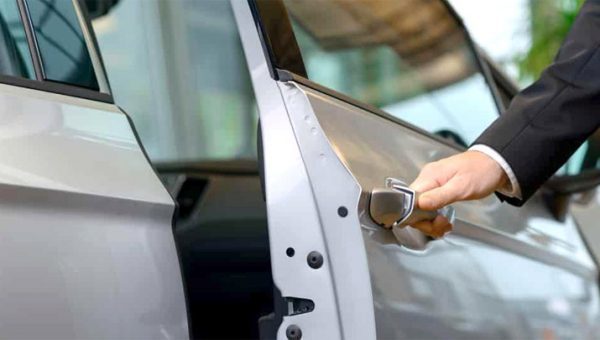
It’s not uncommon for the door of a modern automobile to refuse to lock. In this article, we will discuss how this can happen and ways to solve the problem.
In addition to locking problems, we will also address several other reasons why a car door might be hesitant to close.
How a Car Door Latch Mechanism Works
Door latch designs have been developed over the decades. Modern locking mechanisms work to keep the door secure to the adjacent pillar during driving and during an accident while allowing the door to be opened in the event of a collision. This is accomplished by the use of a jaw-type latch or a rotary tooth latch.
When the car door closes, one or the other of these types of latch firmly grips a headed pin or a U-shaped striker bar on the door pillar. Whether your car has a jaw or a rotary tooth-type latch, for our discussion here, we will simply use the term jaw.
When you open the car door by pulling the lever or door handle, the locking mechanism releases the jaw and the door opens. The jaw is then held in the unlocked position by the locking mechanism. When the door closes, the jaw hits the striker and is pushed back into the locked position.
Reasons a Car Door Won’t Close All the Way
So, your car door closes but does not lock and can be opened. Or the door when closed simply bounces back open.
# 1 – Latch Jaw Stuck in Closed Position
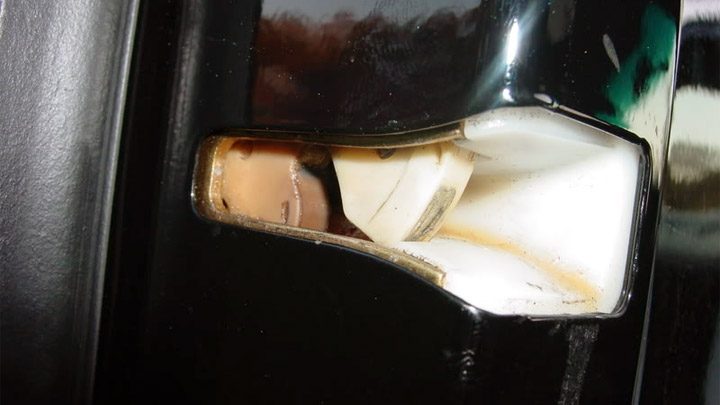
Examine the door latch that won’t close. Now examine another door that opens and closes properly. On that door, you will see what a fully open jaw looks like.
If the faulty door latch is not in the fully open position, the door will not close.
How to Fix
- While observing the jaw, use one hand to pull the lever or door handle as if to open the door. This should release the jaw and it should spring out into the fully open position. Release the door handle. The jaw should remain open.
- Using a screwdriver, try to push the jaw into the closed position. It should easily move to the closed position and “click” into place. Pull the lever or door handle again. The jaw should snap back into the open position again.
- Test the door’s operation. If it locks and reopens properly for three or four tries, you have solved your problem.
- If these steps do not resolve the issue, your car door’s locking mechanism may be faulty. Corrective action by a qualified technician will be necessary.
# 2 – Jaw Won’t Stay in Latched Position
Examine the offending door latch. If the jaw is in a position other than fully open, there may be a problem with the locking mechanism.
How to Fix
- Using a screwdriver, move the jaw into the fully open position. Then move it into the closed position. It should “click” into the closed position. Try to move it with the screwdriver. It should be held firmly in that position.
- While observing the jaw, pull the lever or door handle as if to open the door. This should release the jaw and it should snap into the open position. If it does not, the locking mechanism may have failed. It is also possible that the locking mechanism at the jaw is dry and sticking due to a lack of lubrication. Follow steps (3) and (4) to free and lubricate the jaw.
- You may need assistance for this step. Have your assistant hold the door opening lever or handle as if to open the door. Using a penetrating lubricant such as WD-40, lightly spray the jaw’s pivot point(s). Do not overspray. Work the jaw back and forth with the screwdriver until it moves freely. Release the door opening lever. Push the jaw into the closed position. Wipe away any sprayed lubricant.
- With the jaw in the closed position, pull the door opening lever. The jaw should snap into the open position. If it does not move or only moves partially to the open position, the locking mechanism may be faulty. Corrective action by a qualified technician will be necessary.
# 3 – Latch Jaw and Striker Misaligned
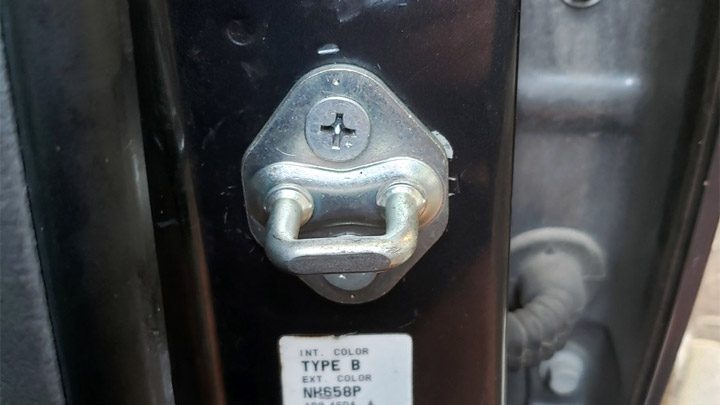
A sagging door can be the result of a prior minor collision which, in turn, causes the latch jaw not to align with the striker on the pillar. Alternatively, the hinge fasteners may have loosened, allowing the door to become misaligned.
How to Fix
Corrective action will require realigning the door. This can be a difficult process for a home DIY mechanic. In most cases, the car will need to be taken to a quality body shop for corrective measures.
# 4 – Frozen Latch Mechanism
In a modern car, a frozen door latch is a rare event. But it can happen.
Such an event can occur in this way:
Your car has been parked for some time outside during a storm. Precipitation accompanied by plummeting temperatures has frozen your windshield and windows. You open the door to grab your ice scraper and the door won’t close. The locking mechanism has frozen so that the jaw does not open fully or does not lock when the door is closed.
How to Fix
Three possible solutions here:
- First, do not slam the door. This could damage the latch jaw. Instead, with the door slightly open, pull the door opening lever or handle and let it snap several times. Often, the impact of this action will break a frozen locking mechanism. If that doesn’t work, then…
- Get in and start the car. Close the door as much as possible. Warm up the engine and turn the front windshield defroster to “high.” Set the heater temperature to its highest setting. This will warm the inside of the car, including the door assembly. Fifteen to twenty minutes may be needed to thaw the door locking mechanism. If this doesn’t solve the problem, there is another option…
- You will need warm water (at home, for example). Start the engine and defrost as described in step (2) above. While the car is warming up, fill a kettle with warm tap water (not boiling). When the car interior and the glass are fully warm, hold the door nearly closed. Now, slowly pour the warm water over the rear corner of the door above the exterior latch handle.
- Following each of the above procedures, close the door to see if you have solved the problem. If the door still does not lock, you will need to contact a service technician for corrective action.
# 5 – Jaw Area Corroded
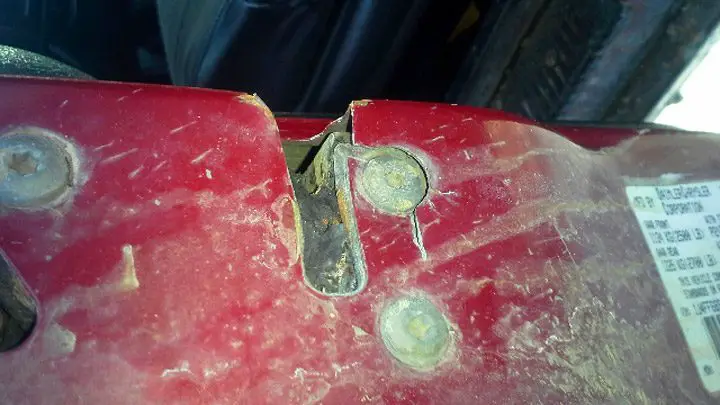
With older vehicles (especially those stored outside for long periods), sufficient corrosion of the jaw area can prevent a car door from closing and locking.
How to Fix
A latch stuck due to severe corrosion may eventually be corrected by following steps (3) and (4) from the “Jaw Won’t Stay in Latched Position” section above, which deal with lubricating the jaw.
# 6 – Latch Mechanism Failure
A failure of the operational locking mechanism is very possible if none of the steps described above correct the problem.
How to Fix
If this is the case, repair or replacement of the locking mechanism by a qualified automotive technician will be necessary.