
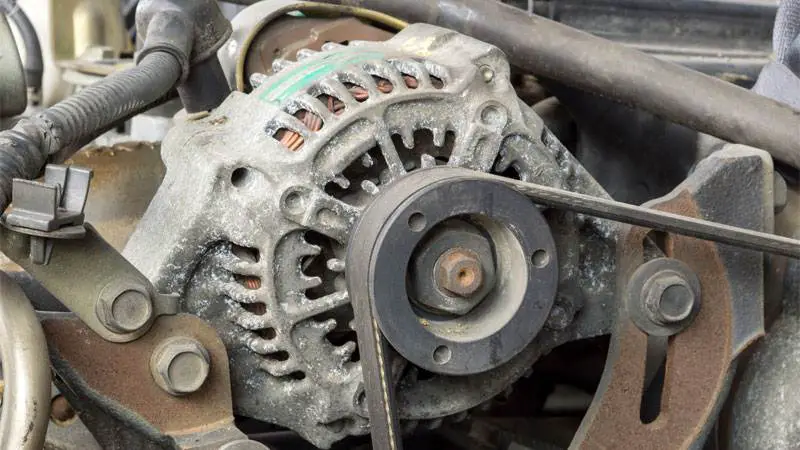
Have you ever noticed signs that your car battery is weak or failing to charge, even if it’s a new battery? Could the alternator be the cause or not? Let’s go through this guide to discover the common reasons why your alternator is not charging the battery and the simple steps to fix this issue.
The Main Functions of a Car Alternator
The alternator is one of the 5 main components of the car’s electrical system, functioning as a machine that generates energy to power the battery, serving the operation of charging devices and electrical equipment.
Car alternators produce electricity by converting mechanical energy. Notably, the source of mechanical energy can come from internal combustion engines, solar energy… If you tried to start your vehicle without an alternator, the battery alone would not be able to produce enough energy to turn your engine over even if you have a new car battery. The alternator is necessary to keep the battery charged and alternate the electrical current through many components of your car.
A faulty car alternator will affect the charging process and the operation of the battery. At the same time, the car’s electrical equipment also operates abnormally and cannot function at its maximum capacity. So why is my alternator not charging my battery? Let’s find out the causes in the next part:
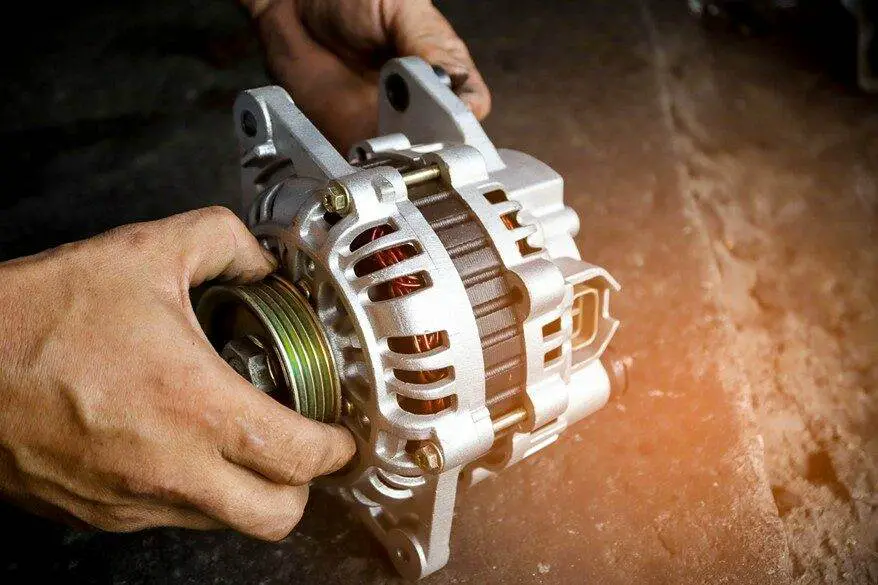
Alternator Not Charging the Battery: 6 Common Reasons
If the car’s alternator stops charging your battery, it’s as if your car cannot start. However, if you are lucky enough, in some situations, your car will probably run for about 10 minutes, but after that, the current will be immediately cut off. Knowing the reasons will help you diagnose the exact problem and possibly fix it.
Generally, a common cause for the alternator not charging is minor wear or corrosion. Practically all mechanical failures, whether it’s brush wear or bearing failure, are the result of an extended lifespan. Modern alternators are equipped with sealed (maintenance-free) bearings that only need to be replaced after a certain time or mileage. The same goes for the electrical part: often, the entire device must be replaced. Besides these causes, other reasons can be considered and checked:
1. Blown Fuse
Some models have alternators that depend on a particular fuse to function. However, sometimes this fuse can blow due to a power surge or simply due to old age. At that moment, your alternator will no longer charge the battery. But remember that not all have fuses, so you must consult the owner’s manual to see if your alternator needs fuses or not. After that, we will give the exact diagnosis.
2. Bad Alternator
Another common issue could be that the alternator is not working or is poorly connected. To test this, you can apply a multimeter in Voltage mode. Start your car and then use a multimeter to check the car battery voltage. The normal number should be around 13 to 14.5 volts. If it’s lower, try revving the engine a few times to see if the voltage increases or remains low. If the Voltage does not exceed 12.5 Volts, the battery will not be charged and the alternator will not work.
A good alternator correctly designed for your engine will provide the charging voltage as described even at idle, even if it may drop below 13 V.
3. Bad Alternator Brush
Carbon brushes constitute only a small part of the alternator but play an important role. Because it is a conductive material and it is responsible for transmitting electricity, connecting the electricity from the static part (Stator) to the rotating part (Rotor).
When the alternator brush is damaged, the electromagnetic connection between the two parts above will be interrupted. Carbon brushes often encounter problems such as oxidation due to long-term use. Carbon brushes are worn out and the brush springs are broken.
4. Stator Winding Problems
The stator coil is made of a core and a coil placed in the front frame. It is responsible for generating a three-phase alternating current through the variation of the magnetic flux of the rotating rotor. When this part is broken or grounded, electricity will not be produced and the power generation will not be able to supply energy to many systems.
5. Alternator Rotor
The rotor is a magnet inside the stator coil. It is responsible for creating a variable magnetic field inside the stator coil. The magnetic field creates an interaction with the stator winding and generates electricity. When the rotor coil is damaged, the magnetic field is not created and no current is generated, which affects other functions of the car.
6. Regulator
As its name suggests, the regulator is responsible for regulating the voltage of the current emitted by the generator system to keep it always stable. If this part is damaged, the electrical current will be weak and strong, causing other parts of the vehicle to flicker such as the lighting system and the car starter.
Symptoms of a Bad Alternator
If you detect any of the symptoms below, you should have your alternator checked:
Difficulty Starting
If you turn the key to start but the engine cranks weakly and starting takes a long time, it could be due to a faulty alternator, which prevents the battery from charging and the voltage is not sufficient to start the engine. Quickly taking your car to a trusted mechanic to have it checked is the safe method. In this case, you should also turn off some electrical equipment like the air conditioning, radio, or headlights to save energy.
The Battery Light Turns On
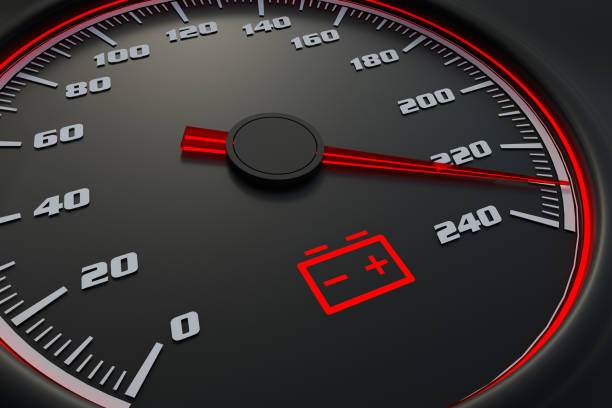
Normally, when starting the engine, the battery light turns off to inform the system of normal operation. But when the car is running and the battery light is still on, it could be due to a weak, damaged battery, or a problem with the battery charging system. The light is on to signal this malfunction.
Dim Headlights
Because the alternator powers the vehicle’s accessories, the lighting system, etc. When this part has a problem, the headlight system will be weak, dim, and flicker. Therefore, if the car lights are weaker than usual and flicker, it is a sign that you have a faulty alternator.
Strange Smell
This smell could be due to the wire heating up because the moving pulley is not aligned or not rotating freely. From there, a significant friction force is created on the belt and that part of the belt heats up, creating an unpleasant smell of burnt rubber. And then, the car’s alternator can be broken.
The alternator is an important component that allows the battery to be charged and powers all the car’s electrical devices. If this device has a problem, it will greatly affect the operation and movement of the vehicle. Knowing how to check a car generator will help drivers know its condition so they can handle it promptly.
But testing the alternator is a rather complex process, it requires experienced technical personnel and the help of different types of tools to know the exact cause. However, if you have basics in the automotive industry, you can perform this procedure entirely by yourself:
How to Test a Car Alternator?
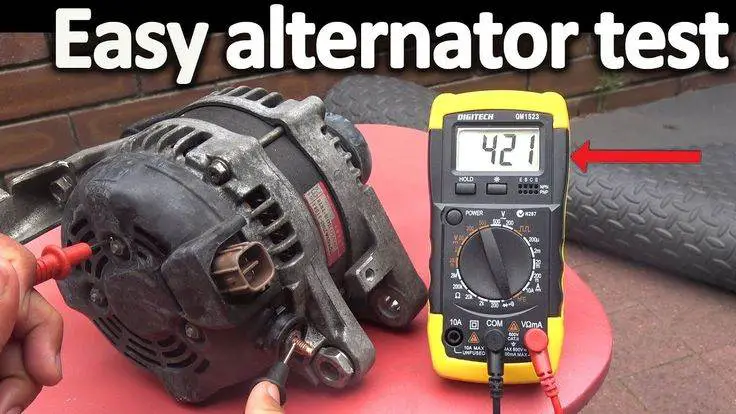
To check the alternator, you need to prepare a professional test kit and a voltmeter.
Follow these 3 steps to test your alternator:
Step 1: Test the Battery
To check the battery, we use a voltmeter. Attach the red wire of the voltmeter to the positive terminal of the battery and attach the black terminal of the voltmeter to the negative terminal of the battery. Then read the settings.
If the voltage is above 12V, we can proceed to the next step. Conversely, if it is below 12V, you need to charge the battery and re-measure the voltage after charging.
Step 2: Start the Car
After measuring the battery voltage, press the accelerator to let the engine run. You need to increase the accelerator to a speed of 2,000 rpm to let the engine warm up after a long period of inactivity.
Step 3: Let the Engine Run Steadily and Check the Battery Voltage.
Let the engine run steadily and check the battery voltage. Continue reading the voltmeter value. If the car battery voltage is between 13 and 14.5 V, the alternator is functioning normally.
If the voltage value is lower or exceeds the threshold of 13 to 14.5 V, it means the generator is faulty or has a problem. Furthermore, it is necessary to continue checking the operation of electricity-consuming devices like air conditioners, lights… to see if they are working normally.
How to Fix an Alternator That Is Not Charging
Upon detecting signs of damage on the vehicle, the recommended method to remedy this situation is to take the vehicle to a repair garage so that technical staff can perform an inspection, detect the right ailment, and treat it with the right medicine.
In the case where the car breaks down in the middle of the road, or if it is suspected that the alternator is damaged, causing the battery to discharge and making it impossible to start the engine and drive, you can call roadside assistance for help or test the battery regulation yourself if possible.
Additionally, you should also maintain the electrical system as well as the alternator regularly, periodically every 3,000 km – 5,000 km of operation (equivalent to about 3 to 6 months) to increase longevity and limit and detect generator damage as soon as possible.
How to Keep Your Car’s Alternator in Good Condition
Mastering the following tips will help drivers maintain their car’s alternator in ideal operating conditions. Specifically:
- Regular Maintenance: during regular maintenance, all parts of the vehicle will be checked. If the alternator has a problem, it will be promptly maintained/repaired to avoid serious damage.
- Limit the Use of Multiple Electrical Systems at the Same Time: Using multiple electrical loads at the same time will cause the alternator to operate less stably. Therefore, this must be limited to maintain the operation and durability of the car’s alternator.
- Replace the Belt at the Right Time: One of the keys to extending the alternator’s lifespan is checking the belt. As it is made of rubber, the belt frays and cracks over time, typically between 40,000 and 70,000 miles – although there is no precise schedule. That’s why it’s important to check the belt during routine maintenance. Replace it after noticing the first signs of aging as it can damage your engine.
New Alternator Not Charging the Battery: Learn More About the Repair Process
Wrap Up
So, in this section, we have provided you with information related to the alternator not charging the battery and how to fix this issue. At the same time, you should apply tips to keep this part in the best condition. So we hope all this information will be useful to you in one way or another if you encounter the same problem with the car alternator.