
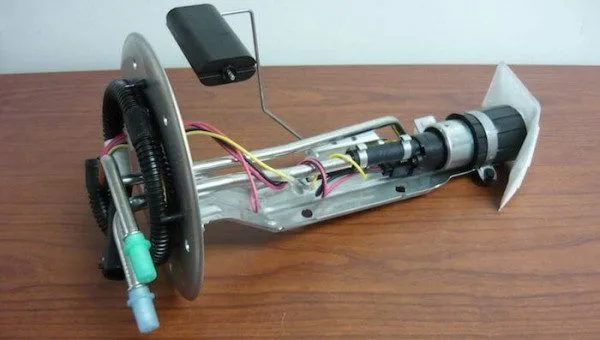
The fuel gauge sensor is a sensor that is not seen very often.
This is mainly because it is not located near the engine under the hood, which is the area you inspect most often. This sensor is located inside the fuel tank near the fuel pump.
The sensor has a float arm that detects the fuel level in the tank. The fuel gauge transmitter then sends the information directly to the instrument cluster and the fuel gauge. In some cases, the information is first calculated in the engine control unit before being sent to the fuel gauge.
If you have problems with the fuel gauge, you can measure the ohms of the fuel gauge transmitter at a certain fuel level and compare them with the values indicated in your repair manual for your specific vehicle. Perform the same procedure, measure from the fuel gauge and check that you get the same results to see if there is a wiring problem.
Symptoms of a Faulty Fuel Gauge Sensor and Wiring
If you have a problem with the fuel gauge sensor or wiring, you can check several symptoms to see if it is really a problem with the sensor and nothing else. Here is a list of the most common symptoms associated with a bad fuel gauge sensor.
Fuel Gauge Behaves Erratically
The first most common symptom of a faulty fuel gauge transmitter is that the fuel gauge behaves erratically and is not related to the actual fuel level. It may go from full to empty and back in a short time. If this is the case, you most likely have a problem with the fuel level sensor, the fuel gauge, or the wiring between the two.
Fuel Gauge Stuck on Empty / Full / Middle
Another rough pattern of a completely ineffective sensor is an indicator that must be stopped at any time, full or set in the middle. The float of the fuel gauge transmitter can often get stuck if it was previously improperly installed, and in these cases, the fuel gauge may also get stuck at a certain fuel level. Most often, the fuel gauge gets stuck at the bottom because the float may not float after refueling.
Decreasing or Increasing Fuel Consumption
This is another type of symptom you will have if you have a bad fuel transmitter. The engine control unit or instrument cluster sometimes collects information from the fuel sensor to calculate the distance you can travel before refueling and calculates fuel per kilometer. In this case, if your fuel gauge sends incorrect information, the engine control unit or instrument cluster may go crazy and give you values that are really independent of miles per gallon or the distance you can travel before refueling. If the fuel gauge jumps a lot, you will most likely also get erratic information about the distance to refuel.
How to Check the Fuel Gauge Sensor?
Checking the fuel sensor can be somewhat difficult because it is located inside the fuel tank. The difficulty depends on the car model you own. Normally, you can measure the wiring to the fuel gauge and the connection gap at the top of the tank. Often, you will find these wires under the trunk or under the rear seat. You will need to find a wiring manual to find the correct wires on your fuel gauge and the correct ohm for a particular fuel level.
The fuel gauge sensor usually has two wires leading to the fuel gauge. Check for corrosion on the connections and make sure the lines are not damaged by measuring them or inspecting them with your eyes.
The most correct way to check the fuel gauge sensor is to lift it out of the fuel tank and measure the ohm value with a multimeter and ensure that the ohm values change when you raise or lower the float. Again, consult your repair manual for the correct ohm value for your particular vehicle.
It is really easy to install the fuel gauge sensor incorrectly when you put it back in your car and this will result in incorrect values on the fuel gauge. So be very careful when installing the new fuel gauge sensor and make sure the arm can move freely up and down.
Remember to use safety accessories and provide good ventilation for such work.
If you do not want to do the work yourself at home, you should visit different car dealerships and compare prices. If you have other questions about the fuel gauge sensor, simply leave a comment below.