
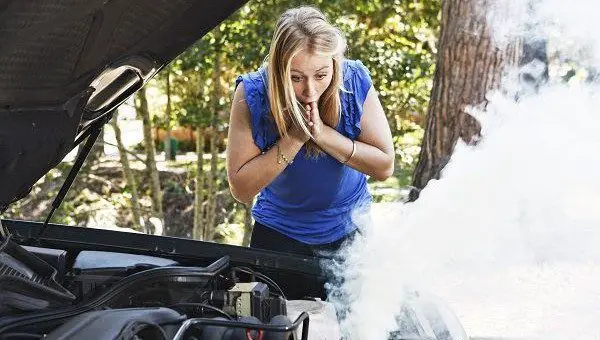

If steam is pouring from under your hood, a temperature warning light glows bright red on your dashboard, or the temperature gauge needle heats up to the High mark,
it’s time to get off the road and shut off the engine before it fries: You have a problem with your car’s cooling system and you want to do everything you can to keep it from overheating—a much more serious issue.
Any indication of engine overheating is a serious problem, so the best solution is to shut off the engine to prevent further damage. Driving a car with an overheated engine can warp cylinder heads and damage the radiator or internal engine parts such as valves, camshafts, and pistons.
Even letting the engine cool for an hour and topping off the radiator with a 50-50 mix of antifreeze and water may not solve the problem. Here are some reasons why an engine overheats for your troubleshooting needs:
- The coolant level may be extremely low due to long-term neglect or a coolant leak in the radiator or radiator hoses. Coolant circulates inside the engine block to cool it, and the leak could be from the block, or from the water pump or heater hoses. Old coolant loses its anti-corrosion properties, allowing rust to form and cause damage.
- The thermostat that allows coolant to circulate may be stuck in the closed position or a clog may have developed, possibly due to debris in the cooling system.
- The engine cooling fan has stopped working or the radiator cooling fins are clogged with debris, so the airflow that reduces the coolant temperature is restricted.
- The radiator cap has gone bad and no longer maintains sufficient pressure in the cooling system, allowing coolant to overflow (engines normally run at about 210 to 220 degrees Fahrenheit).
- The head gasket that seals the gap between the cylinder head and engine block may have failed, allowing coolant to leak into the combustion chambers. Steam should be visible coming from the exhaust system.
- The water pump has stopped working, or the belt driving it has broken or is slipping and not pumping enough coolant.
- You’ve towed a 5,000-pound trailer with a vehicle equipped to tow only 2,000 pounds, exceeding the vehicle’s cooling capacity. (You’ve probably also strained the transmission.)
Regularly checking the engine coolant level in the overflow tank can help avoid disasters. If you have to keep adding coolant, it’s an indication of a leak that should be addressed before it becomes a major issue where you pay for a more serious overheating problem in your cooling system. Having your coolant tested and the entire system inspected by a mechanic every two years is an even better way to avoid cooling system problems.