

A burnt spark plug will greatly affect the engine, leading to car fuel loss (reduces fuel combustion efficiency by up to 30%), difficulty starting, and vibrations. To detect the problem early and “catch the illness” in time, car owners need to know how to recognize burnt spark plugs to have the appropriate solutions. Let’s find out together!
What do spark plugs do in a car?
A spark plug is part of the ignition system, which plays an important role in the operation of the car’s engine. Automotive spark plugs have the effect of generating an electric spark between the center electrode and the ground side electrode to help ignite the fuel in the cylinder.
With a gasoline engine, creating ignition requires three elements: oxygen, fuel, and heat. When the cylinder performs the intake stroke, it draws in air, including oxygen. The engine has a direct fuel injection system. Spark plugs help generate heat. As a result, the fuel mixture is locked in to generate work to help the engine move.
Spark plugs provide heat in the form of small sparks. This spark has a voltage of 5 kV to 45 kV (depending on the vehicle) generated from the spark plug under the control of the Engine Control Module (ECM). The sparks are caused by electrical charges jumping between the two terminals of the plug. The generated heat of 4,700 to 6,500 degrees Celsius helps ignite the air-fuel mixture, thus pushing the piston to help the crankshaft move.
A burnt spark plug: 5 symptoms you cannot ignore
A car engine is a complex machine. Performance, fuel economy, and reliability depend on a constant supply of air, fuel, and spark. Here are 5 signs that a spark plug has burnt out. Before exploring the detailed symptoms, many drivers have a question:
What does a burnt spark plug look like?
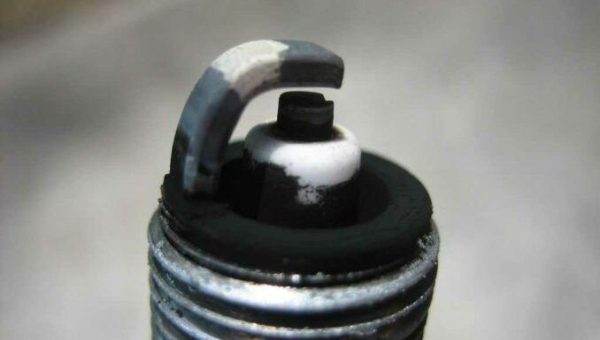
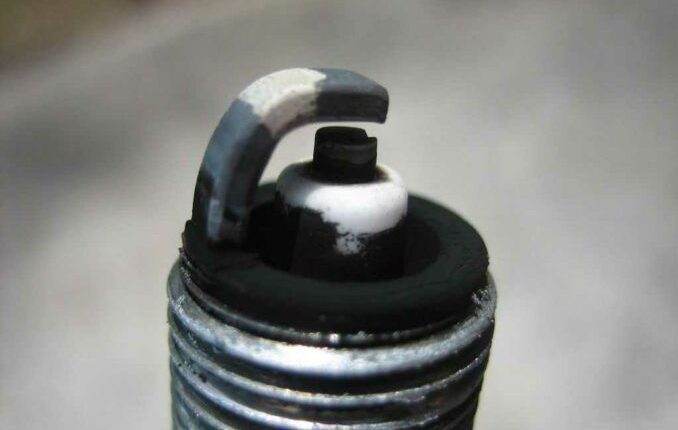
The spark plug looks burnt: how can I tell? You can easily spot the signs of a burnt spark plug when you notice blisters on the insulator tip, white residue, or melted electrodes. The cause of the above phenomenon is due to self-ignition causing overheating, a spark plug having an inappropriate temperature range, or other causes such as combustible deposits in the combustion chamber, damaged cylinders and valves, poor fuel quality.
5 signs indicate you have a burnt spark plug
Because a spark plug plays an important role in the engine process, if the spark plug fails, it will significantly affect engine performance. The following signs indicate that the spark plugs are burnt out and have a problem:
Abnormal fuel consumption
If you find that your car is consuming more fuel than usual, it is likely that the spark plug has a problem. A report from ASE (Automotive Service Excellence) showed that “a burnt or faulty spark plug can reduce fuel combustion efficiency by up to 30%. This results in longer combustion times and higher fuel consumption. When the spark plug is burnt, it will lose its basic functions, the ECM will not control the spark intensity or the amount of oxygen to add the correct fuel level. The ECM is much more sensitive than many riders and can detect misfires in the cylinders. This makes the combustion process less efficient.
Flashing “Check Engine” light
When your engine or some related parts have problems, the Check Engine light comes on to warn the driver. If you see the Check Engine light flashing, it is very likely that the spark plug is burnt out. However, automotive experts say there are many other causes that also cause the light to come on, such as a fault in the energy sensor, the catalytic converter, or the fuel tank cap. Therefore, car owners need to find the cause to diagnose exactly.
Problem starting the car
A good ignition is the most difficult thing when the engine is “cold”. The ECM will add more fuel to compensate for poor evaporation. This can make it difficult to ignite worn spark plugs, making starting difficult. When the driver presses the accelerator to speed up the vehicle, the ECM controls the spark plug to create a spark. But if there is a problem with the spark plugs, the spark generation process may be delayed. This causes a slow engine response and, in some cases, sudden engine spikes. At that time, you will experience harsh or slow acceleration. When your car’s spark plugs are burnt out, the oxygen sensor may misinterpret the engine’s air volume and the oxygen-fuel ratio. When incorrect data is sent to the ECU, it will give a bad signal to your engine.
Engine misfires
You can understand that engine misfires come from incomplete combustion (or zero combustion) that occurs inside your engine’s cylinders. Spark plugs are in direct contact with combustible gas, so they are easy to burn or wear out. This will cause the gap between the spark plug electrodes to widen, thus weakening the spark. Or can also cause loss of fire and inability to ignite the fuel and air mixture. In addition, if the electrodes are covered with a lot of soot, the ignition ability of the spark plugs will be reduced.
Poor engine performance
This can be described as the engine not immediately responding correctly to the driver’s “start signal”. Furthermore, the engine’s “power” may suddenly increase and manifest as an irregular engine condition. A slow response in power delivery, causing sudden jerks, may indicate a spark plug problem. When accelerating, spark plugs are specifically needed to provide a spark strong enough to ignite more fuel and produce more power. Burnt spark plugs may not meet the demand.
How to replace a burnt spark plug?
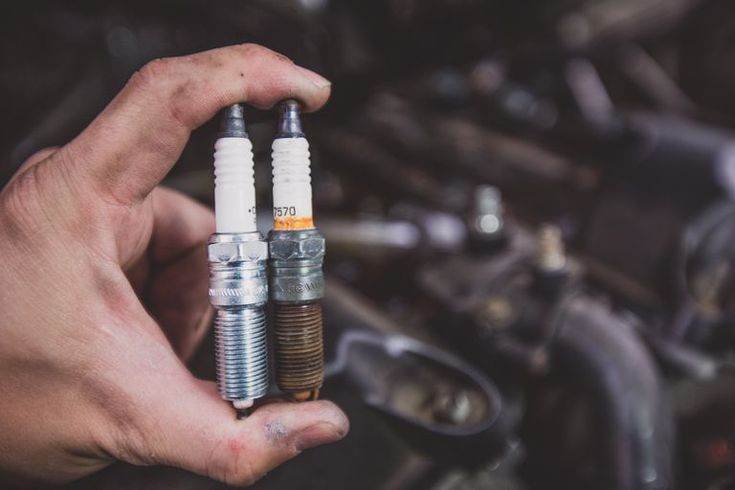
After performing the inspection and seeing that the spark plug shows signs of burning. Drivers need to replace the spark plug in time to protect the engine. Replacing spark plugs requires support tools such as extension rods, spark plug opening tips, tube opening levers, and gap gauges.
Step 1: Removal of the burnt spark plug
Locate the spark plugs on the engine. For L4 and L6 engines, the spark plugs are mounted on the top or side of the engine in a straight line. In a V6 or V8 engine, the spark plugs are located on each side of the engine.
After that, insert the tip into the extension rod and insert the connecting rod into the tube opening lever. Loosen it gently to avoid damaging the thread and remove the spark plug from the engine.
Use a ruler to check the spark plug gap. The standard gap is between 0.7 and 1.5 mm, press the tip of the spark plug on the wood surface to adjust it when the gap is greater than the standard.
Note: It is recommended to remove the spark plug when the car engine is completely cooled, as the spark plug gets stuck very easily when the engine is still hot and is very difficult to handle.
When removing spark plug parts, it is necessary to mark the position so that when reinstalling, it is not confusing. Incorrect installation can cause the spark plugs to malfunction, affecting fuel combustion and engine operation.
Step 2: Install a new spark plug
Clean the new spark plug installation area to ensure the best working environment for the spark plugs. Check if the high-tension wire is broken and if the insulating cover is not damaged.
Install the high-tension wire in the correct position, to ensure that the car engine starts and does not cause vibrations. It is recommended to tighten the spark plug by hand with moderate force to avoid damaging the engine thread.
Note: It is recommended to apply an anti-corrosion agent and insulating grease to the new thread and the spark plug tail to facilitate later removal of the spark plug.
When should the spark plug be changed?
According to expert advice, you should replace the car’s spark plugs after 40,000 to 100,000 km. However, it is difficult to have an exact number of times it is necessary to change a car’s spark plugs. Because the lifespan of the spark plug will depend on each type of spark plug, operating conditions, and maintenance time.
The best way to know when to replace car spark plugs is to check, maintain, and clean the car spark plugs periodically every 20,000 km. These actions not only help extend the lifespan of the spark plugs and know when to replace the new spark plugs, but also help the engine always operate in the best condition. Because through the condition of the spark plugs, you can assess the condition of the engine.
Final thoughts
Did you know that an average spark plug can ignite 27.5 to 110 million times during its lifespan? Each time, the spark plug loses a few molecules from the spark plug electrodes. With continuous work intensity and high pressure, spark plugs are easy to burn or wear out. Based on simple ways to identify a burnt spark plug, car owners can actively diagnose the symptoms of an overheated spark plug. When detecting a problem with the spark plugs, it is best to take the car to a service center for inspection and replacement. It is the safest and most effective solution to increase your car’s lifespan.