
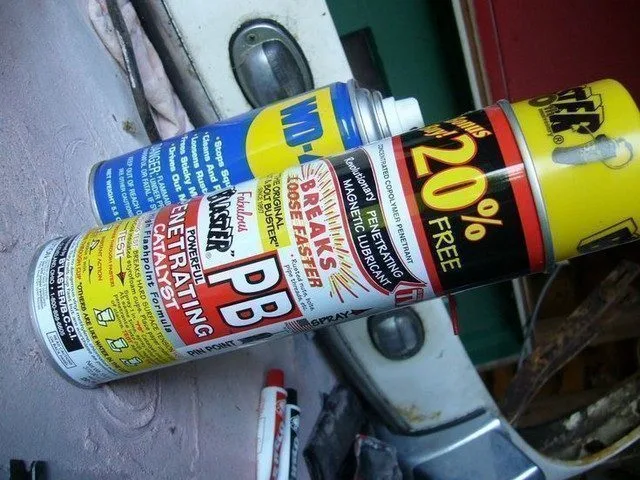
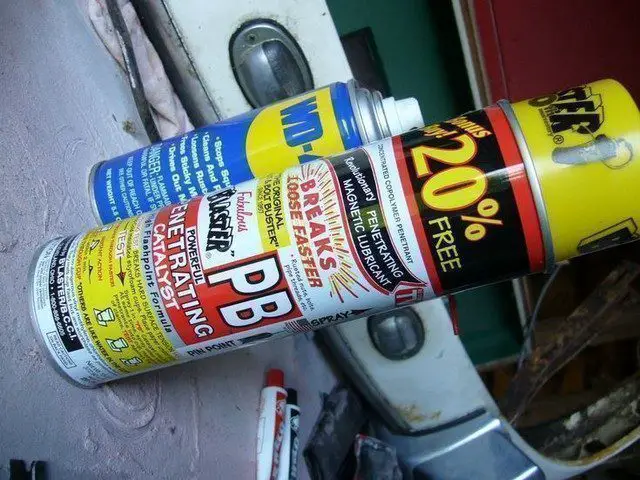
Penetrating oil is most useful when you have a rusted or corroded bolt or nut that won’t budge. Almost every garage or residential workshop needs a can of penetrating oil on a shelf.
If you don’t have one, you probably should. But if you already have a can, chances are you’re not using it correctly. It’s not uncommon for people to use a can of penetrating oil as an old-fashioned lubricant, but that’s actually not what it’s intended for. Spraying a bike chain or gear linkage with WD-40 or PB Blaster won’t really provide the lubrication you wanted.
Definition of Penetrating Oil
Although manufacturers vary in how they label their products, the spray oil you’re looking for will be called “penetrating oil” or “penetrating lubricant” – even though it’s not really a typical lubricating oil, such as that used to make machine gears run smoothly.
Penetrating oil is a petroleum-based oil with a particularly fine viscosity – so fine that it can be sprayed as a mist, and so fine that it will find the smallest openings between metal parts and penetrate them. Because penetrants have such low surface tension, they can seep into almost invisible crevices and over time, loosen the metal connection that seemed rusted shut.
True penetrating oil is sold under many different brands, including WD-40, PB Blaster, Liquid Wrench, and AiroKroil. This can be a bit confusing, especially since brands like WD-40 not only offer true penetrating oil but also sell lithium or silicone lubricants. And some may be marketed as “multi-purpose” lubricants that can be used for both penetrating lubrication and other general-purpose lubrication. However, the best products for loosening nuts, bolts, and other parts will specify on the label as “penetrating” oils.
Penetrating Oil Uses
When faced with a rusted bolt or nut or other parts that seem corroded together, the secret is time. After spraying a good dose of penetrant on the seized parts, let them sit for several hours, even overnight, while the penetrating oil seeps in. Then use your wrenches to try to loosen the parts. If they refuse to move, hit them with another strong dose of penetrating oil and let them sit for several hours and try again.
Sometimes very stubborn parts can be loosened if you apply heat to them. For example, a stuck nut that is warmed with a heat gun expands just enough to allow your wrench to turn it. However, do not apply direct flame to parts still wet with oil. Penetrating oils evaporate fairly quickly, but remember they are petroleum-based products, so there is a possibility of igniting them.
Other Types of Spray Lubricants
True penetrating oils are not the best product for every use, and not all spray lubrication products are penetrating oils.
Here are some of the other spray products available, along with their recommended uses:
Lithium Grease: This is a mixture of lithium hydroxide and petroleum oils. It is a true lubricant, not a penetrating oil, and it works well for lubricating parts where high loads or pressure are present, such as hinges on heavy doors or mechanical cranks.
PTFE: This name stands for polytetrafluoroethylene, but it’s really just Teflon spray. It is very good for lubricating chains and cables. It is an excellent material for lubricating bicycle parts.
Silicone: This is a spray lubricant containing about 1.5 percent silicone suspended in other materials to allow its application as a spray. Silicone-based lubricants repel water and work well at extremely high or low temperatures. It is also unusual in that it can be used on rubber, wood, and plastic parts without staining them. It is not intended for applications where there will be high pressure.
Dry Lubricants: Although in spray form, dry lubricants come out wet, the solvents used to carry the tiny dry particles, usually graphite, evaporate quickly, leaving surfaces completely dry. Dry lubricants are ideal for locks, interior hinges, and drawer slides, as there is no oily mess and dirt doesn’t stick to them. Dry lubricants do not displace water, however, and they wear out fairly quickly and need to be reapplied regularly.