

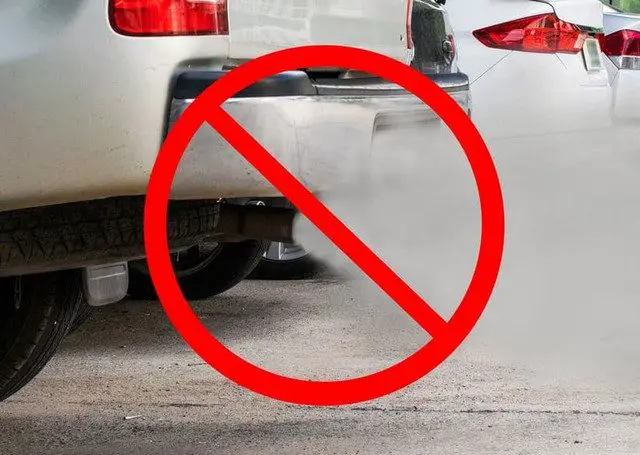
If you see your exhaust pipe blowing white smoke, you need to know the root causes to prevent any engine damage. One of two conditions is responsible for white smoke coming from your exhaust.
The first is a normal condition (so you don’t need to panic) and the second is a not-so-normal condition that should be fixed as soon as possible. For more details, please read the full article below:
If you find yourself in an unfortunate situation where white smoke continues to come from your engine after letting it warm up for more than a few minutes, you might have internal issues. It’s important that you address these problems quickly so that your engine and exhaust system are not damaged.
Here are 7 of the most common causes of a car blowing white smoke from the exhaust pipe.
1) Condensation Burn-off
If you notice white smoke coming from your muffler, don’t automatically assume the worst. You might not need to worry, as it could simply be condensation buildup causing this.
In these situations, you’ll typically see this white smoke coming out in cool weather. The smoke should only come out in small amounts after starting your engine. Then, after about 30 seconds to a minute, the white smoke should disappear. If this is the case, you have nothing to fear.
2) Cracked Cylinder Head
Whenever your cylinder head is cracked or damaged, coolant will start to leak. This doesn’t even have to be a large crack. It only takes a little coolant to leak and mix with the engine oil.
Once this happens, the oil will become contaminated. The first sign of oil contamination is white exhaust smoke coming from the exhaust pipe. As this continues, the white smoke will start to have a sweet smell that won’t go away.
3) Damaged Coolant Reservoir
The coolant reservoir is another area that can leak coolant. This is usually less common for leaks, but it can happen if the reservoir is damaged or cracked.
Sometimes this will occur if a mechanic fixes another issue in the vehicle and accidentally damages the reservoir. In any case, you’ll need to replace the reservoir when it’s damaged.
4) Oil Leak
If oil were to ever leak from your piston rings or valve seals, it would flow into the internal combustion chamber with the fuel. Once the fuel and oil mix, this will produce white smoke and possibly even blue smoke through the exhaust pipe.
You’ll obviously want to fix this leak very quickly, because if the engine components aren’t properly lubricated by the oil, they’ll start to wear out and become damaged fairly quickly. This will lead to a whole other host of expensive problems that you won’t want to have.
5) Bad Fuel Injector
The fuel injector is responsible for placing fuel into the internal combustion chamber at the right time. If you were to have a bad fuel injector, it would cause white smoke to form because the proper amount of fuel didn’t enter the chamber at the right time.
6) Engine Control Unit Error
If you have a faulty engine control unit or one that’s simply glitchy, it can disrupt the fuel injector timing. This doesn’t mean the fuel injector is bad or anything. It just means you need to repair or reprogram the engine control unit so it can correct the fuel pump injector timing.
Often, you can simply disconnect your car battery for a few minutes to reset the computer and the problem resolves itself. Otherwise, you’ll need to go to your dealer for this, as it requires expert mechanics who know your vehicle’s engine to reprogram the engine control unit.
7) Cracked Engine Block
The worst-case scenario is that your entire engine block has a crack. These are the types of problems that will be the most expensive to fix. You probably won’t know which of these issues is causing the white smoke production until you’ve examined your vehicle and performed a diagnosis.