
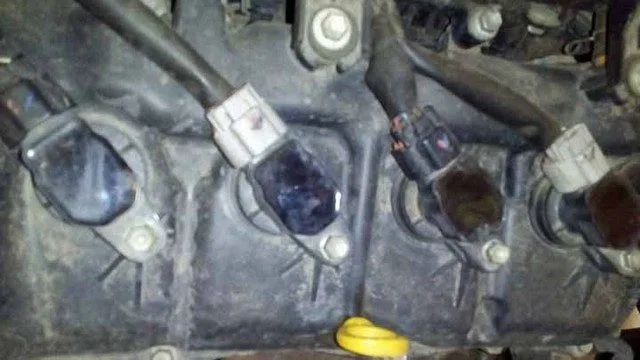
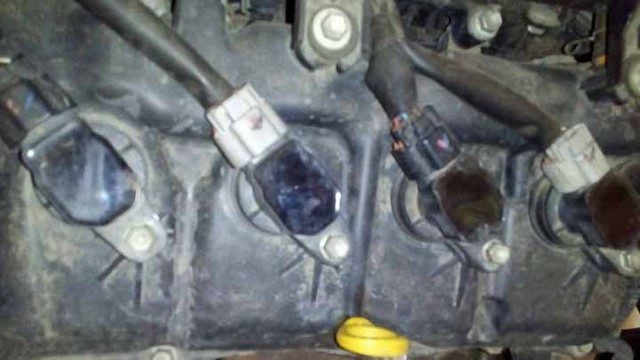
An ignition coil in a vehicle essentially serves as a compact electrical transformer. In other words, an ignition coil has the ability to convert the 12-volt electrical current from a car battery into at least 15,000 volts of electricity for the spark plug.
This high-voltage current is sent to the spark plug, and then the spark plug is able to ignite the fuel so the engine can start.
There is one ignition coil for each spark plug. In some vehicles, the spark plug and ignition coil are connected together with wires, while other cars will have the ignition coil positioned directly on top of the spark plug without needing wires.
Regardless, you need good ignition coils to ensure the engine starts properly. Otherwise, a faulty ignition coil will make your vehicle vulnerable to misfires and cause an increase in the amount of fuel consumed.
Top 5 Symptoms of a Bad Ignition Coil
If you experience driving problems related to the combustion process in the engine, you might possibly have a bad ignition coil. The exact symptoms depend on the condition of the ignition coil.
Here are 5 common symptoms that can be attributed to a bad ignition coil.
1) Stalling
If your vehicle starts to stall while you are driving, it’s possible your ignition coil is faulty. Sometimes this happens when you are already stopped, and other times it occurs when you are moving.
If the coil starts to malfunction, it will send irregular electrical currents to the spark plug. This is why you might drive normally and suddenly encounter problems later.
Once you are moving and the stalling begins, it will eventually lead to a complete stop and the inability to restart.
2) Engine Misfire
If you try to start your engine and hear a stuttering noise repeatedly, you are likely experiencing an engine misfire that can be attributed to a bad ignition coil.
You might still be able to drive your vehicle, but you will hear a lot of strange noises and even feel shaking when you accelerate the vehicle.
3) Poor Fuel Economy
When there is a bad ignition coil and engine misfires because of it, then an increase in fuel consumption will likely follow.
As a result, you will get reduced mileage from your gas tank and will need to fill up your tank more often. This means you will spend much more money on gas than before.
4) Backfiring
At the onset of ignition coil problems, your vehicle will experience a backfiring issue. This is a term that refers to a situation where the internal combustion cylinders contain unused fuel that ends up flowing out of the exhaust pipe.
The first sign of this will be black smoke coming from the exhaust pipe. This smoke will also have a gasoline smell.
5) Check Engine Light
Since a bad ignition coil directly affects the engine’s functionality, you can expect the check engine light to illuminate on your dashboard. There are even vehicles that have only a single ignition coil and spark plug.
So, without at least one functional ignition coil, engine starting will occur when there are no sparks generated inside the cylinders. Of course, a check engine light can mean a number of problems with your vehicle.
But if you have encountered any of the four symptoms listed above and the check engine light is also on, the ignition coil is likely to blame.