
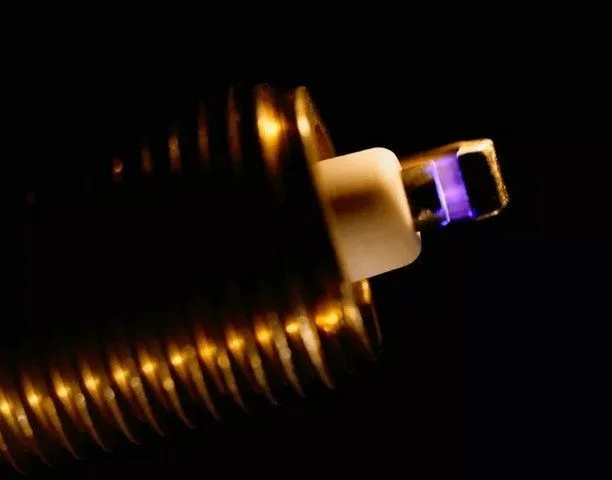
“A candle is just a candle” is a common but incorrect expression. Some candles are more efficient and perform better than others, and each type has a specific use case.
For this reason alone, it is important to check the vehicle manufacturer’s recommendations to ensure that the correct spark plugs are installed in your vehicle.
Below is everything you wanted to know about spark plugs, including a comparison of the 5 most common types of spark plugs.
How Spark Plugs Work
The purpose of a spark plug is to ignite the compressed air and fuel mixture in each cylinder of a gasoline internal combustion engine.
There is a central electrode insulated along the length of the plug and one or more ground electrodes at the bottom end, separated from the exposed end of the central electrode by a gap known as the spark gap.
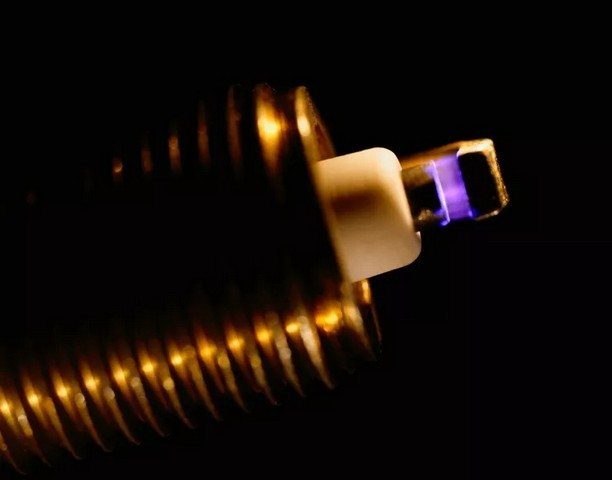
When the voltage supplied by the ignition coil to the spark plug is high enough, the electrical energy jumps across the gap, forming a spark.
Electrodes were traditionally made of copper, but now they are also made from rare materials like iridium and platinum. Newer spark plugs use smaller center electrodes to reduce the amount of voltage required to generate a spark. Less voltage required makes the ignition system more efficient.
In most gasoline vehicles, the number of spark plugs equals the number of cylinders. However, some high-performance vehicles use two spark plugs per cylinder.
Spark Plug Electrode Gap
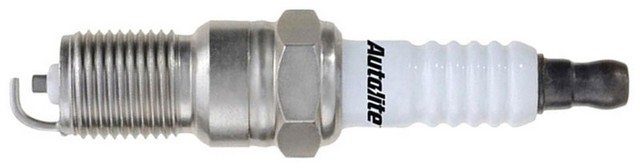
The business end of a spark plug houses the gap, a distance that must be very precise for the spark to form correctly. Over time, this gap can increase as the metal on the electrodes wears away, so it is important to measure the gap with a special tool.
Electrodes can be bent to adjust the gap, a process known as gapping.
Sometimes the plug is too far gone to be repaired by gapping and must be replaced. Continuing to use a spark plug with an incorrect gap can lead to problems such as engine misfires, power loss, and poor fuel economy.
Spark Plug Materials
The main types of spark plugs are copper/nickel, iridium, single platinum, double platinum, and silver. The best spark plug varies by vehicle. Below are more details about each of these plugs and what they are used for.
Copper Spark Plugs
copper plug
The center electrode of this type of plug is a copper core coated with a nickel alloy. It has the largest diameter of all other spark plugs, so it needs more voltage to generate a spark.
Report this ad
The nickel alloy is a soft and less durable material, so spark plugs will need to be replaced more frequently than other types. Some cars are designed to use copper spark plugs despite their shorter lifespan.
In some of these cases, installing more expensive spark plugs may be a waste of money. Consult the owner’s manual for the manufacturer’s recommendations.
Advantages
- Inexpensive
- Suitable for older vehicles built before 1980
- Works well under high compression or turbocharger conditions
Disadvantages
- Shorter lifespan
- Requires more voltage
Iridium Spark Plugs
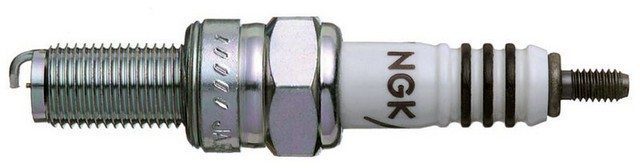
iridium plug
Iridium spark plugs last the longest because iridium is harder and more durable than platinum. These spark plugs have a small center electrode that requires less voltage to generate a spark. These advantages are reflected in the higher price.
Many car manufacturers now use iridium spark plugs in their vehicles, so it is important to stick with iridium when replacing plugs rather than downgrading to platinum or copper/nickel. This could harm the vehicle’s performance.
Advantages
- Leads to more complete combustion
- Long lifespan
- Requires less voltage
Disadvantages
- Expensive
Single Platinum Spark Plugs
platinum plug
A single platinum spark plug is similar to a copper/nickel spark plug, except that its center electrode has a platinum disc welded to the tip instead of a single nickel alloy. The platinum metal lasts longer than the nickel alloy before wearing out.
These plugs also generate more heat, which reduces carbon buildup. This is the recommended material for new cars with a coil-on-plug ignition system.
Advantages
- Long lifespan (up to 100,000 miles)
- Reduces carbon buildup
Disadvantages
- Expensive
Double Platinum Spark Plugs
double platinum plug
Double platinum spark plugs have a platinum coating on both the center and ground electrodes. This is more efficient and longer lasting, making these plugs an excellent choice for a wasted spark ignition system, which puts more wear on both electrodes than other ignition systems.
In a wasted spark ignition system, each ignition coil fires two spark plugs at once, one in the cylinder on the compression stroke and the other in the cylinder on the exhaust stroke.
The spark in the latter is wasted because the air-fuel mixture was already burned during the previous stroke. This ignition system is an improvement over distributor ignition systems because it is not as affected by rain or debris.
Advantages
- Recommended for wasted spark ignition systems
- Reliable
Disadvantages
- Expensive
Silver Spark Plugs
silver plug
These are less common than others and feature silver electrode tips. These do not last as long as iridium or platinum spark plugs because the metal is less durable. They are most often used in older European performance cars and motorcycles.
Advantages
- Better thermal conductivity
Disadvantages
- Reduced longevity
Hot vs. Cold Spark Plugs
The heat range of spark plugs refers to the temperature of the tip where the gap is located. Hot plugs are better insulators that retain more heat at the tip of the plug, and thus in the combustion chamber.
These tend to last longer than cold spark plugs, as the temperatures are high enough to burn off carbon deposits. Hot spark plugs work well in most standard vehicles.
Cold spark plugs are much less insulated, so more heat is conducted from the tip and away from the combustion chamber to the outside of the engine, keeping the combustion chamber cooler.
Cylinder chambers that are too hot for ideal function can lead to problems such as pre-ignition or knocking (uneven fuel burn) which can result in permanent engine damage.
These plugs are ideal for high-performance vehicles with high-temperature engines, such as those with high power, high RPM, prolonged acceleration or high-speed driving, or forced induction.
Standard vs. Performance Spark Plugs
All of the metals above can be used to make regular (replacement) or performance spark plugs. Performance spark plugs are more durable, able to withstand greater changes in temperature and mechanical stress than replacement spark plugs.
This is useful for cars that are driven hard, as the engines undergo much more stress than those of engines driven under normal conditions.