
Car thermostat problems occur unexpectedly. Usually, you’ll start to notice your car beginning to overheat shortly after starting the engine, or the temperature gauge on your dashboard stays below its normal temperature point.
But how do you know the thermostat is acting up? After all, some of these same symptoms can come from a failing water pump, radiator, fan, or even a loose drive belt.
Generally, when a thermostat fails, it gets stuck in either the closed or open position. Whatever its failing state, you’ll find out within minutes using one or more of the tests described in this guide. But first, you need to take a look at how it works to understand the logic behind these simple tests.
What does a car thermostat do?
Like any other water-cooled engine on a passenger vehicle, your car’s engine operates within a temperature range of about 195 to 220 °F (91 to 104 ºC). To help it operate within this range, your car’s engine uses a thermostat.
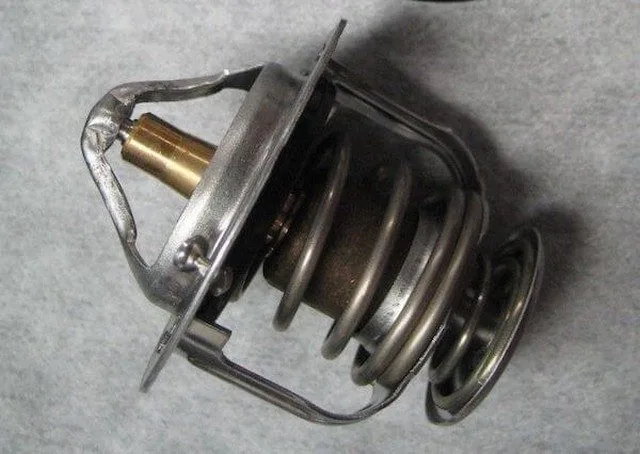
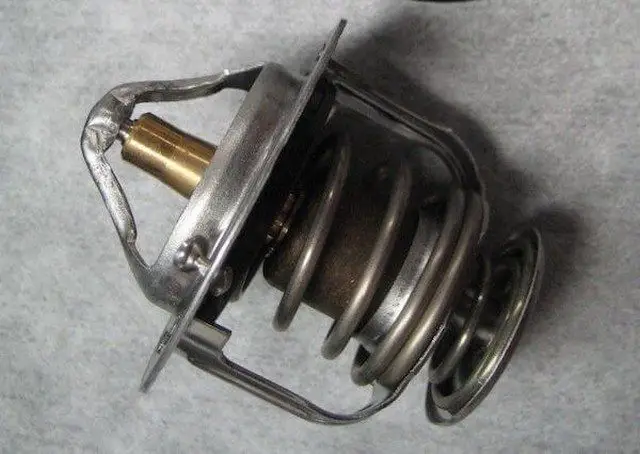
Simply put, the thermostat reacts to temperature changes – in this case, the coolant temperature – by opening or closing a valve to control the flow of coolant between the radiator and the engine. The valve itself operates through a wax-containing element. Thus, the thermostat is small, simple, and effective. The expanding element container in the thermostat faces and comes into contact with the engine coolant. As the coolant temperature increases, the fluid (or wax) in the container begins to melt and expand, pushing a small rod that separates a central plate from its surrounding mounting base to open the valve.
The Thermostat at Work
The thermostat starts in the closed position when you start the engine to help it reach operating temperature. When the coolant temperature rises, it begins to open. The opening allows hot coolant from the engine to flow into the radiator, while the water pump pushes low-temperature coolant from the radiator into the engine. When the low-temperature coolant reaches the thermostat container, the expanding fluid begins to contract, closing the thermostat valve.
During engine operation, however, the thermostat never fully closes or opens but gradually approaches each state to control the coolant flow, depending on the engine’s operating conditions. This allows the engine to run at the best temperature. This ideal engine operating temperature achieves several goals: it helps the engine oil lubricate effectively and remove harmful deposits. It reduces emissions and gas consumption and contributes to engine performance. Thus, the thermostat impacts the health and longevity of your engine.
Symptoms of a Bad Car Thermostat
A faulty thermostat will prevent the engine from operating within its ideal temperature range and affect its performance. For example:
A thermostat stuck open will cause continuous coolant flow, leading to a lower operating temperature. Since the oil operates below temperature, the condition accelerates part wear, reducing engine efficiency and increasing emissions over time.
On the other hand, a thermostat stuck in the closed position will prevent coolant flow and cause a constant increase in temperature. If you don’t notice it and let your engine run, within minutes your engine will self-destruct. Literally.
In either case, your engine will suffer damage. The difference lies simply in the time it takes. Still, a failing thermostat is not the only cause of abnormal engine operating temperature.
Other reasons include low coolant level, a bad water pump, a worn or loose water pump belt, cooling system leaks, a clogged radiator, a faulty radiator fan, and a collapsed radiator hose. Whatever the cause, it’s a good idea to start investigating the problem before it’s too late.
Common Causes of Abnormal Engine Temperatures
- Bad thermostat
- Coolant level
- Bad water pump
- Worn water pump belt
- Loose water pump belt
- Cooling system leaks
- Clogged radiator
- Bad radiator fan
- Collapsed radiator hose
How do I know if my car needs a thermostat?
Now that you have an idea of how the thermostat works, you can use this knowledge to investigate the problem.
First, open the hood and make sure the engine and radiator are cold.
Next, locate the thermostat. If you follow the upper radiator hose to the engine, you’ll see the end of that hose connecting to the thermostat housing. Inside that housing is the thermostat. On some vehicle models, however, the thermostat housing connects to the lower radiator hose.
If you need help locating the thermostat, consult your vehicle’s service manual. You can buy one at your local auto parts store or online. You can also check the reference section of your public library.
Once you’ve found the thermostat, perform one of two simple tests: If you have access to your car’s radiator cap, use the following troubleshooting procedure: Checking Coolant Flow. If the radiator cap is not accessible or you don’t see it, proceed to the next troubleshooting procedure: Checking Coolant Temperature.
Some recommendations before starting:
Even if your radiator cap is accessible, you can actually do both tests, as neither requires removing the thermostat from your car and they both only take a few minutes.
With an engine overheating problem, it’s a good idea to have an assistant at the wheel to stop the engine if the temperature reaches a dangerous level during testing.
If one of your tests indicates a bad thermostat, follow the third procedure below, How can I test a car thermostat, to test it outside the vehicle and make sure you need to replace it.
If you are performing any of these tests because your engine is overheating, it’s a good idea to have an assistant at the wheel to stop the engine if the temperature reaches a dangerous level while you are performing the test.
How to Check Coolant Flow
- Wait for the radiator and engine to cool down.
- Set the parking brake and block the wheels.
- Remove the radiator cap, start the engine, and let it idle.
- Check that the coolant is not flowing. You can check this by looking through the radiator filler neck. The coolant should not be circulating because the coolant has not reached a sufficient temperature to cause the thermostat to open.
- If the coolant is not flowing, proceed to step 7.
- If you see the coolant flowing, it means the thermostat is stuck open. And that explains your temperature gauge indicating a continuous operating temperature lower than normal. You need a car thermo.
How to Check Coolant Temperature
A simple way to check the coolant temperature and, therefore, the thermostat’s operation, is to use your own hands.
Set the parking brake and set your transmission to Neutral (manual) or Park (automatic).
Start the engine and let it idle.
Touch the upper radiator hose and the lower radiator hose, so you can feel the temperature of the hoses. Be careful with the engine’s moving parts during this operation.
Wait about 10 minutes and repeat step 3. You should notice that the hoses have increased in temperature. This means the thermostat is opening. If the hose temperature has remained roughly the same, the thermostat is stuck in the closed position.
If you wish, you can perform a more precise test. For this test, you can use a needle type, a kitchen thermometer, or an infrared thermometer type.
Make sure the radiator and engine are cold, engage the parking brake, and block the wheels.
Start the engine and let it idle.
Get a temperature reading on the engine block or cylinder head surface near the thermostat housing. Then, get a temperature reading of the upper radiator hose two to three inches from the thermostat housing.
After five minutes, take another temperature reading at these same two test points and compare these readings to the previous ones.
Wait five more minutes and take another reading.
At this point, you will begin to notice that the temperature on the engine block or cylinder head is rising while the radiator hose temperature remains roughly the same.
Interpreting Your Results:
If both test points remain at roughly the same low temperature, your car’s thermostat is stuck open. This means the coolant is flowing continuously, preventing the engine from reaching operating temperature. This will confirm the constantly low temperature reading from the temperature gauge on your dashboard. Replace the thermostat.
It takes between 15 and 20 minutes for the engine to reach operating temperature. At that point, the hot coolant causes the thermostat to open. If you take another temperature reading at your two test points, you’ll notice that the radiator hose temperature is almost as high as the engine temperature. This means the thermostat has opened and hot coolant is flowing through the radiator hose.
If the coolant is not flowing, you will notice that the temperature on the upper radiator hose remains roughly the same and the temperature gauge on your dashboard is approaching the red zone. This means you have a stuck closed thermostat.
If necessary, troubleshoot the thermostat as described in the next section.
If the upper radiator hose temperature increases, however, the coolant is flowing. If your engine is still overheating, you have another problem affecting the cooling system. Consult the troubleshooting section of your vehicle’s repair manual to see other causes that can affect the cooling system.
How to Test a Car Thermostat
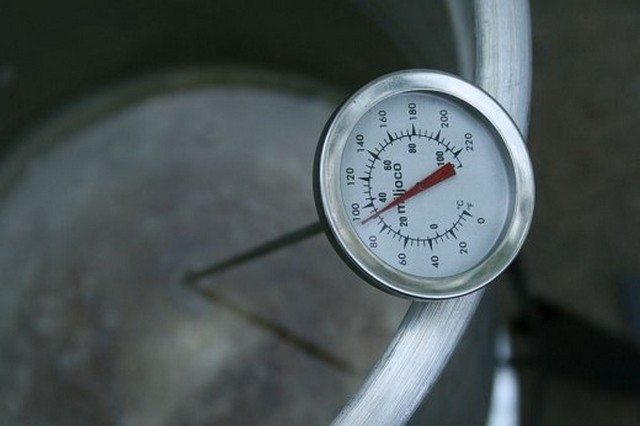
Checking your car’s thermostat is the best way to know if the unit is failing. The test procedure requires a kitchen thermometer and a pair of needle-nose pliers. First, you need to remove the thermostat from your car.
The thermostat housing is accessible in most cars, but you should still follow certain precautions that may apply to your particular model. If you need more help, the best way is to follow the instructions in your vehicle’s make and model repair manual.
Once you have removed the thermostat from your car:
- Visually inspect the thermostat. It should be in the closed position. If it is open, replace it.
- Place a pot on a stove. Pour enough water into the pot to cover the thermostat.
- Submerge the thermostat in the cooking pot, but do not let it touch the bottom of the pot. Use a pair of needle-nose pliers for this.
- Start heating the water and place the kitchen thermometer in the pot, but do not let the thermostat touch the pot. You just want to monitor the water temperature.
- Watch carefully and note at what temperature the thermostat begins to open.
- Take note of the temperature at which your thermostat started to open.
- Wait for the thermostat to open fully and note the temperature. Then, remove the thermostat from the pot and check that the thermostat gradually closes completely.
- Compare your notes to the thermostat operating temperature specifications in your vehicle’s repair manual. If your thermostat deviates from the specifications or if the thermostat’s mechanical action deviates from that described above, replace it.
- Most vehicle engines operate at a temperature of about 195–220 ºF (91–104 ºC). Consult your vehicle’s repair manual for the thermostat operating range and make sure you have the right one for your application. Or replace it if necessary.
