
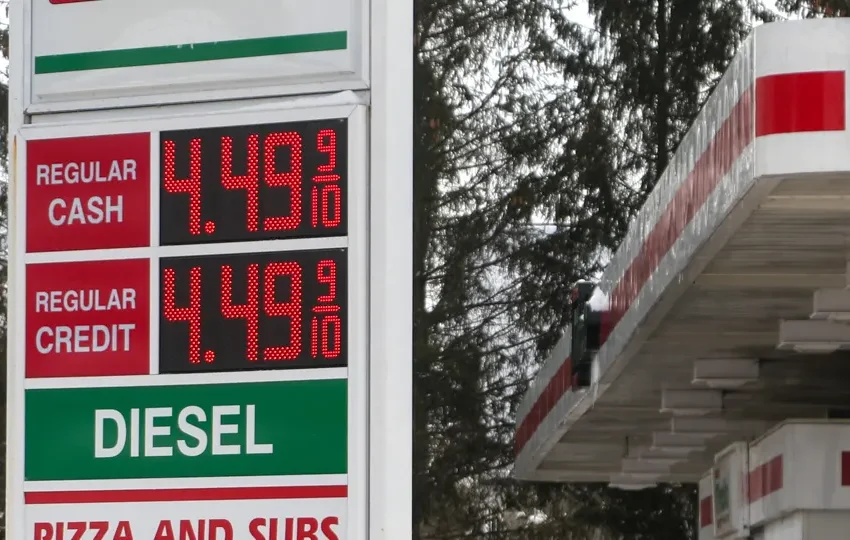
A steady and dizzying trend is emerging: when gasoline prices exceed $4 per gallon, Americans become devout about fuel economy. The value of large SUVs drops, and Honda Civics get a second look. With $5 per gallon gasoline in some states, the process is well underway.
By the end of March, the price of regular gasoline had increased by 47% over the past year, reaching an average of $4.24. Premium gas is up 41%. Diesel saw the largest increase over the past year, at 62%. Diesel is similar to home heating oil and jet fuel.
The trend is that when the pain at the pump eases, even a little, consumers return directly to their large SUVs. Today, with credible electric and hybrid vehicles on the market, things could change permanently.
| Gas Prices: Steady 47% Increase in One Year | ||||||
|---|---|---|---|---|---|---|
| Regular | Mid-Grade | Premium | Diesel | E85 | California Regular | |
| Now | $4.24 | $4.63 | $4.91 | $5.04 | $3.70 | $5.88 |
| Year Ago | $2.88 | $3.21 | $3.47 | $3.11 | $2.47 | $3.88 |
| Now Vs. Year Ago | +47% | +44% | +41% | +62% | +50% | +51% |
| Table compares a nationwide average of gasoline prices for the week of March 21, 2022 versus a year ago for common grades of gasoline and for diesel, as well as regular gas in California. E85 gas is 51%-83% ethanol, the rest gasoline. California, Nevada and Hawaii have the most expensive gasoline. Kansas, Missouri and Oklahoma have the cheapest. Source: AAA |
||||||
For drivers looking for a more fuel-efficient vehicle, check out the best fuel-efficient trucks, SUVs, and high-mileage hybrids. Plug-in hybrids combine electric motors that travel 20 to 50 miles on battery before the gasoline engine starts.
The future for many lies in the fully electric vehicle. Cox Automotive reports that in early March, interest in electric vehicles surged by 69% and in hybrid vehicles by 32%. These are Forbes Wheels‘ best electric vehicles for range, best electric SUVs, and best electric cars.
In an effort to save as much gas as possible with your existing car, here are 20 tips for fuel misers:
Buy Regular Fuel
There is no need to use premium gasoline unless your car manufacturer specifically requires it with labels like “premium only” or “premium required” (not just “preferred”) on the fuel gauge or fuel filler door. Typically, the car will run normally without damaging the engine. Using regular in a high-end car might cost half a second in acceleration to 60 mph. The premium costs 67 cents more per gallon (16%) at late March prices. Automakers claim that gasoline of any quality labeled Top Tier contains all the necessary detergent additives to keep their engines clean.
Combine Trips
In the morning, you realize you need butter, so you get in the Bulgemobile and go get it (three miles there, three back), then you go out again in the afternoon when the milk runs out. How about waiting until the shopping list reaches a critical mass: five items or more? As fueleconomy.gov tells us, “Several short trips made from a cold start can consume twice as much fuel as one longer, multi-purpose trip covering the same distance.”
Remove the Roof Rack or Carrier
Inertia – or the idea that they look cool – is the reason for leaving roof boxes on top long after the ski trip is over. Both increase the car’s weight and reduce aerodynamics. Consumer Reports installed racks and carriers on a Nissan Altima and a Toyota RAV4 driving at 65 mph. The Altima’s 48 mpg with a sunroof dropped by 11% with a cargo box and by 19% (to 39 mpg) with a cargo box and a carrier. Drive 1,000 non-vacation highway miles and you pay $20 more. Permanent factory-installed roof rails, which run front to back, have only a minor impact on drag.
(Don’t) Carry That Weight
Adding 100 pounds reduces fuel economy by 2%. The junk in the trunk – last summer’s golf clubs, overdue library books, goodwill donations that never make it to the bin – adds up.
Use Toll Passes
Stopping to pay tolls can waste fuel, especially on heavily traveled roads. With the toll tag on the windshield, most of the time drivers barely need to slow down. A study by the New Jersey Turnpike Authority found a fuel savings of 1.2 million gallons during the first year of EZ Pass, used in states from Maine to Illinois and Virginia.
Don’t Speed
Fueleconomy.gov reports: “Speed increases fuel consumption and decreases fuel economy due to tire rolling resistance and air resistance. While vehicles reach optimal fuel economy at different speeds, gasoline consumption ‘generally decreases rapidly at speeds above 50 miles per hour.’ Reducing speed by 5 to 10 mph improves mileage by 7 to 14%.”
Carpool
Robert Putnam’s Bowling Alone argues that Americans are much more likely to travel alone these days. Planetizen claims the decline in carpooling is “the most significant change in travel behavior in recent decades.” In 1980, 20% of Americans carpooled; by 2013, that figure had dropped to 9%. But carpooling and ride-sharing can cut your fuel costs in half. Interestingly, unfortunately, carpooling makes the car heavier today than a generation ago; the average American weighs 15 pounds more than in the late 1980s.
Coast to a Red Light or Stop Sign
Avoid jackrabbit starts and frantic stops. AAA informs us that the combination reduces fuel economy by 15 to 30% at highway speed and by 10 to 40% in stop-and-go traffic.
Practice Hypermiling
Some people try to extract the most forward motion from a gallon of gasoline through hypermiling. It helps if you own a mileage champion, like a Toyota Prius hybrid. The rules are simple: time traffic lights (drive at the posted speed) to catch as many greens as possible, coast or glide if you can, keep idling to a minimum, and don’t use remote starters to warm up the car. The car doesn’t need it, it’s a pollution issue, and one only suffers briefly in a cold car. Clear the junk from the garage so your car can go in on winter nights; no need to run the defroster for 5 to 10 minutes to clear ice and snow. Hypermiling websites include Ecomodder.com, Hypermiler.com, CleanMPG.com.
Be Smart About Air Conditioning
It’s more complex than it seems at first glance. For better city economy, keep the windows down and the air conditioning off. On the highway, the aerodynamic drag from open windows cancels out the gain from ambient air. One study found that driving on the highway with the windows down would cost you nine cents per gallon, or $70 per year out of the $5,000 to $7,500 it costs to drive a car 15,000 miles per year (payments, insurance, repairs, gas).
10 Additional Tips
These tips also save fuel:
- Try to avoid rush hour slowdowns. The morning rush hour in the New York metro is four hours, from 6:00 a.m. to 10:00 a.m. In Cleveland, it’s from 7:00 a.m. to 9:00 a.m.
- Keep automatic stop-start enabled. Restarting the car uses less fuel than idling, even for 20 seconds.
- Use cruise control or, better, adaptive cruise control for smoother acceleration and braking.
- Keep your car tuned up, especially if it’s a larger or older vehicle.
- Clean or replace the air filter.
- Make sure the gas cap is tight.
- Inflate your tires properly: every 1 PSI of underinflation costs 0.4% in fuel economy, and tires naturally lose 1 to 2 PSI per month, more in winter.
- Take public transit to and from work in large cities.
- Do some errands by bicycle.
- Shop online instead of driving 10 miles to the mall and back (without completely abandoning local merchants). The extra mileage of a delivery truck from its last stop to yours might be only a mile or two. And those delivery trucks are quickly becoming electric.