BYD’s 2025 EV Sales Smash Records Amid Market Flux

BYD Achieves Unprecedented Electric Vehicle Milestone

The global automotive landscape witnessed a historic shift in 2025 as Chinese automaker BYD reported the sale of 4.6 million electrified vehicles. This staggering figure represents a new world record, solidifying the company’s dominant position in the clean transportation sector. The achievement underscores a pivotal moment where consumer adoption and manufacturing scale have aligned to propel electric mobility into the mainstream.

Navigating an Uncertain Road Ahead

Despite this monumental sales success, analysts point to a complex and uncertain future. The EV market is entering a new phase characterized by intense competition, potential trade barriers, and evolving consumer expectations in key regions like Europe and North America. BYD’s record was driven by its compelling value proposition and deep vertical integration, allowing for cost-effective production of both battery-electric and plug-in hybrid models. However, maintaining this growth trajectory requires continuous innovation and strategic market adaptation.

The Global Ripple Effect

BYD’s performance has sent waves throughout the industry, pressuring legacy automakers to accelerate their electrification plans. The company’s success demonstrates that large-scale, affordable EV manufacturing is not only possible but profitable. This has catalyzed investment in battery technology and supply chains worldwide. The focus is now shifting towards next-generation battery efficiency, autonomous driving features, and building a robust global charging infrastructure to support the millions of new EVs on the road.

The year 2025 may be remembered as the tipping point where electric vehicle sales moved from a niche trend to the industry’s core engine. BYD’s record is a clear signal of this transformation, even as the path forward demands resilience and agility in the face of new economic and geopolitical challenges.

Lynk & Co 08 Review: A Tech-Focused PHEV SUV Contender

Lynk & Co 08: First Impressions

The Lynk & Co 08 arrives in Europe as a bold statement. This premium plug-in hybrid SUV immediately stands out with its distinctive design language, featuring sharp LED light signatures and a confident stance. It promises a blend of electric efficiency, cutting-edge technology, and family-friendly practicality, aiming directly at the heart of a competitive market.

Interior and Technology Hub

Inside, the 08 prioritizes a digital experience. The cabin is dominated by a large central infotainment screen, powered by Lynk & Co’s latest interface, which is responsive and feature-rich. High-quality materials are used throughout, creating a modern and comfortable environment for all occupants. The focus on connectivity is evident, with seamless smartphone integration and a suite of driver-assistance systems as standard, positioning it as a tech leader in its segment.

Powertrain and Driving Dynamics

At its core, the Lynk & Co 08 utilizes a sophisticated plug-in hybrid (PHEV) system. It delivers substantial electric-only range for daily commutes, effectively reducing running costs. When the combustion engine engages, it provides ample power for longer journeys. The driving experience is tuned for comfort and refinement, with a quiet cabin and a smooth ride, making it a relaxed cruiser for families.

Practicality and Final Thoughts

As a family SUV, the 08 offers generous space for passengers and cargo. The rear seats are accommodating, and the boot capacity is competitive. Its proposition is compelling: a well-equipped, stylish, and efficient alternative to established rivals. The Lynk & Co 08 successfully combines a striking design with practical PHEV functionality and a strong tech focus, making it a noteworthy new option for discerning buyers.

Buick P148F Code: Comprehensive Guide to EGR Cooler Bypass Valve Control

Understanding the Buick P148F Diagnostic Trouble Code

The OBD2 code P148F is a manufacturer-specific code primarily used by General Motors (GM), including Buick vehicles. In simple terms, this code indicates a malfunction within the control circuit for the Exhaust Gas Recirculation (EGR) Cooler Bypass Valve. The EGR system is a critical emissions control component designed to reduce nitrogen oxide (NOx) emissions by recirculating a portion of the engine’s exhaust gas back into the intake manifold. The cooler bypass valve is a key part of this system, managing the flow of exhaust gases either through or around the EGR cooler to optimize temperature and efficiency. When the Powertrain Control Module (PCM) detects an irregularity—such as an open circuit, short to ground, or short to voltage—in the electrical pathway controlling this valve, it stores code P148F and illuminates the Check Engine Light.

Role of the EGR Cooler and Bypass Valve

The EGR cooler is a heat exchanger that lowers the temperature of exhaust gases before they are reintroduced into the combustion chambers. The bypass valve acts as a gatekeeper. Under certain conditions (e.g., during engine warm-up or high load), the PCM may command the valve to bypass the cooler, allowing hotter gases to enter to aid in achieving optimal operating temperatures faster. A failure in its control circuit means the PCM cannot properly manage this function, potentially leading to increased emissions, reduced fuel economy, and altered engine performance.

Common Symptoms of a P148F Code in Your Buick

While sometimes a P148F code may not present immediate, noticeable drivability issues, it often comes with discernible symptoms. Ignoring these signs can lead to more severe problems, including damage to the EGR cooler or other engine components.

Primary Symptoms Drivers May Notice

  • Illuminated Check Engine Light (MIL): The most immediate and common indicator.
  • Reduced Engine Performance: You may experience hesitation, lack of power, or rough acceleration as the engine management system enters a default or “limp” mode.
  • Poor Fuel Economy: Incorrect EGR flow can disrupt the ideal air-fuel mixture, leading to increased fuel consumption.
  • Failed Emissions Test: This code directly relates to the emissions system, making it a likely cause for a test failure.

Potential Secondary Issues

If the bypass valve is stuck in one position, it can cause the EGR gases to be too hot or too cold. Excessively hot gases may not cool properly, risking overheating of the intake system. Conversely, gases that are too cool can lead to excessive carbon buildup. In diesel engines, this is particularly critical for the proper function of the Diesel Particulate Filter (DPF) system.

Diagnosing the Root Cause of Code P148F

Effective diagnosis requires a systematic approach, moving from simple, low-cost checks to more complex component testing. Always begin by verifying the code with a professional OBD2 scanner and checking for any related codes (like P0401 – Insufficient EGR Flow) that can provide additional context.

Step 1: Visual and Electrical Inspection

  • Wiring Harness Inspection: Carefully examine the wiring leading to the EGR cooler bypass valve solenoid. Look for obvious damage, chafing, burnt insulation, or disconnected connectors.
  • Connector Check: Ensure the electrical connector is fully seated, clean, and free of corrosion or bent pins.
  • Fuse Verification: Locate and check the relevant fuse for the EGR system in the vehicle’s fuse box(es). A blown fuse is a simple but common cause.

Step 2: Testing the Bypass Valve Solenoid

The bypass valve is typically controlled by an electric solenoid. Use a digital multimeter (DMM) to perform these tests:

1. Resistance Test: Disconnect the solenoid and measure its resistance across the two terminals. Compare the reading to the manufacturer’s specifications (often between 10-50 ohms). An infinite reading indicates an open coil, while a very low reading suggests an internal short.

2. Actuation Test: With the connector disconnected, you can apply battery voltage (using fused jumper wires) directly to the solenoid terminals. A healthy solenoid should produce a distinct “click” sound as it activates the valve.

Step 3: Checking the Control Circuit

This step involves checking the wiring between the PCM and the solenoid.

1. Power Circuit Check: With the ignition ON, back-probe the power wire at the solenoid connector. It should show battery voltage (approx. 12V).

2. Ground Circuit & Signal Check: The PCM provides a pulsed ground to control the valve. A scan tool with bidirectional controls can often be used to command the valve on and off while monitoring the circuit’s reaction with a test light or multimeter, checking for proper PCM output.

Repair Procedures and Solutions for P148F

Once the faulty component is identified, proceed with the appropriate repair. Always clear the code after repair and perform a test drive to ensure it does not return.

Common Repairs from Simplest to Most Complex

  • Replacing a Blown Fuse: If a fuse is blown, replace it with one of the correct amperage. Investigate why it blew to prevent recurrence.
  • Repairing Wiring: For damaged wires, solder and seal the repair, or replace the affected section of the harness. Use proper conduit and loom to protect the repair.
  • Replacing the Solenoid/Valve Assembly: If the solenoid fails the electrical or actuation tests, the entire EGR cooler bypass valve assembly usually needs replacement. This is a common fix for P148F.
  • Addressing PCM Issues: In rare cases, a faulty PCM may be the culprit. This diagnosis should only be made after conclusively eliminating all other possibilities, including wiring and the solenoid itself.

Important Considerations for a Lasting Fix

When replacing the EGR cooler bypass valve, it is often recommended to clean the EGR passages and the intake manifold of carbon deposits. This ensures the new valve operates in a clean environment and prevents immediate re-clogging. Use a professional-grade intake cleaner and follow safety procedures. For diesel engines, this code may be interrelated with DPF regeneration issues, requiring a more comprehensive system check.

Preventive Maintenance and Final Thoughts

While electrical faults can be unpredictable, maintaining a clean EGR system can reduce strain on all its components, including the bypass valve. Using top-tier fuel and adhering to the manufacturer’s recommended service intervals for the emissions system are key preventive measures.

Code P148F is a specific but manageable issue. It points directly to an electrical problem in a well-defined system. With a methodical diagnostic approach—inspecting wiring, testing the solenoid, and verifying circuit integrity—most DIY enthusiasts with intermediate skills or any professional technician can successfully resolve it. Addressing this code promptly restores optimal engine performance, ensures your Buick passes emissions inspections, and helps maintain the long-term health of your vehicle’s engine and emissions systems.

Smart Guide to Buying a Used Electric Car

Navigating the Used Electric Vehicle Market

The used electric vehicle (EV) market is booming, offering a compelling path to sustainable driving without the premium price tag of a new model. While an excellent opportunity, purchasing a pre-owned EV requires specific knowledge to ensure a wise investment. A focused inspection is key to unlocking long-term value and performance.

Critical Pre-Purchase Checks

The battery’s health is the single most important factor. Always request a diagnostic report showing the battery’s State of Health (SOH), which indicates its remaining capacity relative to when it was new. A SOH above 85% is generally considered good for most models. Be wary of vehicles without verifiable battery history.

Understanding Charging and Range

Verify the vehicle’s real-world range, not just the manufacturer’s original claim. Consider your daily needs and factor in potential range reduction in colder climates. Confirm the types of charging ports onboard (e.g., CCS, CHAdeMO) and the vehicle’s maximum charging speed to ensure compatibility with public networks and home setups.

Inspecting Vehicle History and Software

A comprehensive service history is crucial. Check for regular maintenance and any battery-related repairs. For many EVs, especially from premium brands, ensure all software updates have been installed. Outdated software can affect battery management, performance, and access to features. A physical inspection of the exterior and interior for wear, along with a test drive to check all electronic functions, remains essential.

Making an Informed Decision

Research the specific model’s reliability and common issues. Compare prices across different platforms and consider the remaining warranty, particularly on the battery. Financing and insurance for used EVs are now widely available. By methodically evaluating these factors, you can confidently secure a used electric car that delivers eco-friendly mobility and financial sense for years to come.

OBD2 Code P148F: Exhaust Gas Temperature Sensor 3 Circuit High

Understanding the P148F Diagnostic Trouble Code

The OBD2 diagnostic trouble code P148F is a manufacturer-specific code, most commonly associated with diesel-powered vehicles from brands like Ford, GM, Ram, and others. It is defined as “Exhaust Gas Temperature Sensor 3 Circuit High”. This code indicates that the vehicle’s Powertrain Control Module (PCM) or Engine Control Module (ECM) has detected an abnormally high voltage signal from the third exhaust gas temperature (EGT) sensor in its monitoring circuit. Unlike generic codes, P148F’s specific meaning and sensor location can vary, so consulting a vehicle-specific service manual is crucial for accurate diagnosis.

Role of Exhaust Gas Temperature Sensors in Modern Engines

Modern diesel and some gasoline engines utilize a network of EGT sensors to monitor temperatures at critical points in the exhaust system. These sensors are typically thermistors, where resistance changes with temperature. Sensor 3 is often positioned downstream of the Diesel Particulate Filter (DPF) or in a specific location to monitor post-treatment temperatures. Accurate readings are vital for:

  • DPF Regeneration: Initiating and controlling the active regeneration process to burn off accumulated soot.
  • Emissions System Protection: Preventing damage to the DPF, catalytic converter, and Selective Catalytic Reduction (SCR) system from excessive heat.
  • Engine Management: Providing data for fuel injection and turbocharger control strategies.

What “Circuit High” Means Technically

A “Circuit High” condition signifies that the signal voltage received by the PCM from the EGT sensor 3 is persistently higher than the expected range for current operating conditions—often reading near the 5-volt reference voltage. This typically points to a fault in the sensor’s circuit that is creating an open or high-resistance condition, such as a broken wire, poor connection, or a failed sensor itself, rather than an actual over-temperature event.

Common Symptoms and Causes of P148F

When code P148F is stored, the PCM may illuminate the Check Engine Light (CEL) and often implement a limp mode or reduced power strategy to protect the emissions system. Drivers may notice several symptoms.

Observed Symptoms

  • Illuminated Check Engine Light (MIL).
  • Reduced engine power or performance (limp mode).
  • Failed or inhibited DPF regeneration cycles, potentially leading to a DPF clogging code.
  • Poor fuel economy.
  • Other related codes for the emissions system may be present.

Root Causes of the Fault

The P148F code is primarily electrical. The most frequent causes include:

  • Faulty Exhaust Gas Temperature Sensor 3: Internal failure of the thermistor element.
  • Open or Damaged Wiring: Broken, frayed, or corroded wires in the sensor’s signal, reference, or ground circuit.
  • Poor Electrical Connections: Corrosion, looseness, or damage at the sensor connector or PCM connector.
  • Short to Voltage: The sensor signal wire may be shorted to another voltage source in the harness.
  • Failed PCM/ECM: A rare internal fault in the control module (always rule out wiring and sensor first).

Step-by-Step Diagnostic Procedure for P148F

A systematic approach is key to efficiently diagnosing a P148F code. Always begin with a visual inspection and have the correct wiring diagram for your specific vehicle.

Step 1: Preliminary Checks and Visual Inspection

With the engine cool, perform a thorough visual inspection. Look for obvious damage to the wiring harness near the exhaust, especially around sensor 3. Check the sensor connector for:

  • Corrosion or contamination.
  • Bent, pushed-out, or damaged pins.
  • Security of the connection (clicked into place).

Repair any obvious issues, clear the codes, and perform a test drive to see if the code returns.

Step 2: Accessing Live Data with a Scan Tool

Using an advanced OBD2 scanner capable of reading manufacturer-specific PID data, monitor the live data stream for Exhaust Gas Temperature Sensor 3. With the key on, engine off (KOEO), a functional sensor will typically display a temperature close to ambient air temperature. A reading of -40°F/C, 0°F/C, or an abnormally high, fixed value (e.g., 1500°F) confirms a circuit problem. Compare the reading to other EGT sensors for plausibility.

Step 3: Electrical Testing with a Digital Multimeter (DMM)

This is the core of the diagnosis. Refer to a wiring diagram to identify the three wires for EGT Sensor 3: 5V Reference, Signal, and Ground.

  • Test 1 – Reference Voltage: Back-probe the reference wire at the sensor connector (KOEO). You should measure a steady 5 volts (+/- 0.5V).
  • Test 2 – Ground Circuit: Measure resistance between the sensor ground wire and a known-good engine ground. It should be very low (less than 5 ohms).
  • Test 3 – Signal Circuit Integrity: Check for continuity (low resistance) in the signal wire from the sensor connector to the corresponding PCM pin. Also check for a short to voltage or ground.
  • Test 4 – Sensor Resistance: Disconnect the sensor and measure its resistance across its terminals. Compare to the manufacturer’s specifications, which usually show high resistance when cold and lower resistance when warm (can be gently heated with a heat gun for testing). An open circuit (infinite resistance) confirms a bad sensor.

Repair Procedures and Final Verification

Once the faulty component is identified, proceed with the repair. Common fixes include repairing wiring or replacing the sensor.

Repairing Wiring or Replacing the Sensor

For damaged wiring, use proper solder and heat-shrink tubing to make repairs, ensuring the harness is routed away from hot exhaust components. When replacing the EGT sensor:

  • Ensure the engine and exhaust are completely cool.
  • Use the correct size socket or wrench to avoid rounding the sensor.
  • Apply a small amount of anti-seize compound to the threads of the new sensor (only if specified by the manufacturer).
  • Torque the sensor to the manufacturer’s specification to avoid damage.
  • Reconnect the electrical connector securely.

Clearing the Code and Performing a Drive Cycle

After repairs, clear the DTCs with your scan tool. To ensure the repair is successful and the monitor is ready, a complete drive cycle may be necessary. This allows the PCM to verify that EGT Sensor 3 is operating within normal parameters across various driving conditions. Monitor for the return of the Check Engine Light. If the repair was correct, the code should not reappear, and the vehicle should operate normally with full power restored.

2026 Electric Cars: The Most Anticipated New Models

The Electric Vehicle Landscape in 2026

The year 2026 is poised to be a defining chapter in the evolution of electric mobility. As automotive manufacturers fully commit to an electric future, the market will welcome a significant wave of innovative models. This period represents the transition from visionary concept cars to production-ready vehicles, bringing groundbreaking technology and sophisticated design directly to consumers.

Breakthroughs in Battery Technology and Range

A primary focus for 2026 models will be significant advancements in battery efficiency and energy density. Expect to see more vehicles achieving real-world ranges comfortably exceeding 400 miles on a single charge. Furthermore, the adoption of new charging standards and improved battery chemistry will aim to reduce charging times dramatically, making long-distance electric travel more convenient than ever before.

Next-Generation Platforms and Performance

Many 2026 debuts will be built on dedicated, third-generation EV platforms. These architectures allow for more spacious interiors, improved safety structures, and superior driving dynamics. Performance will also take a leap, with dual- and tri-motor setups becoming more common, offering exhilarating acceleration alongside enhanced all-wheel-drive capabilities for various driving conditions.

Software-Defined Vehicles and Connectivity

The cars of 2026 will further blur the line between transportation and connected devices. Over-the-air software updates will be standard, capable of improving performance, adding new features, and refining the user interface long after purchase. Advanced driver-assistance systems will move closer to higher levels of automation, with more sophisticated sensor suites and processing power.

A Diverse Market Takes Shape

The upcoming model year will also be notable for its diversity. Alongside premium sedans and SUVs from established luxury brands, the market will see a surge in electric options in more accessible segments, including compact crossovers and family vehicles. This expansion signifies that electric powertrains are becoming the default choice across the entire automotive spectrum, setting a new benchmark for the industry.

Tesla’s Global EV Crown Slips as 2025 Sales Plummet

A Historic Shift in Electric Vehicle Leadership

For the second consecutive year, Tesla has reported a significant decline in global vehicle deliveries. The 2025 figures, more severe than the previous year’s drop, signal a historic turning point: the American pioneer and long-undisputed leader is no longer the world’s top-selling electric vehicle manufacturer. This retreat is particularly striking as it occurs within a global EV market that continues to expand, highlighting Tesla’s growing divergence from the broader industry’s upward trajectory.

Analyzing the Factors Behind the Decline

Several converging pressures have contributed to this landmark shift. Intense competition is a primary driver, with established automakers and agile new entrants from Asia and Europe launching compelling, technologically advanced models across multiple segments, including affordable sedans and family SUVs where Tesla’s lineup has remained relatively static. Furthermore, consumer appetite has evolved, with many buyers now prioritizing value, varied design, and specific feature sets over the brand cachet that once dominated the early adopter phase.

The Rippling Effects on the Automotive Landscape

Tesla’s sales slump fundamentally alters the competitive dynamics of the electric vehicle industry. Its competitors are seizing market share, proving that electrification is a viable path for a multitude of players, not just a single dominant force. This new era of heightened competition is likely to accelerate innovation and potentially lead to more competitive pricing, benefiting consumers but putting immense pressure on all manufacturers to continuously improve their offerings. The focus is shifting from a one-brand narrative to a multifaceted global race for sustainable mobility.

What Lies Ahead for the EV Pioneer?

The path forward for Tesla is now fraught with unprecedented challenges. Regaining momentum will require more than incremental updates to existing models. The industry and investors will be watching closely for the successful launch of promised next-generation platforms, breakthroughs in manufacturing cost reduction, and a refreshed product strategy that addresses the gaps in its current portfolio. The company’s ability to innovate in software and autonomy remains a key asset, but it must now be paired with a renewed focus on core automotive competitiveness in a crowded and rapidly evolving market.

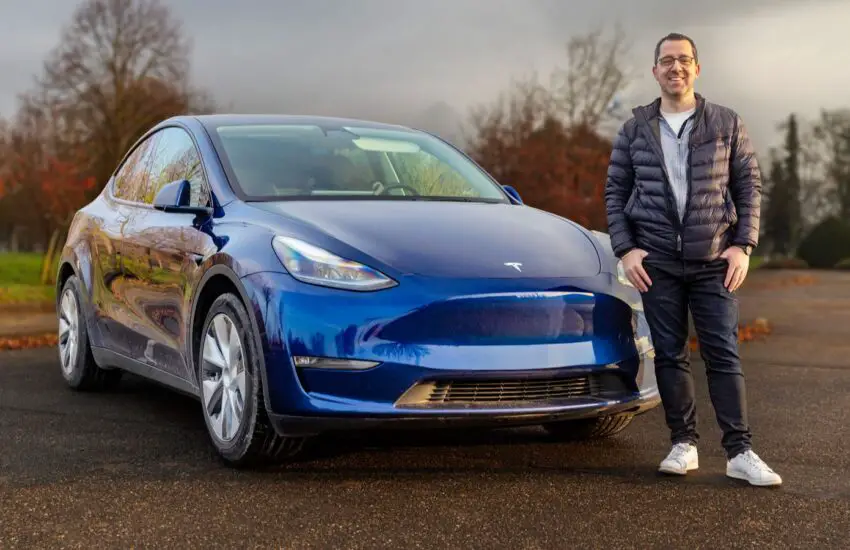
From Family Van to Electric SUV: A 27,000 km Tesla Model Y Review

A Driver’s Honest Take After 27,000 Kilometers

Swapping the keys of a practical Volkswagen Touran for a Tesla Model Y Long Range represents a significant lifestyle shift. After covering 27,000 kilometers, one owner provides a comprehensive and unfiltered account of this transition from a conventional family MPV to a premium electric SUV. The verdict is clear: there’s no looking back to combustion engines.

Real-World Range and Charging Network Reality

The advertised range meets real-world expectations under normal driving conditions, including highway use. The extensive Tesla Supercharger network proves to be a major advantage, turning longer journeys into a seamless experience. The convenience of home charging, however, remains the true game-changer for daily use, fundamentally altering the refueling habit from a weekly errand to a nightly routine.

Daily Comfort and Driving Experience

The leap in technology and driving refinement is immediately apparent. The instant torque, serene cabin at speed, and minimalist interface redefine daily commutes and family trips. The spacious cargo area, aided by the front trunk, easily accommodates family gear. While the ride quality is firm compared to a traditional MPV, it is a trade-off for the responsive and engaging handling characteristics.

A Transparent Cost Analysis

The financial perspective extends beyond the purchase price. Significant savings on “fuel” and routine maintenance compared to the previous Touran are consistently noted. The absence of oil changes, exhaust system issues, and complex mechanical components contributes to a lower total cost of ownership over time, offsetting the initial premium for many drivers.

This firsthand experience concludes that the Tesla Model Y Long Range successfully transitions from a novel technology to a dependable, cost-effective, and enjoyable primary family vehicle. The initial adaptation to electric vehicle ownership is quickly overshadowed by the daily benefits in performance, convenience, and operating economics.

Chevrolet P148E OBD2 Code: Exhaust Gas Recirculation (EGR) Valve Position Sensor Circuit Low Voltage

Understanding the P148E Diagnostic Trouble Code in Chevrolet Vehicles

The OBD2 diagnostic trouble code P148E is a manufacturer-specific code primarily used by General Motors (GM), including Chevrolet, GMC, Buick, and Cadillac vehicles. This code is defined as “Exhaust Gas Recirculation (EGR) Valve Position Sensor ‘A’ Circuit Low Voltage.” It indicates that the Engine Control Module (ECM) or Powertrain Control Module (PCM) has detected a voltage signal from the EGR valve position sensor that is below the expected normal operating range. This sensor is critical for precise EGR system operation, which is essential for reducing nitrogen oxide (NOx) emissions and controlling combustion temperatures.

Role of the EGR System and Position Sensor

The Exhaust Gas Recirculation (EGR) system is a key emissions control component. It recirculates a small, metered amount of inert exhaust gas back into the engine’s intake manifold. This dilutes the air-fuel mixture, lowering peak combustion temperatures and reducing the formation of harmful NOx emissions. The EGR valve position sensor, typically a potentiometer, is mounted on the EGR valve. It provides real-time feedback to the ECM about the valve’s pintle position (how far it is open or closed). This closed-loop feedback allows the ECM to precisely control the EGR flow rate.

Technical Meaning of “Circuit Low Voltage”

A “Circuit Low Voltage” condition for the P148E code specifically means the signal voltage from the position sensor to the ECM is reading lower than a predetermined threshold—often near 0 volts or ground potential. This can happen when the sensor’s signal wire is shorted to ground, the sensor itself has an internal failure, or there is a fault in the sensor’s 5-volt reference circuit. The ECM interprets this abnormal low signal as an implausible valve position, triggering the P148E code and illuminating the check engine light.

Common Symptoms and Causes of Code P148E

When the P148E code is stored, the vehicle’s ECM may default to a fail-safe or limp mode for the EGR system, often disabling it entirely to prevent driveability issues or potential engine damage. This can lead to several noticeable symptoms.

Primary Symptoms of P148E

  • Illuminated Check Engine Light (MIL): The most immediate and common indicator.
  • Reduced Engine Performance and Power: The engine may feel sluggish, especially under acceleration or load.
  • Increased Nitrogen Oxide (NOx) Emissions: This will cause a vehicle to fail an emissions test.
  • Engine Knocking or Pinging (Detonation): Without EGR to lower combustion temperatures, pre-ignition can occur, particularly under load.
  • Rough Idle or Stalling: In some cases, incorrect EGR feedback can disrupt idle air control.
  • Poor Fuel Economy: The engine management system may run a richer fuel mixture to compensate, reducing efficiency.

Root Causes of the P148E Fault Code

  • Faulty EGR Valve Position Sensor: The internal potentiometer has failed, providing an incorrect low signal.
  • Shorted or Damaged Wiring Harness: The sensor’s signal wire is shorted to ground or chassis due to chafing, heat damage, or rodent activity.
  • Poor Electrical Connections: Corrosion, bent pins, or loose terminals at the sensor connector or ECM connector.
  • Failed or Sticking EGR Valve: A mechanically stuck valve can sometimes cause abnormal sensor readings.
  • Issues with the 5-Volt Reference Circuit: A problem with the ECM’s provided 5-volt reference supply to the sensor.
  • Faulty Engine Control Module (ECM/PCM): Rare, but internal ECM failure processing the sensor signal is possible.

Step-by-Step Diagnostic and Repair Procedure for P148E

Diagnosing P148E requires a systematic approach using a digital multimeter (DMM) and a quality scan tool. Always begin by verifying the code and checking for technical service bulletins (TSBs) for your specific Chevrolet model (e.g., Silverado, Equinox, Tahoe).

Step 1: Preliminary Inspection and Scan Tool Data

Start with a visual inspection of the EGR valve, sensor, and associated wiring harness. Look for obvious damage, corrosion, or disconnections. Using your scan tool, navigate to live data parameters. Look for the “EGR Valve Position” or “EGR Desired Position” PID (Parameter ID). With the key on, engine off, the commanded position is usually 0%. Observe the actual position reading. A reading fixed at 0%, 100%, or an implausibly low value (e.g., 2%) while commanding different positions confirms a sensor circuit issue.

Step 2: Electrical Circuit Testing with a Multimeter

Locate the wiring diagram for your specific vehicle. Disconnect the electrical connector from the EGR valve position sensor. With the key on, engine off, check for the following at the harness connector (not the sensor side):

  • 5-Volt Reference: Probe the appropriate pin; you should read a steady 5.0 volts (±0.5V).
  • Sensor Ground: Check the ground circuit for continuity to a good engine ground. Resistance should be very low (less than 5 ohms).
  • Signal Circuit Integrity: Check the signal wire for a short to ground or voltage. It should not have battery voltage or be shorted to chassis ground.

If the 5V reference or ground is missing, diagnose that circuit back to the ECM. If circuits are good, the fault likely lies with the sensor or valve assembly.

Step 3: Testing the EGR Valve Position Sensor

Reconnect the harness and use a multimeter to back-probe the signal wire. Slowly move the EGR valve pintle by hand (if possible) or command the valve with a capable bi-directional scan tool. The signal voltage should change smoothly between approximately 0.5V and 4.5V without any dropouts or spikes. A fixed low voltage (e.g., 0.1V) or no change confirms a failed sensor. Note: On many modern Chevrolet models, the position sensor is integrated into the EGR valve and is not serviced separately.

Step 4: Repair and Clearance of Code P148E

Based on your findings:

  • Repair Wiring: Solder and seal any damaged wires. Use conduit to protect the repair.
  • Clean Connectors: Use electrical contact cleaner on corroded terminals.
  • Replace Component: If the sensor or integrated EGR valve assembly is faulty, replacement is necessary. Use OEM or high-quality aftermarket parts.

After repairs, clear the DTC with your scan tool. Perform a test drive to ensure the code does not return and that all driveability symptoms are resolved. Monitor live data to confirm the EGR position sensor is now responding correctly to ECM commands.

Preventative Maintenance and Final Considerations

While EGR system components are wear items, certain practices can extend their life. Using high-quality fuel and performing regular oil changes can minimize carbon buildup, a common culprit for sticking EGR valves. Periodically inspecting the engine bay for damaged wiring or loose connectors can also prevent future electrical faults like P148E.

Importance of Proper Diagnosis

Resist the temptation to simply replace the EGR valve as a first step. A thorough diagnosis as outlined can save significant time and money by accurately identifying whether the fault is in the wiring, sensor, or valve mechanism itself. Misdiagnosis can lead to unnecessary part replacement and a returning check engine light.

Impact on Emissions and Vehicle Operation

Ignoring a P148E code will lead to increased emissions, potentially causing your vehicle to fail mandatory smog checks. Furthermore, prolonged driving with a disabled EGR system can contribute to engine knocking and increased thermal stress on engine components. Addressing this code promptly is key to maintaining your Chevrolet’s performance, efficiency, and environmental compliance.


Ram Power Wagon 2027: Hemi V8 Replaced by Cummins Diesel Power

A New Era for the Ram Power Wagon

In a landmark shift for one of America’s most iconic off-road trucks, Ram has officially confirmed the 2027 Power Wagon will abandon its legendary gasoline Hemi V8 in favor of a high-output Cummins turbo-diesel engine. This move directly responds to years of enthusiast demand, fundamentally altering the truck’s capability profile and positioning it as a new benchmark for heavy-duty off-road performance.

The Heart of the Change: Cummins 6.7L High-Output

The centerpiece of this transformation is the renowned Cummins 6.7-liter inline-six turbo-diesel engine. Known for its massive torque output and robust durability in Ram 2500 and 3500 models, this powerplant will bring a different kind of muscle to the Power Wagon. Drivers can expect a dramatic increase in low-end torque, providing superior crawling capability on treacherous terrain and enhanced towing prowess even in extreme off-road conditions. This swap from gasoline roar to diesel grunt represents the most significant powertrain change in the modern Power Wagon’s history.

Beyond the Engine: Anticipated Upgrades

Integrating the heavier Cummins diesel will necessitate comprehensive engineering revisions. Anticipated upgrades for the 2027 model include reinforced front and rear axles, an enhanced suspension system to manage the increased weight, and likely upgrades to the already formidable disconnecting front sway bar and Warn winch system. The focus remains on maintaining the Power Wagon’s legendary articulation and rock-crawling agility while endowing it with the workhorse stamina characteristic of a diesel powertrain.

Redefining the Off-Road Heavy-Duty Segment

This strategic shift allows the Ram Power Wagon to carve out a unique niche. It will no longer compete solely with gasoline-powered off-road trucks but will instead offer a diesel-powered, factory-equipped off-roader with unmatched torque. This addresses a key gap in the market for adventurers and workers who require extreme off-road capability coupled with the long-range efficiency and high-tow rating traditionally found only in conventional diesel pickups. The 2027 model year is poised to redefine expectations for what a dedicated off-road truck can achieve.