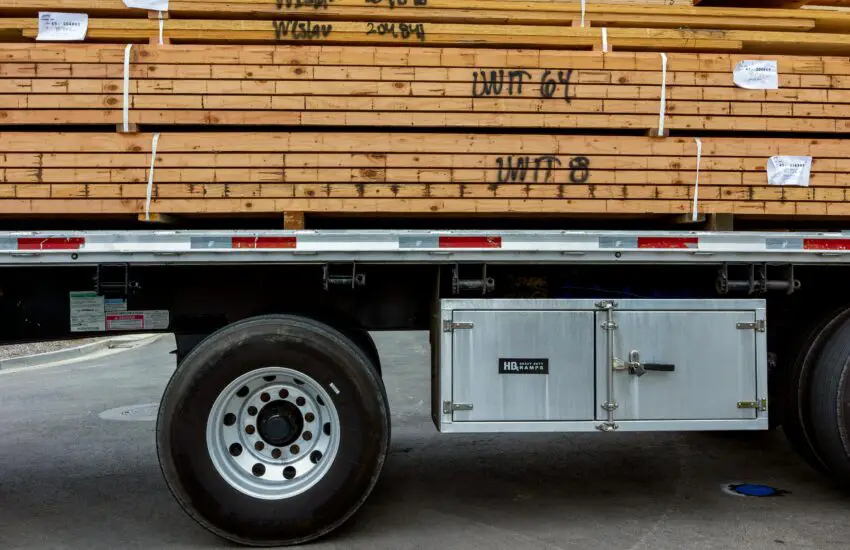
How to choose the right flatbed trailer for your transport

Choosing the Right Flatbed Trailer

In the logistics and transportation sector, efficiency and reliability begin with the right equipment. For heavy loads, oversized goods, or irregularly shaped cargo, few options offer as much flexibility as a flatbed trailer, particularly the standard 53-foot flatbed, which is a cornerstone of commercial transport across North America.

Whether you operate a fleet or are simply looking to increase your transport capacity, understanding flatbed trailer options is essential for optimizing performance, safety, and return on investment.

What is a Flatbed Trailer?

A flatbed trailer is a long, open platform without sides or a roof, making it ideal for transporting goods that don’t easily fit into enclosed trailers. These trailers are designed for maximum accessibility, allowing loading and unloading from all angles, perfect for bulky equipment, metal structures, and cumbersome cargo.

The 53-foot flatbed trailer is the industry standard for commercial loads in the United States. It offers the ideal balance between cargo volume and compatibility with freight infrastructure like loading docks and weigh stations.

Types of Flatbed Trailers

Not all flatbed trailers are created equal. Depending on your cargo, you might consider:

  • Standard Flatbed: Length from 48 to 53 feet. Ideal for palletized goods and general cargo.
  • Drop Deck Trailer: Features a lower deck for taller cargo that exceeds standard height limits.
  • Double Drop Trailer: Offers an even lower center section for transporting extremely tall items like construction machinery.
  • Extendable Flatbed Trailer: Ideal for long loads such as steel beams or pipes, these trailers can be adjusted in length.

Steel vs. Aluminum for Flatbed Trailers

Choosing between steel and aluminum for your flatbed trailer depends on several critical factors. Steel trailers offer exceptional durability and superior impact resistance but are heavier, which can reduce payload capacity. Aluminum trailers are significantly lighter, allowing for more goods to be carried while staying within legal weight limits, but they may have a higher initial purchase cost.

Essential Selection Criteria

To choose the flatbed trailer that perfectly fits your needs, several factors must be considered. The nature of your cargo determines the type of deck required, while frequency of use influences material choice. Road regulations regarding weight and dimensions must be strictly followed to avoid violations. Finally, acquisition budget and long-term maintenance costs complete the decision-making analysis.

Advantages of Flatbed Trailers

Flatbed trailers offer numerous operational advantages. Their open design facilitates loading and unloading from all sides, significantly reducing handling times. Their versatility allows them to accommodate goods of various shapes and sizes, including those requiring side access during transport. Their simple structure generally results in easier and less costly maintenance compared to specialized trailers.

Safety Considerations

Safety remains paramount when using flatbed trailers. Proper cargo securement is essential to prevent shifting during transport. Securing equipment like straps, chains, and nets must be suited to the type of goods being transported. Regular inspection of the deck condition, braking systems, and lighting equipment helps ensure optimal transport conditions.


The exceptional benefits of the Toyota Corolla in San Antonio

The Exceptional Benefits of the Toyota Corolla in San Antonio

When it comes to reliability, efficiency, and value for money, few vehicles have stood the test of time like the Toyota Corolla. Renowned as an economical compact sedan with a premium feel, the Corolla remains a top choice for both first-time buyers and experienced drivers. If you’re currently looking for a Toyota Corolla in San Antonio, you’re in luck: this city offers excellent dealership options, seasonal promotions, and an inventory suited to a wide range of needs.

In this article, we will explore the key benefits of buying a Toyota Corolla in San Antonio, covering everything from fuel efficiency and safety to local advantages and dealership perks. By the end, you’ll understand why the Corolla is not just a smart choice, but the perfect solution for drivers in San Antonio.

1. Exceptional Fuel Efficiency for San Antonio Commutes

One of the main reasons drivers choose the Toyota Corolla in San Antonio is its remarkable fuel economy. Whether you’re commuting to work in downtown San Antonio, regularly driving on Loop 1604, or heading out on a road trip to the Hill Country, the Corolla helps you save on fuel.

  • The standard Corolla sedan offers up to 32 MPG in the city and 41 MPG on the highway.
  • The Corolla Hybrid boosts this to an impressive 53 MPG in the city and 46 MPG on the highway.

With rising fuel prices, this efficiency means substantial long-term savings for San Antonio residents, especially for those with daily commutes or weekend adventures.

2. Proven Reliability and Low Maintenance Costs

The Toyota Corolla has earned a reputation as one of the most reliable cars on the road. Year after year, it ranks at the top of customer satisfaction surveys and durability ratings. This reliability translates into lower maintenance costs and fewer unexpected visits to the mechanic.

Corolla owners in San Antonio enjoy added peace of mind thanks to the robust engine and transmission, designed to withstand the varied driving conditions in Texas. High summer temperatures and occasionally rough roads are no challenge for this vehicle built to last.

3. Advanced Safety Technology for Peace of Mind

The Toyota Corolla comes equipped with the Toyota Safety Sense system, a comprehensive suite of safety features designed to protect occupants and prevent accidents. This system includes lane-keeping assist, adaptive cruise control, and pedestrian detection.

For San Antonio drivers, these technologies are particularly useful in dense driving environments, such as interstate highways or downtown streets. Enhanced safety provides extra protection, whether you’re driving alone or with your family.

4. Optimized Comfort and Interior Space

Despite its compact status, the Toyota Corolla offers a spacious and well-designed interior. Ergonomic seats, quality materials, and effective sound insulation contribute to a pleasant driving experience, even on long trips.

The Corolla’s trunk provides generous space for groceries, luggage, or recreational gear. Whether you’re heading out for a getaway to Brackenridge Park or shopping at San Antonio malls, you’ll have the room you need.

5. Outstanding Resale Value

One of the Toyota Corolla’s major assets is its ability to retain value on the used car market. Thanks to its reputation for reliability and consistent demand, the Corolla sells easily and at a favorable price.

For San Antonio residents, this means investing in a Corolla is a smart financial decision. Whether you plan to sell it in a few years or keep it long-term, you’ll benefit from an excellent return on investment.

6. Adaptability to San Antonio’s Climate

The Toyota Corolla is designed to adapt to various climates, including the hot, humid summers of San Antonio. The efficient air conditioning, UV resistance, and durability of interior materials ensure your comfort year-round.

Additionally, recent Corolla models are equipped with advanced thermal management systems that preserve engine performance even on the hottest days. You can rely on your vehicle, no matter the weather conditions.

7. Customization and Available Options

The Toyota Corolla offers a wide range of trims and options to meet individual preferences. From premium audio systems to advanced connectivity technologies, you can customize your vehicle to your specific needs.

San Antonio dealerships typically offer a varied inventory, allowing buyers to find the Corolla that perfectly matches their lifestyle and budget. This flexibility is an additional advantage for discerning drivers.

In conclusion, the Toyota Corolla is a wise choice for drivers in San Antonio thanks to its fuel efficiency, legendary reliability, advanced safety technologies, and excellent value for money. Whether you’re a new driver or a seasoned motorist, this car will meet your expectations and accompany you on all your Texas adventures.

7 Secrets to Keep Your Car Like New

7 Secrets to Keep Your Car Like New

There’s nothing quite like the moment you take the wheel of your first car and discover its shiny surfaces and that distinctive new car smell. The excitement, the feeling of freedom, and the pride that come with it are unique.

Naturally, you take care to preserve that feeling by setting rules like “no food in the car” and choosing an air freshener that reminds you of the new car scent.

However, in doing so, it’s possible to overlook the maintenance of the vehicle’s mechanical system, which is just as crucial as its appearance.

Owning a car in the UK means dealing with busy city commutes and unpredictable weather. From harsh winters to city driving with frequent stops and starts, regular maintenance is key to ensuring your vehicle runs smoothly and efficiently.

On the other hand, ignoring small issues can lead to costly repairs, an MOT test failure, or even a breakdown on the motorway. That’s why, to help you avoid this, we’re revealing 7 secrets that will allow you to keep your car like new, no matter where you drive.

1. Regular Brake Checks

Your car’s brakes are among its most important safety features, especially in rainy or icy weather. It’s your responsibility to ensure they are always in perfect condition. If you hear squeaking, grinding noises, or if the brake pedal feels soft, your brakes might be faulty.

The Driving Standards Agency (DVSA) classifies faulty brakes as one of the main causes of MOT test failure in the UK. However, with some regular brake checks, you can easily ensure your braking system works properly, reduce braking distances, and prevent dangerous situations.

2. Oil Changes and Fluid Checks

Missing oil changes can lead to engine damage, poor performance, and increased fuel consumption. Engine oil plays an essential role in lubricating moving parts, reducing friction, and helping to dissipate heat.

It’s recommended to check the oil level regularly and adhere to the oil change intervals recommended by the manufacturer. Don’t forget other vital fluids either: coolant, brake fluid, power steering fluid, and windshield washer fluid. Proper levels and clean condition of these fluids are essential for your vehicle’s proper functioning and longevity.

3. Tire Monitoring

Your tires are the only point of contact between your car and the road. Incorrect pressure, uneven wear, or low tread depth can compromise handling, increase braking distance, and the risk of aquaplaning.

Check tire pressure at least once a month and before a long trip. Visually inspect the tires for any signs of abnormal wear or damage. Periodic tire rotation promotes even wear, extending their lifespan.

4. Battery Maintenance

A weak or faulty battery is a common cause of breakdown, especially in cold weather. Battery terminals can corrode over time, disrupting the electrical connection.

Regularly inspect the battery for any corrosion on the terminals and clean them if necessary. If your battery is more than three or four years old, have it tested to assess its condition and charge level. Avoid leaving headlights or accessories on when the engine is off to prevent draining the battery.

5. Filter Replacements

Your car uses several filters to ensure its proper operation. The air filter protects the engine from impurities, the oil filter cleans the engine oil, and the cabin (or pollen) filter improves the air quality inside the vehicle.

Clogged filters can reduce performance, increase fuel consumption, and even damage the engine in the long run. Follow the recommended replacement intervals for each of these filters.

6. Lighting and Signal Inspection

Properly functioning lighting and signaling are essential for your safety and that of other road users. This includes headlights (dipped and main beam), brake lights, turn signals, and reverse lights.

Regularly check that all your lights come on correctly. Replace any burnt-out bulbs promptly. A misaligned headlight can also reduce your visibility at night and dazzle other drivers.

7. Bodywork Cleaning and Protection

While mechanical maintenance is paramount, preserving your car’s exterior appearance is also important. Dirt, road salt, bird droppings, and tree sap can damage the paint over time.

Wash your car regularly to remove these contaminants. A thorough wash, possibly followed by polishing and a protective wax, will help preserve the paint’s shine and protect the bodywork from the elements.

By following these 7 regular maintenance tips, you will significantly contribute to maintaining your car’s performance, safety, and value, allowing you to enjoy the feeling of driving a like-new vehicle for longer.

Total Cost of Ownership of a Truck: Complete Guide 2024

Total Cost of Ownership for a Truck

Purchasing a truck represents a long-term commitment. Owning a utility vehicle involves various expenses, which requires a thorough analysis of the financial implications to properly assess the actual cost of the specific model.

These financial considerations remain essential whether you are an independent owner-operator or managing a large fleet of vehicles.

The overall cost effectively includes vehicle acquisition, repairs, fuel and oil, regular maintenance, driver wages, insurance, taxes, and all these elements constitute significant factors in the total expense structure.

Understanding these costs enables truck owners to make informed financial decisions, plan effectively, and competently manage economic aspects in a highly competitive market. This article provides a detailed analysis of the total operating cost of a truck.

The Average Total Cost of Owning a Truck

The average cost of owning a truck varies considerably depending on the type of vehicle, its usage, and its geographical location. According to average estimates, owning a truck represents between $150,000 and $180,000 per year per vehicle.

These figures include fixed and variable costs such as acquisition, fuel, repairs, insurance, driver wages, taxes, and tolls. Among these expense items, fuel and driver wages prove to be the most significant, with fuel potentially accounting for up to 40% of operating expenses.

Regular and additional expenses also evolve over time and change after certain mileage thresholds. For example, recent models generally have lower maintenance costs but tend to have higher purchase or lease prices.

Detailed Components of Ownership Cost

The initial investment constitutes only one part of the financial equation. Business planning tools like total cost of ownership help owners determine the overall expense related to a specific asset over its complete lifespan.

Current operating costs include preventive maintenance, tires, fluids, and wear parts. These elements, although less visible than the initial investment, accumulate significantly over the vehicle’s lifetime.

Impact of Usage on Costs

Intensive use of the truck naturally accelerates the wear of mechanical components. Long-distance trips, difficult roads, and heavy loads proportionally increase the need for maintenance and repairs.

Frequency of use directly influences fuel consumption, tire wear, and the need for more frequent maintenance. Rigorous planning of routes and loads can optimize these parameters.

Cost Reduction Strategies

Several approaches allow for controlling expenses related to truck ownership. Regular preventive maintenance, eco-driving training for drivers, and choosing fuel-efficient models represent significant optimization levers.

Negotiating bundled maintenance contracts, comparative analysis of insurance, and strategic tax planning also contribute to reducing the overall financial burden.

Future Cost Trends

Current trends indicate a gradual increase in ownership costs, mainly influenced by rising fuel prices, evolving environmental regulations, and increasing labor costs.

The emergence of electric and autonomous technologies could substantially modify this economic equation in the medium term, potentially offering new opportunities for reducing operating costs.

Intelligent CNC Machining: The Revolution in Electric Vehicle Manufacturing

Intelligent CNC Machining Propels Smart Manufacturing of New Energy Vehicles

In today’s rapidly evolving technological landscape, new energy vehicle (NEV) manufacturing is undergoing significant transformation. This shift is driven by the urgent need for sustainability and efficiency in automotive production. As manufacturers strive to meet growing consumer demands and stringent regulations, intelligent CNC machining is emerging as a crucial component of smart manufacturing.

Challenges in Electric Vehicle Manufacturing

The increasing demand for eco-friendly transportation options has accelerated the growth of the NEV market. However, this transition is not without challenges. A major obstacle lies in the complexity of modern vehicle designs, which often require intricate components that must be produced with high precision. Furthermore, the need for lightweight materials, such as aluminum and advanced composites, adds to the complexity, as these materials often require specialized machining techniques.

Additionally, manufacturers must navigate the need for flexibility in their production processes. As consumer preferences evolve and technology advances, the ability to quickly adapt to new designs and production methods becomes critical. Supply chain disruptions, exacerbated by global events, have further emphasized the importance of agility in manufacturing. These challenges demand innovative solutions capable of enhancing efficiency while maintaining quality.

The Rise of Intelligent CNC Machining

Intelligent CNC machining is at the forefront of addressing these challenges. By leveraging advanced computing technologies and automation, manufacturers can achieve high precision and efficiency in their production processes. In the context of NEVs, intelligent CNC machining can significantly enhance the accuracy and consistency of critical components.

Superior Precision and Quality

Intelligent CNC systems integrate sensors and AI algorithms that monitor machining parameters in real-time. This continuous monitoring enables automatic adjustments to maintain optimal quality throughout the production process. The ability to produce parts with extremely tight tolerances is particularly important for battery components and electric propulsion systems.

Production Flexibility

Unlike traditional production lines, intelligent CNC machining centers can be quickly reprogrammed to accommodate new designs. This agility allows manufacturers to respond more effectively to market changes and specific customer demands. The production of customized small batches thus becomes economically viable.

Optimization of Advanced Materials

NEVs frequently use lightweight materials and special alloys that present unique machining challenges. Intelligent CNC machines are equipped to handle these materials with optimized settings, reducing waste and improving energy efficiency. Adaptive machining allows for automatic adjustment of speeds and feeds based on material characteristics.

Integration into the Smart Manufacturing Ecosystem

Intelligent CNC machining does not operate in isolation. Its true potential is realized when integrated into a connected manufacturing ecosystem. Interoperability with Manufacturing Execution Systems (MES) and IoT platforms enables complete visibility of the production chain. This integration facilitates predictive maintenance, reducing unexpected downtime.

Data Collection and Analysis

Intelligent CNC machines generate vast volumes of data that can be analyzed to optimize processes. Analyzing tool wear trends, for example, allows for more effective planning of tool changes and reduction of production defects. This data also contributes to the continuous improvement of component designs.

Automation and Robotics

Integration with advanced robotic systems enables the creation of fully automated manufacturing cells. Robots can load and unload parts, perform intermediate inspections, and even carry out secondary operations, creating a continuous and highly efficient production flow.

Future Prospects

The evolution of intelligent CNC machining continues to push the boundaries of what is possible in NEV manufacturing. Future developments include deeper integration of artificial intelligence for autonomous process optimization, as well as the adoption of augmented reality for programming and maintenance. The convergence of digital technologies and physical manufacturing opens new possibilities for more sustainable and efficient production.

As the automotive industry continues its transition toward electrification, intelligent CNC machining will remain an essential pillar of this transformation. Its ability to combine precision, flexibility, and efficiency makes it an indispensable asset for manufacturers seeking to remain competitive in the rapidly evolving landscape of sustainable mobility.

How to Resurface Cylinder Heads with a Treadmill: Technical Guide

Resurfacing Cylinder Heads with a Treadmill

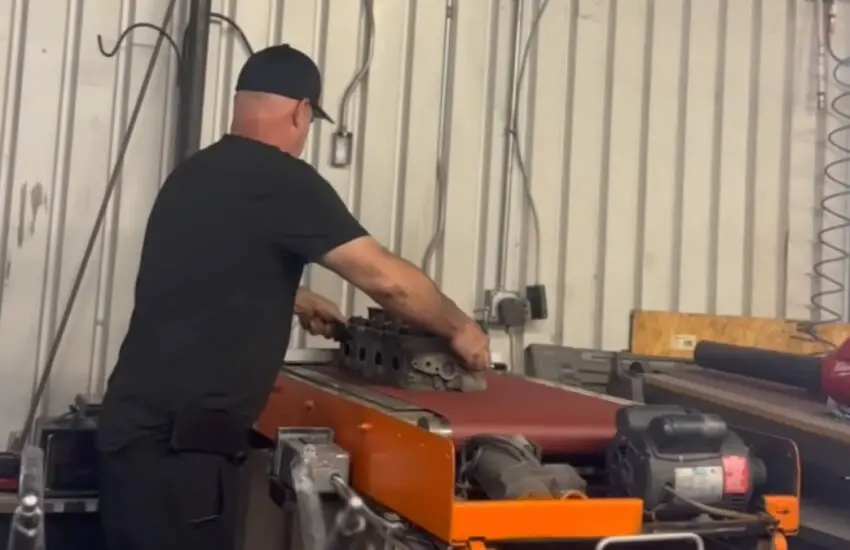
Specialized workshop equipment quickly becomes very expensive. To acquire a machine for resurfacing cylinder heads, you generally need to budget at least 3000 euros, and this cost can increase significantly depending on the desired level of sophistication. Alternatively, if this investment is prohibitive, you can outsource this work to a professional with the proper equipment, but this involves waiting times. But what do you do when neither purchasing nor outsourcing are viable options? If you share the ingenuity of David Miller, creator of the Hemi Garage Hacks YouTube channel, the solution lies in building your own device from a treadmill.

A Proven and Effective Method

This approach is no joke. Miller claims to have resurfaced over 1000 cylinder heads with his homemade systems over the past 13 years. A remarkable achievement, especially considering that his latest version cost him less than 500 euros to assemble.

Key Components of the System

As he explains in his latest video, Miller based this build on a treadmill designed to handle heavy loads and a medical stretcher. The setup uses a granite slab topped with a glass plate, creating an extremely rigid base that allows the custom-ordered abrasive belts to move freely. A metal bar fixed at one end serves as a stop for the cylinder heads. Once this device is in place, the task becomes relatively simple.

Break-in and Finishing Process

It seems that four or five cylinder heads are needed to break in each abrasive belt. Up to that point, Miller manually polishes the surface of each piece. Beyond that stage, the system cleans the surfaces perfectly, allowing it to perform a complete resurfacing in just a few minutes. To achieve an optimal result, it is essential to move the cylinder head back and forth on the belt and change its direction at least once, or even twice. Although this operation is not the most complex, it requires some technique to guarantee perfect flatness, which is essential for engine sealing and performance.

Practical Considerations and Precautions

This DIY method, although ingenious and economical, is not without its challenges. The accuracy and uniformity of the resulting surface must be rigorously checked with appropriate metrology instruments, such as a precision straightedge and a dial indicator. Safety is also a crucial factor: using a modified treadmill requires enhanced precautions against mechanical and electrical risks. Vacuuming the metal and abrasive particles generated during machining is essential to protect the operator and the work environment.

Comparison with Traditional Methods

Compared to a professional resurfacing machine, this homemade system has limitations in terms of production capacity and perfect reproducibility. Dedicated machines offer superior automation, precision, and speed, justifying their cost for intensive use. However, for the amateur mechanic or the skilled DIYer working on occasional projects, Miller’s solution demonstrates that it is possible to achieve satisfactory results with a controlled budget and an inventive spirit. It paves the way for similar experiments for other garage machining operations.

Ford Godzilla 7.3L V8 in a Classic Chevrolet C10: A Bold Engine Swap

Ford Godzilla 7.3L V8 in a Chevrolet C10

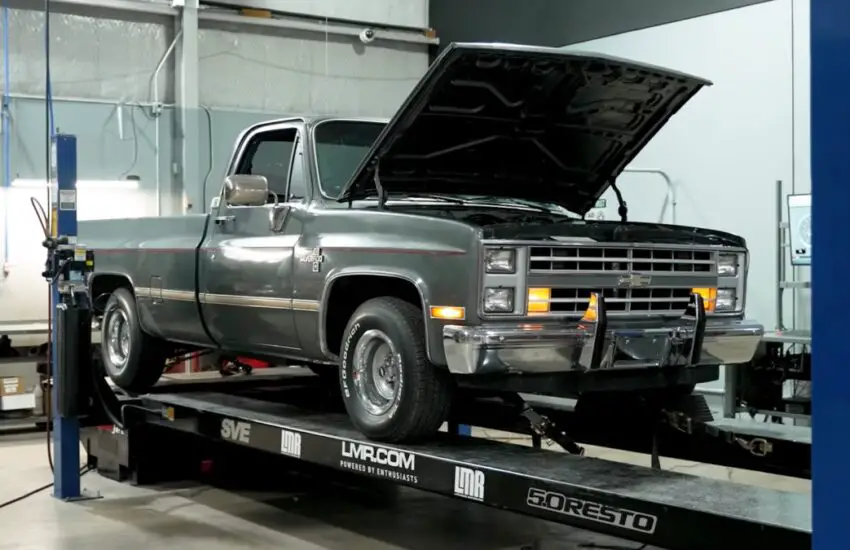
Ford created the hot-rodder’s best friend when it unveiled the 7.3-liter Godzilla engine. This powertrain has been heavily modified and installed in virtually every product from the Blue Oval manufacturer one can imagine, from Ford Fox Body Mustangs to F-150 pre-runners, and many more. However, I must admit I had never seen one in a squarebody Chevrolet C10 until now.

Jody Gunter’s Custom C10

This pickup truck belongs to Jody Gunter from Valley Mills, Texas. It is a 1986 Chevrolet C10 Silverado model that was recently tested on the dyno at Late Model Restorations. Instead of installing a used engine from a Super Duty pickup, Gunter opted for one of Ford’s crate Godzilla engines. He immediately equipped the block with a 92-millimeter GT500 throttle body, a Ford Performance intake manifold, a stage one Brian Tooley Racing camshaft with a phaser, an OBR control system, and beautiful exhaust headers that feed the rest of the custom exhaust.

7.3-liter Ford V8 in a Chevrolet C10

Technical Specifications of the Swap

The 7.3-liter Godzilla engine represents an exceptional platform for customization enthusiasts. With its generous dimensions and robust design, it offers considerable power potential. The crate engine version chosen by Gunter allows for easier installation while guaranteeing the reliability of a new engine. The addition of the GT500 throttle body and Ford Performance intake manifold optimizes cylinder filling, while the Brian Tooley Racing camshaft enhances high-RPM performance.

Integration into the C10

Installing a Ford engine in a Chevrolet represents a major technical challenge. The Late Model Restorations team had to solve several adaptation issues, particularly with engine mounts, the exhaust system, and electronics. The OBR control system effectively manages the engine while retaining the phaser’s functionalities. The custom long-tube headers were specially designed to fit perfectly into the C10’s chassis while optimizing exhaust gas flow.

Dyno Performance

Dyno tests revealed the impressive capabilities of this configuration. The combination of various performance elements allows the Godzilla engine to develop substantial power while maintaining a flat and usable torque curve. Retaining the phaser contributes to good low-RPM efficiency, while the modifications unlock the engine’s potential at high RPMs.

The Significance of This Project

This engine swap perfectly illustrates the current mindset in the automotive customization world. Traditional boundaries between brands are becoming increasingly porous, with enthusiasts now prioritizing performance and originality over brand purity. The Chevrolet C10 equipped with the Godzilla V8 thus represents a unique creation that combines the timeless charm of an American classic with the modern performance of a contemporary engine.

I finally achieved my college dream: acquiring a two-seater kart

I Finally Realized My Childhood Dream

Kismet is a fun way to say “destiny.” And the most amusing destiny is the one that places a fantastic go-kart in your path. Hop on board; we’re going to fulfill our childhood dreams by driving something that blurs the line between “toy” and “vehicle.”

The other day, I was driving through the countryside on an errand for my partner. On a long straight stretch of country road, I spotted someone pushing a yellow machine resembling a go-kart buggy into a driveway. “So cool,” I thought to myself.

I’ve been moderately obsessed with kart-like vehicles for about two years now, ever since I raced against a CrossKart at the Mount Philo hill climb. It was so cute and so fast—truly the ultimate toy vehicle. At the same time, I’ve dreamed of a mini sandrail-style kart since my earliest childhood. After all, isn’t that a universal dream?

The Quest for the Perfect Kart

My fascination with these little speed machines goes way back. Karts represent the ultimate freedom, that intoxicating feeling of driving a minimalist machine that responds instantly to every command. Unlike traditional cars, they offer a pure connection with the road and the environment.

Technical Features of a Two-Seater Kart

Modern karts like the Tomberlin Crossfire 150 come with impressive features. Their 150cc engine provides enough power for thrills while remaining accessible. The two-seater design allows you to share the adventure, whether for forest rides or on dirt paths.

The independent suspension on all four wheels ensures remarkable comfort on rough terrain. The all-terrain tires grip perfectly on various surfaces, while the tubular chassis offers optimal rigidity and safety.

The Unique Driving Experience

Driving a kart is not comparable to driving a classic car. In these machines, every bump is felt, every turn becomes an adventure. The wind whips your face, the engine roars right behind you—it’s a complete sensory experience.

These hybrid vehicles between a toy and a real mode of transport provide pure, almost childlike joy. They remind us that driving can be pure pleasure, free from the constraints of daily utilitarian transport.

Why Karts Are So Appealing

The appeal of karts lies in their simplicity and accessibility. Without doors, without a roof, without unnecessary bodywork, they embody the very essence of automotive fun. Their compact size makes them perfect for storage in a standard garage.

Maintenance is generally simpler and less expensive than for a traditional automobile. For many enthusiasts, owning a kart represents the fulfillment of an accessible childhood dream, without a disproportionate financial commitment.

Conclusion: The Dream Come True

Acquiring this two-seater kart marked the achievement of a long-cherished dream. These unique vehicles combine adrenaline, nostalgia, and freedom in a compact and fun package. They prove that sometimes, the simplest dreams are the ones that bring the most satisfaction.

Ford F-150 Lightning 2026: Up to $4,000 Discount on Electric Models

Ford F-150 Lightning 2026: Up to $4,000 in Discounts

Automakers are desperately trying to make all electric vehicles as affordable as possible since the disappearance of the $7,500 federal tax credit. Ford, which had attempted to extend this credit for leases through an ingenious approach, likely yielded to political pressure this week by announcing the abandonment of these plans. Nevertheless, the brand must maintain the appeal of its products, and one of the strategies adopted involves reducing the price of certain F-150 Lightning trims by up to $4,000.

Revised Pricing Structure for 2026

With the exception of the Pro work model, the 2026 F-150 Lightning starts at $65,540, including substantial destination charges of $2,195, for the STX trim. This price is exactly the same as the previous year’s base XLT version, although the naming has changed and additional off-road equipment has been integrated. It’s when opting for the mid-range Flash trim that the price difference becomes significant, with a saving of $4,000 compared to the equivalent 2025 model, for a total of $68,190.

Discounts Across the Entire Range

Moving up the range, the Lariat trim now starts at $77,190, representing a decrease of $2,000, while the Platinum retains its price of $87,190. Ford confirmed that these price reductions did not lead to the removal of standard equipment, thus preserving the perceived value for customers.

Electric Vehicle Market Context

This price reduction strategy comes in a particularly tense competitive landscape for electric vehicles. The absence of the federal tax credit has significantly altered the economic equation for potential buyers, forcing manufacturers to review their pricing positions. Ford thus appears to be adopting an aggressive approach to maintain its competitiveness in this evolving segment.

Analysis of Available Trims

The STX trim, the new entry point for the range, inherits the characteristics of the former XLT while benefiting from off-road improvements. The Flash, with its $4,000 reduction, now represents the best value-for-money option in the range. The Lariat and Platinum versions continue to target customers seeking a higher level of finish and equipment, with particular attention paid to comfort and onboard technologies.

Outlook for the F-150 Lightning

These pricing adjustments could significantly influence F-150 Lightning sales in 2026. By making the vehicle more accessible, Ford hopes to expand its base of potential customers in a market where price remains a decisive criterion for many buyers. The American brand thus demonstrates its willingness to quickly adapt to the changing realities of the electric vehicle market.

Comparison with Competitors

Faced with the growing offerings of electric vehicles in the pickup segment, these price drops position the F-150 Lightning in a more competitive price range. This strategy could allow Ford to maintain its leadership in this particular segment, while meeting consumer expectations regarding the financial accessibility of green technologies.

Audi SQ9 2027: The future German sports SUV unveiled in testing at the Nürburgring

Long-Awaited 2027 Audi SQ9 Spotted with Hybrid Design

Surprisingly, Audi still lacks a direct competitor for the Mercedes-Benz GLS-Class and BMW X7, but this situation will change as early as next year.

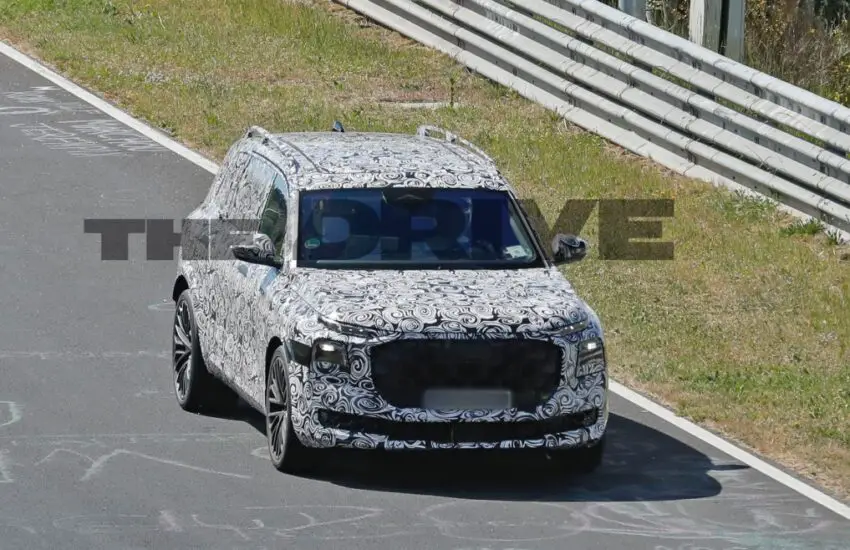
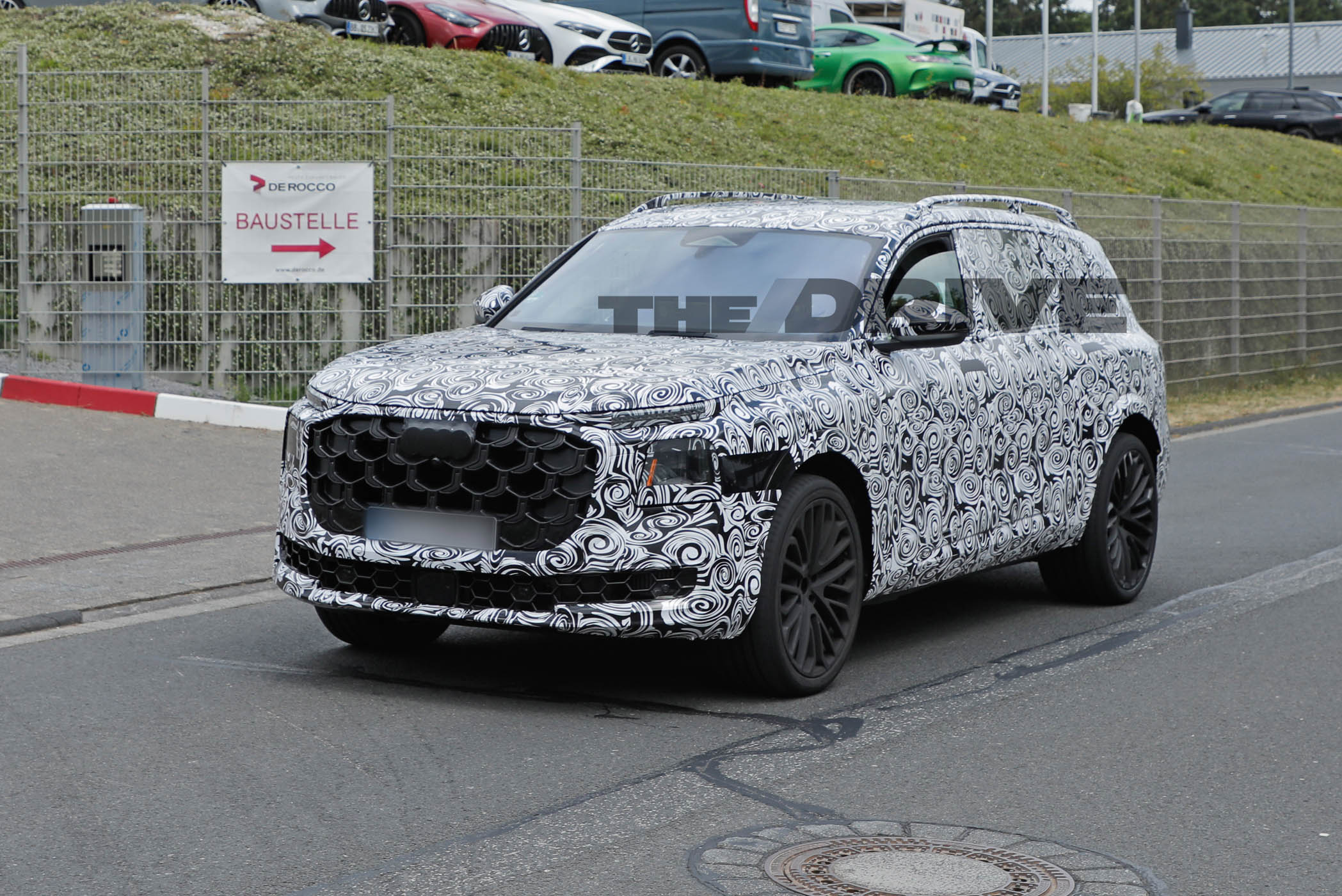
The three-row Audi Q9 SUV will debut in 2026 and position itself above the Q7 in the manufacturer’s lineup. Today, a sporty version of the Q9, to be marketed as the 2027 Audi SQ9, was spotted during testing on and around Germany’s Nürburgring.

The SQ9 will use the Q9’s technical foundation while adding more performance and power. The 4.0-liter twin-turbo V8 from the SQ7 and SQ8 models is expected under the hood. Power should approach 500 horsepower with 568 lb-ft of torque. An 8-speed automatic transmission will handle gear changes, while a performance version of the Quattro all-wheel drive system will be standard.

2027 Audi SQ9 spy shots
Stefan Baldauf / SB-Medien

A Design Blending Multiple Audi Models

The front of the SQ9 will feature a stylistic mix between the latest Q3 and Q7, enhanced with elements borrowed from current SQ7 and SQ8 models. The split headlight treatment is particularly striking, accompanied by honeycomb grille inserts. Multi-spoke wheels, likely 22 or 23 inches, generously fill the wheel arches and appear imposing despite the SQ9’s already substantial dimensions. The beltline and rear fender adopt a rounded shape that evokes the Mercedes-Benz GLS more than the Audi Q7.

An Awaited Response in the Premium Segment

The arrival of the SQ9 represents a strategic challenge for Audi in the premium three-row SUV segment. This model will finally fill a gap in the brand’s offerings against its direct German competitors. Intensive testing at the Nürburgring demonstrates Audi’s commitment to delivering dynamic characteristics worthy of its sporty reputation.

A Proven Technical Platform

The mechanical foundation of the SQ9 will build on Audi’s expertise in performance SUVs. The 4.0-liter twin-turbo V8 has already proven itself in other S model range vehicles, offering an ideal balance between refinement and performance. The Quattro all-wheel drive system, specifically calibrated for this application, will guarantee exemplary handling in all conditions.

A Distinctive Visual Identity

The SQ9’s exterior design appears to successfully synthesize various models from the Q lineup. The use of split headlights, a recent brand signature, gives the vehicle an immediately recognizable lighting identity. The specific grille and oversized wheels help affirm the sporty character of this high-performance version.

Positioning in the Audi Lineup

The SQ9 will establish itself as the flagship of Audi’s SUV range, above the Q7 and Q8. Its premium positioning and high performance will make it a halo product for the four-ring brand. This model will represent the technological and stylistic culmination of Audi in the sporty large family SUV segment.