Chevy Colorado Racing: An Atlas I6 Turbo Engine for a Radical Transformation

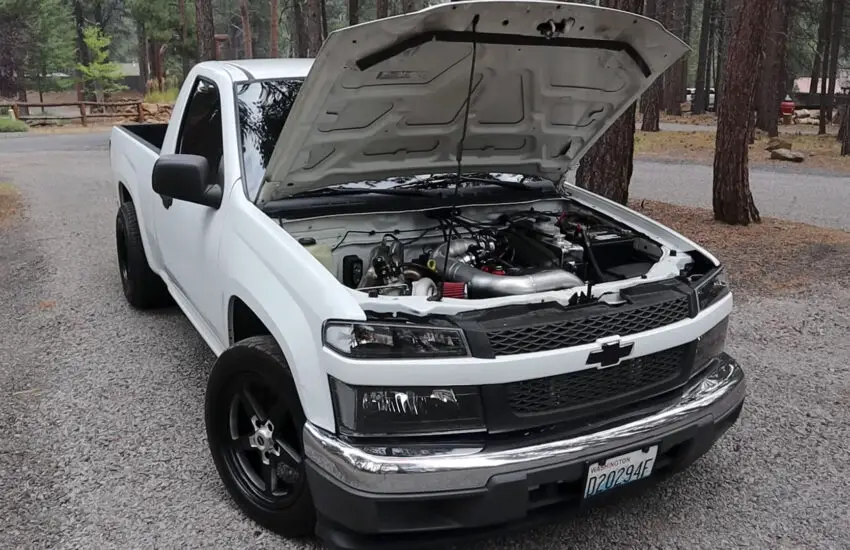
It is well known what a V8 can accomplish in a small pickup. But what is truly exciting is a project like this Chevy Colorado equipped with a supercharged Atlas I6 engine. Instead of choosing the classic LS route, Sky Perry, from the YouTube channel Reignited – Cycle and Automotive, opted for a GM inline 6-cylinder, a “GM 2JZ”, enhanced with a large turbo. After several months of work, the race pickup is now operational and promises thrilling sensations.

The Origins of a Budget Project

It all started with the purchase of a $1200 Colorado with a blown engine. Although known for his Hemi swaps, like on his twin-charged 392 Dodge Magnum, Perry found an Atlas 4.2-liter I6 engine in a Chevy Trailblazer for only $300. This low-cost project ultimately cost him about $7800, including the pickup.

A Herculean Task and High-Level Modifications

The budget would have been much higher without Perry’s manual labor. He estimates dedicating 250 hours to this project. Among the major modifications: the fabrication of a custom exhaust manifold for the VS Racing turbo, tuning via a MaxxECU, installation of an 8.8-inch rear axle, and a 3-inch suspension drop. Remarkably, the original AR5 manual transmission was retained, requiring a custom-machined flywheel. All of this was topped off with a… $100 clutch.

The Community Around the Atlas Engine

Sky Perry was assisted by Calvin Nelson (Nivlac57 on YouTube), a specialist in this engine. Nelson is famous for installing a 1000-horsepower Atlas 4200, nicknamed “AmeriBarra,” in a fifth-generation Camaro and for pushing an I6 Trailblazer into the 10-second quarter-mile club. A community of enthusiasts is forming around these swaps, and that’s great news.

Expected Performance

The pickup was scheduled for a dyno run on September 6th. Although the results are not yet public, Perry expects power exceeding 400 horsepower. Whether it’s fast or not, one thing is certain: with its turbo and manual transmission, the driving experience will be explosive.
How Ford Used 3D Printing to Gain Seconds at the Nürburgring

3D printing was the decisive tool for optimizing the Ford Mustang GTD on the legendary Nürburgring circuit. In the spirit of “Ford v Ferrari,” where every detail counts for victory, Ford’s engineering team adopted an unconventional, real-time development approach to push the boundaries of performance.

A Revolutionary Development Philosophy

At the launch of the 2025 Mustang GTD, Greg Goodall, Chief Program Engineer, revealed a complete break from the traditional process. Typically, development stops abruptly to focus on production. For the GTD, this rule did not exist. The team printed and tested parts directly on the Nürburgring track, a first that allowed for live data analysis and instant feedback into the design process.

The Birth of “Click Flicks”

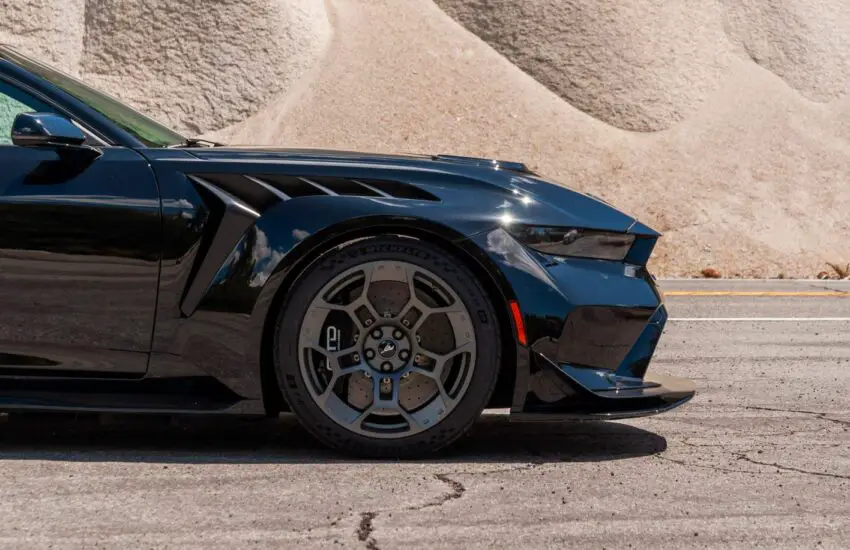
The major innovation came from a call by vehicle dynamics specialist Steve Thompson from the ‘Ring. He informed the team that he had tested 3D-printed parts around the hood vents, small “ski bumps” dubbed “click flicks.” These additions, not part of the initial design, proved effective enough to shave off precious (undisclosed) time per lap.

A Fast and Effective Collaboration

Motivated by these results, an intense collaboration between Goodall’s engineering team and Anthony Colard’s design team enabled the finalization of a viable design within one to two weeks. The goal was clear: replicate the aerodynamic effect of the prototypes while seamlessly integrating it into the bodywork. After seven to eight iterations and nearly 20 wind tunnel runs, the solution was found.

A Decisive Impact on Performance

The result was a major aerodynamic innovation: the “click flicks” are neutral in terms of drag but generate crucial additional downforce. These appendages were attached to a pre-existing lower lip on the hood. Their contribution was such that Greg Goodall admitted that a lap under 7 minutes would have been “very tight” without them. Proof was delivered in August 2024 when the Mustang GTD became the first American car to complete a Nürburgring lap in under 7 minutes (6:57.685), before setting a record time of 6:52.072 in April 2025.

Daniel Sadek: How a Catastrophic Car Movie Hastened His Downfall and Contributed to the 2008 Crisis

He lost millions on a disastrous car movie and helped bring down the global economy. Let’s go back to the 2000s, when underground car culture was at its peak. It was the decade of Fast and Furious, Torque, and Driven… Ah, Driven… If only I could forget it. I still see that flying manhole cover when I close my eyes at night.

Redline: The Cinematic Fiasco Funded by a Subprime Lender

But if Driven was bad, Redline was worse. Not only was it a spectacular cinematic failure, but it also had the “privilege” of being funded by one of the architects of the 2008 financial crisis: Daniel Sadek, the owner of Quick Loan Funding.

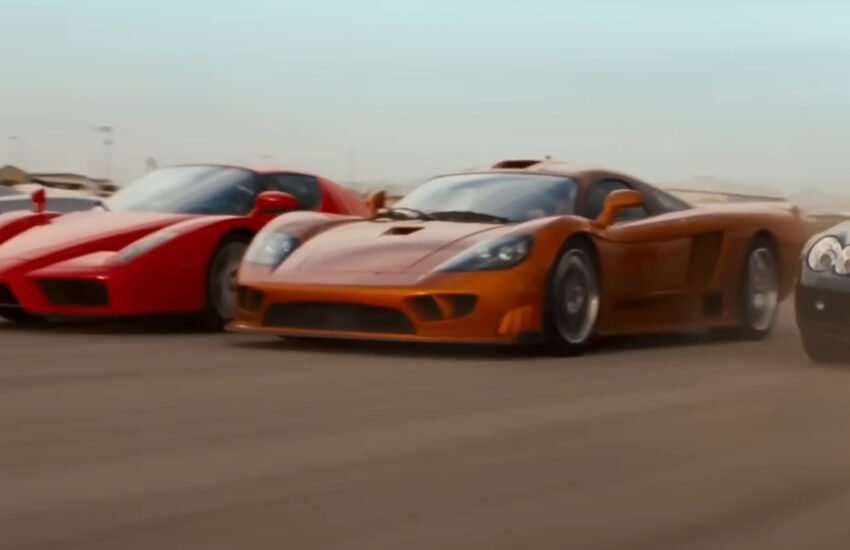
Sadek may not be the only aspiring Hollywood producer to have lost 18 million dollars on a film that cost 26 million, but he is the only one who destroyed a Porsche Carrera GT and a Ferrari Enzo in the process. Technically, it was Eddie Griffin who killed the Enzo, but who’s really counting? Certainly not those writing NINJA loans on the eve of the Great Recession.

A Film with an Exorbitant Budget and an Absurd Plot

Redline‘s B-list cast could have made for a fun racing movie if someone competent had been in charge. But it was clear that wasn’t the case. Between the convoluted plot and the lead role written specifically for Sadek’s girlfriend, the red flags should have been enough to scare off the entire production team. But Sadek’s money was good—at least at first—and his lending business was booming.

The Fall: From Cinema to the Subprime Crisis

What could go wrong? The answer turned out to be “just about everything.” The two destroyed supercars didn’t help the already overpriced project. But most importantly, don’t think the link to the financial crisis is clickbait: Sadek’s company held the records for nearly 4 billion dollars in subprime loans when the bubble burst. He even made Vanity Fair‘s list of the 100 people responsible for the 2008 crisis. Sure, he was only 86th, but his aggressive pursuit of uncreditworthy clients earned him the nickname “Predator Zero.”

The Bankruptcy of a Credit-Based Empire

He was so over-leveraged from financing the film that he couldn’t cover the torrent of defaults, which ultimately cost him his company. The resounding failure of Redline was the catalyst for the dizzying collapse of an empire built on easy credit, thus contributing to the global economic crash.

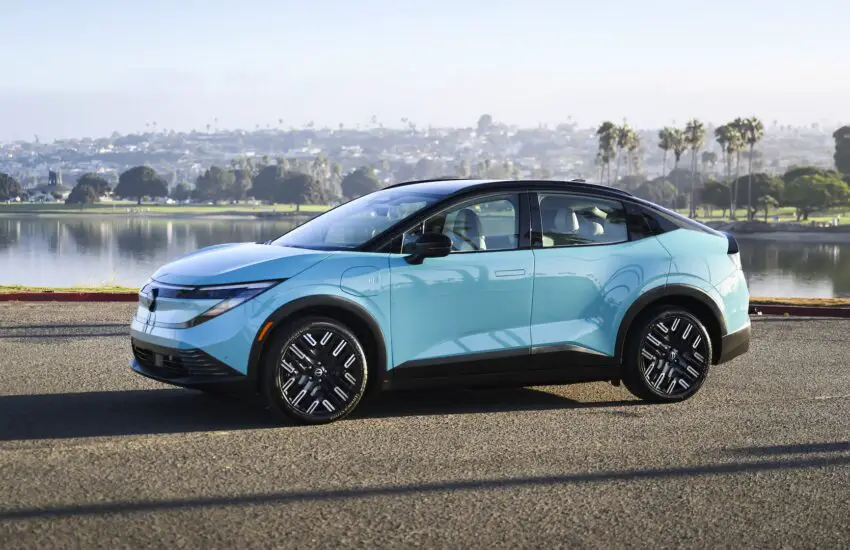
Nissan Leaf 2026: Complete Test of a Surprising and High-Performance Electric Car

Perfectly mastered simplicity is what defines the 2026 Nissan Leaf. Far from the small city car that popularized electric vehicles in 2010, it now presents itself as a crossover with serious range, solid technology, and a refined driving experience.

The Basics

The 2026 Leaf is a complete overhaul of Nissan’s electric offering. Starting at $29,990 for the S+ trim, it offers 487 km of range, tripling that of the original. Higher versions, like the Platinum+ ($38,990), slightly sacrifice range (417 km) for luxury and technology.

Design and Features

Transformed into a crossover, the Leaf sports an aerodynamic silhouette. Inside, the modern and clean cabin features comfortable “zero gravity” seats, intuitive physical controls, and a panoramic roof. The trunk offers 566 liters (1869 liters with seats folded).

Driving Experience

This is where the Leaf excels. The steering is precise and the torque is immediate (261 lb-ft). The new multi-link suspension improves comfort. The steering wheel paddles allow for playful energy recovery. The real-world range is impressive.

Technology and Price

The Google infotainment system and bidirectional charging are practical. With its aggressive pricing and range superior to its rivals (Kona Electric, Niro EV), the 2026 Leaf represents a safe bet, combining simplicity, driving pleasure, and efficiency.

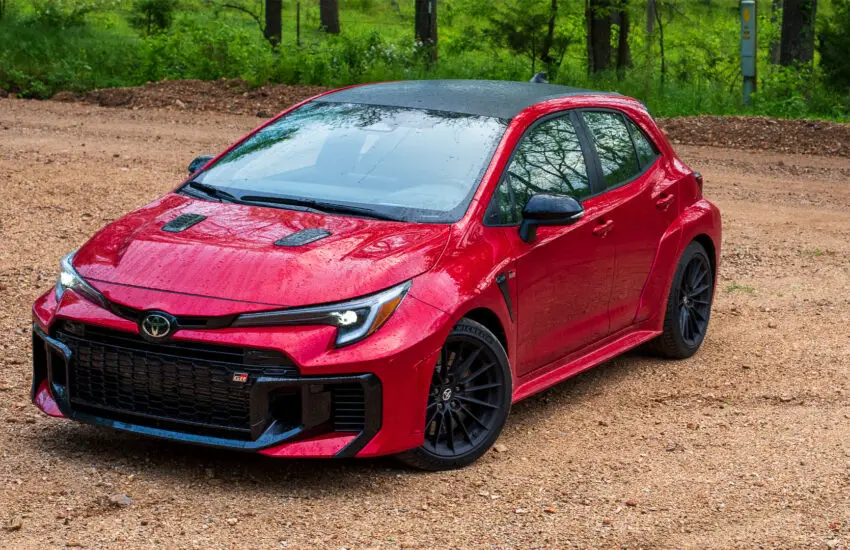
Toyota Corolla GRMN: Leaks on the Carbon Hood, Gold Wheels, and Sport Seats

The Toyota Corolla GRMN, the ultimate version of the GR Corolla, was caught completely undisguised at a dealership event, revealing exclusive details that confirm its status as a hardcore vehicle. These images, initially shared on the GR Corolla Forum, unveil a track-ready hot hatch.

An aggressive design and performance materials

The front of the car features aggressive air intakes and fins on the bumper, perfectly matching the official teasers released by Toyota in the spring. The standout feature is undoubtedly its exposed carbon fiber hood, a tribute to the tuning cars of the 2000s. At the rear, a large spoiler and a GRMN badge leave no doubt about its identity.

An interior focused on performance

The interior images confirm several specific features. Like the Morizo edition, this GRMN removes the rear seats to lighten the structure. The steering wheel and gear lever are wrapped in Alcantara, a finish not found on standard GR models. The biggest surprise lies in the new bucket seats, which are much more enveloping and closer to those of a race car than a typical city car.

Gold wheels and a mysterious powertrain

One cannot ignore its beautiful gold forged wheels, which appear identical to those already available but in this exclusive color. While the leaks reveal a lot about the appearance, they remain silent on the powertrain. The current GR Corolla has a turbocharged 1.6-liter three-cylinder engine producing 300 horsepower. Toyota has mentioned a “torque increase” and the possibility of inheriting the short-ratio gearbox from the Morizo, suggesting the engine’s power may be reworked for the track.

An imminent reveal

The wait shouldn’t be much longer. Toyota has promised to release more information in the fall of 2025, making the official unveiling of this Toyota Corolla GRMN imminent.

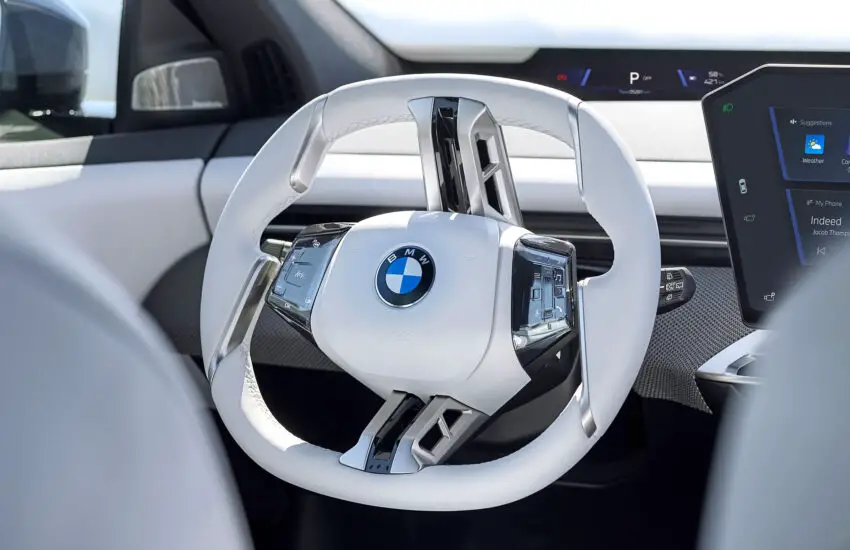
BMW reads your mind: the ADAS that disappears when you take control

Driver assistance systems (ADAS) are often a source of frustration for drivers. Lane keeping assist, automatic emergency braking, adaptive cruise control… So many technologies designed for safety, but which tend to intervene inappropriately, even when they are neither necessary nor desired. Nothing is more annoying than having to fight against an electronic assistance that tries to save you against your will.

The Nightmare of Intrusive ADAS

Imagine: you’re driving on a two-lane country road. A delivery truck is blocking your lane. The opposite lane is clear, so you calmly begin to overtake. Suddenly: BEEP BEEP BEEP! The lane departure warning triggers and the lane keeping system tries to pull the steering wheel back to the right, straight towards the truck. You counter-steer, complete your overtaking, and move on. Or, worse, you spend five precious minutes searching through menus to figure out how to disable this “assistance.”

The BMW Revolution: The ADAS That Understands Your Intention

But BMW is arriving with a new “super-brain” architecture that radically changes the game. Its special feature? The ability to… do nothing. No, it’s not simply about being able to deactivate the system – that option already exists. It’s also not just a simple improvement in object detection to reduce false positives, although that is certainly included.

An Eye Tracker to Anticipate Your Maneuvers

The real innovation lies in a capability to read your thoughts, or at least, your eyes. The system is now capable of recognizing signs of an intended maneuver from the driver. When you approach an obstacle and glance into the opposite lane to check for traffic, BMW’s eye-tracking sensor – the same one that already monitors attention and signs of drowsiness – detects your gaze.

When this gaze is coupled with a corresponding action on the steering wheel, the system understands that you are acting deliberately. If it detects no immediate safety threat on your new trajectory, it will not trigger any alarm and will not intervene to correct your direction.

The Result: Finally Harmonious Driving

The result? Silent compliance. The dream for any driver annoyed by untimely interventions. This new logic also smoothens the transitions between manual and hands-free driving modes, practically eliminating the need to activate or deactivate them; the car simply yields control to the driver in response to their actions.

This advancement is just a first glimpse of the possibilities offered by BMW’s new electrical architecture. In the future, expect even more intelligent integration of its systems.

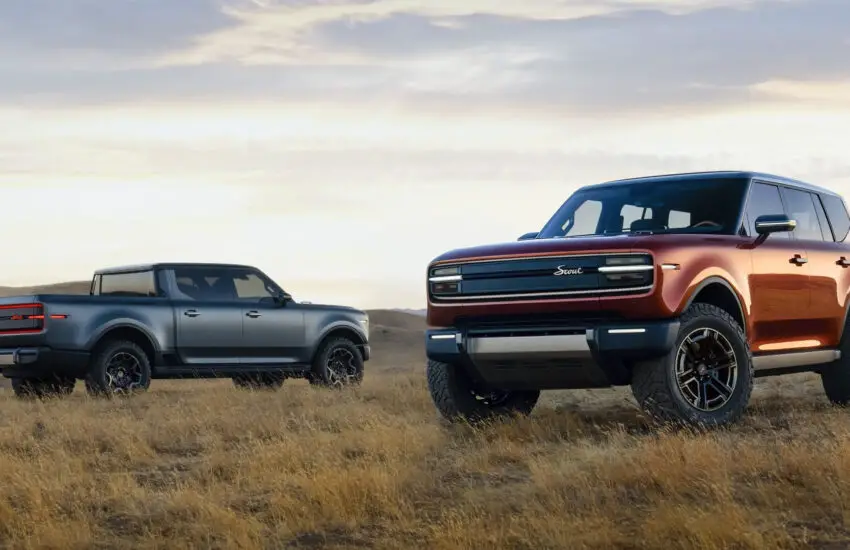
Scout CEO calls dealers ‘noise’ and defends direct sales

Scout CEO Scott Keogh strongly criticized the traditional dealership sales model, calling it “a lot of noise.” He compared the car buying experience at a dealership to shopping at Best Buy, while presenting direct sales, like Apple’s approach, as “the right strategy” for a superior brand experience.

Automotive News in Brief

Mercedes-Benz Strategy Change

Mercedes-Benz is dropping the “with EQ technology” designation for its electric vehicles. Future models, like the upcoming GLC Electric, will simply bear the “Electric” label.

Subaru Introduces Its Special Edition Series.Yellow

Subaru unveils its seventh edition of the special Series.Yellow series, including distinctive versions of the BRZ and WRX.

Pricing and Recalls

Mercedes announced the price of the 2026 AMG E53 Plug-in Hybrid wagon: $94,500 upon its arrival in the U.S. market this fall. Meanwhile, Tesla is now offering its Superchargers to businesses, unbranded, to generate new revenue. Additionally, the 2025 Dodge Charger Daytona and Jeep Wagoneer S electric vehicles are subject to a recall due to a risk of unintended movement when stationary. Finally, the base 1958 version of the 2026 Toyota Land Cruiser sees a $750 price increase ($58,650), while the top-tier version decreases by $405 ($63,900).

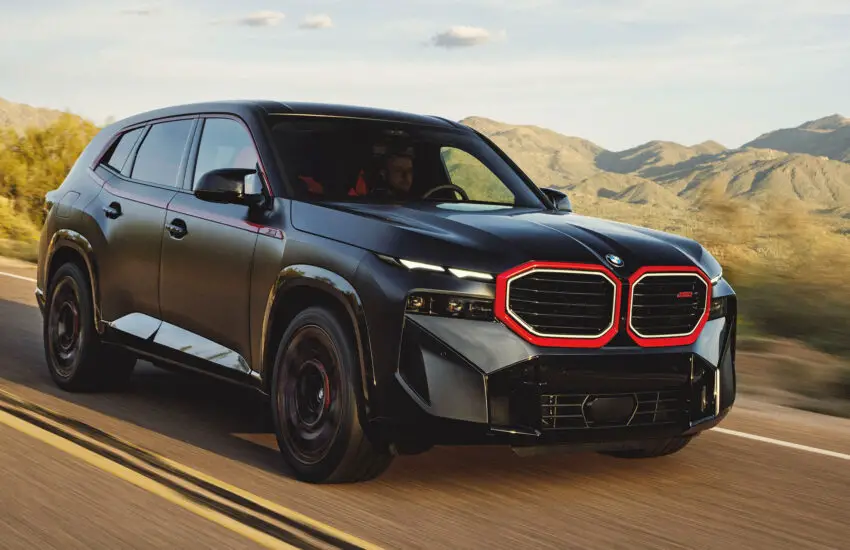
BMW: The huge grilles on their recent models were a request from China

With the upcoming arrival of the Neue Klasse lineup, the era of massive “kidney grilles” at BMW appears to be coming to an end. While other polarizing design choices, such as large wheel arches or angular loops, seem here to stay, the end of oversized grilles is a victory for many purists. However, for BMW’s design leadership, this phase was not a mistake, and the Chinese market is said to be the main reason.

The Justification from BMW’s Design Director

When asked during the launch of the new iX3 SUV about the potentially “too radical” nature of the grilles, Adrian van Hooydonk, Head of Design for the BMW Group, firmly disagreed. “No, because it depends on which part of the world you are in,” he stated. “In some areas of the world, like China, it’s fine; people still ask for large grilles. So that’s the tricky situation you find yourself in as a global brand.”

Criticism Without Impact on Sales

Van Hooydonk assured that BMW had “taken note of all the negative feedback” surrounding the controversial designs of models like the M3, 7 Series, or XM. However, this controversy was never reflected in sales figures. “Quite the opposite,” he emphasized. According to him, consumer sentiment was even positive, which did not prompt the manufacturer to react or backtrack.

An Explanation That Raises Questions

This explanation, however, leaves one puzzled. On one hand, it seems to attribute the responsibility for this aesthetic choice to the tastes of Chinese customers. Yet, an observation of current trends in the Chinese automotive market shows a strong appetite for clean designs, sleek shapes, and distinctive lighting signatures, quite similar to Western trends.

A Change of Course with the Neue Klasse

Despite the absence of negative consequences on sales, BMW has decided to make a significant shift with its future Neue Klasse lineup. Adrian van Hooydonk explains this turnaround as an aesthetic necessity: “the risk of not changing enough would be much greater than changing too much.” The design of the Neue Klasse, already visible on the upcoming iX3, thus represents a new direction, welcomed as a step in the right direction to bring BMW back toward a more consensual design.

Steve McQueen’s Daily Driver Up for Auction: The 1952 Hudson Wasp

Actor and style icon Steve McQueen is inseparable from the 1968 Ford Mustang Fastback Bullitt and the Porsches from Le Mans. But for his daily commutes, errands, or trips to the airport, he often drove this 1952 Hudson Wasp. Displayed at the Petersen Museum in Los Angeles since 2006, the car will soon be auctioned by RM Sotheby’s.

An exceptional auction for a unique piece

Named the “1952 Hudson Wasp Twin H-Power Two-Door Brougham,” this automobile will be sold at the Sotheby’s auction in Hershey, Pennsylvania, on October 9. Bidding is also available online or by phone. Listed as Lot 246, its estimated sale price is between $40,000 and $60,000, a range above market value due to its exceptional history.

An iconic 1950s design

The Hudson Wasp shares a similar aesthetic to the Hudson Hornet, made famous by the character “Doc Hudson” in the movie Cars. Its typical 1950s streamliner design is enhanced by its covered rear wheels, while its massive bumpers give it a utilitarian and practical look. The interior, meanwhile, exudes vintage charm with its bench seat that resembles a genuine diner sofa.

A preserved period mechanical setup

Under the hood lies an inline six-cylinder engine with a Power Dome cylinder head and a Twin-H Power carburetor configuration. The transmission is handled by a Hydra-Matic Drive with a column-mounted shifter.

An authentic and history-rich condition

The car, though clean, is far from being in new condition. With 63,537 miles on the odometer (high mileage for a 1950s car), it features various scratches, rust bubbles, and a heavily damaged roof paint. This “lived-in” condition gives it an authentic and unique character, a testament to its regular use by the star.

For any car enthusiast or film history buff, driving this classic car that Steve McQueen used “to go to church on Sundays” would undoubtedly be an unforgettable experience.

Self-Propelled Lawn Mower: Turn Your Lawn Mowing into a True Mechanical Sport

Mowing the lawn can be much more than just a chore: it’s my personal motorsport. Approaching forty and having recently become a homeowner, I discovered an unexpected passion for mowing, not for the lawn’s appearance, but for the expert piloting of my zero-turn riding mower.

The Thrills of a Driver on Their Tractor

Using a riding mower stimulates the same senses as sports driving. You need to find the perfect balance between speed and control, anticipate the terrain, and develop a symbiosis with your machine. Our several-acre property includes a fenced area for the dogs and a grassy strip before the forest. Navigating along fences requires surgical precision, while the mowing strategy becomes a real puzzle: is it more effective to divide the terrain into sections or to make large, complete laps?

My Cub Cadet ZT1 42E Electric

After starting with an old manual mower, I inherited a nearly new Cub Cadet ZT1 42E electric. This was my first experience with an electric vehicle, and the choice proved perfect for residential maintenance. Sufficient range for our 3.3 acres, fast charging in a few hours, quiet operation, and no emissions: electric is ideal for mowing.

Mastering the Technique of a High-Performance Machine

The unique feature of the zero-turn lies in its independent drive wheels, allowing for on-the-spot turns like a tank. I even developed a controlled-slide technique by playing with the speed levers, adding style and efficiency to my maneuvers. Progress is measurable: I reduced my mowing time from two hours to under 1 hour 30 minutes, always seeking to optimize my path as if on a racetrack.

The Advantages and Challenges of Electric Mowing

While I probably wouldn’t have bought an electric mower myself, I’m not complaining about the pleasure it brings. The only notable drawbacks: some difficulty in very tall grass (which forces me to mow more regularly) and the need to store it indoors in winter, which takes up considerable space in my garage.

Conclusion: An Accessible Mechanical Hobby

Mowing has become much more than a household task: it’s a technical, rewarding, and measurable hobby. Between the route strategy, mastering the machine, and the personal challenge of constant improvement, I’ve turned an obligation into one of my favorite mechanical activities.