Drunk driving: A Canadian gets a DUI while driving a Barbie Jeep

A man from Prince George, British Columbia, recently demonstrated a spectacular lack of judgment. Last Friday, he was intercepted by police while making a trip to buy a Slurpee… driving a pink children’s Power Wheels Jeep. While he might have gotten away with it by avoiding rush hour, the individual chose audacity, with unfortunate consequences.

A Not-So-Discreet Expedition for a Slurpee

According to Canadian media Global News, the man, sporting Pit Viper-style sunglasses and a t-shirt proclaiming “Let’s do it the stupidest way possible,” had borrowed the toy, which belonged to his roommate’s daughter. His mission: to go to the nearest convenience store. He attempted to justify his actions by stating: “It wasn’t a high-speed chase. I waited until it was safe, and when I crossed the road, I was using my hand signals.”

Canadian Law is Clear

Unfortunately for him, the police officers did not find the situation amusing. After breathalyzer tests revealed a blood alcohol level above the legal limit, he received a 90-day driving prohibition and a court summons. The fact that he was already subject to a driver’s license suspension likely explains why he had opted for this one-seat Barbiemobile rather than a conventional car.

The Broad Definition of “Motor Vehicle”

Canadian authorities indeed consider that “any vehicle operating on a public roadway that is propelled by something other than muscular power falls within the definition of a motor vehicle and requires a licensed driver and insurance.”

An Important Reminder

This incident serves as a friendly reminder: law enforcement is far less likely to see the humor in this kind of prank when multiple offenses are committed simultaneously. A DUI, regardless of the nature of the wheeled vehicle, will almost always get you into trouble. Meanwhile, the young owner of the Barbie Jeep has, fortunately, recovered her property.
Polestar 5 vs Porsche Taycan: Why a 1000-Pound Weight Difference?

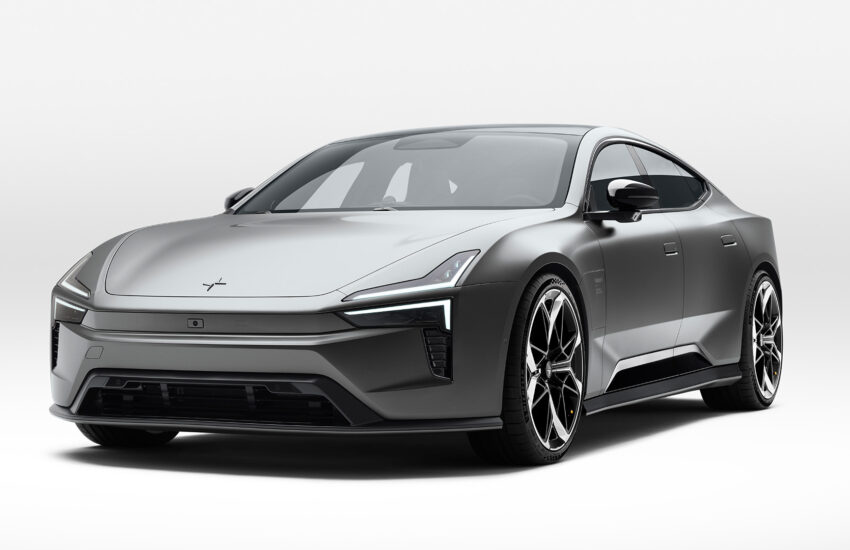
The Polestar 5 weighs nearly 1000 pounds more than a Porsche Taycan. You’ve probably already spotted the Polestar 5 and thought: “Wow, that’s really sleek.” It is arguably the most beautiful model in the lineup, and it produces an impressive 884 horsepower. Polestar itself presents the 5 as a direct competitor to Porsche, with its technical features positioning it as a rival to the Panamera and the Taycan. On paper, the competition seems tight, but one detail stands out: the substantial weight of the Polestar 5, hovering around 5600 pounds.

A Striking Weight Comparison

For comparison, the lightest Taycan (rear-wheel drive) weighs 4,630 pounds. Even the heaviest version, the Turbo Cross Turismo, remains well below at 5,196 pounds. This gap is explained by several factors. Besides the fact that the Polestar will only be offered with all-wheel drive (AWD), it also features a larger battery and embodies a Grand Touring philosophy, unlike the Porsche, which is more focused on pure sport.

The Decisive Role of the Battery

The Polestar 5 is equipped with a 112 kWh battery pack, giving it a claimed range of 351 miles (WLTP cycle). The Taycan, on the other hand, has a smaller 105 kWh battery. While the final weight of the Polestar’s battery hasn’t been officially confirmed, it is very likely that it exceeds that of the Porsche, whose battery alone weighs 1,389 pounds. The general rule is that each kWh of capacity adds between 13 and 17 pounds. A difference of 7 kWh could therefore represent a weight surplus of 91 to 119 pounds for the Polestar.

Construction Philosophy and Platforms

The overall construction also plays a role. The Polestar 5 is 200.3 inches long, compared to 195.4 for the Taycan. Its new platform, the Polestar Performance Architecture, is based on a welded and riveted aluminum structure, known for its strength-to-weight ratio. It’s possible that Polestar had to use more materials to achieve its rigidity targets. In contrast, the Taycan’s critically acclaimed J1.2 platform blends aluminum and steel at the B-pillars and roof for optimal robustness without excessive weight gain.

Grand Tourer vs. Pure Sports Car

Finally, the fundamental difference lies in their DNA: the Polestar 5 is a Grand Tourer, while the Taycan is a high-end sports car. Polestar has designed a car that competes more directly with the Porsche Panamera (which weighs up to 5,302 pounds in its Turbo E-Hybrid version). Like the Panamera, the Polestar 5 prioritizes interior space, acoustics, and comfort technologies. These elements, although impossible to quantify precisely, undoubtedly tip the scales.

Conclusion: Two Distinct Visions of Electric Performance

The verdict is therefore no surprise. If you’re looking for a high-performance machine with race-bred handling, the Porsche Taycan remains the benchmark. But if you desire a luxurious and spacious electric Grand Tourer, the Polestar 5 presents itself as a bold and stylish alternative to the Porsche tradition.

Toyota re-manufactures AE86 engine parts to preserve the legendary Corolla

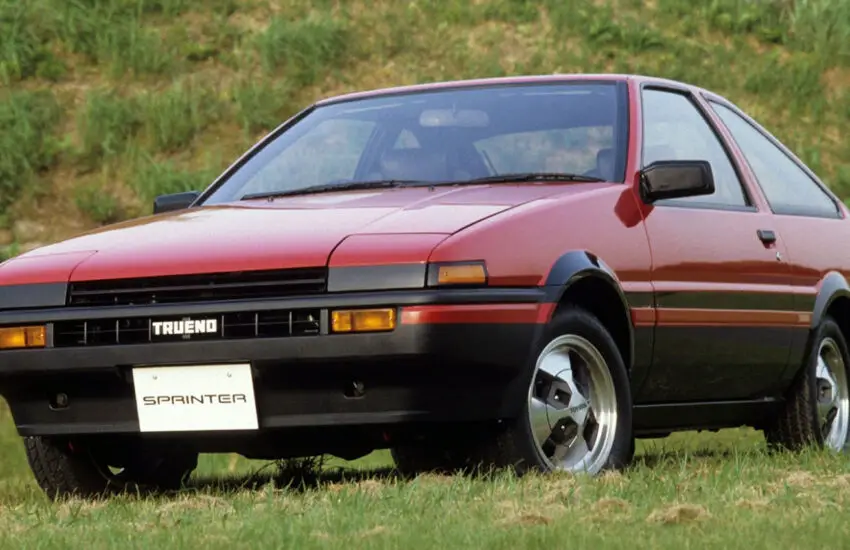
Toyota is remanufacturing AE86 engine parts to keep the best Corolla alive. About five years ago, the Japanese automaker launched the GR Heritage Parts program, dedicated to reproducing components for its legendary models. This program initially covered third and fourth-generation Supras, older Land Cruisers, and even the rare 2000GT. It later expanded to more accessible sports cars like the AE86 Corolla Levin and Sprinter Trueno, although initially it only involved certain chassis parts and for a limited time. Today, Toyota is taking a step further by adding reproduction engine parts to its catalog, specifically for the 4A-GE, the much-coveted 1.6-liter 16-valve inline-four of the AE86 twins.

Modernized Parts Thanks to Enthusiast Feedback

AE86 owners in need of new cylinder head and engine block sub-assemblies are in luck. Toyota is not just reproducing these parts with modern materials and precision; the company has also incorporated community feedback. For example, engineers thickened the walls of the intake and exhaust ports in the new block sub-assembly – a modification directly attributed to fan requests at events.

The Benefits of Current Manufacturing Methods

Current manufacturing methods enhance these components in multiple ways. The combustion chambers in the cylinder head sub-assembly benefit from “additional machining” aimed at standardizing performance between engines with slightly different compression ratios. A coating process for the intake ports reduces surface irregularities that are detrimental to performance. Finally, the addition of cam pins allows for an “improvement in assembly handling.”

A More Precise and Robust Engine Block

The engine block is not left behind. Its bores can now be machined to a degree of precision impossible 40 years ago. The use of more rigid cast iron, coupled with a redesign of the crankshaft cap structure (optimized through simulation), enhances the part’s durability. Bosses and ribs have also been integrated into the design, allowing the engine to be mounted transversely for front-wheel-drive applications, beyond the rear-wheel-drive AE86 twins.

Availability and Legacy

If you are in Japan this weekend, Toyota will be selling these parts for the first time at Fuji Speedway during the 30th-anniversary event of Initial D. For others, acquisition might be more complicated, even without considering current international shipping issues. With these new components for the AE86, Toyota now markets over 200 spare parts covering eight classic models, thus perpetuating their legacy for future generations of enthusiasts.

Bollinger Motors: The Strategic Pivot of the Electric Vehicle Manufacturer to Utility Vehicles

Contrary to appearances of an imminent shipwreck, Bollinger Motors is making a decisive strategic shift. The electric vehicle manufacturer, based in Oak Park, Michigan, is reinventing itself by focusing on the commercial market, a bold pivot that could well secure its survival and future.

Promising Beginnings Against the Backdrop of the American Dream

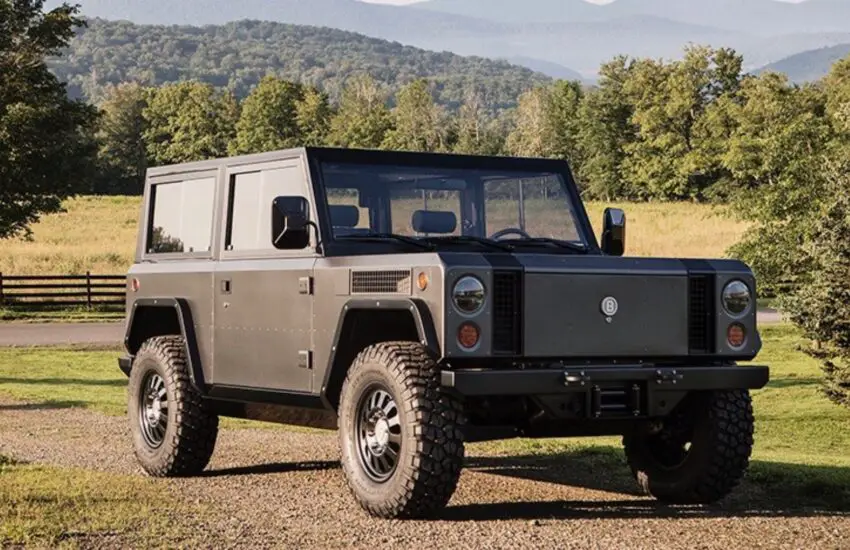
Founded by Robert Bollinger, the company was born from a simple vision on his organic farm in New York State: to design an electric truck that is both powerful and enjoyable to drive. The project, which began in a garage before moving to the cradle of the American automobile industry, Michigan, promised robust and “purpose-built” vehicles, entirely designed around an electric architecture.

Abandoning the B1 and B2 Models in Favor of Utility Vehicles

The ambitious B1 and B2 SUVs, with a design inspired by the Defender and equipped with innovative features like a full pass-through in the chassis, were intended to appeal to the general public. But the COVID-19 pandemic and economic realities put an end to these projects. Their limited range (200 miles), significant weight, and high cost became prohibitive. Bollinger had to put them on hold to focus on a priority: generating revenue with commercial vehicles, such as the B4 delivery van, which can be quickly delivered to corporate fleets.

The B4, Spearheading a New Era

Today, the B4 van embodies this new direction. Based on an 800-volt platform designed from the outset to be “future-proof,” it is constantly improved through customer feedback. Its tight turning radius (42 feet) and efficient design make it an ideal work tool, more pleasant and quieter than a comparable internal combustion vehicle. Bollinger is betting on its agility, an advantage over large established manufacturers, to quickly adapt its products.

The Challenges and Strengths of the New Bollinger Motors

The path remains fraught with obstacles. The current political climate, sometimes hostile to electrification, and the complexity of obtaining state subsidies (which can reach up to $120,000 per vehicle in New York) are significant challenges. Despite partially empty facilities and the departure of its founder, the company, now under the umbrella of Bollinger Innovations and partnered with Mullen Automotive, remains hopeful. Its major strength? A 71% American-made manufacturing process, a powerful argument for winning government tenders. The pivot is underway, and for the first time in five years, the path to the future seems clear.

BMW plans 40 new models in 2 years: a design and electric revolution

BMW is preparing to launch an unprecedented product offensive. The German manufacturer has indeed announced its intention to renew its entire lineup within just two years. No fewer than 40 vehicle launches, either new or refreshed, are planned.

The Neue Klasse: A New Design Language for BMW

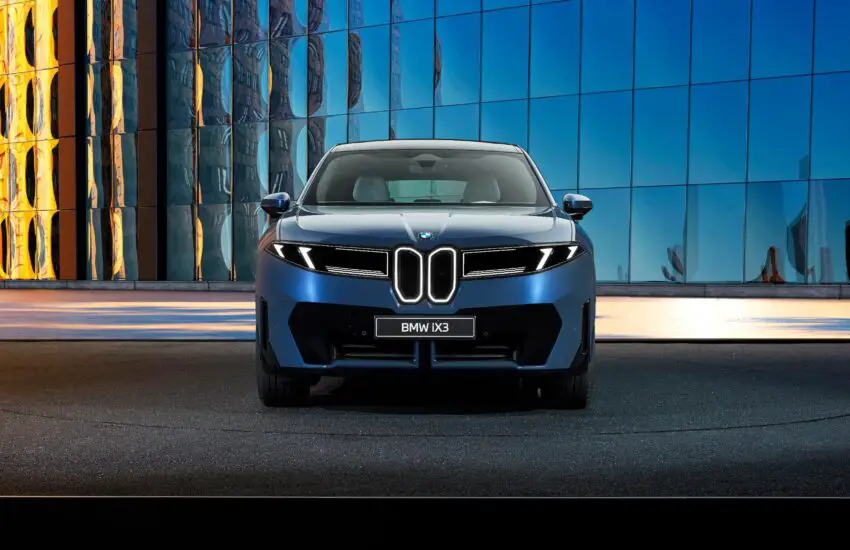
This aggressive strategy aims to deploy the new “Neue Klasse” design language across the entire line. Expect cleaner lines, the removal of chrome elements, and illuminated interpretations of the famous “Kidney” grille that will equip current and future models.

Other Players in the Luxury Automotive Industry Are Not Standing Still

This announcement from BMW comes in a highly dynamic premium automotive landscape.

Polestar Refocuses Its Strategy

Polestar has paused the development of the Polestar 6 electric roadster to focus on the Polestar 7 and the next generation of the Polestar 2. These vehicles, aimed at the European market, promise higher sales volumes. The brand’s new design director has also emphasized the need to introduce bolder colors into the lineup.

Porsche and the $1,310 Option

At Porsche, purists can lighten their 911 with an exclusive option: carbon fiber windshield wipers, available for the modest sum of $1,310.

The Screen War Rages at Mercedes

Rivalries are also intensifying. The head of design at Mercedes-Benz did not mince words when criticizing BMW’s new interiors, which he deems “distracting,” and those of Audi, which he compares to a design “straight out of 1995.” Mercedes, for its part, is betting everything on a fully digital approach with its all-screen dashboards.

Aston Martin and Mercedes Celebrate and Innovate

Aston Martin is celebrating 60 years of convertibles with two special and very limited editions: the DB12 and Vanquish Anniversary of Volante Editions, each produced in only 60 units. Paradoxically, Mercedes-Benz, while moving towards an electric future, is also developing a brand new V8 engine, proving that internal combustion is not down for the count.

AI and Auto Recycling: How Artificial Intelligence is Revolutionizing Vehicle Recycling and Recovery

Copart, an international giant in the auto parts market and vehicle auctions, is experiencing remarkable prosperity. The company is reporting an increase in revenue, gross margin, and net income for the quarter and the year. During a recent earnings presentation, analysts and Copart’s CEO, Jeff Liaw, detailed how the company is using artificial intelligence to transform its business.

AI to Assess and Value Damaged Vehicles

For an operation like Copart’s, which handles a colossal volume of often similar transactions, the deployment of AI is particularly relevant. Instead of using physical inspection tools, Copart leverages AI for tasks such as vehicle price evaluation and the decision to scrap vehicles (“totaled”), all based on the analysis of massive data.

In practice, this means calculating the cost of estimated repairs relative to the vehicle’s value much faster than before. This speed of analysis is already influencing insurance premiums and the value of used cars globally, even affecting the international distribution of vehicles.

The Growing Complexity of Modern Vehicles

An intriguing phenomenon is at play: although the severity of accidents is declining, the rate of vehicles declared economically irreparable (“total loss frequency”) is rising. Copart’s teams attribute this to the increasing complexity of modern cars, making them more expensive to repair. A striking example: a 2024 F-150 taillight costs over $1000.

CEO Jeff Liaw specified: “The frequency of total losses has generally increased at a rate far exceeding the decline in the frequency of accidents themselves. In the United States, it stood at 22.2% in the second quarter of 2025, compared to 21.5% a year earlier.”

A Dynamic International Market

Irreparable vehicles are mostly exported. Cheaper labor abroad and the possibility of obtaining a new title for them make their restoration financially viable. Liaw notes that international buyers account for about 40% of the vehicles sold at auction in the United States by Copart, generating nearly half of the proceeds.

AI, the Ultimate Arbiter of Vehicle Value

Car auctions like Copart maintain a unique relationship with sales data and repair viability. They react to these values and simultaneously define them, creating a self-reinforcing loop.

AI only accelerates and amplifies this process. By evaluating vehicles with an unparalleled amount of data, it becomes the ultimate arbiter of their value, dictating what should be repaired or scrapped, and ultimately, the cost of insuring certain models.

The CEO’s Remarks on Copart’s AI Strategy

When questioned by analysts, Jeff Liaw detailed the use of AI: “We equip our sellers with tools to make instant total loss decisions, informed by millions of similar vehicles sold in the past. These decision-support tools are greatly powered by large language model (LLM) technologies.”

AI is also deployed in customer support, agent support, and even at the auction level to recommend products to buyers. Liaw concluded by stating that this technology makes Copart radically more efficient and paves the way for future opportunities, even announcing that a dedicated presentation on their use of AI might take place.

Ferrari Testarossa Returns: 1,036 Horsepower and a 70s Spoiler

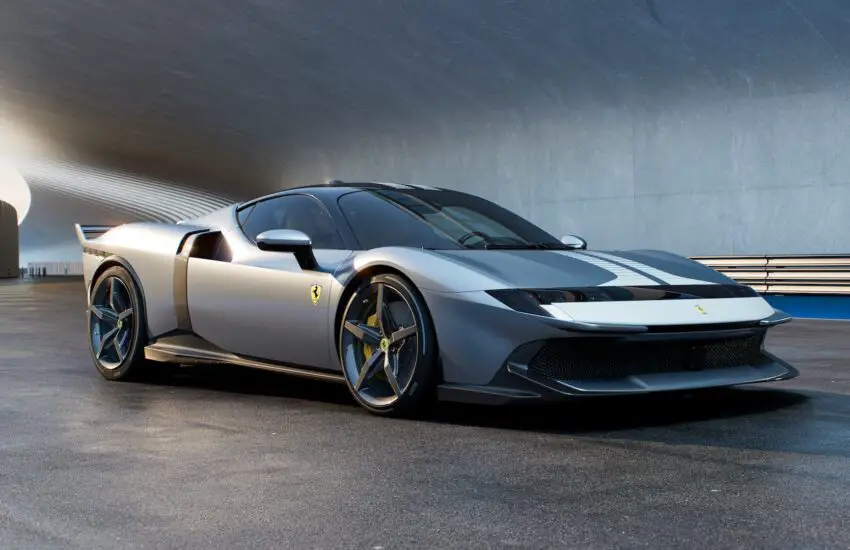
The Ferrari Testarossa makes its grand return! Named the Ferrari 849 Testarossa, this new supercar from Maranello is a model with a decidedly attractive design, even though the pop-up headlights, unfortunately, are not part of the package.

An Iconic Design Reinterpreted

Unveiled in Milan, the 849 Testarossa revives one of the brand’s most iconic names, immortalized by the hit series Miami Vice. While it retains a wedge-shaped silhouette, its design is more forward-looking than purely retro. The front end, with its pointed nose and aggressive air intake, however, evokes the original Testarossa. The three-quarter rear view, on the other hand, recalls the Daytona SP3, with its sloping roof and broad shoulders.

A Phenomenal Hybrid Powertrain

True to the heritage of the “red heads,” the new Testarossa is powered by a mid-rear-mounted 4.0-liter twin-turbo V8. It is a plug-in hybrid, similar to the phenomenal 296 GTB. The internal combustion engine alone develops 819 horsepower, but aided by three electric motors (two on the front axle, one at the rear), the combined power reaches a stratospheric level of 1,036 horsepower.

Record-Breaking Performance

Ferrari announces a 0 to 100 km/h in 2.3 seconds and a 0 to 200 km/h in 6.3 seconds, figures that the brand tends to underestimate. In all-electric mode, it can travel up to 30 km at a maximum speed of 130 km/h.

A Driver-Focused Interior

Inside, there is no traditional central screen. The infotainment screen is integrated into the digital cluster in front of the driver, while the passenger has their own screen. The gear selector is a nod to the past, adopting a traditional design inspired by old gated shifters.

Spider and Coupé Unveiled Simultaneously

Unlike its usual practice, Ferrari unveiled the Spider version at the same time as the Coupé, sporting a mustard yellow livery that beautifully highlights its angular lines. The price, however, remains a mystery… for those who need to ask.

Ridge Racer: 30 Years Ago, the Arcade Racing Game Came Home

Ridge Racer marked a decisive turning point in video game history. The series accompanied the launch of several consoles, but nothing surpassed its explosive arrival on the first PlayStation. Released in arcades in 1993, Ridge Racer embodied the future with its textured polygon tracks and smooth gameplay. Just over a year later, it was running on a small machine that Japanese players simply plugged into their televisions, with minimal concessions. And almost a year after that, on September 9, 1995, it landed in North America alongside the PlayStation. Happy birthday to Ridge Racer and, incidentally, to the PlayStation!

The Absolute Standard of Arcade Racing Games

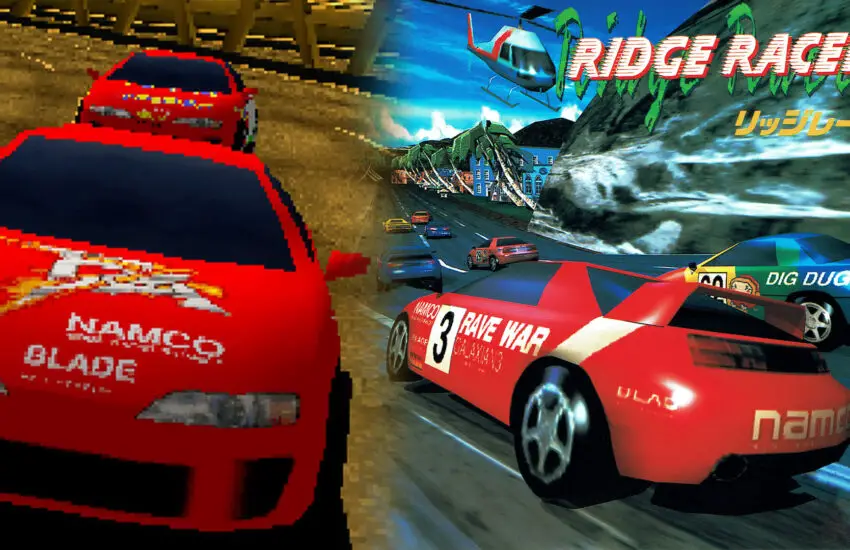
For those who never played the original, Ridge Racer was simply the ultimate benchmark of the genre at the time, alongside Sega’s Daytona USA. In arcades, drivers piloted the iconic red F/A Racing car, which more or less resembled an A80 Supra, on a now-legendary track: Seaside Route 765.

This track, with its 13 turns starting from the city and heading towards the coast, is one of those classic circuits suitable for all skill levels. Turn 3 at the tunnel exit and turn 9, the tightest on the circuit as you leave the beach, require drifting to be taken at good speed. This technique would become the most distinctive gameplay characteristic of the Ridge Racer franchise.

A Technological Revolution at Home

The idea that Sony’s first console could bring all this home was unprecedented. Remember that at that time, most racing games still used sprite-scaling techniques like in Out Run. The few polygonal games were confined to PCs or niche platforms and didn’t offer the same visuals or smoothness.

The PlayStation version of Ridge Racer displayed lower resolution and a frame rate halved compared to its arcade version, but it remained incredibly smooth and beautiful. Although Daytona USA has its staunch defenders, Ridge Racer outperformed its rival on Saturn, which ran at 20 frames per second compared to Ridge Racer’s 30.

Where to Play Ridge Racer Today?

For many years, it was difficult to recapture the feel of the original game. You needed to own a PS1 and a copy of the game, or a copy of Ridge Racer Type 4 including its Turbo Mode bonus disc. Fortunately, this changed a few months ago with the release of Arcade Archives: Ridge Racer on PlayStation 4 and 5, Nintendo Switch, and Xbox Series.

This new edition is a port of the arcade version, not the console version we’re celebrating today, but overall it offers a better experience. It runs at 60 fps and, in my opinion, the driving is much more satisfying. Drift initiation was very abrupt in the PS1 version, whereas I’m much faster and have much more fun on Seaside Route 765 in the arcade version. The only feature I really miss is the chase camera angle.

A Legacy Still Alive

Hard to believe, but it’s been 13 years since the last main installment in the series, Ridge Racer, was released on PS Vita. We can only believe in its return one day, while wondering about such a long absence. Less hardcore and punishing racing games are experiencing something of a resurgence these days, and Ridge Racer has a style and flavor all its own. Meanwhile, today is the perfect day to revisit its origins.

Roof Top Tent for Car: Why Such Enthusiasm for Such Expensive Tents?

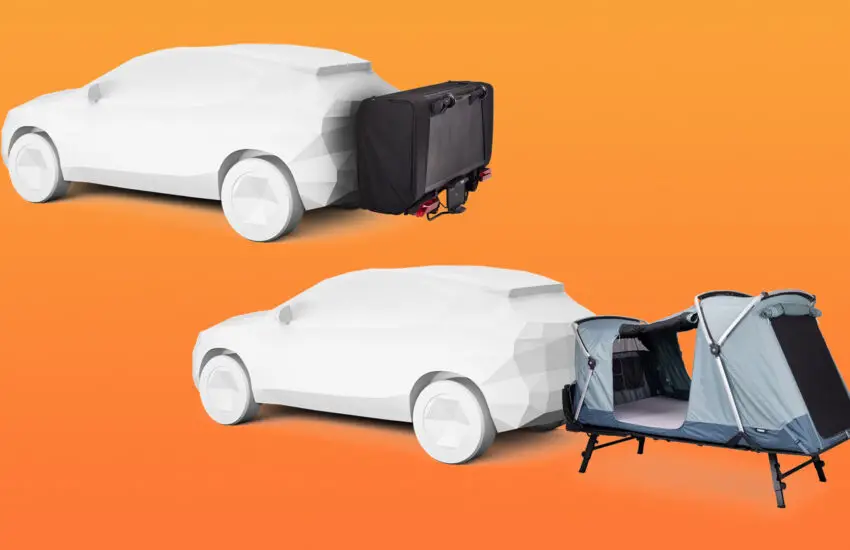
Vehicle-mounted tents, popularized by the #vanlife movement and overlanding on Instagram, continue to be successful despite often exorbitant prices. The recent announcement of the $4,700 Thule Outset has reignited the debate about the relevance of this equipment.

Roof Top Tents (RTTs): A Luxury with Multiple Drawbacks

Roof Top Tents appeal with their high-end manufacturing, premium materials, and gas-assisted quick deployment. But they present major challenges: significant weight high up that alters handling, a substantial aerodynamic penalty that increases fuel consumption, and problems with parking in underground garages. Not to mention the difficulty of accessing them from the ground.

The Thule Outset: A Hitch-Mounted Solution

Thule offers an alternative with the Outset, which mounts on a hitch rather than the roof. This model deploys in seconds and can be easily detached from the vehicle. A definite advantage for being able to leave the campsite without dismantling everything. However, be careful not to leave the engine running with someone inside, due to the risk of carbon monoxide poisoning.

A Dizzying Price Range

The RTT market features considerable price disparities. You can find premium models like the ARB Altitude for nearly $6,000, while entry-level options like the “XBull” sell for around $600 at Walmart. The difference is obviously felt in the quality of construction and durability.

Questionable Practical Advantages

Do the marketing arguments for RTTs hold up to analysis? Being elevated to escape insects? They know how to climb and fly. Fear of animals? Most avoid you, and those that are curious can easily reach your roof. Does the sole tangible benefit – ultra-fast deployment – truly justify a surcharge of several thousand dollars compared to a classic ground tent?

The Ground Tent: A Reasonable Alternative

A traditional family-sized tent can be set up in minutes, offer standing room, a camp bed at a normal height, and pack down to a size similar to a carry-on suitcase. For a featherweight equivalent to a few jackets. A simple, economical, and versatile solution that questions the real added value of RTTs.

Passing Fad or Camping Revolution?

While overlanding has led to sometimes unreasonable purchases ($300 shovels…), the high-end roof top tent market persists in 2025. Is it merely a fashion trend, a need to stand out, or do these products genuinely offer superior comfort and experience? The debate between the 4×4 glamour enthusiasts and the “ground tent peasants” remains open.

LC Engineering 5VZ-FE Engine: A Revival for 1990s Toyota 4Runner and Tacoma

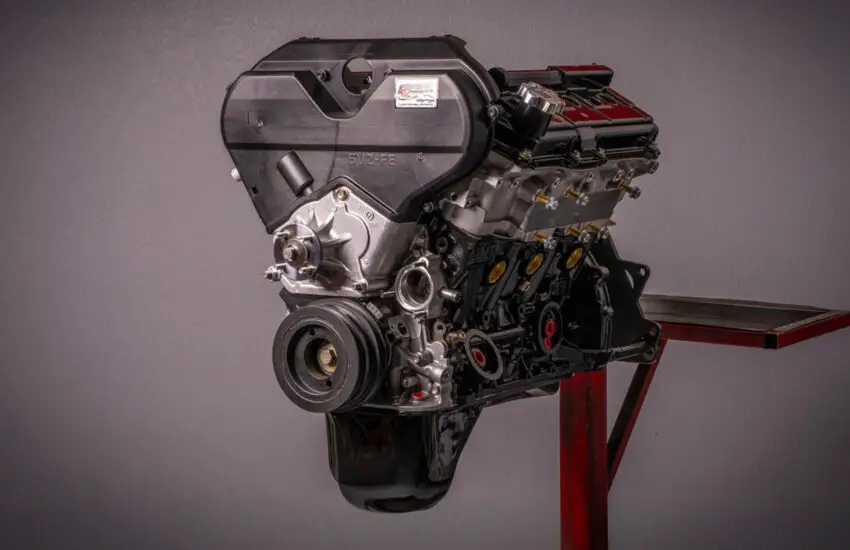
1990s Toyota 4Runners and Tacomas can get a whole new lease on life with this supercharger-ready crate engine. As an enthusiast recently searching for a clean third-generation 4Runner, I can confirm: they’re becoming rare. Away from California, in the heartland, most are simply worn out. If I ever acquire such a gem, I already know which engine I’d give it: LC Engineering’s brand new Stage 1 5VZ-FE 3.4L block. While far from cheap, it’s, in my opinion, worthy of a rust-free survivor.

An Investment for OEM+ Purists

Let’s be clear from the start: the long block costs $10,000. For that price, an LS V8 or even a Tundra 2UZ swap is possible. But some owners prefer to avoid that radical route. This solution is ideal for OEM+ builds that favor a supercharged V6, true to the original spirit, rather than an oversized powertrain.

LC Engineering: Toyota Expertise

LC Engineering is a renowned shop in Arizona, famous for its work on legendary 4-cylinders like the 22RE and 2RZ. A quick look at their Instagram is enough to see the quality of their builds and the enthusiasm of the Toyota community. Their involvement is a mark of seriousness and makes these 5VZ-FEs all the more remarkable.

The Technical Specifications of the Stage 1 Block

The 5VZ-FE presented here is a fine piece of machinery. Each Stage 1 long block benefits from prepared cylinder heads (ported and polished), ARP head studs, and a lightweight crankshaft pulley. LC Engineering does not specify a precise power gain, mentioning increased reliability and a slight performance boost. The original engine produced 183 horsepower in the 4Runner and 190 horsepower in the Tacoma. The crucial point? This block is advertised as “supercharger-ready.” Imagine it paired with a Magnuson supercharger…

For Which Target Audience?

This engine is perfect for a full restoration or an original owner wanting a complete overhaul. It’s the solution for those who refuse to rebuild an engine that’s been swallowing dust for 25 years. It’s not the choice for those seeking maximum power at all costs, but for those who want to keep their Toyota clean and simple, without completely transforming the engine bay. A V8 is an option, but not the only one.