Chevrolet Corvette Z06 and ZR1 Recall: Fire Risk During Fuel Tank Refilling

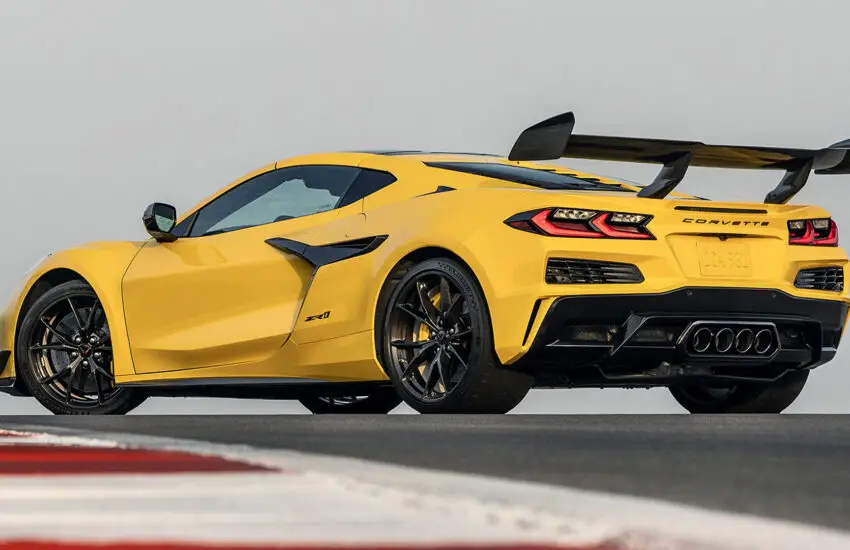
Next-generation Chevrolet Corvette Z06 and ZR1 models are subject to a voluntary recall and stop-sale order issued by General Motors. The reason? A potential fire risk during refueling.

Which models are affected by the recall?

This safety issue specifically affects the following North American models: the 2023 to 2026 model year Chevrolet Corvette Z06, as well as the 2025 and 2026 Corvette ZR1. The standard Stingray and E-Ray versions are not affected at this time.

What is the cause of the problem?

The identified defect concerns a radiator/fan assembly located on the left side of the vehicle. If excess gasoline is spilled into the filler cap cavity, the fan could propel fuel vapors towards an engine ignition source, creating a risk of “external combustion” and thus fire.

GM’s immediate safety recommendations

While awaiting the availability of a fix, General Motors urges owners to strictly follow the refueling instructions in the owner’s manual:

  • ALWAYS ensure the pump nozzle is fully inserted into the fuel pipe.
  • NEVER add fuel after the first automatic shut-off click of the pump.
  • ALWAYS turn off the vehicle’s engine during refueling.

It is strongly advised against “topping off” the tank after the pump’s automatic shut-off, a practice that can send fuel into unintended passages.

What is the remedy and when will it be available?

The definitive solution will involve Chevrolet dealers installing “an insert or a shield to divert spilled fuel.” However, the parts necessary for this repair are not yet available. GM has confirmed the stop-sale order for affected unsold new vehicles.

An official statement from General Motors

A spokesperson for the manufacturer stated: “General Motors is voluntarily recalling certain models to address a fuel overflow issue during refueling. This is a rare event, and faulty gas station pumps appear to be a contributing factor. The safety of our customers is our highest priority.”

F1 2026: F1 cars to be 1.5 seconds slower, FIA accepts responsibility

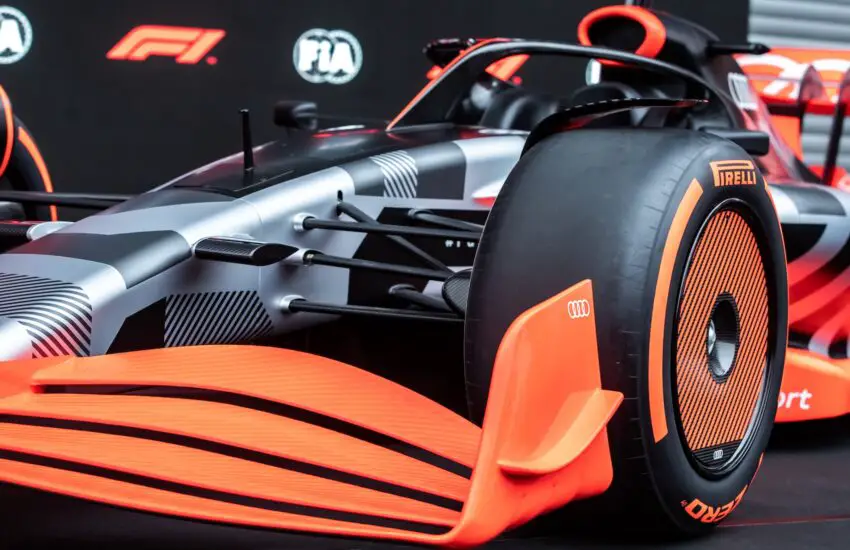
F1 2026 cars will be over a second slower per lap, according to initial FIA simulations. Despite this finding, the governing body states that this performance drop is not a cause for concern, a position that is sparking debate within the Formula 1 community.

Simulations predicting a significant slowdown

Teams are already working hard on the new technical regulations that will come into force in 2026. At this stage, they can only rely on data gathered from simulators and wind tunnels to predict the behavior of their future cars. And these predictions indicate a notable drop in performance.

Nikolas Tombazis, the FIA’s Single-Seater Director, confirmed to Motorsport.com that current simulations predict lap times up to 1.5 seconds slower than current F1 cars, partly due to new aerodynamic designs. He specified: “At the launch of the regulations, the new cars will be between one and two and a half seconds slower. […] but we do not expect lap times to be a talking point.”

FIA surprised by the importance given to lap times

Tombazis’s reaction to the concerns of drivers, teams, and fans is, to say the least, surprising. The experienced engineer, who has worked at Benetton, McLaren, and Ferrari, simply shrugged, saying he was “surprised” and stating that “it actually doesn’t matter.”

He justified his position: “I am a bit surprised by the importance given to lap times. The sport has gone through various phases where cars were slower or faster. Once you get used to it, it’s fine. […] I really don’t think lap times will be a factor once people get used to these cars.”

A debate about the very essence of F1

This lack of concern from the FIA raises questions. How can it be that the pinnacle of motorsport no longer cares about pure performance and the pursuit of speed? If the goal is no longer to go faster, what will the competition focus on? Energy and tire management may take precedence over pure attack, a major philosophical shift.

A cyclical evolution, but increased complexity

As Tombazis rightly points out, F1 has experienced performance drops in the past, often induced by regulation changes for safety reasons or to meet new technological challenges. So, it won’t be the first time that newer cars are slower than their predecessors.

The sticking point remains that these new 2026 cars are presented as being much more complex and much more expensive to develop. The paradox is therefore seeing ultra-sophisticated cars arriving that, ultimately, will post less impressive lap times. The central question remains: for you, is lap time important?

Chrysler Pacifica Grizzly Peak: A 4-Seater Minivan with 31-Inch Tires for Adventure

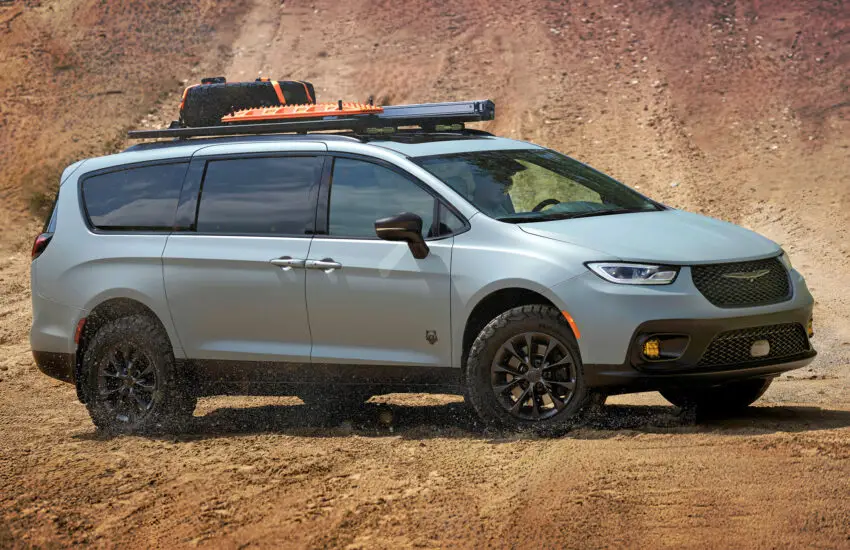
The Chrysler Pacifica Grizzly Peak is a concept that proves off-road adventure isn’t exclusive to SUVs. Chrysler dared to imagine a rugged, adventure-ready version of its Pacifica minivan, a vehicle so convincing it’s surprising it hasn’t been put into production yet.

A Surprisingly Polished Adventure Concept

Although officially presented as a concept, the Pacifica Grizzly Peak features a specific badge, custom upholstery and stitching, and most importantly, it’s fully functional. Provided its impressive 31-inch BFGoodrich all-terrain tires don’t rub in the wheel wells – which remains the big unknown – this minivan seems ready to go straight from the trail to the auto show.

Technical Modifications for Off-Roading

The preparation is serious: the suspension has been raised by 7 cm at the front and 6.35 cm at the rear, significantly increasing the ground clearance. It is equipped with a Rhino Rack roof rack, a TYRI light bar with Baja Designs fog lights, a retractable ARB awning, and protective film on the rocker panels and bumper.

An Interior Designed for Exploration

Inside, Chrysler has made functional modifications. The third-row bench has been removed to create storage space or even a spot for sleeping bags. There is also a 150V/450W power outlet, new anchor points, and an additional storage compartment under the floor. The vehicle retains its comfortable second-row captain’s chairs.

Conventional Mechanics Remain

Chrysler did not detail the mechanics, other than the presence of all-wheel drive. Since the plug-in hybrid Pacifica is only front-wheel drive, this concept likely uses the 287 horsepower 3.6L Pentastar V6 gasoline engine, with no other announced modifications.

A Niche Market, but a Relevant Concept

While the huge tires seem a bit excessive for mass production, they send a clear message about this van’s intentions. The market for an all-terrain minivan remains niche, but who better than Chrysler, with its Jeep and Ram expertise, to attempt it? The Pacifica Grizzly Peak will be on display at the Overland Expo Mountain West in Colorado.

Jeep Cherokee 2026: The Hybrid Return at 37 MPG Starting at $37,000

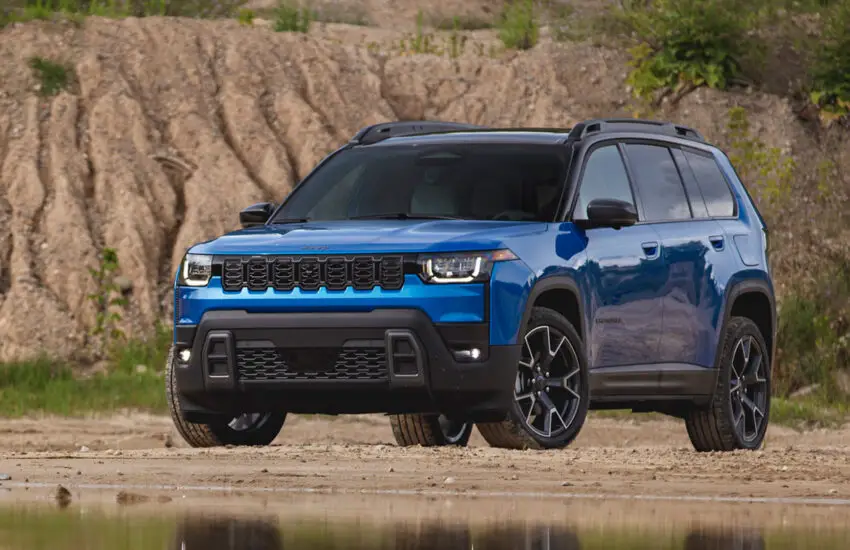
The Jeep Cherokee has had a long, winding, and, on more than one occasion, interrupted life. Evolving from an enthusiast’s darling to a crossover with intermittent production, its existence has been tumultuous. After a few years of absence, the Cherokee is making a comeback for 2026. It will bolster an expanding Jeep lineup, which recently welcomed the all-electric Wagoneer S and is set to receive the off-road Recon, as well as new versions equipped with Hemi engines.

The Grand Return of a Staple

After years of rising prices and increasing exclusivity, Jeep is doing its best to return to the mainstream. And what do drivers want today? Simply put, hybrids.

Rugged mid-size SUVs are very popular right now. The Cherokee itself helped create this segment. As the saying goes, “Out of sight, out of mind,” isn’t it?

A Hybrid Offensive from Launch

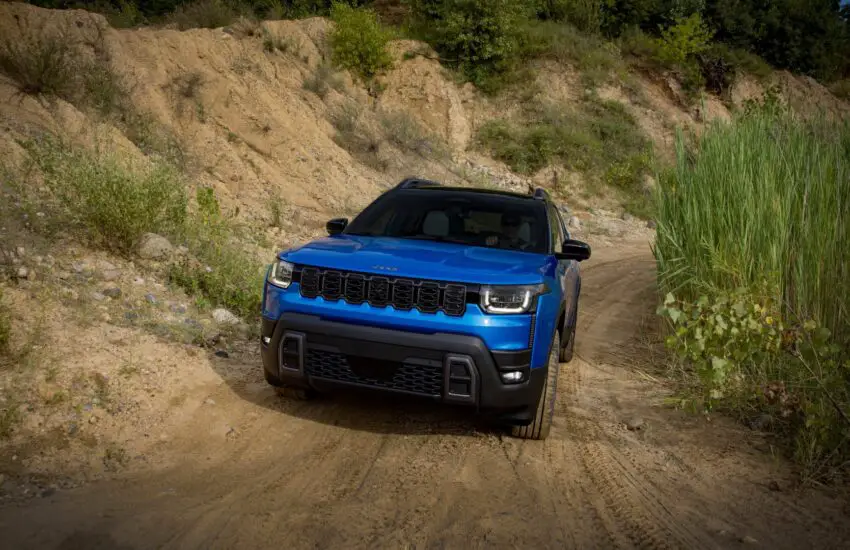
At launch, the Cherokee will be offered in only one configuration: an all-wheel-drive hybrid. A 1.6-liter turbocharged engine is paired with an electric motor and a 1.08 kWh NCM-Graphite battery. It is not a plug-in model.

Total power is rated at 210 horsepower and 230 lb-ft of torque. Power is sent to all four wheels via a CVT transmission and Jeep’s “Active Drive I” 4×4 system, which includes a single-speed transfer case and automatic torque distribution. Jeep announces a very un-Jeep-like combined fuel economy of 37 MPG.

Pricing and Availability

The 2026 Jeep Cherokee starts at $36,995 (including $1,995 destination fee). Jeep will initially launch the Limited and Overland trims ($42,495 and $45,995 respectively) in the fall. The base and Laredo models ($39,995) will arrive in early 2026.

What About Driving Fun?

Stay tuned. A Trailhawk version is in the works.

New Jeep Cherokee 2026: The CEO Confirms Its Off-Road Capabilities

The new Jeep Cherokee will remain capable off-road, as CEO Bob Broderdorf affirmed. After an absence of several years, the Cherokee is making its official return. Although the 2026 model is a mid-size vehicle similar to the one it replaces, it will arrive in a radically different automotive landscape, much more competitive and unpredictable.

A Transformed Market for the Cherokee’s Return

The SUV segment has evolved significantly since the last generation of the Cherokee. Jeep will no longer be alone against outdated competition. Toyota has unveiled a new Land Cruiser and a 4Runner, while Subaru and Honda are enhancing the off-road capabilities of their two-row models. Nissan has even announced the upcoming return of the Xterra. By 2025, almost every brand is now an SUV brand.

A Key Positioning for Jeep Dealers

In Jeep dealerships, customers often dream of a Wrangler or a Gladiator but frequently leave driving a Grand Cherokee or a Compass due to budget constraints. The reasonably priced, mid-size Cherokee will offer dealers a third option for buyers limited by their wallets.

Off-Road Heritage Preserved

But the need for volume does not mean that Jeep’s mainstream models have to be boring. CEO Bob Broderdorf wanted to reassure purists: despite market constraints, the new Cherokee will uphold the brand’s 4×4 heritage.

A Trailhawk Version and a Competent Mechanical Base

When asked about his aspirations, Broderdorf assured not only that a Trailhawk version would be introduced but also that even the most basic models would have the fundamental mechanical components to tackle off-road trails. “It’s a Jeep,” he stated emphatically.

A Shared Platform but a Specific Powertrain

The Cherokee is built on the same new platform as other mid-size models from the Stellantis group. However, it will not be the flagship for the brand’s electrification. It will also not feature Jeep’s longitudinal engines. The four-cylinder hybrid powertrain is a transverse (“east-west”) configuration with a traditional mechanical transmission and a driveshaft at the rear. In short: no Hemi in sight.

The only remaining unanswered question is the precise launch timeline.

Volvo XC90 T8 2025.5: Review & Opinion of the Elegant 7-Seater Hybrid SUV

The Volvo XC90 has always displayed superior elegance compared to its competitors. For its latest restyling, the Swedish manufacturer adds a few extra touches to make its three-row SUV even more attractive, despite a design that is nearly a decade old.

The Basics of the 2025.5 Volvo XC90

After mechanical updates in 2023, Volvo has tweaked the design and technology of its hybrid SUV. Minor modifications, but which together constitute significant improvements.

The grille is now more detailed, the “Thor’s Hammer” LED daytime running lights are sharper, and new wheels energize the silhouette. At the rear, the LED lights are now tinted.

Interior and Technology

Inside, the 9.0-inch portrait touchscreen gives way to an 11.2-inch unit. The system, based on Android Automotive and integrating Google, proved to be much less buggy than that of the EX90. It supports Apple CarPlay and Android Auto, but curiously, not wirelessly. A large physical volume button and a manually adjustable steering column remain, which is surprising for a luxury SUV costing nearly $90,000.

Driving the 2025.5 Volvo XC90 T8

The T8 plug-in hybrid powertrain combines a 310 horsepower turbocharged 2.0-liter gasoline engine with a 145 horsepower electric motor on the rear axle. The combined output reaches 455 horsepower and 523 lb-ft of torque, powered by an 18.8 kWh lithium-ion battery.

The transmission is smooth and powerful. Additional soundproofing effectively dampens engine and wind noise. The steering is light, and the optional adaptive air suspension ($1,800) absorbs imperfections with ease.

Space and Practicality

The front seats are among the most comfortable on the market. The second row is suitable for long journeys, and the third, although intended for children, can accommodate adults on short trips. Practically for cargo, a double mattress, its box spring, and frame fit in the back with the second and third rows folded down.

Range, Charging, and Efficiency

The XC90 T8 offers an electric range of 51 km (32 miles) and a combined fuel consumption of 8.7 L/100km (27 mpg). In real-world conditions, the 51 km electric range was achieved, and a 690 km highway road trip showed a consumption of 7.1 L/100km (33.0 mpg), an impressive figure for a three-row SUV.

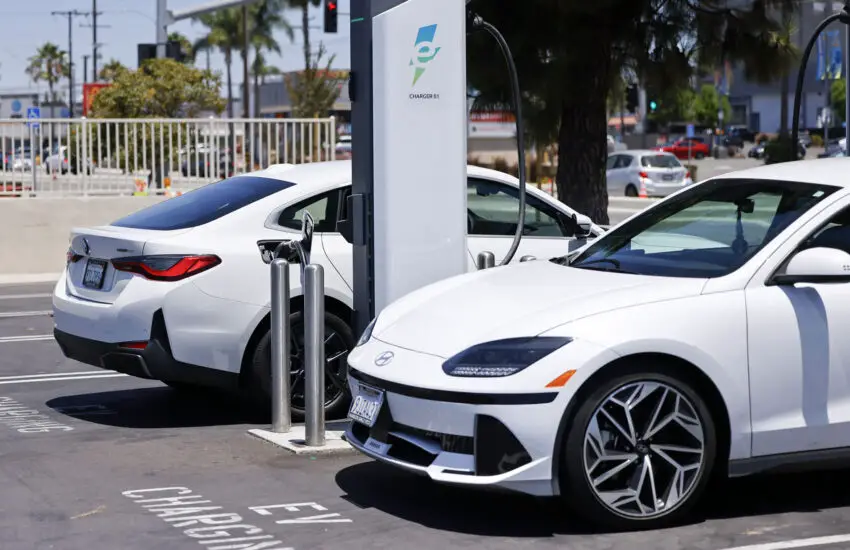
Charging the 18.8 kWh battery takes about 5 hours on a Level 2 charger (240V), and a full night on a standard household outlet (120V).

Final Verdict

Faced with competition that is slow to offer compelling three-row plug-in hybrids (Audi Q7, BMW X5, Mercedes GLE), the 2025.5 Volvo XC90 T8 remains not only competitive but compelling. It combines useful electric range for the city with highway efficiency, all in an elegant and comfortable package, demonstrating a clear lead in the market.

Revealing Study: Electric Cars Still More Eco-Friendly than Thermal Cars

It is widely accepted that electric vehicles, or electric cars, are more environmentally friendly than their gasoline counterparts. This claim includes the total impact of battery manufacturing and the production of electricity needed for their charging. However, this generalization masks important specifics, such as the most virtuous models or the crucial influence of geographic location.

A Comprehensive Cradle-to-Grave Analysis

The University of Michigan provides a precise answer to these questions through an in-depth study, accompanied by an online calculator. This tool allows for the comparison of greenhouse gas emissions over the entire life cycle of vehicles – from production to disposal, including emissions related to driving and the production of fuel or electricity.

The Decisive Impact of Your Location

The results vary considerably depending on your place of residence. For example, in Bucks County, Pennsylvania, a compact gasoline sedan emits 309 grams of CO2 equivalent per mile. A compact hybrid emits 20% less, a plug-in hybrid 44% less, and an electric vehicle (EV) with a 200-mile range, 63% less. These gains would be even greater in Phoenix, with a 79% reduction for an EV.

Large EVs Outperform Small Combustion Vehicles

The most striking result concerns the comparison between large EVs and small combustion cars. The study shows that the heaviest and largest EV emits only 71% of the CO2 emitted by a compact gasoline car. Thus, over its entire life cycle, a 3.2-ton electric pickup truck (Rivian R1T) is less polluting than a standard Honda Civic.

The Case of Pickups and Freight Transport

Given the popularity of pickups in the United States, the study included the cost of cargo transport. Even with a 1,100 kg load, a 400-mile range electric pickup would produce about 35% of the emissions of an empty gasoline pickup. Note, however, that carrying a load impacts the range of an EV more than that of a combustion vehicle.

An Unequivocal Conclusion

The University of Michigan acknowledges that parameters, such as charging ranges, could refine the analysis. Nevertheless, the main message is clear: any vehicle with an internal combustion engine is more harmful to the environment than any EV. The key takeaway from the researchers is as follows: “Electrifying the powertrain offers greater potential for emission reduction than simply reducing the vehicle size.”

Rolls-Royce electric with analog meters: Halcyon reinvents the Corniche

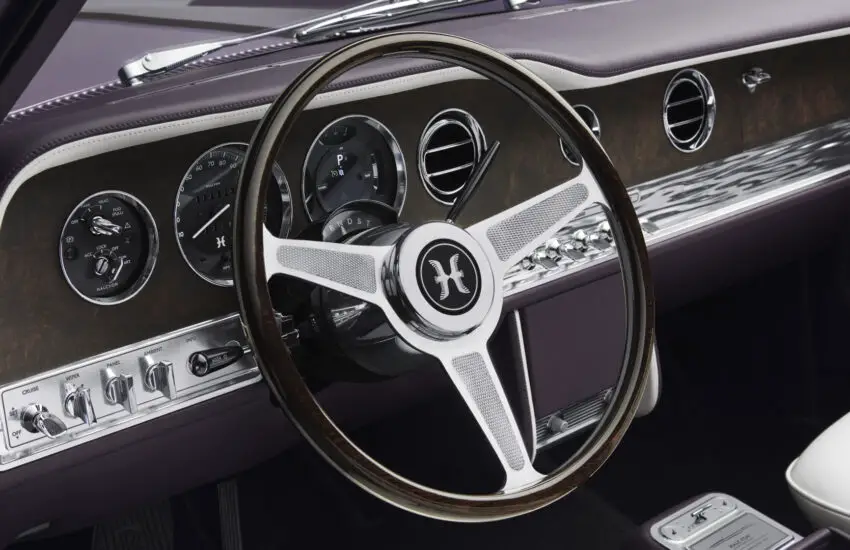
Tired: Take an old car that was once classy, install an LS V8 engine, add LED headlights and a digital dashboard, sell it to someone with Guy Fieri’s sense of style. Wired: Create a custom 800-volt electric propulsion system, but connect it to beautiful old-school analog gauges and switches. Discover the sublime details of this reinvented Rolls-Royce.

Halcyon and the Rolls-Royce Corniche “Highland Heather”

The more I look at this Corniche (nicknamed “Highland Heather”), completely rebuilt by a coachbuilder called Halcyon, the more I find things to love. The purple-on-white color combination is intense, yet elegant. The rest of the car is pure class.

Halcyon started making waves last year, announcing in December that it “empathetically modernizes classic Rolls-Royce models,” namely the Corniche convertible and the Silver Shadow sedan. Empathetic modernization… what a phrase. It’s tempting to dismiss this as press release jargon, but, based on the photos of the company’s first complete project (the purple convertible here), I think these Halcyon folks might really have something.

A Unique Creation, Timeless

Among the many restomod, reimagined, and coachbuilt cars I’ve seen over the last decade, this Corniche truly seems to be among the most… out of sync with reality. And I say that as a sign of sincere appreciation for its uniqueness. While many modified old cars end up looking like old cars with modern parts, this one really gives the impression of coming from an alternate timeline where 1970s design and 2020s technology truly coexist.

This makes the Highland Heather a rather cool achievement, regardless of its road performance.

An Analog Dashboard, a Triumph of Design

The press release presenting this car, which will be showcased in person at the Hampton Court Palace Concours of Elegance in a few days, highlights impressive technical elements, such as its in-house built 800V electric platform and adaptive suspension.

But for me, the design of the dashboard interface is a more interesting success. Just look at those switches and gauges. Analog. Three-dimensional. Beautiful.

Just by looking at them through a screen, I feel like they allow selections with a satisfying click. And there are few greater joys in the automotive world than controls that offer a dramatic feel.

An Exclusive Project and an Inspiration for the Future

Halcyon plans to produce only 60 cars of this type, and they start at around half a million dollars. Old Rolls-Royces in general can often be found for a song, but the cost to maintain one in good condition with original parts is astronomical.

The Halcyon Corniche is incredibly cool, and I’d love to see more customizers follow a similar design philosophy regarding the human-machine interface.

Tesla Charging Cable: The Complete Guide to Stress-Free Electric Mobility

Electric vehicles (EVs) are establishing themselves as the future of transportation, driven by the need for sustainable mobility solutions. Tesla, a leader in this revolution, stands out as much for its cars as for the technology that supports them. At the heart of this technology is the Tesla charging cable. This simple yet essential accessory ensures drivers have access to the energy needed for all their journeys. Discover how this cable has become the indispensable pillar of electric mobility, from home charging to the Supercharger network.

The Evolution of Tesla Charging Technology

Tesla’s commitment to innovation is evident in its charging solutions. Early models used the Universal Mobile Connector (UMC), allowing charging from a standard household outlet. In response to growing demand for speed, Tesla introduced the Wall Connector, offering higher power and reduced charging times. Today, Tesla cables combine versatility and efficiency, meeting all needs, whether at home, at work, or on the road.

Home Charging: Simplicity and Efficiency

The ability to charge your vehicle at home is a major advantage for Tesla owners. The Wall Connector turns your garage into a personal charging station. Capable of providing up to 70 km of range per hour, it ensures your car is always ready each morning. This solution eliminates frequent stops at public stations and allows you to take advantage of off-peak electricity rates, reducing the overall cost of ownership.

The Versatility of Tesla Charging Cables

Designed to adapt to all scenarios, Tesla cables, like the Mobile Connector, come with multiple adapters for different types of outlets. Whether you’re at a friend’s house or a hotel, simply plug in to charge. This flexibility is crucial for frequent travelers or residents of areas where charging infrastructure is still developing, offering total freedom without the fear of running out of power.

The Supercharger Network for Long Trips

For long journeys, Tesla’s Supercharger network is a game-changer. Strategically located along major routes, these Superchargers deliver ultra-fast charging, adding up to 320 km of range in just 15 minutes. The proprietary cable is designed to deliver maximum power safely, minimizing downtime and making long-distance travel as simple as filling up with gasoline.

Efficiency, Savings, and Environmental Benefits

Tesla’s proprietary technology maximizes energy transfer efficiency, reducing losses and costs. Charging at home during off-peak hours proves more economical than using public stations. Beyond savings, driving a Tesla is also an eco-friendly choice: zero emissions during use, reduced pollution, and lower greenhouse gas emissions. Tesla’s goal to power its Superchargers with renewable energy reinforces this commitment to a sustainable future.

The Future of Charging and the Tesla Community

Tesla continues to innovate with the deployment of its network and the development of even faster solutions, such as wireless charging. These advancements will make EV ownership more attractive. Owning a Tesla also means joining a community passionate about technology and sustainability, united by the exchange of tips and mutual support, with constant backing and software updates provided by the brand.

Intelligent CNC Machining: The Engine of Electric Vehicle Manufacturing

In the rapidly evolving technological landscape, the manufacturing of new energy vehicles (NEVs) is undergoing significant transformation. This transition is driven by the urgent need for sustainability and efficiency in automotive production. As manufacturers strive to meet growing consumer demand and stringent regulations, intelligent CNC machining is emerging as a crucial component of the factory of the future.

The Challenges of Electric Vehicle Manufacturing

The increasing demand for eco-friendly transportation solutions has accelerated the growth of the NEV market. However, this transition presents significant challenges, including the complexity of modern designs that require intricate components to be produced with high precision. The need to use lightweight materials, such as aluminum and advanced composites, adds to this complexity, as these materials often require specialized machining techniques.

Furthermore, manufacturers must address the need for flexibility in their production processes. The ability to quickly adapt to new designs and methods is critical, especially as supply chain disruptions have highlighted the crucial importance of manufacturing agility.

The Rise of Intelligent CNC Machining

Intelligent CNC machining is at the forefront of addressing these challenges. By leveraging advanced computing technologies and automation, manufacturers can achieve high precision and efficiency. In the context of NEVs, it significantly enhances the accuracy and consistency of critical components.

Battery packs, essential for the performance and safety of electric vehicles, are a perfect example. They require extremely precise manufacturing processes where the slightest deviation can lead to issues. Precision machining meets these requirements while reducing production cycles and material waste.

Machine Learning and Data Analytics

A key advantage of intelligent CNC machining is its ability to integrate machine learning and data analytics. Collecting and analyzing production data provides valuable insights. Real-time monitoring of machining processes allows for immediate adjustments, ensuring optimal performance.

This data-driven approach also facilitates predictive maintenance, which helps prevent unexpected downtime by identifying potential issues before they lead to failures.

Digital Trends in CNC Machining

With the advent of Industry 4.0, digital trends are becoming paramount. They enhance production efficiency and enable greater flexibility and better traceability.

Cloud Computing and IoT

Cloud Computing and the Internet of Things (IoT) are revolutionizing operations management. Connecting CNC equipment to cloud platforms allows for centralized data management and seamless communication between devices.

Augmented Reality (AR) and Virtual Reality (VR)

AR and VR provide operators with enhanced training and support. AR can offer real-time overlays of critical machining parameters, guiding operators through complex processes. VR simulations allow for practice in a risk-free environment.

Key Technologies in Precision Machining

For NEV manufacturing, several key technologies are driving advances in precision machining.

High-Speed Cutting (HSC)

High-speed cutting technology enables rapid material removal at high speeds, crucial for complex geometries and hard materials.

Multi-Axis Machining

Multi-axis machining enhances CNC machine capabilities by allowing simultaneous movement along multiple axes, producing complex shapes in a single setup.

Integration of Additive Manufacturing

The integration of additive manufacturing (3D printing) with CNC machining is gaining ground. This hybrid approach offers greater design freedom to create lightweight and optimized components.

The Future of Smart Manufacturing

The future of production in the NEV sector will be shaped by several major trends.

Automation and Autonomous Manufacturing

The rise of automation technologies is paving the way for autonomous manufacturing systems, enabling continuous production with minimal human intervention.

Sustainable Manufacturing Practices

In the face of environmental concerns, NEV manufacturers must optimize material usage, reduce waste, and minimize energy consumption. Precision machining and digital trends facilitate these sustainable practices.

Intelligent CNC machining is set to play a pivotal role in the future of smart electric vehicle manufacturing. By embracing these advancements, manufacturers can not only enhance their production capabilities but also contribute to a more sustainable and efficient automotive industry.