
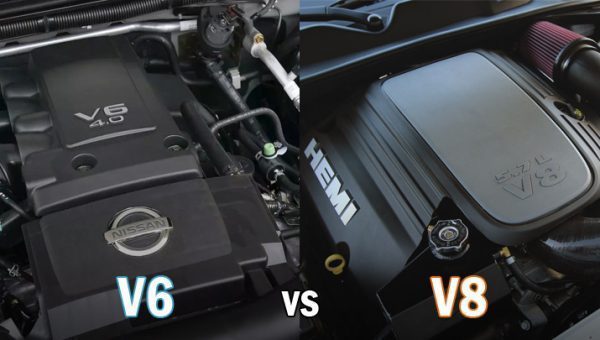

When buying a new vehicle (especially a truck), you’ll often have more than one engine option. Right up there with the 4-cylinder vs. 6-cylinder debate is the V6 vs. V8 argument.
Should you go for the extra power of a V8 or the better fuel economy of a V6? Unfortunately, it’s not that simple.
The V6 vs. V8 debate has been argued for decades. Keep reading to learn more about the history of each engine and how they compare in nine different metrics to help you answer the question of which engine is the best option for you.
V8 Engine History
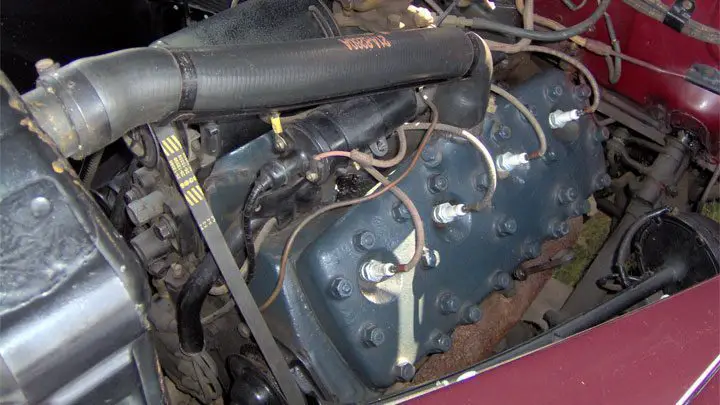 1932 Ford Flathead V8
The V8 engine had its humble beginnings in France, as a man named Léon Levavasseur filed the first V8 patent in 1902. By 1904, he was building these engines for early airplanes and motorboats. In 1906, the British manufacturer Rolls Royce built V8s for only three of its expensive sedans.
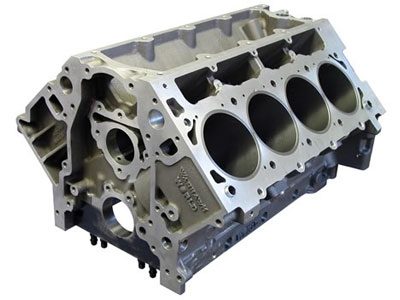 Modern V8 block
Henry Ford’s company had limited experience with large V8s during the Roaring Twenties. In 1932, Ford made its biggest contribution to the V8 world. The famous Ford flathead engine appeared in a newly designed coupe, the Model 18 to replace the popular Model A.
In just one year, Ford delivered nearly 300,000 copies of this model, although the 221 cu. in. V8 had many startup problems. Ford persevered with the basic engine configuration and continued to be produced with significant improvements until 1953.
V6 Engine History
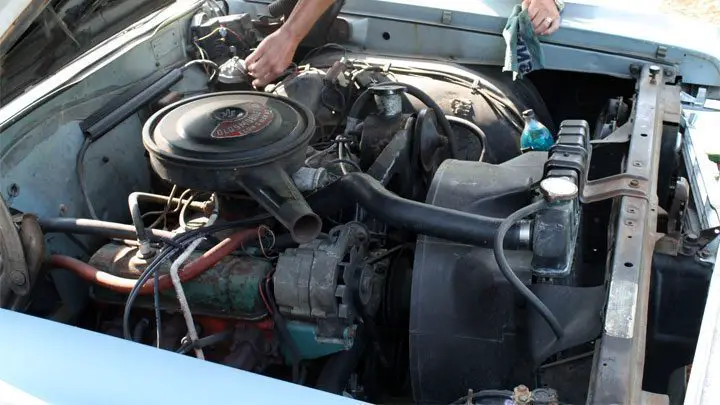
V6 engines first appeared on the Italian Lancia Lambda in 1924. These inauspicious beginnings were short-lived. It wasn’t until 1950 that Lancia placed a new V6 engine design in its Aurelia model. The Aurelia was produced until 1958 and took the checkered flag in several prestigious European car races.
In the United States, Buick took note of the Lancia V6 design and introduced its first V6 model in 1962, the Buick Special. This was the first mass-produced V6 in the automotive world.
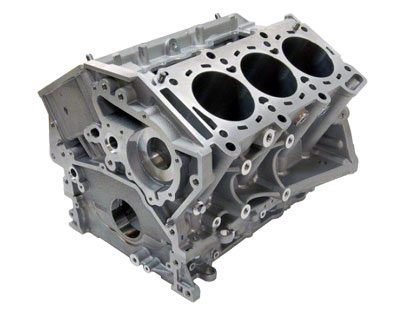 Modern V6 block
In Japan, Nissan (then Datsun) released a V6 engine in 1983. In the United States, this engine first appeared in the 1984 240Z, which replaced the inline-six engine that first came with this two-seater.
V6 development has remained very active to this day, keeping pace technologically with the more powerful and larger V8s. Today, the V6 is second in popularity only to the smaller inline 4-cylinder engines; V8s come in a distant third.
What Does the “V” Stand For in a V8 or V6?
The “V” simply represents the geometric arrangement of the cylinders if you look along the engine parallel to the crankshaft.
Nowadays, all 8-cylinder engines produced are V8s. But not all 6-cylinder engines are V6s, as inline-six (straight-six) and flat-six cylinder orientations are made by some car manufacturers.
V8 vs. V6 Comparison
In this comparison, we will discuss car engines available for road use and costing less than $125,000. Racing car offerings and derivatives of these cars can produce engines with much higher horsepower and torque. Due to the purchase price, these cars rarely grace our garages.
#1 – Engine Size

V8 engines, having two more cylinders than V6s, will typically exceed V6 engines in size. And this includes physical size, displacement, and engine weight. What are the main design attributes of these two engine types?
- V8 engines, due to the cylinder arrangement (4 cylinders aligned in each row), are inherently easy to balance. Well-balanced engines run smoothly. The absence of vibration is essential for the high RPMs required when seeking maximum power.
- V6 engines are fundamentally unbalanced due to the odd number of cylinders in each bank. There are very limited ways to reduce vibrations due to the sequence of piston power strokes occurring in each bank.
Vibration issues limit the size of V6 engines to less than about 4.0 liters (L). Two fine examples close to this limit come to mind:
- Nissan’s world-class 3.7L V6 is typical of the smoothness possible with proper design. This non-turbocharged engine can deliver up to 350 hp.
- The Chevrolet Camaro’s 3.6L V6 is another elegant design that offers vibration-free operation and excellent power. It is rated at 332 hp.
To smooth out larger V6 engines, balance shafts are required. One or more of these can help mitigate vibrations. But balance shafts add weight and complexity and cannot always provide optimal smoothness across the entire RPM range of an engine.
Winner: V8 Engine
#2 – Power

In these most basic considerations, V8 engines win hands down. The reason is that V8 engines can comfortably exceed the V6 displacement limit of 4.0L with little detrimental effect on engine smoothness.
V8
Coupled with the relative ease of engine balancing, large V8 engines like the 6.4L Hemi in the Dodge Charger produce 485 brake horsepower (hp). And this is without a turbocharger.
With some internal modifications and a supercharger, the Hemi in the Dodge Challenger offers horsepower numbers above 800. V6 engines can hardly compete with that.
The Mustang’s 5.0L V8 comes close to the 6.4L Hemi with less displacement for a power output of 480 hp. By adding a supercharger, the slightly larger Ford 5.2L V8 jumps to 760 hp.
V6
Nissan’s 3.7L V6 develops a maximum power of 350 horsepower. A twin-turbocharged 3.8L version of this engine in the Nissan GT-R produces 565 hp. This almost race-ready car just pushes our $125,000 price limit.
Lincoln will offer a Lincoln Aviator this year with a 3.0L V6 producing 400 horsepower. This is accomplished with two turbochargers.
With the use of turbochargers, a V6 can come close to and even, in some cases, surpass a naturally aspirated V8 in power. But there will be a significant cost for this kind of power.
Although possible, turbocharged V6 engines over 400 horsepower are complex to build. The cost factor limits their use to high-end sports cars and sedans or SUVs like the Lincoln Aviator.
Example Comparison
The Alfa Romeo Giulia Quadrifoglio offers 505 hp from a 2.9L twin-turbo V6. The car is a gem in every respect, but the base sticker price starts at around $76,000.
On the other hand, a fully loaded 485 hp Dodge Charger will have a sticker price of around $45,000. The 480 hp Mustang GT is offered in this same range.
If you’re looking at the Alfa Quadrifoglio’s price, you might also consider an 807 hp Challenger Hellcat or a 760 hp Mustang GT 500. Both are offered in the same range as the Quadrifoglio.
Winner: V8 Engine
#3 – Handling

Car handling can be a very subjective discussion. The feel, steering, cornering, acceleration, and braking of a car can be measured and summarized in a report.
With little argument, V8 automobiles will generally weigh more than V6s. V8 engines are heavier than V6s. Heavier cars generally perform worse than their lighter siblings.
So, considering the weight factor alone, V6 automobiles will generally handle better than V8s. But let’s add designer intelligence to the mix. Here we will see that many larger V8 sedans and sports cars handle remarkably well.
I’m thinking of the Chevrolet Corvette. Yes, it has a V8 with a lot of power but with excellent handling too. Mustangs and Chargers are both heavy cars but still handle well despite the large engines.
More powerful turbo V6 engines add money to the sticker price, which can also translate into surprisingly good handling and fast V6 cars.
But for automobiles that share the same price range, V6 offerings in terms of handling will only exceed this attribute compared to V8s at the same price.
Winner: V6 Engine
#4 – Towing and Payload Capacity

In this regard, power is king. None of the V6 offerings, even with turbos, will out-tow a V8 car, SUV, or light truck. V6 platforms will also not carry a larger payload than an equivalent V8 vehicle, although some van ratings might argue otherwise.
For high loads and greater maximum towing capacity, slower-revving V8 engines remain in the driver’s seat.
Winner: V8 Engine
#5 – Fuel Economy

Top 10 Brands and Products of 2020

An essential element for keeping your car’s engine in good working order is to regularly change your motor oil and ensure that the new oil you install is the best your car can get. The oil keeps the internal engine parts lubricated, preventing moving parts from rubbing against each other and causing damage, and also keeps it cool, ensuring it doesn’t overheat.

If your oil is not changed frequently, dirt, grime, and sludge can build up inside the engine compartment and around moving parts, and the old dirty oil will not allow parts to slide smoothly against each other. If the oil is dirty and full of impurities, it can cause serious damage, and you may even need to replace your engine in the future. Some oils also contain additives, such as detergents, to keep surfaces clean at high temperatures and antioxidants that prevent oxidation (which can lead to rust) and prevent motor oil from thickening. Additives also capture dirt and other contaminants to prevent buildup on engine parts.
But it’s not always easy to choose the right motor oil. To ensure you’re not left staring blankly at someone when they ask you what type of motor oil you want, in this article, we will go over the top 10 motor oil brands and products to make sure you get the best to keep your engine running.
TYPES OF MOTOR OIL

Before diving into the details of each brand and product, here is a brief description of the different types of motor oils you’ve probably heard about in the past.
- Conventional oil comes from refined crude oil. It works well in most everyday vehicles, but it’s the cheapest oil. It’s the standard oil for new cars. Almost all major brands will sell conventional oils, available in several viscosities.
- Synthetic blend oils, on the other hand, are designed almost specifically for “high-performance” engines. They are made in a laboratory and are often more expensive but offer a longer lifespan and more lubrication for your engine due to maintained viscosity. They are made for slightly heavier engines that run at higher temperatures. Typically, they are therefore less volatile, meaning they evaporate less, which reduces oil loss and increases the car’s fuel consumption.
- Fully synthetic oils, however, contain absolutely no mineral oil. They have exceptional longevity and are often used in the industry. They tend to be the most expensive oil but also offer what might be the best option for older cars due to the type of additives they contain, which will prevent the oil from thinning and losing its viscosity, meaning there will be less wear and tear on the parts.
- High-mileage oils contain ingredients to take care of older engines, such as antioxidants and detergents. Seals, gaskets, and non-metallic parts begin to break down and loosen as the engine ages, and high-mileage oils are formulated with seal conditioners that increase flexibility and restore shape, which can help prevent leaks in the long term. If a car is beyond its warranty and has 60,000, 80,000, or even 150,000 miles, high-mileage oil could do a lot for it.
Before choosing an oil, it is of course essential that you take your car into account; different cars require different types of motor oil. A new car may work perfectly fine with mineral oil, but an older car with a high-performance engine could benefit from a synthetic oil. You want to get the best quality but avoid spending money on an oil that won’t improve your car’s performance.
TOP MOTOR OIL BRANDS
- Castrol. Castrol is perhaps one of the oldest motor oil brands, having been first founded in 1899 and entered the British market in 1909. Now owned by BP and based in the UK, it has great expertise and offers a wide range of oils, mainly focusing on fully synthetic or synthetic blend oil and have a lot of experience with high-performance automobiles: they have been involved in NASCAR and F1 for many years.
- Mobil. Mobil has been hailed as one of the early innovators of synthetic motor oil, and this legacy continues today with its Mobil 1 product line. Their fully synthetic motor oils claimed to keep engines in excellent condition over 250,000 miles, and they offer products for everything from performance sports cars to cars well beyond their prime.
- Liqui Moly. Liqui Moly GmbH is a German company specializing in oils, lubricants, and additives that offers over 4000 products for cars worldwide as well as for motorcycles, ships, and industrial machinery.
- Motul. Motul is a French company, now operating globally, that develops lubricants for the automotive industry and other industries. Motul are true innovators in the motor oil industry, producing the first semi-synthetic oil in 1966 and the first fully synthetic oil in 1971.
- Shell. Perhaps better known as an oil and gas supplier, the Dutch-British company Shell also produces and distributes lubricants, including motor oil, and delivers its market-leading lubricants to consumers in over 100 countries. In 2013, it was ranked the world’s top lubricant supplier.
- Elf. Formerly owned by the French government, Elf became a private company in 1994; today, after merging with Total, it is the fourth-largest oil company in the world and an expert in lubricants. Some of its latest products include fuel-saving lubricants and low SAPS lubricants for modern engines.
- Comma Oil. Focusing exclusively on vehicles, whether passenger or commercial, and now based in Sao Paulo, Brazil, Comma Oil prides itself on its approaches to technical innovation and training that lead to quality products for all seasons and all types of engines.
- Valvoline Oil. Almost everyone has heard of the Model T car, one of the first affordable mass-produced automobiles. Fewer people, however, will have heard of Valvoline, even though it was the oil used in some of those early Model T cars, as the company has been around since 1866, originally designing lubricants for steam engines. It has a serious history behind it.
- Ravenol. Is a German lubricant producer that emphasizes synthetic lubricants created by industrial processes and prides itself on technical innovation.
- Fuchs Oil. Fuchs is a global company of German origin that has been developing, producing, and selling lubricants and related products for 85 years – for virtually all areas of application and sectors from automotive to industry and beyond. With 62 bases and over 5,600 employees worldwide, the FUCHS Group is one of the leading independent companies in the supply of lubricants.
BEST MOTOR OILS OF 2020
- Castrol Edge Professional, Longlife III. Castrol Edge is a synthetic oil suitable for diesel and gasoline engines and guarantees excellent performance and reliability even at sub-zero temperatures. It is also highly resistant to oxidation and lasts its entire lifespan.
- Mobil 1 ESP Formula 5W-30. Another synthetic oil, Mobil 1 ESP oil has an SAE viscosity of 5W-30 and is highly compatible with most vehicles. It is designed to provide excellent cleaning power and to prevent engine wear. It is also suitable for diesel and gasoline automobiles.
- Shell Helix HX7 5W-30. This Shell synthetic oil was designed to meet the demanding requirements of some high-performance engines, including Ford and those requiring API SJ, ILSAC GF-2, or ACEA A1/B1.
- Comma XTech 5W-30. This is a fully synthetic high-performance oil designed for Ford DuraTec, DuraTorq, or Zetec vehicles and offers users all the fuel economy benefits of an ACEA A5/B5 oil. In addition to being suitable for diesel and gasoline engines, it can also be used with fuel-injected, multi-valve, and turbocharged engines.
- Valvoline SynPower 5W-30. SynPower 5W-30 is a low-viscosity fully synthetic motor oil, formulated with a combination of premium synthetic base oils and advanced additive technology. Designed for modern gasoline engines, SynPower 5W-30 meets the ILSAC GF-5 fuel economy performance specification and the GM dexos1™ GEN 2 specification.
- Liqui Moly Top Tec 4200 5W-30. This is a high-tech, low-friction motor oil based on synthetic technology. It offers motorists exceptional protection against wear, reduces oil and fuel consumption, and ensures rapid oil penetration into the engine. According to manufacturer specifications, oil change intervals of up to 30,000 or 50,000 km or every 2 years for low-mileage drivers are thus possible.
- Motul X-Clean 5W-30. X-Clean is a 100% synthetic high-performance gasoline and diesel motor oil for powerful and recent cars equipped with large-displacement engines. This versatile product has many car manufacturer approvals and is particularly recommended for vehicles still under warranty. Compatible with catalytic converters.
- ELF Evolution Motor Oil, 900 SXR. Elf Evolution 900 SXR offers exceptional protection against wear as well as thermal stability and oxidation resistance. This stops the degradation of engine components, even under very severe conditions. It is suitable for all types of driving (city, highways, and motorways) and particularly in severe conditions.
- RAVENOL VMP 5W-30. Ravenol VMP is a universal fuel-saving motor oil, specially distilled for modern gasoline and diesel engines with and without turbochargers in passenger cars and vans with extended oil change intervals. Extends the life of the particulate filter.
- Fuchs Titan GT1 5W-30. This Fuchs oil was specially developed for VW gasoline and diesel engines with and without long-life service and is approved according to VW 504 00/507 00. Currently, it can be used with backward compatibility for older VW specifications as well as in hybrid models.
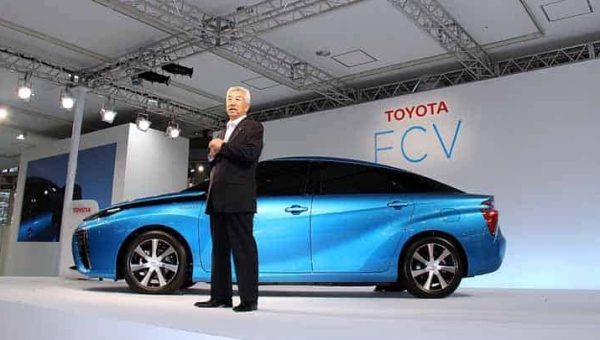
Top 5 Hydrogen Cars from Honda and Toyota

Honda and Toyota are two Japanese car manufacturers that everyone in the developed world has heard of. They are also among the leading manufacturers of vehicles with hydrogen fuel cell technology. Since the beginning of the 21st century, Honda and Toyota have experimented with hydrogen fuel cell vehicle models. Most of them remained in Japan while some were introduced in the United States as mere concept cars. This hydrogen technology took time to become popular since hybrid electric cars attracted more attention at the time. But now, the hydrogen fuel cell concept car is back and consumers seem to be interested in it.
Top 5 Honda Hydrogen Cars
Here are the top 5 Honda Hydrogen cars.
- 2007 Honda FCX Clarity – The 2007 Honda Clarity fuel cell experience was the company’s new fuel cell vehicle that was introduced in Europe, Japan, and Southern California. Europe had already begun to have hydrogen fueling stations at this point.
- 2016 Honda Clarity Fuel Cell – The 2016 Honda Clarity Fuel Cell was introduced to the Southern California U.S. market since the last Clarity model in 2008. Now, with more hydrogen refueling stations and dealerships to sell this vehicle, it allowed more people to become interested in buying it.
- 2002 Honda FCX – The 2002 Honda Fuel Cell (FCX) experience was one of the first fuel cell vehicles produced by Honda. When it was released in 2002, it was actually a hybrid vehicle, but it was still the first to show the true power of a hydrogen tank.
- 2014 Honda FCV Concept – The 2014 Honda Fuel Cell Vehicle concept showed American Californians what Honda was working on and what their fuel cell technology could do. It was only a concept car, but it led to the creation of their Clarity models in 2016 and 2017.
- 2017 Honda Clarity Fuel Cell – The 2017 Honda Clarity Fuel Cell is Honda’s latest fuel cell vehicle. In California, only 12 Honda dealerships are authorized to sell this vehicle model. Six of them are located in Southern California.
Top 5 Toyota Hydrogen Cars
Here are the top 5 Toyota Hydrogen cars.
- 2015 Toyota Mirai – The 2015 Toyota Mirai is one of Toyota’s most popular hydrogen fuel cell vehicles. Priced at just $57,000, it is considered a luxury car and has since been sold in the northeastern United States.
- 2014 Toyota FCV – The 2014 Toyota Fuel Cell Vehicle was a concept car that was first shown at the Tokyo Motor Show before being sold in the United States. It was only sold in areas where there were hydrogen refueling stations.
- 2005 Toyota Fine-X – The 2005 Toyota Fine-X, also known as the Fuel Cell Innovation Emotion-eXperiment, debuted as a concept car at the Tokyo Motor Show and then at the Geneva Motor Show.
- 2005 Toyota Fine-T – The 2005 Toyota Fine-T is actually another name for the Toyota Fine-X that was used in Europe and Japan. Both vehicles had very similar features and were among the first to introduce four-wheel steering in a fuel cell vehicle.
- 2002 Toyota FCHV – The 2002 Toyota Fuel Cell Hybrid Vehicle was the first hydrogen vehicle presented by Toyota. It was only available through a lease to a limited number of American drivers. The response was encouraging but it would only be sold years later.
Please Note
If you wish to purchase a hydrogen vehicle, you will need to research the locations of the nearest hydrogen refueling station. Since you can only drive in these areas, you will not be able to take your hydrogen car on long trips without a gas station. This is why Honda and Toyota have only selected certain dealerships to sell and lease these cars. They wanted to be sure that consumers could access these nearby service stations.
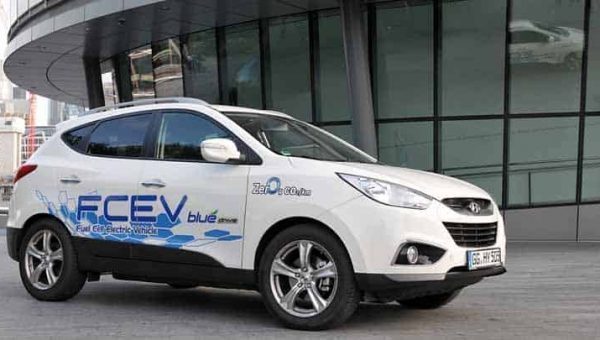
Differences between hydrogen fuel cell and traditional cars

The use of alternative energy for cars is becoming increasingly popular in the modern era. While most people have heard of electric vehicles, many do not think about the available energy sources that can power them. Among all the available electric car options, hydrogen fuel cell cars have proven to be the cleanest on the market. They do not use an electric battery like other electric vehicles do. Furthermore, the emissions coming out of the exhaust pipe are only water vapor and heat. This makes them the most environmentally friendly of all the other options.
Working Principle of Hydrogen Fuel Cell Cars
Hydrogen fuel cell cars produce electricity through the conversion of hydrogen gas. Once this happens, heat and water are the only two things emitted from them. You will not see toxic carbon emissions coming out as with traditional vehicles. There are high-pressure fuel tanks in the vehicle that store the hydrogen gas. Instead of burning the gas as you do with regular fuel, the hydrogen gas flows into the fuel cells which contain oxygen. The hydrogen gas mixes with the oxygen and forms the electrical current needed to power the electric motors. This, in turn, provides power to the wheels and allows the vehicle to move.
The 3 Main Differences Between Hydrogen Fuel Cell Cars and Traditional Cars
If you are considering getting a hydrogen fuel cell car, you need to understand the fundamental aspects of the vehicle. While hydrogen vehicles have many advantages, there could also be major drawbacks for you.
Besides hydrogen producing cleaner emissions, below are the 3 main differences between hydrogen and ordinary vehicles. This will help you better understand the working principle of hydrogen fuel cell cars and how they might affect your lifestyle.
- Small Battery – All vehicles have batteries, but they serve different purposes depending on the type of vehicle. A hydrogen fuel cell car has a small battery that is solely responsible for boosting acceleration. It is not the main source of power for propulsion as in hybrid vehicles. Additionally, hydrogen fuel cell car batteries are capable of recharging themselves using energy from the hydrogen fuel cells. This allows the batteries to last a very long time.
- Less Noise – Hydrogen fuel cell cars are much quieter because there is no roaring petroleum engine emitting exhaust fumes. Furthermore, the power delivery is quite quick as it is fast for electric motors to achieve full torque. This means you can lightly press the accelerator pedal and make the car accelerate quickly. Again, there will be no engine noise when the car accelerates either. The only sounds you are likely to hear come from the outside winds blowing against it.
- Limited Fueling Stations – The only major drawback of hydrogen fuel cell cars is that you cannot simply go to a traditional gas station to refuel. You will need to go to a hydrogen fueling station to fill up the cells. Unfortunately, there are not as many hydrogen fueling stations as there are regular gas stations. In fact, there are only 39 hydrogen fueling stations throughout the United States and the majority of them are located in California. But, as the technology expands to other states, there will likely be more hydrogen stations opening very soon.
The Outlook
You might be wondering why more hydrogen vehicles are not produced if they are so good for the environment. The main argument on the other side is that hydrogen still causes emissions when it is produced. This is technically true because hydrogen currently comes from natural gas. But we have the technology to produce hydrogen from cleaner renewable energy sources. California has currently started this process at 6 of its hydrogen fueling stations. The state requires that any hydrogen station receiving public funding use renewable sources for at least 33% of its hydrogen production. Hopefully, this percentage will increase in the future and expand to other states.
How hybrid cars work

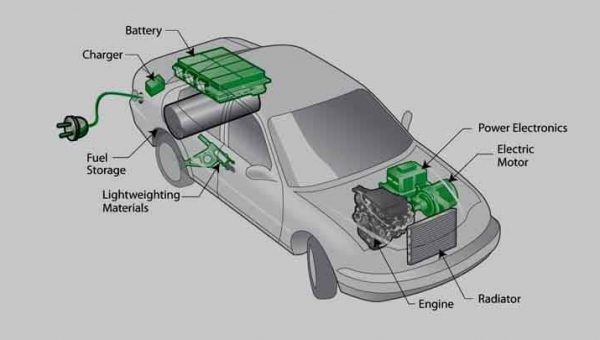
Most drivers around the world have never driven a hybrid vehicle before. All they know about these hybrid vehicles is that they operate with an internal combustion gasoline engine and a battery-powered electric motor. But few of them know how this combination actually makes the car work. The truth is that drivers have a choice regarding how much electricity from the electric motor they can use for their driving and how much gasoline they get from the internal combustion engine.
Normally, a driver would use both the engine and the electric motor in order to save both battery power and gasoline. The battery inside a hybrid vehicle is much larger than the battery in your conventional classic car. Not only does the hybrid battery need to power basic accessories like the air conditioner and radio, but it also needs to power some of the vehicle’s movement. This requires it to be a much more massive battery that costs thousands of dollars and lasts about 100,000 miles.
The 6 Main Features of a Hybrid Vehicle’s Internal Structure
To understand how a hybrid vehicle works, you basically need to understand its internal structure. Here are the 6 main features of its structure.
- Fuel Tank – You will always have a fuel tank to store your gasoline as in a conventional vehicle. Due to the advanced technology of hybrid cars, gas will not need to be used as much. This will give you better fuel efficiency and produce fewer emissions.
- Transmission – Most hybrid vehicles will still use a conventional transmission that you would find in an ordinary gasoline car. However, new transmissions are built specifically for certain hybrid cars, like the Toyota Prius.
- Batteries – The batteries are what power the electric motor of a hybrid car. Not only that, but the batteries can also take back power from the electric motor. This is one way to preserve their lifespan.
- Generator – If you have a series hybrid vehicle, they have a generator that is powered by the gasoline engine. From there, the generator can then generate power for the electric motor and help recharge the battery. It is essentially a way to convert gasoline into electrical energy for the motor and battery.
- Electric Motor – This is the feature that makes the hybrid vehicle particularly special. The electric motor has the ability to accelerate the vehicle by taking power from the battery. However, it can also give power back to the battery if you slow the vehicle down.
- Gasoline Engine – The hybrid vehicle still has a gasoline engine. This remains the main source of power for the vehicle since 1 gallon of gasoline has the same energy as half a ton of battery energy.
Additional Information
Some hybrid vehicles can be plugged in to recharge the battery while others do not have this capability. Plug-in hybrids are considered electric vehicles while those you cannot plug in are not electric vehicles. Those you can plug in typically have an “electric-only drive” function that allows you to power the movement entirely with the electric motor. The only problem is that you can only drive at low speeds between 10 and 30 miles per hour. The electric motor is not powerful enough to accelerate the vehicle faster without drawing on the gasoline engine for more power. If you try to drive over 30 mph in “electric-only drive” mode, you will quickly deplete your battery power and will then be forced to drive on gasoline only as in a normal car.
What is DSC? Definition, Functions and Benefits
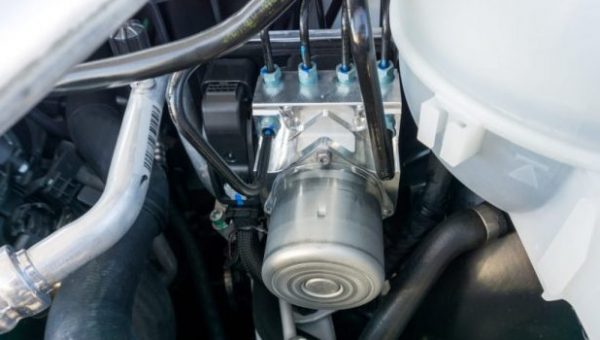
DSC (Dynamic Stability Control) is a system that has been installed on BMW, Jaguar, Ford, Mazda, Land Rover, and MINI vehicles. It is based on the anti-lock braking system and improves vehicle stability during driving. It also prevents wheels from slipping. The system enhances handling and safety during maneuvers.
DSC analyzes readings from the yaw rate sensor, lateral and longitudinal acceleration sensors, wheel speed sensors, and the brake pressure sensor. This allows it to calculate the actual direction of the vehicle’s movement. The steering wheel angle and accelerator pedal position are used to assess driver intervention.
If the actual direction of the vehicle’s movement differs from the intended one, the system activates the hydraulic unit. This increases pressure in the brake circuit. The rotational speed of one or more wheels is reduced, allowing the car to return to the intended path. Engine torque can also be adjusted if necessary.
DSC turns on automatically. If needed, it can be deactivated by pressing the button on the center console or in the display settings. This is recommended when driving on loose or soft ground or if snow chains have been installed.
POPULAR CARS EQUIPPED WITH DSC
- BMW X5 E53, 6 Series E63, E64, 5 Series E39, E60, E61, 3 Series E90, E91, E92;
- Jaguar X-Type X400, XJ X351, XF X351;
- Ford Falcon FG, Focus Mk3;
- Mazda 3 BL, 6 GH, 5 CR19;
- Land Rover Discovery III;
- MINI Cooper S Mk I.
REASONS FOR MALFUNCTION
- Loss of electrical power to ABS sensors.
- Uneven tire wear.
- Installation of tires with different tread patterns.
- Use of a small spare tire.
- Low brake fluid level.
TSI Engines: What It Represents and Its Performance Parameters

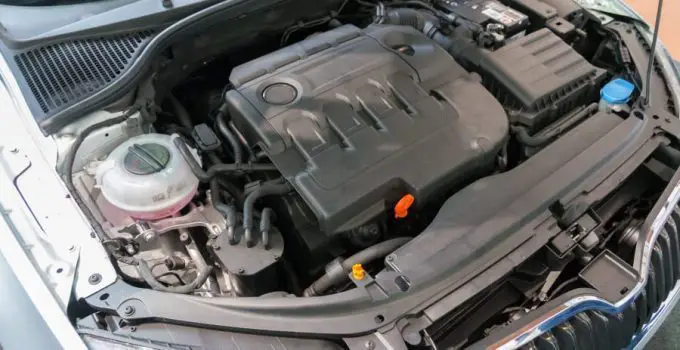
TSI is a range of turbocharged direct injection gasoline engines produced by the German Volkswagen Group. The first TSI engine had a capacity of 1.4 liters and was first introduced in 2005 on the Golf GT Mk5. It was highly praised by experts and won the “Best New Engine” award in the prestigious “International Engine of the Year” competition. Today, models from brands such as Volkswagen, SEAT, and Škoda can be equipped with TSI engines. These engines develop high power and torque despite their relatively small capacity. They are characterized by fuel economy.
FEATURES
TSI engines have 4 cylinders with 8 or 16 valves. The engine block can be made of cast iron or aluminum. The cylinder head is always made of aluminum. The engine can be turbocharged or twin-charged. In the twin-charged version, the engine has both an exhaust turbocharger and a mechanically driven supercharger. The timing mechanism uses a chain or a belt, depending on the timing system version.

How to know when it’s time to align the tires

Proper tire alignment is important to prevent excessive tire and vehicle component wear. Poor tire alignment can reduce your MPG, cause wheels to work against each other, and wear tires by creating improper tread wear patterns. Here are some signs that suggest you need an alignment fix.
- Uneven wear. If one of your front or rear tires shows a very different wear pattern from its opposite, it’s more than likely time for a tire alignment.
- Pulling to the right or left. If a vehicle’s wheels are misaligned, you’ll notice the vehicle will automatically try to turn to one side or the other. If you have to fight the wheel, it’s time for an alignment so that all wheels point in the correct direction.
- Passive pull. With a minor alignment issue, the vehicle may not actively pull, but when you let the car go straight without a hand on the steering wheel, the vehicle may naturally drift in one direction or another. This is also a sign of an alignment problem.
- Vibration. Poor alignment can also cause vibrations as the wheels pull against each other. If your car shakes while driving on the road, check your alignment.
- A crooked steering wheel. Another sign of a misaligned vehicle is that the steering wheel may be crooked while the car or truck is moving straight. Keep an eye out for this telltale sign of an alignment issue.
The Benefits of Tire Alignment
Poor tire alignment can lead to many different problems in a vehicle. Here are some reasons why it’s not a good idea to continue driving without proper tire alignment from a professional workshop.
- It facilitates tire rotation. Even if you take care to rotate the tires every 7000 miles, if the car is not aligned, they can still wear out and shred in a relatively short time.
- It meets warranty requirements. If your tires come with a warranty or a “lifetime certificate,” check the fine print. It likely includes the requirement to get periodic alignments to prevent the tires from wearing incorrectly. Don’t let your warranty be voided by a lack of proper maintenance.
- It improves handling. A car with proper wheel alignment is easier to drive. When faced with road obstacles like potholes (which further disrupt alignment), you’re ahead if you have correct wheel alignment on your vehicle.
- It reduces steering column wear. Poor alignment causes wear on many car parts, not just the tires. In extreme situations, a misaligned vehicle can shake parts and cause even more deterioration. Your best bet is to get periodic alignments so that the car’s systems don’t suffer from being shaken.
- Improves fuel consumption. Like many other car issues, poor alignment can lead to lower MPG because the vehicle uses more energy to maintain its path than it should. Don’t let poor wheel alignment harm your vehicle’s overall health and limit the MPG it gets on the road.
Tire Alignment Costs
Auto cost assistance websites provide a price range for a tire alignment. This breaks down into categories:
- Front alignment. This service involves fixing the alignment of the two front tires only. Standard costs for this package range from $30 to $65, depending on the local market.
- Four-wheel alignment. This involves aligning all four wheels of the vehicle. It ranges from $50 to $95, depending on the local market.
- Additional costs. Larger vehicles may be more expensive when you want a full four-wheel alignment.
Alignment Terminology
To understand wheel alignment, we need to understand the terms used and their meanings.
Camber
Camber refers to the angle of a wheel. The measurement is calculated in degrees. Looking at the front of the vehicle, if the wheel is tilted outward, it’s positive camber. If the wheel leans toward the car, it’s negative camber. When the wheel’s camber is not true or centered, it leads to uneven tire wear that pulls the car to one side or the other. Some front-wheel-drive vehicles cannot be adjusted for camber; therefore, if the camber is off on such a car, it means a part is worn or broken in the suspension system and needs repair.
Caster
When a car’s steering wheel is turned, a pivot is turned by the front wheels. This pivot is attached to the car’s suspension system. The angle of this pivot is measured in degrees, which is called caster. If you look at your car from one of the sides and the top of the pivot is tilted toward the rear of your car, it’s positive caster. When the top of the pivot is tilted forward, it’s negative caster. When the wheels’ caster is off, the car doesn’t track properly when moving in a straight line. This can make the car’s steering too light or too heavy, making it difficult to control. Caster is generally not adjustable on front-wheel-drive cars. When caster is off on these cars, there’s a part of the suspension that needs repair.
Toe
Your vehicle’s “toe” is the distance between the front of the tire and the rear. When your tires are toed in, it means the front part of the tires is closer together than the rear part. When looking at the front tires, if your tires look like a triangle in their relationship to each other with the small end toward you, your car is toed in. If the triangle has the small end toward the rear of the vehicle, it means it’s toed out. Your tires should be equal to each other, forming a square. When tires are toed in or out, they wear out quickly. A car’s toe is adjustable on all types of cars.
Related Questions and Answers
Can poor car tire alignment cause loud tire/road noise?
It is very rare for poor car tire alignment to cause loud tire rolling noise. This would mean a very serious problem in your alignment if it reached that point. Tire alignment essentially means your tires are straight relative to each other, and for them to be twisted enough to make a loud noise against the road is a sign of a serious situation. Poor tire alignment is highlighted by drifting during driving where the car seems to pull to one side or the wheels are visibly off-center. If left unchecked, poor alignment will lead to uneven wear on your tires, and it is extremely rare for your tires to make a loud noise due to poor alignment.
What is the average price for tire alignment?
The tire alignment price you pay will vary depending on the alignment performed and the location. The recommended alignment is a four-wheel alignment, and you should ensure that’s what you’re getting, as you might be charged less for a front-wheel alignment or a thrust alignment, which only addresses the rear axle. A price of $60 to $85 is reasonable, depending on various factors. Most mechanics will start by offering a higher price than their final offer. Negotiate the price and get the best deal possible. Anyone asking for more than $90 is too expensive, and you should look elsewhere.
Do tire alignment costs vary by car type?
Tire alignment costs vary depending on the type of car you’re aligning. For example, if you were to align a Smart car, the alignment costs might be lower than if you were trying to align the latest Cadillac CTS. It’s a matter of cost and car. A truck, on the other hand, will likely cost even more to align. Especially if it’s a 4X4, because you not only need to ensure the full alignment of the front end (tie rods, upper/lower steering racks, steering assembly, etc.), you’ll also need to ensure that the drive wheels on the four rear drive wheels are functioning correctly as well. This could cost you more than you think.
Does rear tire alignment cost more or less than front tire alignment?
A rear tire alignment will tend to be less expensive than a front alignment for one reason: complexity. In a rear alignment, you’re still adjusting toe-in and toe-out, but that’s about it. You’ll need to make some minor suspension adjustments, but they can be done with a wrench. If you need to insert rear shims (spacers) to align the rear of your car, a wrench will do the job. The front end, with its toe-in/toe-out, tie rod assemblies, steering rack assemblies, and more, is more involved because one thing affects another. Thus, a front alignment will actually be the more expensive alignment.
How can you tell the difference between tire vibrations and engine vibrations?
Engine vibrations are easier to determine than tire vibrations. First, sit at a red light and look at the tachometer if your vehicle has one. If the engine refuses to stabilize and the idle level fluctuates between 800 RPM and 2600 RPM, you can be almost sure you have an engine idle issue. If you have a tire vibration, you won’t notice it until you’re at speed. Once you reach cruising speed, you’ll likely feel the steering wheel vibrate. Holding it with one hand will only confirm it. If it’s a tire vibration, it could indicate tire wear or a tire issue. It could also indicate that your crankshaft might be slightly misaligned, or it could simply be resonance with the pavement.
Are oversteer and understeer signs of poor tire alignment?
Oversteer and understeer are more likely signs of poorly maintained tires than signs of poor tire alignment. Poorly maintained tires should be addressed for safety reasons. On the other hand, misalignment manifests as cupping in the front and rear tires. If you find such cupping, shake your tires to see if there’s any play. If so, there’s a good chance the toe-in and toe-out need resetting, as do the tie rods. Once that’s done, your car is ready to roll. However, monitor your tire condition and keep them in good shape.

The most dangerous roads in the world

Some countries have difficult geographical features that make road construction impractical. Why can’t you get in a car and drive from Canada to Argentina or Chile by car even though North America and South America are connected? Well, there’s this really thick impenetrable rainforest that is prohibitively expensive. This also applies to much of western Brazil. The Amazon basin is simply too thick to cross and maintenance would be astronomical. Nepal is nestled high in the Himalayas. Would you try to build a road through those? No, thank you!
In America, we also have certain safety codes that must be met for construction to proceed and for the general public to start using the road. In other countries around the world, these safety codes are sometimes simply not at the same level, if they exist at all. Nevertheless, people continue to traverse these dangerous paths. Here are some of the scariest to find.
1. Atlantic Ocean Road (Norway)

The Atlantic Ocean Road connects many small islands off the west coast of Norway that are located at the entrances to its many fjords. Besides this distinctive bridge, drivers must watch out for the wild weather conditions of the North Atlantic. Large waves frequently crash over the bridge and onto the roadway.
2. Canning Stock Route (Australia)

To call the Canning Stock Route a road is more than an overstatement. It’s really a 1150-mile dirt path dug into western Australia. That’s about the length of the drive from New York to Kansas City. It is not maintained and is only recommended for 4×4 vehicles. There is also no water, fuel, or services along the route. Drive at your own risk!
3. Caucasus Road (Georgia)

The Tusheti region in the northwest of the country of Georgia is isolated, and the only road leading to the village of Omalo is full of switchbacks crossing the faces of the mountains. There are no guardrails, of course, and avalanches are frequent, especially in winter.
4. Zoji La Pass (India)

The Zoji La Pass is located in the western Himalayas. At an altitude of over 11,000 feet above sea level, the pass must close during the winter months as snow eventually makes the road impassable. Avalanches are also a constant concern throughout the year. A new tunnel under construction through the mountain is expected to significantly help matters.
5. Guoliang Tunnel Road (China)

A group of villagers raised funds to connect their remote village of Guoliang to the rest of China beyond the Taihang Mountains. Built mainly with hammers and chisels, it is three-quarters of a mile long and 16 feet high. It winds its way along the mountainside, in and out of tunnels with “window” cutouts, and features a few railings along the sides of the road.
(image via )
6. James Dalton Highway (Alaska)

Even some American roads are dangerously remote! You may recognize the James Dalton Highway (or Alaska Route 11) from the TV series Ice Road Truckers. The majority of the road is essentially gravel and there are few places to refuel along the way. There are no medical facilities along the route. It is also prone to dangerous winter conditions and flooding.
7. Hana Highway (Hawaii)

The Hana Road is not in bad condition. But as it is embedded in the Hawaiian mountainside, it features many twists and hairpin turns – over 600! It is also narrow with steep drop-offs into the ocean and several one-lane bridges.
8. Vitim River Bridge (Russia)

Does this look like a functional bridge to you? It’s actually an old train bridge that was decommissioned. Wooden planks were then placed on top to allow cars to use it as a bridge. However, the wood is now rotten and worn out. There are also no guardrails. In winter, it’s easy to slip on the icy surface and plunge into the ice. In summer, the tumultuous river rises up to the wooden planks so that you are barely afloat.
9. Commonwealth Avenue (Philippines)

Commonwealth Avenue is not dangerous due to poor condition or steep cliffs. It is one of the most congested roads in the world. Even though it is a vehicle road, it has a large number of pedestrians and cyclists on its 18 lanes. In fact, it has one of the highest rates of pedestrian deaths. Many estimates indicate that 7,000 people die each year along the road, often called “Killer Highway.”
10. Karnali Highway (Nepal)

The Karnali Highway provides goods and services to some of the most remote regions of the country. But heavy monsoon rains often cause landslides that make the road impassable. Only about 7.5% of the total length of the highway is actually paved with blacktop. In 2010, monsoon rains closed the road for 3 months, making 1/3 of the entire country inaccessible by land.
11. Karakoram Highway (Pakistan / China)

The Karakoram Road connecting Pakistan and China is one of the most dangerous in the world because it is also one of the highest paved roads in the world. Avalanches often destroy entire sections, and it is a narrow path to travel. Many areas have only stone mounds as guardrails. Fortunately, this bus was caught and all passengers were able to escape unharmed.
12. Kabul-Jalalabad Highway (Afghanistan)
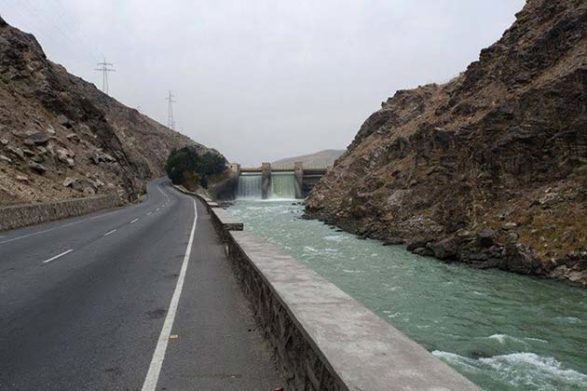
The Kabul-Jalalabad Highway is another steep mountain pass with many hairpin turns that can make passengers nervous. Because it is narrow and in poor condition in some sections, traffic jams can often form. This is not a place you want to get stuck.
13. Killar to Pangi Road (India)

The Pangi Valley is an isolated tribal region that can often be cut off from the rest of India during the snowy winter months. This road is barely one lane and is mostly made of dirt and rocks. It was blasted into the mountainside. The steep and slippery conditions can make the 52 km journey take a long time.
14. Kolyma Road (Russia)

The Kolyma Road is often called the “Road of Bones” not because many people die on it, but because it was built by Josef Stalin’s gulag prisoners. That’s not to say it’s not dangerous. It is in such a state of disrepair that the road is actually easier to drive during the winter when it freezes (than the wet and muddy summer months). But whiteout conditions make it difficult to see what lies ahead.
15. Apache Trail Scenic Drive (Arizona)

The Apache Trail covers incredible landscapes, but you’d better keep an eye on the road. This loop is narrow and some of the guardrails don’t seem to keep you on the road. It is not recommended for large vehicles like RVs or even some SUVs.
16. Le Passage du Gois (France)

No, this road doesn’t lead directly into the ocean. At least, not at low tide, it doesn’t. When the tide rises, however, the road becomes impassable with waves splashing over the surface of the roadway. Even at low tide, things can still be dangerous with water or mud (or even other debris) covering the road.
17. Luxor-al-Hurghada Road (Egypt)

The Luxor-al-Hurghada Road crosses the Egyptian desert, which seems quite dangerous (especially if you break down or have an emergency). Head-on collisions are numerous and, as a result, deaths are higher. Egyptians also tend not to drive with their lights on, even in the dark! There are also reports of many bandits on the road.
18. Nanga Parbat Pass (Pakistan)

The ninth highest mountain in the world seems like a great place for a road, doesn’t it? In reality, it is mostly a dirt path barely wide enough for one vehicle bordering the mountainside. If someone approaches you, good luck turning around! It actually connects to the Karakoram Road which is also on this list and is dangerous in itself.

The twists and turns of Patiopoulo-Perdikaki make the steep slope easier for drivers to handle. However, blind hairpin turns are not perfect for visibility. And when the road is wet and slippery, it’s really better to stay away.
20. Cotopaxi Volcano Road (Ecuador)

The Cotopaxi Volcano Road may seem relatively safe and unchallenging, but with this active volcano nearby, the roads require constant maintenance. You see all that snow at the top of the cone? Flash floods are common in the area, which also destroy the pavement, and some sections are just gravel crossing a stream. Crossing waterways without a bridge seems super safe.
21. Sichuan-Tibet Highway (China)

The Sichuan-Tibet Road has the winding and turning mountain roads common to other dangerous roads on this list. Landslides and avalanches are also common. And please, don’t take your eyes off the road to try to enjoy the beautiful scenery. It’s just not worth the risk.
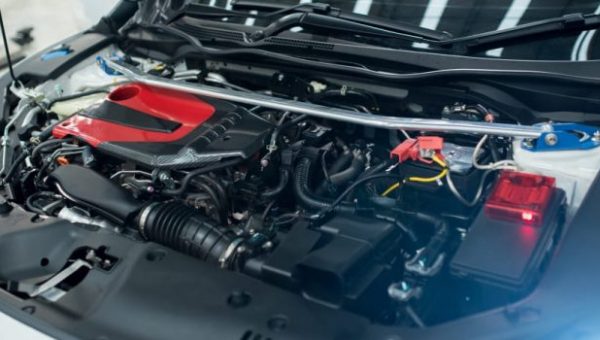
i-CTDi and i-DTEC: Honda diesel engines with Common Rail direct injection system

i-CTDi and i-DTEC: Honda Diesel Engines with Common Rail Direct Injection System
i-CTDi and i-DTEC are names for turbocharged diesel engines equipped with the Common Rail direct fuel injection system. They have been used in Honda cars since 2002. These engines are an exclusive development of the Honda Motor Company. They are known for being reliable and maintainable and also help reduce fuel consumption.
FEATURES OF I-CTDI, I-DTEC ENGINES
The i-CTDi and i-DTEC engines have 4 cylinders and 16 valves. The engine block is made of aluminum with cast iron cylinder liners. This reduces the engine’s weight and allows it to warm up faster. The cylinder head is aluminum. The valve timing mechanism uses a chain. All versions are equipped with a variable geometry turbocharger.
POPULAR I-CTDI, I-DTEC ENGINES
| Version Name | Code | Capacity, L | Max. Output, hp | Max. Torque, N·m | Start of Production | Honda Models Equipped with This Engine Type |
| i-CTDi | N22A | 2.2 | 140 | 340 | 2002 | Accord VII; CR-V III; Civic VIII; CR-V II; FR-V IV |
| i-DTEC | N22B | 2.2 | 150−180 | 350−380 | 2008 | Accord VIII; Civic IX; CR-V VI; CR-V III |
| N16A | 1.6 | 120−160 | 300−350 | 2013 | Civic IX; CR-V IV; Civic X; HR-V II |
COMMON MALFUNCTIONS OF I-CTDI, I-DTEC ENGINES
| Malfunctions | Engines |
| Hard engine start in cold weather. | N22A; N22B |
| The valve timing chain tends to stretch even at low mileage. | N22A |
| The turbocharger often fails. | N22A |
| The exhaust manifold often cracks. | N22A |
| The EGR valve clogs quickly and its intake pipe cracks. | N22A; N22B |
| The crankshaft damper pulley may break prematurely. | N22A |
| Piezoelectric injectors often fail. | N22B; N16A |
| The low-pressure fuel pump fails if the fuel filter is not replaced on time. | N22B |
| The diesel particulate filter clogs prematurely. | N16A |