
Top 7 Best Cars for New Drivers

These premium cars will help keep your insurance low and your confidence high as you take your first steps in your driving adventure.

Being a new driver can be a scary and intimidating experience. In addition to understanding everything about how to drive, experiencing other drivers and real-life situations on the road for the first time can be quite stressful – for fresh-faced drivers and worried parents alike.

That’s why the type of car first-time drivers use is very important. Ensuring the car has all the features you need and doesn’t need to be towed to the garage every few months will reduce the pressure and allow you to focus solely on driving. This will make everything much safer, easier, and ultimately more enjoyable.

So we’ve compiled a list of the 7 best first cars for new drivers to make those initial miles as easy as possible and set you up for the best start to your driving career. Whether you’re looking for the cheapest cars to insure for new drivers or the best automatic cars for new drivers, there’s bound to be something for you here.

WHAT ARE OUR CRITERIA?

  • Standard ESP
    Since it became legally required in 2014 for all new cars across Europe to be equipped with Electronic Stability Program, or ESP, it’s no surprise that this is one of the things we look for. But it’s not just because we have to; ESP is a life-saving technology. This umbrella term incorporates systems such as traction control and anti-lock braking systems to help you drive more safely by analyzing data on the car’s speed or position to help you stay on track. And it certainly works well – British studies indicate that your chances of being involved in a fatal accident are reduced by 25% with ESP.

Note: some manufacturers have different names for this system (ESC, VDC, or VSA), but all the cars we’ve chosen are equipped with it.

  • Minimum four-star NCAP crash test rating
    Another essential safety measure for new cars is their crash test performance. The road safety charity Brake conducted research on the rate of new road accidents and found that although 17 to 19 year-olds make up only 1.5% of driving license holders, they are involved in 9% of all fatal and serious accidents in the UK. This study doesn’t suggest why, but it’s quite clear that all safe cars for new drivers must be robust enough to withstand a crash. By ensuring that all cars achieve at least four stars in the Euro NCAP safety test.
  • At least four stars in the Ecotest
    Although this might be the first car you buy, it hopefully won’t be the first in a long line. That’s why it’s always important to think ahead, both for your car and the planet. With increasingly strict standards and rigorous testing processes, it’s important to select an environmentally friendly car that scores low in the EU Ecotest and has low emissions. Not only does this mean you’re doing your part to limit the effects of global warming, but it also means you won’t fail your MOT or be charged an extra emissions tax soon for emissions.
  • Front, side, and head airbags
    1973 was the year James Bond hit our screens in ‘Live and Let Die’ and Pink Floyd released what is still the best-selling album by a British artist, ‘Dark Side of the Moon’. These events now seem like ancient history, which is why it would be unthinkable not to buy a car with airbags, which themselves were first introduced in 1973. Airbags are a crucial part of a car’s passive safety system, and by choosing only cars with front, side, and head airbags, we give new drivers the best chance of protection in a collision.
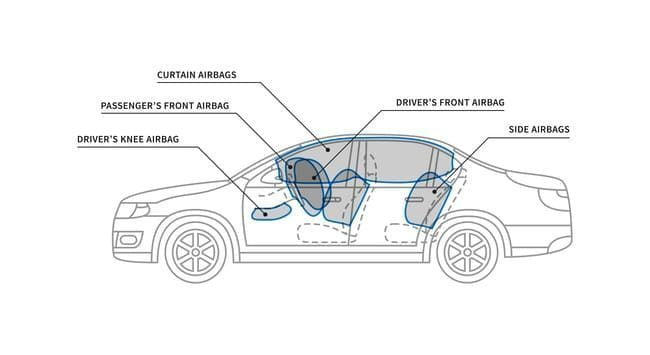
    Front, side, and head airbags
  • Reliable technology
    This has less to do with safety and more with comfort, allowing novice drivers to focus solely on the road. If your car’s technology constantly needs fixing, it will mean many otherwise avoidable trips to the garage, unnecessary expenses, and overall, a less enjoyable driving experience. These cars are all equipped with the best reliable technology to prevent this from happening.

BEST CARS FOR NEW DRIVERS

1. FORD FIESTA
Ford Fiesta: best car for new drivers 2020

The Fiesta is known for its affordable price, peppy engine, and many extra features. It has a sporty look, and this is matched by its performance; it handles well on the road and is reliable.
Regarding systems and technology, it comes with ABS, EBA, and electronic stability control, as well as Bluetooth connectivity, a DAB digital radio, and Apple CarPlay/Android Auto.

2. VOLKSWAGEN POLO
Car parts for a good car for new drivers for Volkswagen Polo

With an engine ranging from 1.0-liter to a much faster 2.0-liter engine depending on the trim level, the familiar Polo name for new car owners. It is synonymous with reliability, a minimalist presence, and timeless performance. The latest ‘S’ model comes with specifications such as ABS, ESP, front disc brakes, and hill start assist.

3. TOYOTA COROLLA
Toyota Corolla: best car for new drivers in the UK

After 10 years, the Corolla is back and offers a high hatchback option for new drivers. Available with a 1.2-liter turbo petrol engine, a 1.8-liter VVTi (same as the Prius), or with a 2.0-liter powertrain, it is fast but remains an economy-focused device, with CO2 emissions of only 89 g/km and over 60mpg at its best.

4. KIA PICANTO
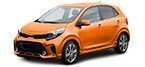
Kia Picanto: best car for new drivers 2020

The Picanto’s compact frame and unique grille give it a sporty-looking car, with great performance and extra features. With five doors as standard, it’s one of the most spacious cars on this list and comes with electric front windows, a two-speaker stereo system, USB connectivity, automatic lights, and touchscreen satellite navigation.

5. RENAULT CAPTUR
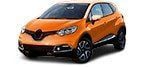
Car parts for a good car for new drivers for Renault Captur

A comfortable, unique interior and easy driving define the Captur. Whatever engine you choose, it is quiet, refined, and offers decent fuel economy. What is particularly appealing to novice drivers is the suite of driver assistance systems offered as standard, the five-star Euro NCAP rating, and Renault’s overall reputation for safety.

6. SUZUKI JIMNY
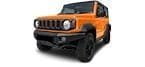
Suzuki Jimny: best car for new drivers in the UK

The Jimny has always been able to feel its individual character and charm with its adorable look, fun driving, and great off-road capabilities. However, it’s also an excellent car for new drivers who live in a non-urban area and need something reliable, stable, and ready for a challenge.

7. HONDA CIVIC
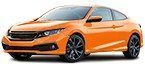
Honda Civic: best car for new drivers 2020

Certainly one of the more expensive cars on the list, the Honda Civic will provide a spirited performance as a first sedan with a powerful engine. A practical cabin and trunk, with a huge amount of storage (420-770 liters!), as well as an excellent standard technical kit. It’s definitely an option to consider.
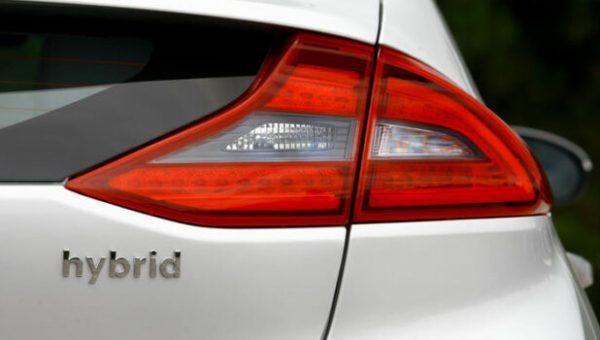

Top 9 Best Hybrid Cars 2020

2020 was nothing if not a year of change. We were all shocked and forced to change our way of life because of Covid-19, and scientists are announcing that some environmental tipping points and thresholds have been crossed or that we are rapidly approaching them. Times of intense change have always been seen as an opportunity to reflect on our lives and the world around us, and this could be the moment for you to start thinking about your driving.

With petrol and diesel cars being quickly targeted by government regulations, and the EU even stating that the ban on selling new petrol and diesel cars will be moved up from 2040 to 2035 at the latest to help protect the environment, there has never been a better time to think about switching to an electric vehicle. If you’re stuck in the middle and not convinced about going fully electric, we have the perfect options for you: the 9 best hybrid cars to buy.

This list provides a comprehensive lineup of the best hybrid cars to buy to play your part in helping make the planet cleaner, while getting the best performance.

There are many reasons why hybrids are the way to go now. The lightweight materials used to make hybrid vehicles mean that electric power will be sufficient to move the car. This means less reliance on petrol and greater freedom and fuel economy. The UK government also offers some tax benefits for less polluting cars, like hybrids, which could offset the additional costs or higher prices of hybrids, ultimately making owning the best hybrid cars affordable. The last reason, and perhaps the most important, to jump on the hybrid bandwagon is their resale value. Due to the fluctuations and unpredictability of oil prices, more and more people are turning to hybrid vehicles either to ease gas prices or to not be as dependent on oil. Therefore,

WHAT IS A HYBRID CAR?

What is a hybrid car

To put it simply, a hybrid car combines at least one electric motor with a petrol or diesel engine to power the car, and it recovers energy through regenerative braking. The amount of power provided by the electric motor varies; some cars are fully powered by the electric motor, sometimes it’s all the petrol engine, and sometimes they cooperate. This leads to less petrol burned and, consequently, better fuel economy, meaning more money in your pocket. In some circumstances, adding electric power can actually enhance performance.

The electricity comes from a high-voltage battery (separate from the car’s conventional 12-volt battery) that regenerates by capturing energy when the car decelerates. In conventional cars, all is lost to the heat generated by braking, but here, it is put to better use. The battery can also be maintained by the petrol/diesel engine if necessary. One of the best things about hybrids is that they can be designed and engineered for different targets or specifications. A hybrid could, for example, aim for maximum fuel economy or keep the vehicle cost as low as possible. In addition to the high-quality features and performance that often come with hybrid cars, as car manufacturers want to impress with their hybrid range, for the best hybrid cars, luxury is a given.

THE BEST HYBRID CARS IN THE UK

1. TOYOTA COROLLA

Toyota Corolla: best hybrid car 2020

After 10 years, the Corolla is back and looking to reclaim its place as a top hatchback, this time as a hybrid. Available with a 1.8-litre VVTi (same as the Prius) or with a 2.0-litre powertrain, it’s fast but remains an economy-focused device, with CO2 emissions of just 89 g/km and over 60 mpg at its best.

2. HYUNDAI IONIQ PLUG-IN

Hyundai Ioniq Plug-In: best hybrid car for new drivers in the UK

For those thinking about a hybrid for the first time, the Ioniq offers low running costs at an affordable price as well as a normal and reassuring driving experience. It is more practical and smarter inside than its main rival, the famous Toyota Prius. There are conventional hybrid, plug-in hybrid, and fully electric versions, but the conventional hybrid is our choice.

3. VOLKSWAGEN GOLF

Auto parts for a good hybrid car for Volkswagen Golf

The Golf has long been a favorite, but this hybrid version offers something new. It still has as many strengths as before with a smooth and responsive powertrain, brilliant packaging, and looks both inside and out, and the usual Golf performance. They changed the engine but not the winning formula.

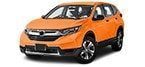
4. HONDA CR-V

Honda CR-V: best hybrid car 2020

The latest CR-V SUV offers plenty of space for passengers and luggage, and the hybrid version – combining a 2.0-litre petrol engine with an electric motor – delivers power to match. It’s also a very efficient and stylish hybrid that would make a great family car with all that space.

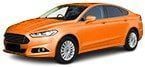
5. FORD MONDEO HYBRID

Ford Mondeo Hybrid: best hybrid car for new drivers in the UK

Like many names on this list, the Mondeo has been around for a while. This long-standing success hasn’t stopped Ford from offering something new with the hybrid version. Its low CO2 emissions of 98g/km (103g/km for the estate) significantly reduce tax, although the Mondeo Hybrid is not exempt from London’s congestion charge.

6. VW PASSAT ESTATE GTE

Spare parts for a good hybrid car for VW Passat Estate GTE

The VW Passat is a comfortable and eco-friendly offering from VW. Emissions are only 29 g/km of CO2, and fuel economy is also good, around 65 mpg with a full battery and even up to 40 mpg with a flat battery. Owners will also benefit from very low monthly BIK (Benefit in Kind) tax payments due to the low emissions.

7. BMW 330E

BMW 330e: best hybrid car 2020

If you think hybrids might not have the comfort and performance you’re used to, BMW’s 330e sedan might help change your mind. Built on the already superb BMW 3 Series, the electric motor and 2.0-litre turbo petrol engine combo mean this hybrid will do 0-60 in just 6.1 seconds, all with the typical BMW comfort and luxury.

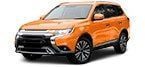
8. MITSUBISHI OUTLANDER

Mitsubishi Outlander: best hybrid car for new drivers in the UK

There’s nothing extraordinary about the Mitsubishi Outlander, as the Japanese manufacturer’s 2.4-litre hybrid petrol engine offers great aesthetics and fuel economy. Even if you run out of fuel, the battery alone will allow you to travel 28 miles – certainly a reassuring feature for anyone who has ever been stranded on the motorway.

9. KIA NIRO

Spare parts for a good hybrid car for Kia Niro

The Kia Niro petrol/electric hybrid is much more conventional in its appearance than its other hybrid counterparts. It looks and feels like an SUV and comes with many tech features: there are plenty of USB charging ports, a wireless mat to charge your smartphone on the dashboard, and it has a standard EuroNCAP 4-star safety rating.

Top 12 Best Cars with Big Boots

In addition to giving you the freedom to travel comfortably and on your own terms, there’s a very good reason why cars have become a staple of Western civilization. Have you ever tried to bring back a mattress from IKEA? How about getting to the green for 18 holes of golf by train? I guess you haven’t, and that’s precisely why cars have remained so popular. Cars with massive trunks can help us move all those bulky items in their own secret tardis: the car trunk.

If you’re looking for a cavernous compartment that will have no problem storing all your bits, this is the right place to start, with our list of 12 cars with big boots.

While most people would tend to assume that a bigger car means a larger trunk, that’s not necessarily true. Since there are excellent small cars with big boots, it’s worth considering more than just the trunk space. As well as the overall trunk capacity, whether the rear seats fold down or not, the width of the car’s rear, the loading lip height, and the car’s height are all factors to consider when determining if your potential new ride will do what you need.

To make it easier for you, we’ve divided the list into car types, so whether you’re looking for good family cars with big boots or more affordable cars with large boots, there will be something here for you.

SUV CARS WITH BIG BOOTS

SUV cars with big boots

BMW X7

It has received a lot of criticism for its front grille design, but the BMW X7 packs an impressive trunk. As one of the best 7-seater cars with big boots, the X7 has a 320-liter luggage compartment that increases to 750 liters when you fold down the rear seats. For such a huge vehicle, it’s also surprisingly agile.

HONDA CR-V

The CR-V is one of the SUV cars with big boots that doesn’t shy away from a trip to pick up furniture or at the mere mention of a camping holiday. It’s stylish and fast, in addition to being offered in 5 or 7-seater versions. The 7-seater, however, has a bit less loading space.

KIA SORENTO

Another 7-seater with large storage, the Kia Sorento offers drivers a comfortable ride and a punchy diesel engine with a standard four-wheel-drive system. With a “A” CO2 emission rating and a high towing capacity, it’s a very solid SUV with 660 liters of space at the back.

SALOON CARS WITH BIG BOOTS

Saloon cars with big boots

VOLKSWAGEN PASSAT

The Volkswagen Passat offers drivers a premium interior, a host of standard features, a very large trunk, and a spacious rear bench for a mid-size saloon. If you’re looking for cars with large boots for dogs that can comfortably fit a crate or kennel, the Passat is perfect and offers a combination of sportiness and comfort.

HONDA ACCORD

The Honda Accord may seem quite expensive compared to other saloons, but the wide range of luxury features, like the 18-inch alloy wheels, side view and rearview cameras, keyless entry and start, leather seats and trims definitely justify the price. The luggage capacity starts with a 457-liter trunk, and you can lower the rear seats for more space.

BMW 7 SERIES

The second BMW on the list, this time a saloon, is almost as spacious at the back as the X7. As always, its majestic aesthetics and sumptuous interior make the BMW 7 Series an excellent vehicle, and there is also a petrol-electric plug-in hybrid version of the car, whose engine emits less than 50 g/km of CO2.

HATCHBACK CARS WITH BIG BOOTS

Hatchback cars with big boots

HONDA CIVIC

The 2021 rebranding campaign for the Honda Civic might seek to showcase its “aggressive” style and new impressive features (remote engine start, 18′ black alloy wheels, 1.5 L VTEC turbo engine), but that doesn’t stop it from having 479 liters of trunk space, surpassing most other saloons, and being able to fit seven carry-on suitcases. Perfect for holidays.

CHEVROLET CRUZE

Chevrolets are generally more about power than big trunks, but it seems dealers tend to post videos on Youtube showcasing the Cruze’s huge loading space. As they show us, you can easily store two full sets of golf clubs or the family’s suitcases and still have room for shopping.

CITROËN C4

The C4’s 408-liter trunk not only improves on most other medium cars with large boots, but folding down the Citroën’s rear seats increases the total load capacity to 1300 liters, which can take on any challenge. The rear of the car is also low, meaning storing things in the trunk is hassle-free.

ESTATE CARS WITH BIG BOOTS

Estate cars with big boots

MERCEDES E-CLASS

The Mercedes E-Class is renowned for being one of the best 5-seater cars with big boots, and the current E-Class confirms this reputation amazingly. It has a huge 540-liter trunk and an even more spacious cabin due to its 43 mm longer length compared to previous versions and an additional 65 mm between the front and rear wheels.

SKODA SUPERB

The Skoda was clearly designed with storage and transport in mind. With a massive volume of 625 liters, the trunk can handle all daily challenges, as well as holiday luggage and specialized equipment. The large-opening rear also makes it easy to load larger-than-average items, and for those looking for cars with large boots for prams, it’s a solid option.

HONDA CIVIC TOURER

The Honda Civic Tourer offers 624 liters, making the loading space more than sufficient for almost all situations, and folding down the rear seats extends the available space to an almost unfathomable volume of 1668 liters. The rear seat bases can also be lifted up, making it one of the best cars with large boots for wheelchairs or other more difficult objects.

Top 8 Best Electric Cars 2020

As more and more restrictions on diesel and petrol cars come into effect in UK city centers and the ever-present threat of global warming remains firmly in the headlines, the demand for electric cars has never been higher. If you’re not too familiar with the range of electric vehicles (or EVs) on the market, you might think the conversation starts and ends with Tesla.

While it’s true that Tesla propelled electric cars into the spotlight long before any other major car manufacturer, other big players in the automotive industry have started to emerge on the scene with impressive offerings. The general public also seems to have taken note, as 10% of all car registrations in the UK so far in 2020 were for electric cars. For good reason too; they are quiet, cheap to run, and easy to drive. With 26,300 charging points already built across the country, there has never been a better time to think about the best electric cars to buy and recharge for some of these high-voltage vehicles.

THE CRITERIA FOR THE BEST ELECTRIC CARS ON THE MARKET

To decide which are the best electric cars, 5 main criteria come into play.

  1. Price – Always an important factor in choosing the right car, the prices of electric cars are what put many consumers off initially. And rightly so – some of the first electric cars intended for everyday use would cost buyers £60,000 or more. Fortunately, technological developments and increasing support (often through government grants) have brought prices down and made some of the best electric cars cheap and affordable.
  2. Quality – Electric vehicles are known for being easy to drive, quiet, and packed with technology, as well as often looking stylish while doing it. We have considered all the different features that can come with modern electric cars to determine which are the best choices. These include the onboard display, design quality and overall look, the quality of materials used, heated seats, built-in GPS systems, adaptive cruise control, smartphone connectivity, and many more.
  3. Suitability for Daily Use – Like any vehicle considered a bit of a luxury, a question mark always hangs over how practical a car is for everyday use. It may be true that an electric car saves the planet by producing zero emissions, but if it can’t get you from point A to point B without losing charge or if its battery needs replacing very frequently, it doesn’t measure up to everyday working vehicles. This won’t be a problem for any of the cars on this list.
  4. Energy Reserve – As mentioned above, the quality and ease of use of an electric car depend hugely, almost entirely in fact, on both the distance it can travel when fully charged and the time it takes to reach that point. Fully charging a battery with a Level 1 or 2 charger can take up to 8 hours without a fast charging station, which may not always be ideally located. Therefore, the cars on our list are those that will last the longest.
    Energy Reserve
  5. Comfort – Our final criterion is the comfort of the car. Whether a car is equipped with heated leather seats, a two or three-zone climate control system, smartphone connectivity, or even a spacious cabin, it can really contribute to the driving pleasure and the time you want to spend in it. There’s nothing worse than dreading long car journeys due to discomfort, so we’ve made sure you’ll love getting into these best electric cars of 2020.

THE 8 BEST ELECTRIC CARS ON THE MARKET

1. NISSAN LEAF

Nissan Leaf: best electric car 2020

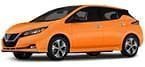
The second-generation Nissan Leaf arrived on the UK market in 2018 and was quickly named Electric Car of the Year 2018 by WhatCar? It was also the world’s best-selling plug-in electric car in 2019 and with a range of 239 miles reaching 0-60 in just 7.1 seconds, all starting from around £27,000, it’s easy to see why.

2. RENAULT ZOE

Renault Zoe: best electric car for new drivers in the UK

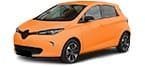
If you’re looking for one of the best electric cars for range, the Renault Zoe offers the best range of any electric vehicle under £30,000 with 250 miles on a full charge when driving in the city. Even more impressively, it gives you a range of 90 miles after just 30 minutes of charging at a 50 kWh charging station.

3. KIA SOUL

Auto parts for a good electric car for Kia Soul

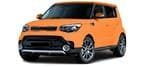
The Soul shares a state-of-the-art powertrain with the Kia e-Niro that gives it a useful range of 280 miles and is considerably more interesting than the e-Niro with a sleeker interior and a fairly unique design, as well as a 315-litre boot. You’ll certainly stand out from the crowd.

4. FIAT 500 ELEKTRO

Fiat 500 Elektro: best electric car 2020

Claimed by Fiat as being both the only fully electric convertible and “a kind of urban Tesla,” the 2020 Fiat 500e model comes with more luxurious features than you might expect from a compact electric car. Features include Level 2 autonomous driving, 360-degree “drone view,” wireless Apple CarPlay, 17-inch alloy wheels, eco-leather upholstery, and a 3 kW wall box.

5. VOLKSWAGEN E-UP

Volkswagen e-up: best electric car for new drivers in the UK

Based on the VW Up, the king of small city cars, the e-Up offers excellent value for money. It easily exceeds 120 miles in regular urban use for just over £20,000. It’s not as attractive as the Honda e or the Renault Zoe, but in terms of durability at a reasonable price and no-frills for everyday use, it’s the way to go.

6. HONDA E

If a distinctive look and cutting-edge technology are your top priority, the Honda e is definitely made for you. With no external wing mirrors, a sleek and futuristic interior, and headlights that look so much like bright, sparkling eyes that they seem to come to life with every charge, the Honda e is one of the most comfortable and high-quality electric cars on the market.

7. PEUGEOT E-208

Peugeot E-208: best electric car for new drivers in the UK

For people who aren’t too enthusiastic about electric cars but still want to do something to reduce their emissions, the Peugeot e-208 is a great choice. It looks, operates, and feels very similar to a standard 208. The 50 kWh battery allows for a maximum range of 217 miles on a single charge while performance is also quick.

8. BMW I3

BMW I3: best electric car 2020

The BMW i3 is certainly the best high-end electric vehicle you can buy. Traveling in the city or between cities is a joy in the i3 as it is quiet, efficient, and behaves well with a ton of luxury features inside the cabin. All this doesn’t come cheap, as it will cost you over £35,000.

Air Conditioning Recharge: How It Works and Is It Worth It

Is the car not cool enough anymore? Stay calm and recharge your air conditioning unit.

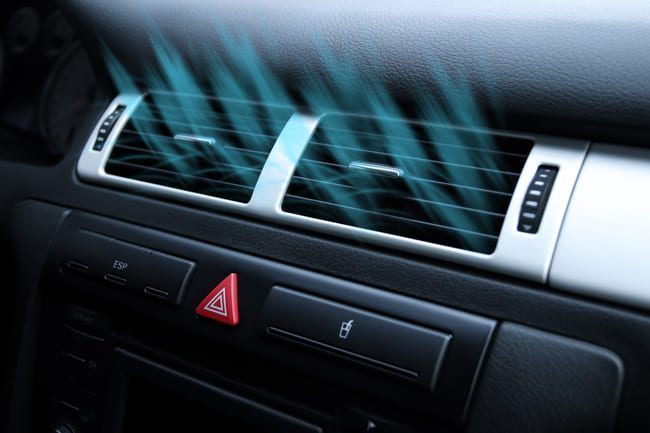
Among the many luxuries offered by modern cars, air conditioning is perhaps the one that makes driving the most comfortable. Gone are the hour-long journeys in a stuffy, boiling car in summer and you can stay cool and comfortable on every little trip to the shops. But what happens when your air conditioner stops blowing cold air and why does it happen? If your air conditioner is blowing hot air or only working intermittently, you may have exhausted the substance that gives your car that magical cold air ability. An AC recharge can bring back cold air when you need it most in hot weather.

WHAT IS AIR CONDITIONING RECHARGE?

Your car’s air conditioning works through a compressor, a refrigerant, and an evaporator. Air conditioners cool the interior air by forcing special chemical compounds to evaporate and condense over and over again in a closed coil system. These compounds are refrigerants that have properties allowing them to change chemical state at relatively low temperatures. Air conditioners also contain fans that push your cabin air over these cold coils filled with refrigerant.

When hot air flows over the cold coils of the low-pressure evaporator, the refrigerant inside absorbs the heat and changes from a liquid state to a gaseous state. To ensure it continues to cool effectively, the compressor puts the refrigerant gas under high pressure which converts it back into a liquid. All the extra heat created by compressing the gas is then removed from the system using a second set of coils called condenser coils and a second fan. When the refrigerant gas cools down, it becomes liquid again and the process starts over. It’s like an elegant, endless cycle designed to keep you cool: the liquid refrigerant is converted into gas as it absorbs heat, then it is compressed and turned back into liquid so it’s ready to absorb heat from the air inside the car. Magic… or science to be precise.

If your air conditioning stops working, this is most often due to the refrigerant in the system and an air conditioning recharge can help you solve this problem.

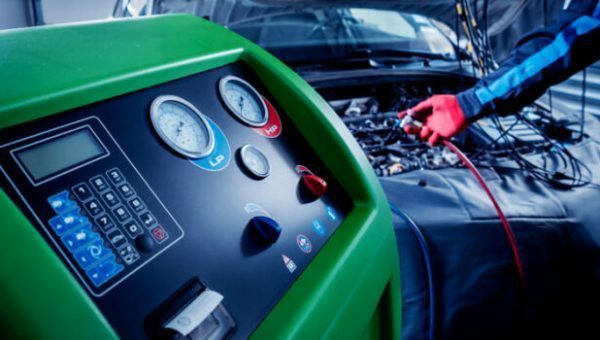
Car air conditioning recharge involves removing the old refrigerant gas from your air conditioning system and replacing it with new refrigerant, so your air conditioning can cool again. When wondering where to get an air conditioning recharge service, your garage should be your first point of call, but it might also be possible to do an air conditioning recharge yourself.

WHY DO AIR CONDITIONERS NEED TO BE RECHARGED?

How often the air conditioner recharges

In theory, the refrigerant should not need to be replaced. Because it just changes from a gas to a liquid inside the coils, it should last forever. Studies show, however, that as a result of this process, up to 10% of the refrigerant is lost each year as it permeates the system. Less gas of course means less cool air in your system, so a top-up every few years will allow your air conditioning to operate under optimal conditions.

Besides keeping your cabin cool, there are other reasons to ensure your air conditioning is working as well as it can. You can also improve your energy efficiency if the refrigerant is at its capacity, as there is less strain on the system and the engine.

Some of the symptoms you might experience that indicate it’s time for a change are an unpleasant smell coming from the vents or a lack of cold air coming out when the air conditioning is turned on.

Air conditioning doesn’t just provide car comfort during the hot summer months; it can also be used in winter to defog your windshield, which is another important reason to recharge your air conditioning unit. Air conditioning systems create dry, warm air instead of the usual humid air outside in winter, which can clear your windshield much faster than your regular blowers.

HOW OFTEN SHOULD I RECHARGE MY AIR CONDITIONER?

When to recharge the air conditioning is an important question, as the service is not always the cheapest. Air conditioning is not checked as part of an MOT test, so it’s important that you include recharging as part of your vehicle’s regular maintenance. The lifespan of the air conditioning gas in a car depends on the car manufacturer, but most manufacturers recommend having your air conditioning regassed once every 2 years.

IS IT POSSIBLE TO RECHARGE YOUR AIR CONDITIONING YOURSELF?

Do-it-yourself air conditioning recharge

The cost of air conditioning recharge is one of the reasons why some people might consider doing this DIY. In a garage, prices are usually quite standard and depend on the type of refrigerant gas your car uses. The vast majority of cars on the road in the UK use one of two types of refrigerant – R134A and R1234YF. If your air conditioning system requires R134A gas, the recharge cost is £49.95. For vehicles that require R1234YF gas, the recharge cost is £129.95. In short: it’s quite expensive.

However, you can buy air conditioning regas kits if you want to try it yourself and save money. If something goes wrong, however, you risk ending up with a very expensive repair bill. Specialists may also have a better idea of how to check for leaks and other issues with the air conditioning system. There are also safety issues to consider. If the refrigerant gas comes into contact with your skin or eyes, it can cause painful frostbite burns.
You will need a canister filled with refrigerant and a valve to attach it to the AC system, as well as screwdrivers, goggles, gloves, and your car’s manual or handbook. A gas canister and valve typically cost around £60 and you get a £10 refund when you return the valve. One cartridge can be used to fill three air conditioning systems, so in theory, you’ll make big savings compared to garage prices.

If you want to do it yourself, there are three steps: Locate the air conditioning fill port, attach the top-up gas, and simply fill.

Use your manual or handbook to locate the air conditioning fill port, often called the low-pressure port. The manual will also tell you what type of gas you need to buy if you’re unsure. Some covers under the hood need to be removed before accessing this port.

Remove the plastic cap that is often secured using screws and bolts and attach the valve. Start the engine and set the air conditioning to the coldest setting. Let it run for at least three minutes, then check the pressure on the valve. If your air conditioning needs regassing, the valve will usually give a low reading (in the white zone).

Shake the gas cartridge, then connect it to the valve. Recharge by pressing the trigger for a few seconds. Go back and check the pressure again for an updated reading. Continue until it’s in the green, so above 25 PSI. Before finishing, check the air conditioning again by turning it on and it should blow cold. If the air conditioning does not hold pressure and cannot reach the green section of the PSI gauge, there is likely a leak somewhere in the system and it will require a specialist to check and repair it.

DO AIR CONDITIONER RECHARGE KITS WORK?

Air conditioning recharge kits have the potential to save you a lot of money. But do they work? The short answer is: sort of.

Yes, they can absolutely top up the air conditioning refrigerant in your system so it will blow cold air again.

However, since your vehicle’s refrigerant is supposed to last forever, if your sealed air conditioning unit is losing refrigerant, it could be due to a leak. If your refrigerant can leak out, air and contaminants can get in and that’s extremely bad.

Now, a small leak isn’t so bad. A £15 recharge yourself can revitalize the system with refrigerant for the entire summer season if the leak isn’t that big. The same problem will occur again the following year, but as long as the leak hasn’t gotten worse, you can repeat the process and avoid going into the workshop and having an expensive repair. Some people treat this as part of their car’s annual maintenance. Some kits also come with a sealer to help eliminate small leaks, which is an added bonus. You must be careful, however – putting anything into the system that your manufacturer does not recommend can have adverse effects.

A recharge kit only injects refrigerant into the system. It does not remove any contaminants from your system and does not clean it, and an AC machine is needed to decontaminate all the air in the system. If there is a leak, it also means that even though a kit will temporarily recharge the air conditioner, it will lose refrigerant much more quickly.

There is also the additional concern that if you use a recharge kit yourself with little or no experience, you could overpressurize the AC system and cause premature compressor failure. This can be very costly. It might be worth paying a garage to recharge your air conditioning rather than paying for repair costs. Taking it to a garage will also get you additional services, like compressor oil change, which will be essential to help maintain your air conditioning system in good condition, especially if it’s a car over 4 or 5 years old.

Fuel consumption: how to calculate it, monitor it, and save money

With constantly fluctuating oil prices, knowing your fuel economy has never been more essential.

There are many things to consider when buying a new car. What is the handling like? What about power and acceleration? Is it comfortable to drive? One of the most common questions is what will the running cost be? And it’s an extremely important question. In recent years, there have been perfectly designed, attractive, and comfortable cars that consistently received poor critic ratings because they are simply too expensive to use.

Most of the time, this comes down to them being “gas guzzlers,” meaning they have extremely high fuel consumption. Given the high and unpredictable price of gasoline and diesel, the energy efficiency of cars has become a key metric to help you choose the right car for you. That’s why we have MPG and why almost every review of a vehicle will mention what its MPG is. But what is this value, can I calculate it for my existing vehicle, and how useful can it be for buying a new car?

WHAT IS MPG?

What is MPG

MPG stands for miles per gallon and it is the standard unit for measuring fuel consumption in land vehicles. The figure shows the number of miles a car can travel on one gallon of fuel. For example, if your car has a fuel consumption of 50 mpg and its fuel tank holds one gallon (or 4.55 liters), you can travel 50 miles before the car runs out of fuel.

By law, every car must be given an official MPG value by the manufacturer and this must also be made available to customers. This serves as a guide so consumers can compare energy efficiency between different models and vehicles. The EU sets the standards for British vehicles and the tests are administered in the UK by the Vehicle Certification Agency. Because they are all standardized, they offer an accurate comparison between cars. If you are buying a new car and looking to get something more efficient, it’s always a good idea to ask what my car’s MPG is right now and will this car have a better one.

HOW IS MPG CALCULATED?

The official MPG is calculated from a test conducted in a laboratory on a rolling road. A single model is tested for each product range. A car is tested on two cycles: the urban cycle and the extra-urban cycle. The urban cycle test starts from a cold engine and then mimics city driving at speeds not exceeding 30 mph. This test lasts 2 and a half minutes and includes a series of stops and starts to recreate the type of driving required in urban areas. The extra-urban test is designed to see how a car would behave outside the city and lasts 4.3 miles with a maximum speed of 70 mph. The temperature is standardized to 20-30 degrees and there is never more than the driver in the car. The MPG shown by a manufacturer is then an average of the two MPG figures from these two tests.

HOW DOES THIS DIFFER IN REALITY?

Since MPG is done under hypothetical laboratory conditions, there will always be a difference between a car’s official calculated mileage (calculated under the official EU-regulated test conditions) and what you can actually achieve behind the wheel.

MPG figures can still be used for comparison purposes, but they won’t be very useful if you’re trying to determine how much a car will actually cost you, because the average mileage per gallon in real terms will differ from the manufacturer’s value.

The amount of gasoline you will need for 100 miles will always vary on the road because the test removes variables such as hills, uneven surfaces and does not account for different driving styles, passenger weight, cargo carried, wind resistance, or any modifications made to a car.

For example, fitting larger wheels means the car will be heavier, generate more aerodynamic drag, and have more rolling resistance than standard wheels, so your car’s fuel economy will be worse.

HOW TO CALCULATE ACCURATE FUEL CONSUMPTION RATES

Even though the test is not entirely reliable, it is possible to calculate fuel costs yourself. It is relatively simple and can teach you how to reduce fuel consumption and make savings.

The simplest way is to fill up your car’s gas tank and note your current mileage. Decide whether you are going to focus on urban, extra-urban, or general fuel consumption and drive normally under the desired conditions. When you are ready to calculate your car’s MPG, fill up the tank again and note the number of liters of fuel needed to fill it to the limit, as well as the number of miles you have traveled since the first fill-up.

Since we fill our tanks with liters, we will have to convert this figure into gallons. So, divide the mileage by the number of liters used, then to convert to MPG, multiply that figure by 4.546. You now have the true MPG of your car.

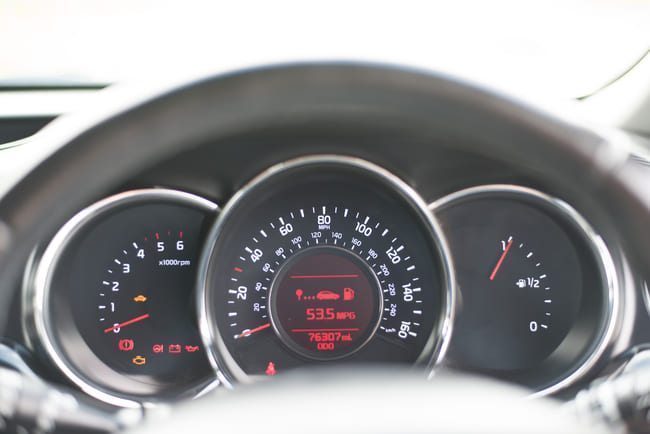
It is important to note that if you want to compare it to the official statistics, you should try to stick to their test conditions (including the speeds used and the types of roads on which you perform the tests). All of this can be made easier if you have a built-in or aftermarket onboard computer. Many of them often automatically display the MPG at the end of a trip.
TIPS TO IMPROVE YOUR FUEL ECONOMY

From how you drive to what you keep in your car, here are 10 tips to reduce your fuel costs:

  1. Make your car lighter: get rid of all unnecessary items in your car’s trunk or on the back seat. For every 45 kg of weight in the vehicle, your car’s fuel consumption decreases by about one or two percent.
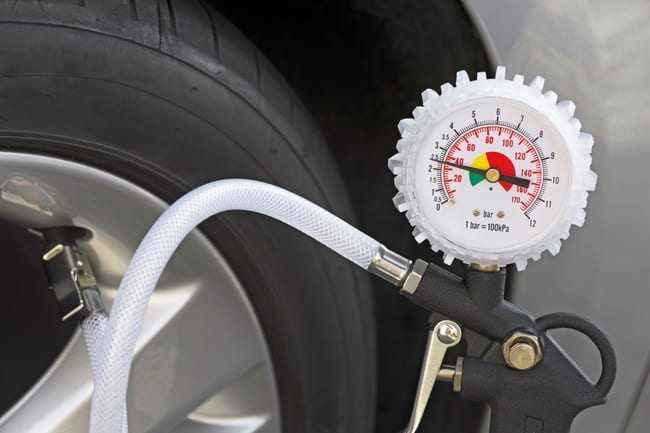
  2. Keep your tires properly inflated: underinflated tires can reduce your car’s fuel consumption by up to five percent in some cases due to their insufficient grip on the road and increased resistance. Ensuring they are at the recommended pressure can save you money.
    Keep your tires properly inflated
  3. Stick to the speed limit: this is not just about safety, because sticking to the speed limit also helps you maintain good fuel economy. Driving faster often means your fuel consumption will be worse because the engine has to work harder to produce the power needed at high speeds.
  4. Avoid idling: when your car is running but not moving, your gasoline mileage is absolutely zero, but fuel is still being burned to keep the engine running. So, if your car is going to be stationary for more than about a minute, turn off the engine. Only do this, however, if it is safe.
  5. Constant braking and acceleration: while driving, always apply steady, constant pressure to your car’s accelerator pedal. A heavy foot will always lead to reduced gasoline mileage and poor fuel consumption
  6. Make your car more aerodynamic: removing roof racks and reducing the car’s weight by removing unnecessary items or changing tires or wheel rims can allow the car to move through the air better and reduce drag, meaning less fuel is needed to get you where you need to go.
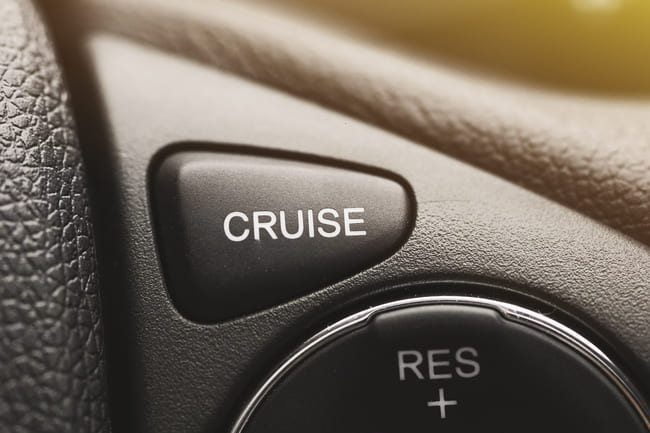
  7. Use cruise control on highways: cruise control means your car will run at a constant speed, meaning there is no acceleration. No acceleration reduces the amount of work your engine does and thus consumes less fuel.
    Use cruise control on highways
  8. Keep the windows closed: this can be difficult if it’s hot outside, but keeping the windows closed makes your vehicle more aerodynamic and improves its energy efficiency. Especially at higher speeds, you should keep the windows closed to reduce drag and improve fuel consumption
  9. Use air conditioning less: there will always be times when you need to turn on the air conditioner, but you should try to use it in moderation.
  10. Replace dirty air filters: A dirty air filter makes your car’s engine work much harder and has a real negative impact on your fuel economy. Be sure to follow the manufacturer’s recommendations for periodically changing the air filter.

How to Park Properly: Tips on Parallel Parking, Reverse Parking, and Head-In Bay Parking

What is the most stressful aspect of driving? Possible traffic collisions? Road rage? Breaking down for no apparent reason? No. Apparently, nearly half of drivers aged 18 to 34 find parallel parking to be their biggest stress. It’s the maneuver everyone dreads being asked to perform during their driving test and long after people have obtained their driver’s license, they can struggle with it. Fortunately, our guide is here to explain and give you some tips and tricks to help you parallel park, as well as reverse bay parking and forward bay parking, perfectly every time.

FORWARD BAY PARKING

Forward bay parking

We will start with an explanation of forward bay parking, which is often considered the simplest of these three parking maneuvers. This procedure involves driving the car forward into an empty parking space. Although it doesn’t seem that difficult, the obstacles on each side must be taken into account, as well as the distance from the bay, where and when to start turning relative to the bay, and the speed of the car. Entering the bay itself is normally not a problem when there’s nothing around, but it’s a real test of observation to enter and exit in a very busy parking lot because there can be many hazards around us.

Here are some tips to avoid parking fears:

  1. The first step is to ensure you are at a good distance, ideally as far as possible, from the bay you wish to park in. This gives you the widest possible turning radius and more time to turn and correct your angle, without having to reverse or straighten up once you’re in the bay.
  2. This should go without saying, but before turning, make sure to use your indicators to signal your intention to other road users. Also check your mirrors at this point, looking for current or potential hazards.
  3. You are now looking for the first reference point to help you park – the boundaries of the parking area you wish to park in, often white lines on the ground. When you see the first white line just under your right side mirror, you can check one last time in your mirrors, then steer to full lock (turning the steering wheel as far as possible to the left or right). An important aspect of this is to make sure to take your time and go as slowly as possible; the slower you drive, the more time the vehicle has to turn and the less you’ll have to make adjustments. Even if it seems like a great idea to swing the car into place as quickly as possible, it certainly is not!
  4. As you turn into the bay, start to straighten your steering once your car is parallel or nearly parallel to the white lines of the bay (you can see them in your mirror) or if you can tell the car is straight using visible objects through the windshield. You can use both outside mirrors to check if the car is straight, then apply the handbrake, and you’re done!

REVERSE PARKING INTO A BAY

Forward bay parking

To paraphrase Isaac Newton, what goes into a parking space must come out of a parking space. If you park forward into a bay, you will have to reverse out of it. This can be quite tricky or time-consuming when there is a lot of traffic or movement in a parking lot. What many drivers prefer, therefore, is reverse bay parking, to ensure you can escape quickly and comfortably when you want to.

Even if you opt for forward bay parking, it’s really worth familiarizing yourself with reverse parking, as you’ll be reversing out of your spot anyway. This turn uses the same principles as forward bay parking but, since the car is moving in reverse, it just requires a bit more observation and awareness.

Here are some simple steps to help you perfect your reverse bay parking:

  1. Again, try to position the car far from the bay you wish to park in (to get a wide turning arc) and ensure your car is opposite the desired bay. If you are turning into a bay that is on the side of a road, you are in the middle of the road at a good distance, but this of course means extra precautions must be taken to check and alert other road users of your intention. Also be aware that the front of your car will swing out when you reverse into the bay and there is a risk of hitting objects on the other side of the bay, such as low walls or fences, so take extra care! If there are vehicles or cyclists behind you, as well as pedestrians nearby or approaching, stop and let them pass.
  2. Next, reverse your car slowly until you reach the turning point. This point is slightly different for all cars, so you will need to establish your own way of recognizing when you have reached this point. It’s roughly when the first white line of the bay is parallel to the middle of your vehicle. As with forward bay parking, you can use your mirrors and look out the window to help establish this. When you reach this point, check once more for cars or pedestrians nearby, stopping if necessary, then turn your steering wheel to full lock in the direction you wish to go.
  3. Continue moving slowly in reverse, checking both sides and all around you to ensure you are not going to collide with any object either behind or to the side of you. You can also check the white lines of the bay and use your rearview mirror to see when you are inside the bay. When your car is parallel to the white lines and directly inside the bay, straighten the wheel.
  4. Once your car is directly inside the bay, continue moving very slowly in reverse until the front of the lines that mark the bay are in front of your car. This may not be possible for some larger or longer vehicles, but for most ordinary cars, it’s a good indicator that you have reached a point where your car is safely parked in the bay. Your perfect reverse bay park is complete!

PARALLEL PARKING

Parallel parking

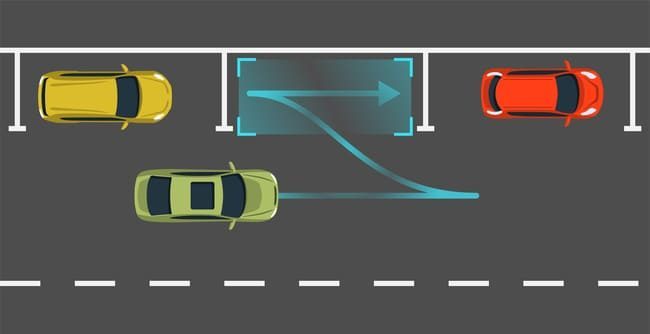
What is it about parallel parking that makes people break out in a cold sweat? Why do so many people consider it the most stressful aspect of driving? As with reverse bay parking, the car is reversing, which limits one’s ability to see potential hazards the car is heading towards and forces them to constantly turn their head to detect any potential danger.

Furthermore, the timing must be perfect when parallel parking: since you often park your car behind an already parked vehicle (and sometimes even between two already parked cars), the risk of collision increases and the space is much smaller or tighter than a predefined parking space.

But fear not, if you follow these tips for parallel parking correctly, your parking nightmares will be over:

  1. Find the space you want to parallel park in. This is often likely to be between two cars or at least behind one car. Drive a good distance (about a car’s length) past the car you wish to park behind, so you have enough time to reverse slowly and think about when and where to start turning. When you are about to stop, check your mirrors and around you for other road users.
  2. Before starting to reverse, check if any vehicles or cyclists are approaching and wait for them to pass.
  3. Once you are satisfied it’s all clear, look through the rear window, then move the car backward, taking your time and moving slowly until the rear of your car is level with the rear of the car in front of the space you want to park in. It is important that you reverse far enough – if you don’t, you risk hitting the car next to you.
  4. Once the rear of your car is level with the rear of the already parked car, you are at the turning point and are about to steer into the space. This is the most dangerous part of the maneuver, as the front of your car will swing out into the road. Before doing anything else, observe the road again to ensure there are no cyclists, cars, or pedestrians nearby. Remember to always check your right blind spot.
  5. If all is quiet, reverse very slowly and while moving the car, turn the steering wheel one full turn (360 degrees) in the direction of the space (e.g., if it’s on your left, turn the wheel to the left). By turning the wheel one full turn instead of full lock, the steering angle will be slightly less sharp at about 45 degrees. This eliminates the possibility of you reversing into the car next to you.
  6. You now need to determine when to straighten the car. While reversing, you will need constant all-around observation and must stop if vehicles are approaching. Also, if you are reversing towards pedestrians, stop and let them pass before continuing. Remember to check your rearview mirror frequently. The moment you straighten up varies from car to car, but generally aligning the left corner of your car with the right corner of the car you are parking behind serves as a good reference point. Once aligned, turn the steering wheel in the opposite direction, this time to full lock. You can even stop at this point to give yourself more time to check around for hazards or to turn the wheel.
  7. Turning your steering wheel to full lock position will bring the car parallel to the curb. As you reverse, continue to check your outside mirror to ensure you are not going to hit the curb or are too far from it; leaving your car too far from the curb can be extremely dangerous. If you are too far away, you will need to pull forward slightly, then reverse again, this time turning more in the desired direction to get closer to the curb.
  8. Once you are close enough to the curb and have started to straighten your car, continue moving slowly until the car is completely parallel to the curb, using your mirror to judge. It’s always best to ensure your car is not too close to the car in front of you, to give them space to reverse slightly and help them move. A gap of about a quarter of a car’s length or 1 meter can be a blessing for drivers when they need to maneuver out of a tight space.

PARKING AIDS: REVERSE PARKING WITH CAMERAS AND SENSORS

Parking aids: reverse parking with cameras and sensors

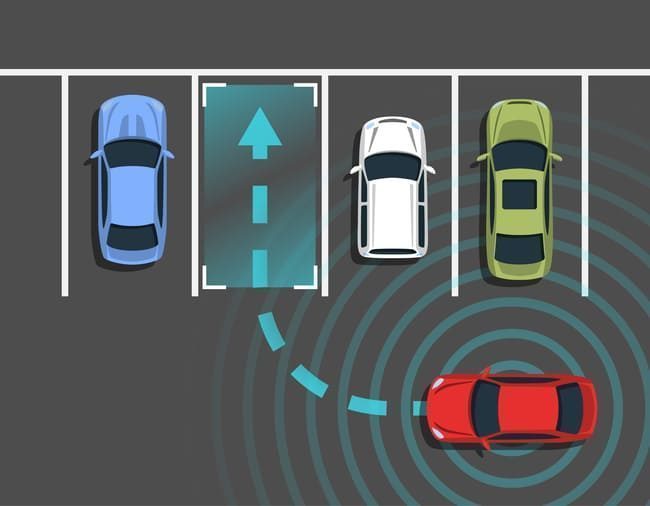
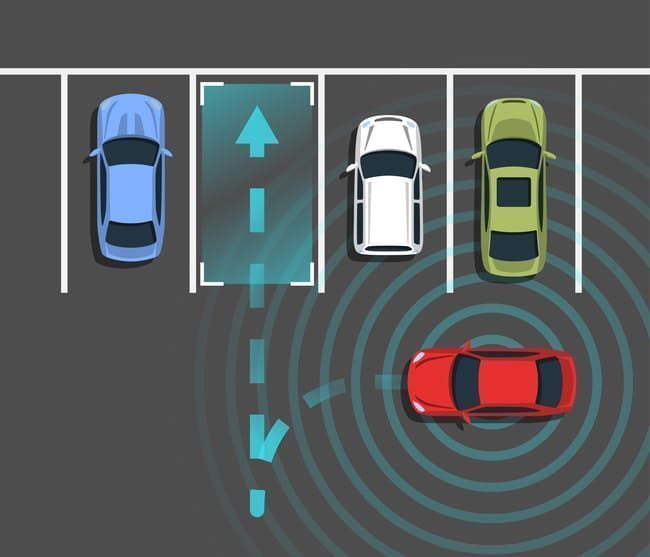
Reverse parking should now be straightforward thanks to the best tips and tricks we’ve given you, but if it all still seems a bit daunting, there are now tons of gadgets that come standard or can be fitted to your car to help you with reverse bay and parallel parking. The most helpful are reverse or parking sensors or cameras.

Parking sensors are proximity sensors designed to alert drivers to the presence of obstacles, moving or stationary, when parking. These systems use electromagnetic or ultrasonic sensors. Ultrasonic systems use sensors located on the front or rear bumper to detect objects, while electromagnetic systems often come with cameras and do not require additional holes to be drilled in your car (like ultrasonic sensors) as they can be discreetly mounted on the inside of the bumper. When ultrasonic sensors were first developed in the 1970s, they were dismissed by Jaguar as unnecessary and likely to be unpopular. Times have definitely changed; now, they can often come standard from the manufacturer.

Both systems often use sounds to alert drivers when there is an obstacle behind them and make the job easier if your car is about to hit the curb or another car while parallel parking or reversing.

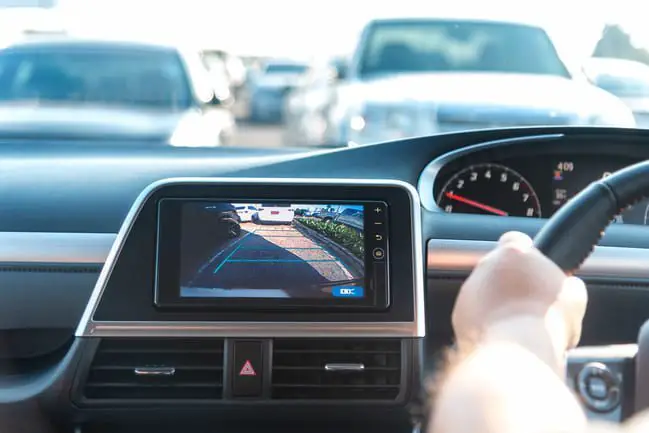
In addition to sensors, a wide range of parking cameras is also available. These are cameras that attach to the rear of your car and are linked to a screen that can be positioned on your dashboard. They give the driver a picture of what is directly behind their car and are often accompanied by software that shows you the “parking line” (the potential position of your vehicle if you continue moving on that trajectory). This can be extremely useful when aligning your car in a parking bay or in a parallel parking space. A handful of cameras even come with night vision settings and variable angle settings, allowing you to adjust how much you see behind you. Many of these cameras are relatively inexpensive and all are user-friendly and easy to use. Some of the best parking cameras come from Pioneer, Vordon, or Valeo, and for reliable parking sensors, a wide range comes from Amio, Stark, and Ridex.

With all these tips and some of this fantastic technology, you should be able to reverse, bay, and parallel park perfectly.

How to Tow a Car: Tips and Rules for Towing a Car

KNOWING HOW TO TOW A CAR CAN HELP YOU OUT OF SOME TOUGH SITUATIONS, BUT IT ISN’T AS SIMPLE AS YOU MIGHT THINK

It’s a situation we never want to find ourselves in: you’re stuck on the side of the road with a car that won’t start and you don’t know how to get the engine running again. Whether it’s because you forgot to fill up the tank or you ignored the annoying check engine light, you’re stranded in the middle of nowhere and, to make matters worse, you haven’t renewed your breakdown cover. When a friend or family member offers to tow you home, you’ll feel like they’re your guardian angel. But without knowing exactly how to tow your car legally and safely, you shouldn’t jump for joy just yet. This is our guide on how to tow a vehicle and the regulations you need to be aware of when towing.

HOW TO TOW A CAR

It’s not only in the disastrous circumstances mentioned above that you might want to tow a car. It could be taking a vehicle on vacation, helping during a move, or taking a car that won’t start from your home to a garage. The most important thing is to prepare for it with the right equipment and know exactly how to tow a vehicle.

USING A TOW ROPE OR STRAPS

Using a tow rope or straps

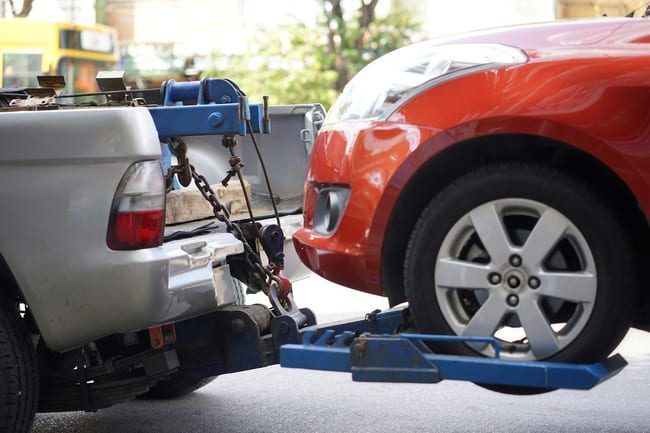
A tow strap is one of the most basic, cheapest, and easiest ways to tow a car. The tow rope should be strong and in good condition and must be attached to the front of the car that needs to be towed. The other end should, of course, be attached to the car doing the towing. Ensuring the rope is attached roughly in the center and in line on both vehicles will make it easier to control the direction of the towed vehicle. There are many strengths, sizes, and qualities of tow ropes for different vehicles available on the market, so be sure to consider what you might need when purchasing a tow rope.

USING A TOW DOLLY

Using a tow dolly

A tow dolly makes towing vehicles easier because some of the load is taken off the vehicle doing the towing, as only the rear wheels of the towed vehicle rest on the ground. The front set of wheels is lifted onto the dolly itself, which can be coupled with the tow ball at the back of the vehicle doing the towing, just like a trailer. This usually works best when the towing vehicle is front-wheel drive. This is because a rear-wheel drive or four-wheel drive vehicle means you need to disconnect the drive shaft for longer distances.

When the dolly is secured, you can load the towed vehicle. If possible, drive the car onto the dolly facing forward. Make sure the vehicle is properly positioned on the dolly.

The front wheels should then be secured using tire straps and all you have to do is disconnect the drive shaft and you’re ready to tow the car.

USING A TRAILER

Using a trailer

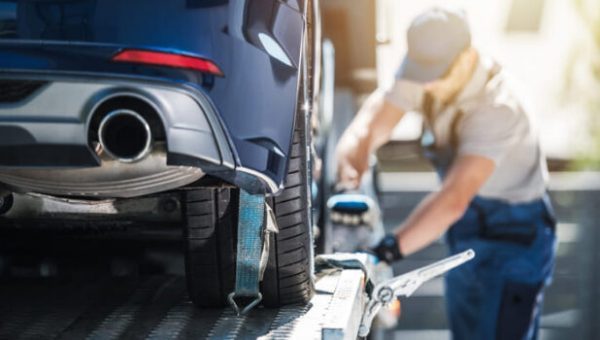
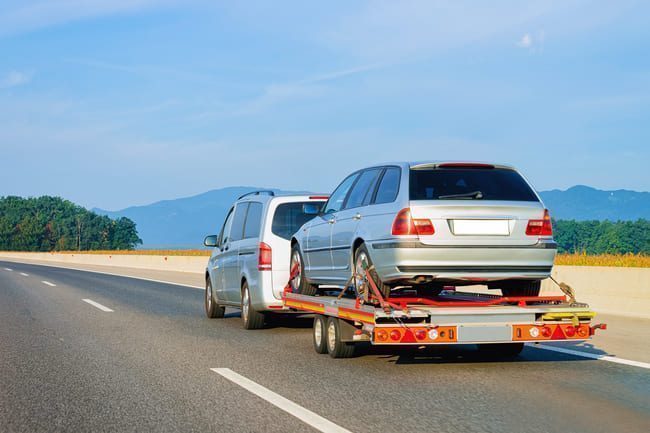
Whereas with a tow dolly, only one end of the vehicle will be raised, using a trailer means the vehicle is completely off the ground. This is by far the easiest way to tow a vehicle, but of course, you won’t carry a trailer with you everywhere you go.

This is also safer than other methods, but it has its drawbacks, one of which is that the towing vehicle and trailer together may be too heavy for the towing vehicle to handle. So your vehicle’s towing rating is something it’s essential you know (for any type of towing actually!). This towing rating or Maximum Authorized Mass (MAM) will be given in KG. For example, a vehicle with a towing rating of 800 kg MAM will be able to tow a vehicle provided the weight of the towed vehicle and the trailer does not exceed 800 kg.

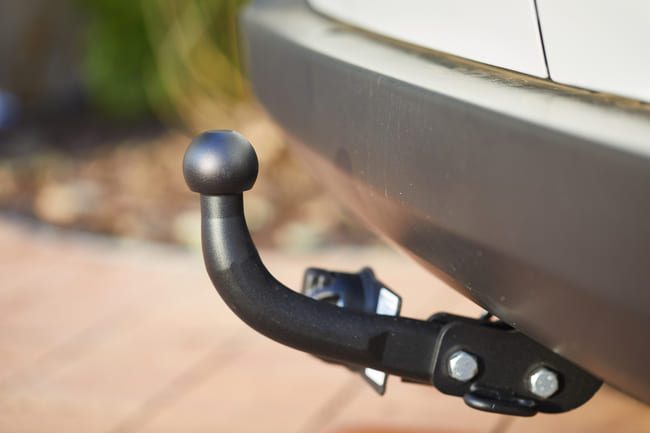
The trailer is attached to the tow ball of the vehicle that will perform the towing. You must ensure that the trailer hitch is securely fastened and that it is attached to the hitch by gently pushing the towing vehicle forward. When you have done this, attach the safety chains that connect the trailer to the towing vehicle itself. Then connect the trailer’s wiring harness to the towing vehicle’s sockets. If the trailer comes with a brake battery, you should check its charge before starting your journey.

After setting up and attaching the trailer, you will then need to load the vehicle itself. After extending the trailer’s ramps, you will drive the towing vehicle up the ramp and onto the trailer itself. Make sure the towing vehicle is centered by driving the vehicle slowly up the ramps.

Continue climbing until the front tires rest against the tire stops located at the front of the trailer itself. Then place the vehicle in park and make sure you have engaged the parking brake.

You can then attach wheel nets or nylon straps to the towed vehicle to ensure maximum safety.

USING A TOW BAR

Using a tow bar

Finally, you can also tow cars using a tow bar. All four wheels of the towed vehicle will be on the ground during this process and you must ensure to disconnect the drive shaft to make sure the transmission is not damaged when the car is towed.

Tow bars are typically used with caravans or when towing vehicles over long distances or across the country. It is important to note that a tow bar means you attach brackets to the front chassis of the vehicle doing the towing. If you cannot do this yourself, a technician or expert can help you.

You must first secure the brackets. Find the strongest part of the vehicle’s chassis to attach the bracket, one on each side of the front. Then check the brake lights and turn signals to ensure they work together simultaneously. You can purchase a wiring system that will connect and coordinate with the lights and turn signals so they work together.

Finally, attach the tow bar. After attaching the tow bar brackets to the towed vehicle itself, you ensure the bolts are secured using a socket wrench. After securing the tow bar, make sure to fasten it by attaching the towing vehicle’s safety chains to the pivot bracket itself.
Towing Rules

Towing a car with another car is perfectly legal, provided certain guidelines are followed, which must be adhered to at all times, especially if the vehicle is being towed in an emergency situation and it may not be immediately clear that a vehicle is being towed.

Note: these rules are based on UK legislation – when towing in other European countries, local laws must be consulted.

  • A “On Tow” sign must be visible at the rear of the towed vehicle.
  • When vehicles are connected only by a rope or chain, the maximum allowed distance between vehicles is 4.5 meters.
  • If the distance between the two vehicles exceeds 1.5 meters, the rope or chain must be clearly visible at a reasonable distance from both sides to other road users, for example by attaching a colored floating cloth in the middle.
  • A qualified driver must be in the towed vehicle, even if it is not functioning properly.
  • If it is dark, the towed vehicle must have its lights on as it would under normal circumstances, even if it is broken down.
  • If the car’s wheels are in contact with the road, it must be insured, so a towed car must still be insured even if it is broken down. In addition to insurance, the car must be taxed and have a valid MOT, if applicable.
  • For drivers who passed their driving test after January 1, 1997 and have not taken a test to drive with a trailer, restrictions apply. Check the GOV.UK website for more information.
  • It is illegal to tow a car on the motorway if it did not break down on the motorway.
  • You cannot tow a car without the driver’s or owner’s consent. If you find a car blocking your driveway, for example, you are not allowed to tow the car. You must contact the appropriate authorities.

TOP TOWING TIPS

  • Make sure you have a vehicle suitable for towing – it makes sense to see if your towing vehicle is suitable for the situation. Trying to tow a Land Rover with a Fiat Punto will only end badly. The weight – and the safe towing limit – will be defined in each car’s manual.
  • Only cars with manual transmissions can be towed – do not attempt to tow an automatic car; seek professional assistance.
  • Regularly check the quality and strength of the tow rope or chain you are using and before using it.
  • If you are towing someone, agree on a route to take with the person being towed, preferably avoiding heavily built-up areas.
  • Do not connect steel hooks to bumpers, as they will likely be torn off.
Top towing tips
  • Use the clutch to pull away slowly and avoid jerky movements that could damage the rope. Similarly, avoid sudden braking.
  • Take your time – never exceed 15 mph.
  • Signal with enough time for the towed driver to prepare.
  • Try to keep the strap, rope, or chain taut at all times to avoid jerking – this can be controlled by gently applying the brake.

Top 11 Best Tire Brands

Give your car the best grip and total traction with our 11 best tires.

Tires are among the most important features to make your driving experience both comfortable and safe. Without good tires, no matter the technical specifications of a car, the quality will decrease. If you use inadequate tires, you could even risk your own safety.

Although budget tires may seem attractive compared to premium brands, there is a good reason to opt for the gold standard. If a brand claims to be the best tire manufacturer, like many on this list, they will have years of experience and research behind them that allow them to offer car owners the most technologically advanced tires. You may not immediately associate these four pieces of rubber with cutting-edge technology, but these experts have found countless ways to make tires safer, more robust, and more aerodynamic. This does not mean, however, that price is everything. There are a handful of cheaper tire brands that keep their promise and can even offer better value for money than premium manufacturers, without a huge lack of grip and handling.

Whether it’s improving traction in difficult weather, or making them more reliable and engineered to last longer, all the tires on this list will offer you something more than generic and budget tires. Read our guide to find out which tires are the best and what makes a great tire.

WHAT ARE THE QUALITIES OF THE BEST TIRES?

RUBBER COMPOUND AND STRUCTURE

First, the type of rubber compound used is essential for having a good tire. Tires must have a compound that allows them to perform well in wet conditions as well as dry and to have decent longevity. Major brands constantly tweak to see how the materials they use in these compounds, and in the tire in general, affect performance. To give you an idea of the complexity of the situation, an average Goodyear tire contains about 30 types of synthetic rubber, 8 types of natural rubber, 8 types of carbon black, polyester and nylon fiber, steel bead wire, and 40 different chemicals, waxes, oils, pigments, silicas, and clays. So when you hear someone talking about the smell of burning rubber on a race track, you know that actually it’s the smell of much more than that. Things you might find in all tires, but especially high-quality tires, will be zinc to make the tires more resistant, carbon black to make them last longer, and nylon threads to help seal the tire to the wheel. Good internal structure and materials used inside the tire will also help ensure that the contact patch remains even and on the road.

TREAD PATTERN

Tread pattern

Besides the material used, the tread pattern is very important for the quality of a tire. It is the tread design that helps determine the tire’s traction on the road, and companies have developed many different styles for different conditions. Like the bow of a ship, a good design should cut through water, allowing the rubber to make contact with the road. The grooves must evacuate water from the contact patch, as failure to do so leads to hydroplaning.

There are four elements that make up a tire’s tread: the ribs are the raised section of the tread, made up of tread blocks; the grooves are deep channels that extend circumferentially and laterally around the tire; the tread blocks are the raised rubber segments that make contact with the road surface; the sipes are thin, small slits molded into the tread blocks. All these different elements work together to create the right balance between grip, stability in different conditions, and reduced resistance to allow for smooth and fast driving.

Since the best tire brands often design their own treads, they all have subtle differences and peculiarities. However, we can generalize tread types into a few rough categories.

Symmetric tread patterns are very common and feature ribs and tread blocks on the tread face where both halves of the tire display the same pattern. They provide smooth driving, have high directional control, and low rolling resistance.

A directional tread pattern is designed to rotate in one direction only and typically incorporates V-shaped tread blocks. These patterns are effective at ejecting water and have good grip on wet surfaces. They offer extremely high protection against hydroplaning, excellent handling on snow and mud, and very good high-speed handling.

Asymmetric tire treads offer almost a combination between directional and symmetric, with excellent handling, high stability in corners, and excellent grip in wet conditions.

THE 11 BEST TIRE BRANDS

HANKOOK

best tires: Hankook

Moving towards the high-end of the tire market and gaining exposure in Europe through its partnership with Formula Renault and other major racing series, it offers a full range of winter, all-season, and low rolling resistance tires for excellent handling and improved fuel economy.

GOODRIDE

Goodride: best tire company

Goodride tires can be found all over the world, and this universal brand focuses on manufacturing products that do not harm the environment, while maintaining excellent performance, and their state-of-the-art installation has won awards from the U.S. Department of Transportation and the United Nations Economic Commission for Europe.

ROTALLA

Best tire brands - Rotalla

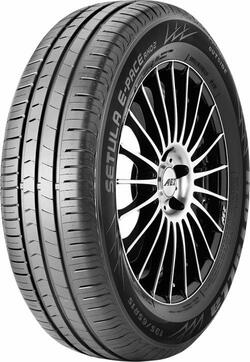
Offering high-performance tires at affordable prices, Rotalla is a good option if you are looking for replacement tires but don’t want to pay for the brand. They have a full range of tires, including winter and low-noise tires.

NANKANG

Nankang - best tires

Exceptional value for money is also something that Nankang, Taiwan’s largest tire manufacturer, tries to combine with high-quality products. Their motto is “Integrity, pragmatism, and innovation,” and they are proud of their research and development tires that make them up.

GOODYEAR

Goodyear: best tire company

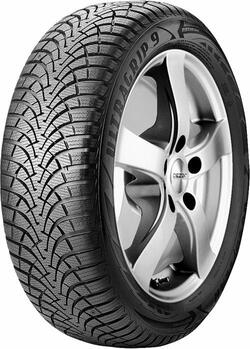
You can’t think of tires or racing without thinking of Goodyear. Named after the scientist who invented vulcanized rubber and with over 100 years of experience in the field, all Goodyear tires are technologically advanced and offer high quality. From UltraGrip 8 tires for winter to Eagle F1 Asymmetric 2 tires for high performance, they have something for everyone.

MICHELIN

Best tire brands: Michelin

They may be known now for a man made of white tires or exquisite cuisine, but Michelin is a serious tire brand. For over 125 years, their technology has made them renowned for their reliability and quality. Their products are all designed with road safety in mind, and they stock everything from budget tires to high-performance tires.

PIRELLI

best tires: Pirelli

Since 1872, Pirelli has been designing and manufacturing innovative tires. With a set of these on your car, you can rely on their safety, reliability, and excellent driving performance. With tires suitable for off-road driving, sports performance as well as eco-friendly tires, Pirelli meets all needs.

CONTINENTAL

Continental: best tire manufacturer

Recognized worldwide for their tires for a variety of vehicles (cyclists can also use Continental tires or inner tubes!), they are also known for their quality and performance. Their range includes the ContiEcoContact 5, an eco-friendly tire, the ContiPremiumContact 5 for comfort, and the ContiSportContact 3 for high-performance vehicles.

BRIDGESTONE

Goodride - The best tire brands

Whether it’s high-performance tires or just tires for daily use, Bridgestone has everything you need. Whether you drive a 4×4, a car, a van, or even a motorcycle, your needs can be met to the highest standards and according to your budget.

NEXEN

Nexen - best tires

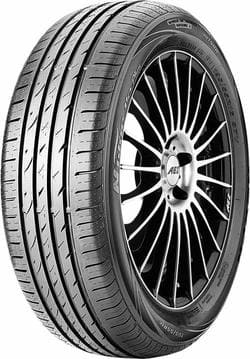
Nexen is a Korean tire brand founded in 1956. Their forward-thinking approach is illustrated by their very name, which is a combination of “next” and “century” in Korean.

Due to their commitment to quality products, friendly service, and exceptional value, Nexen’s domestic market share has grown from 8% to 20%, and they export to 120 countries. Their tires must be doing something right!

DUNLOP

Dunlop: best tire company

Forget tennis balls and rackets, Dunlop is also a serious tire manufacturer. They clearly focus on sport and offer a “complete range of tires for all seasons and all sizes.” Their tires aim for maximum grip and are designed to be robust and durable; some are even developed in tandem with DuPont Kevlar.

Traveling with a dog in the car: the law, safety tips and the best products


Avoid canine chaos and potential accidents by safely securing your dogs.

Since the 1970s, laws began to be introduced to make seat belts mandatory in passenger vehicles worldwide. Experts have proven the benefits of wearing a seat belt and that it massively reduces the risk of injury for passengers. It took a long time for this idea to catch on for pets, but it’s finally here. It is now almost mandatory to take special precautions when transporting pets and there is certainly a right and wrong way to travel with a dog in the car.

There are many reasons why it is important to keep an eye on your dogs, from pets being a distraction in the car to injuries in an accident. Regardless, failing to comply with regulations could result in a heavy fine, invalidate your insurance, and in the worst case, be fatal for your dog or for you.

Since our pets bring us so much joy, it is only fair that when we travel with a dog in the car, we provide them with the appropriate safety equipment to ensure they are as protected as we are. Here, we will give you all the best tips on the safest way to travel with a dog in the car.

WHY DO PETS NEED TO BE RESTRAINED IN THE CAR?

There are a ton of important reasons to keep your dog protected and secure while you are driving. This applies to all dogs; even the best-behaved dogs need some form of restraint and it should be used, whether you are going to the shops or taking a longer trip.

First, it is vital for their safety. Seat belts and airbags prevent humans from crashing into what is in front of them if the vehicle collides with another object. A pet seat belt or carrier will do the same and prevent them from sustaining serious injuries if you are in a car accident. Things like appropriate boot mats for cars also prevent pets from slipping while driving, which could also cause injuries. Aside from the physical pressure it could put on them, many dogs hate driving because it is so artificial. Having the right equipment limits the stress of the experience for them, even if it can be stressful to put them in the basket or carrier!

After an accident, an unrestrained dog may be frightened or even aggressive, especially if they are in pain and confused. Having them properly restrained will make accessing them safely to help much easier and reduce the risk of them running away or lashing out in fear.

Second, your safety is threatened if your pet is loose in the car. They could seriously injure you and your passengers in an accident if they are thrown onto you. A Border Collie may not seem that big compared to many other animals, but when traveling at 30 mph, the force is equivalent to the weight of a polar bear. Forget breaking the ice, that will break your bones.

Loose pets are not only involved in accidents

Loose pets can not only be involved in accidents, they can also be the cause of accidents. Dogs can distract the driver from the road when they climb or try to get on your lap, or perhaps even interfere with the steering wheel or brake pedal, thereby increasing the risk of an accident. Even if they are not doing anything dangerous, pets making noise, moving around, or attacking car accessories can cause drivers to take their eyes off the road and become a deadly distraction. It only takes a few seconds for a situation on the road that could be potentially fatal to develop. Even with the best-behaved dogs, it is not worth taking the risk.

Dogs roaming in the car can also cause insurance headaches. The terms of many car insurance policies require that, when driving with pets, they are properly restrained at all times. A loose dog in the car could mean that you have violated your insurance policy, invalidated it, and left you with a huge bill to pay if you are involved in an accident. This can also invalidate your pet insurance if they are injured and need treatment.

WHAT DOES THE LAW SAY?

It is not straightforward to determine precisely what the law is in the UK regarding restraining dogs, as there is no specific “dog in car law,” but it is always better to be on the right side. Rule 57 of the Highway Code states that drivers must “ensure that dogs or other animals are properly restrained so that they cannot distract you while you are driving or injure you, or injure themselves, if you stop quickly.” It also recommends that “a seat belt harness, pet carrier, dog cage, or dog guard are ways to restrain animals in cars.”

The Highway Code is not technically enforceable by law, but if you do not follow the regulations, it could still cause you problems. If you have an accident with an unrestrained pet, or even if the police stop you, it may be considered that you are driving “without due care and attention.” If you are involved in an accident because you were distracted by your pet, it could be considered dangerous driving. Driving without due care or dangerous driving can result in fines of up to £2500, up to 9 penalty points on your license, and in extreme cases, a driving ban. Some insurance companies now warn customers that their car insurance could be invalid if they are involved in an accident with an unrestrained animal in their vehicle.

TIPS FOR TRAVELING SAFELY WITH A DOG IN THE CAR

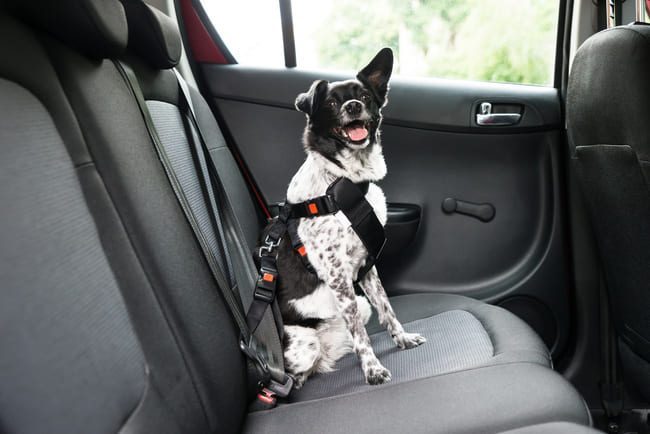
Dogs can travel in the back seat if they are attached to the seat belts with a car dog harness and they can also travel in the boot in a crate or on foot if a dog mat is used; remember to remove the parcel shelf to give them enough space. The quality of the harness, crate, or guard is also very important. There are many different types on the market, so take a look at our recommendations below to know where to start.

Seat belts with a car dog harnessSmall dogs should be placed in a pet carrier and secured with a seat belt on the back seats or on the floor behind the passenger seat. It may seem like they don’t have a good view, but sometimes not being able to see the road can make them calmer and less anxious or excitable.

Pet carrierAlways make sure you have enough water for your dogs in your car, especially on long trips. Also consider bringing food if you are traveling during their normal meal times and plan places to stop for your dog to go to the toilet. Even if they don’t end up going, they will certainly appreciate the fresh air. Just like humans, meeting their basic needs will ensure that pets are less likely to distract you while driving.
 
If you are traveling with more than one dog, make sure they are separated as much as possible. Even the best of friends can suddenly change behavior in unfamiliar situations and trying to break up a dog fight while navigating traffic or driving on country roads will never end happily.
Traveling with more than one dog in the carUse sunshades to cover the windows when it is hot or very sunny to help protect your dog and never leave them alone in a hot car, even if it’s only for 5 minutes.

 
If you know you have a significant or long trip coming up, it is worth taking your dog on shorter trips first to get them used to being in the car. It is important that they feel as comfortable and relaxed as possible. Getting used to it at a young age will mean it is part of their “socialization” and will not seem strange to them. Plan longer trips and make sure they usually end with something fun like a treat or a walk. Make these experiences as positive as possible, with plenty of treats and fun days so that your dogs look forward to driving.
 
It is also important to drive to fun places. Just as children hate going to the dentist, dogs will not enjoy going to the vet. If they associate the sound of the boot opening with a vet visit, it will cause more distress than excitement.
 
Finally, ignore movies and car advertisements: never let dogs stick their heads out the window. They could bump their head on something, fall out the window, or distract other drivers.

BEST PRODUCTS AND BRANDS FOR TRANSPORTING DOGS

Some of the products you might want to think about for your dogs are pet seat belts, harnesses, crates, and carriers, as well as boot or trunk guards or mats. There is a wide variety of brands that stock these different products, so here are some of the best.

If you are looking for carriers or containers for small dogs, SAVIC and EBI both offer an excellent range. These are typically made of sturdy but lightweight plastic, making them ideal for carrying or transporting a dog to and from the car. There are plenty of ventilation holes and flaps depending on the model, so dogs have adequate ventilation and can see what is in front of them, but it can help if a dog is anxious or disoriented during the journey. This is probably the safest way for a dog to ride in the car.

EBI also offers a range of small dog baskets so they can be carried under the arm. These might not be as safe for long trips, however, and should be used with a dog harness. Both brands also offer larger boxes or cages for dogs that can often take up an entire boot but can also accommodate multiple dogs and are often made of metal, great for protecting your dogs in a collision.

Hunter offers a premium range of larger dog transport bags, which could be useful for carrying a dog or for walking in the city or countryside. Along with this, Hunter offers a variety of polyester, leather, and faux leather protective mats to put in your car boot and protect the boot floor from dogs. POLGUM offers a range of very effective protection that prevents dogs from slipping and gives them a firm footing in your boot.

Dog guards and barriers

Finally, for dog guards and barriers to prevent dogs from climbing from the boot to the back seat, both DBS or Animals & Car offer a good variety of metal or mesh guards, depending on your needs.