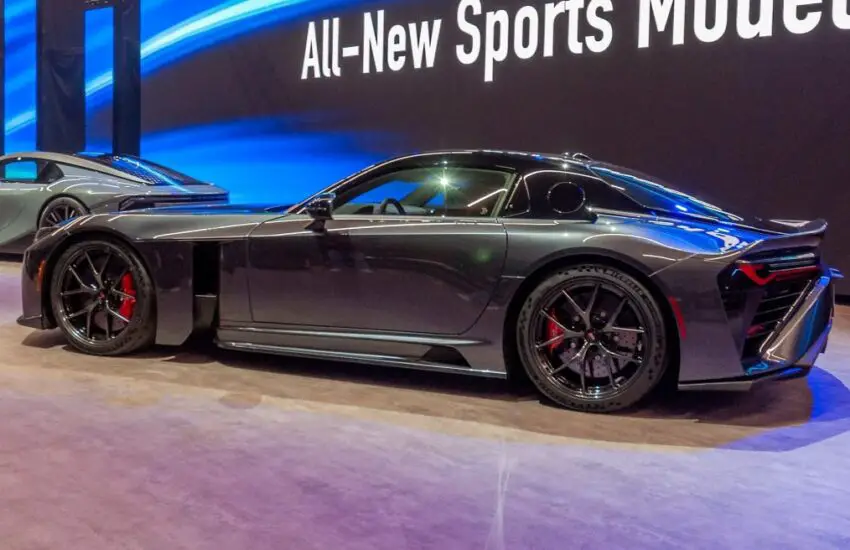
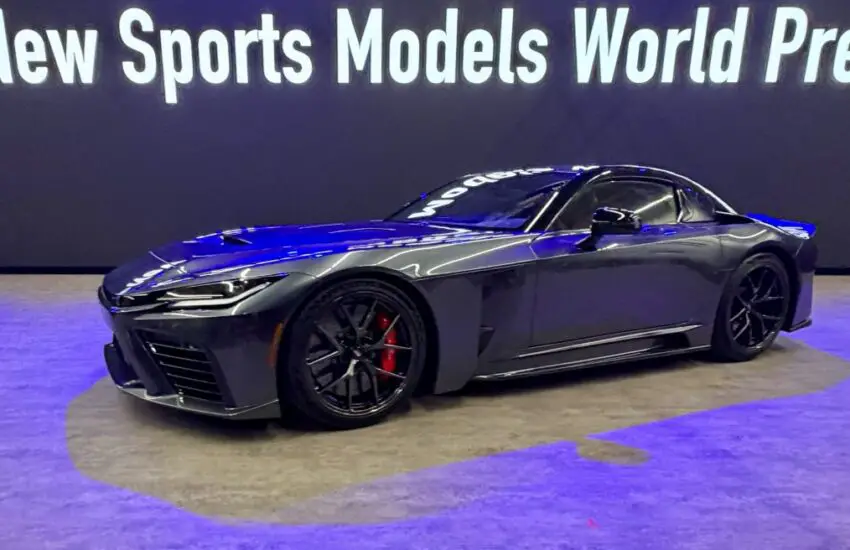
Toyota GR GT: Chasing the 7-Minute Nürburgring Dream

The Ultimate Benchmark: A Sub-7-Minute Lap

The Nürburgring Nordschleife stands as the ultimate proving ground for performance cars, a 20.8-kilometer ribbon of tarmac that separates contenders from pretenders. For Toyota’s Gazoo Racing division, the target for its upcoming GR GT hypercar is unequivocal: to conquer the ‘Ring in under seven minutes. This mythical barrier, breached by only a handful of road-legal production cars, represents more than just a number. It is a statement of intent, a declaration that Toyota can compete at the absolute pinnacle of automotive engineering and motorsport-derived performance.

A Legacy of Performance Forging a New Path

The GR GT is not born in a vacuum. It is the culmination of lessons learned from the track-dominating GR010 Hybrid Hypercar and the visceral GR Yaris and GR Corolla hot hatches. However, this model represents a bold new direction. While specifics remain guarded, the GR GT is expected to leverage a hybrid powertrain combining a high-revving, force-inducted engine with potent electric motors, delivering not just staggering power but also the instant torque and traction needed for the Nürburgring’s treacherous corners.

Engineering Focused on a Singular Goal

Every aspect of the GR GT’s development is filtered through the lens of the Nürburgring challenge. Aerodynamics will be honed for high-speed stability and mechanical grip, with a focus on generating immense downforce without excessive drag. The chassis and suspension will need to be both brutally stiff for precision and surprisingly compliant to handle the circuit’s infamous bumps and crests. This car is being engineered from the ground up to translate electrical and mechanical energy into lap time with ruthless efficiency.

More Than Just a Lap Time

Achieving the sub-seven-minute goal would be a historic moment for Toyota, solidifying its Gazoo Racing brand as a true performance powerhouse. It would validate the company’s “road-to-circuit” philosophy, proving that technology developed in the crucible of endurance racing can create a transcendent road car. The Toyota GR GT aims to be more than just a stopwatch hero; it seeks to be a complete driver’s car, offering an immersive and electrifying experience that honors its singular, record-breaking mission.

Why Toyota’s GR GT Supercar Won’t Wear a Toyota Badge

The Mystery of the Missing Toyota Badge

Toyota has unveiled a stunning new supercar, the GR GT concept, but enthusiasts will not find it at their local Toyota dealership. This high-performance machine exists in a unique space, developed by Toyota’s Gazoo Racing (GR) division but not destined to be sold as a traditional Toyota model. This strategic decision highlights a fascinating shift in how automakers manage flagship performance brands and market exclusivity.

The Gazoo Racing Brand Conundrum

The core issue lies in distribution. Gazoo Racing, while a powerhouse in motorsport and the force behind models like the GR Supra and GR Yaris, is not a standalone retail brand. There are no exclusive GR dealerships. Selling a hyper-exclusive, likely seven-figure supercar through standard Toyota showrooms presents significant logistical and brand-image challenges. The vehicle’s positioning, price, and clientele service requirements fall far outside the norm for Toyota’s extensive dealer network.

A Potential Path to Market

Industry analysts suggest several avenues for the GR GT. One strong possibility is a limited production run handled through a select network of flagship dealers or via direct, invitation-only sales, similar to other limited-edition hypercars. Another theory posits that the technology and platform may be leveraged for a future Lexus flagship, given that brand’s established presence in the luxury performance segment. The GR GT may also serve primarily as a rolling laboratory for next-generation racing technology, with a very limited street-legal production run to satisfy homologation rules.

More Than Just a Concept Car

Regardless of its final sales strategy, the GR GT is a critical statement piece. It solidifies Gazoo Racing’s technical prowess and ambition, pushing the brand further up the performance hierarchy. It acts as a halo vehicle for the entire GR lineup, boosting the cachet of more accessible models. This move allows Toyota to explore the extreme limits of performance and hybrid technology without directly altering the mainstream Toyota brand’s identity focused on reliability and accessibility.

Toyota GR GT: The Hybrid V8 Supercar Redefining Performance

The Dawn of a New Supercar Era

The automotive landscape is shifting, with performance icons from manufacturers like Toyota now commanding six-figure price tags and rivaling the most exclusive marques. The recent unveiling of the Toyota GR GT Concept marks a pivotal moment, signaling the brand’s most ambitious and expensive project since the legendary LFA. This hybrid V8 supercar is poised to enter a rarefied arena of luxury and power.

Engineering a Masterpiece

While full production is approximately a year away, key details have emerged that outline a formidable machine. The GR GT’s heart is a newly developed hybrid V8 powertrain, a combination that promises devastating acceleration paired with a new level of technological sophistication for a Toyota-badged supercar. This move represents a significant technical leap, blending raw internal combustion emotion with cutting-edge electric assist.

Positioning in the Performance Pantheon

With an expected price point well over $200,000, the GR GT is not merely a sports car; it is a statement. This pricing strategy places it in direct competition with established European exotics, challenging perceptions of what a Toyota can be. The vehicle’s development, closely tied to Toyota’s motorsport learnings, suggests a focus on track-capable performance that remains usable on the road.

A Vision for the Future

The GR GT’s debut at the Woven City, Toyota’s futuristic prototype city near Mount Fuji, is symbolic. It underscores the model’s role as a technological flagship, showcasing how high-performance engineering can evolve. This supercar is envisioned as more than just a speed machine; it is a testbed for advanced materials, hybrid efficiency, and driver-centric innovation that will filter down to future models.

The anticipation for the GR GT continues to build as it represents a bold return to the supercar segment for Toyota. It promises an unparalleled blend of Japanese engineering, hybrid prowess, and visceral V8 performance, setting a new benchmark for what a global automotive giant can achieve.

The Forgotten Gem John Davis of MotorWeek Misses Most

An Unlikely Favorite from a Practical Mind

For decades, John Davis has been the trusted, pragmatic voice of MotorWeek. His reviews are grounded in real-world usability, family needs, and long-term value, making his personal automotive regrets particularly fascinating. Among the thousands of cars he has tested, one forgotten model stands out as the one he misses the most: not a flashy supercar, but the humble and innovative 1985 Chevrolet Celebrity Eurosport.

More Than Just a Sedan

Davis’s affection for the Celebrity Eurosport stems from its surprising blend of attributes. On the surface, it was a mainstream, front-wheel-drive family sedan. However, the Eurosport package endowed it with a firmer suspension, specific alloy wheels, and distinctive two-tone paint. Davis fondly recalls its balanced handling, comfortable interior for five, and the peppy performance from its fuel-injected V6 engine. It represented a era when General Motors was injecting sporty character into everyday transportation, a formula that resonated deeply with his practical yet enthusiast-oriented sensibilities.

A Legacy of Understated Excellence

The car’s significance lies in its embodiment of a now-rare automotive ideal: competent all-around performance without excessive cost or complexity. Davis laments that this philosophy has faded, overshadowed by today’s market extremes of basic appliances and highly specialized performance variants. The Celebrity Eurosport was a genuine do-it-all vehicle, capable of commuting, road trips, and even providing a little driving enjoyment on a back road. Its durability and straightforward mechanics are traits Davis associates with a bygone era of automotive design focused on owner satisfaction over fleeting trends.

John Davis’s nostalgia for the Chevrolet Celebrity Eurosport is a powerful reminder that the most memorable cars are often those that perfectly execute their intended mission. It underscores that true automotive gems are defined not by horsepower or prestige, but by their honest character and ability to deliver seamless, reliable service with a touch of unexpected flair.

The Voice of F1: Crofty’s Journey from Garden Dreams to Global Broadcasts

The Soundtrack to Speed

For millions of fans worldwide, the voice of David ‘Crofty’ Croft is the essential soundtrack to a Formula 1 weekend. His energetic, insightful, and instantly recognizable commentary narrates the drama, translating complex strategies and 200mph action into an accessible and thrilling story. But this iconic voice began its journey not in a commentary box, but in the imagination of a child playing in his garden.

A Childhood Dream with a Soundtrack

Crofty’s path was shaped by a lifelong passion for sports broadcasting. As a boy, he would provide his own live commentary for every activity, from scoring imaginary cup-winning goals in football to mimicking the legendary Murray Walker while riding his bicycle. This innate desire to narrate and share the excitement of sport laid the foundation for everything that followed. He wasn’t just playing a game; he was practicing his future craft, learning to build narratives and capture moments of tension and triumph.

From Local Radio to the Global Paddock

The professional journey was one of dedication and gradual ascent. Crofty honed his skills across various sports on local radio, mastering the art of painting pictures with words and thinking quickly under pressure. His big break into motorsport came with commentary roles for MotoGP and the British Touring Car Championship, where his talent for making fast-paced racing comprehensible and compelling became evident. This led him to the Formula 1 support series, GP2, perfectly positioning him for the ultimate call-up.

Defining an Era of F1 Broadcasting

Since becoming the lead commentator for Sky Sports F1’s coverage in 2012, Crofty has defined an era. His partnership with analyst Martin Brundle is celebrated for its perfect balance of infectious enthusiasm and deep technical expertise. He possesses a unique ability to sense a story unfolding, building anticipation for a strategic battle or a crucial overtake, making him the narrator for a generation of fans. His voice has become synonymous with the sport’s biggest moments, from last-lap showdowns to shock victories, proving that a great commentator does far more than describe—they make you feel the heartbeat of the race.

Renault’s Heritage Auction: Uncovering Forgotten Treasures

Renault’s Unconventional Heritage Collection Heads to Auction

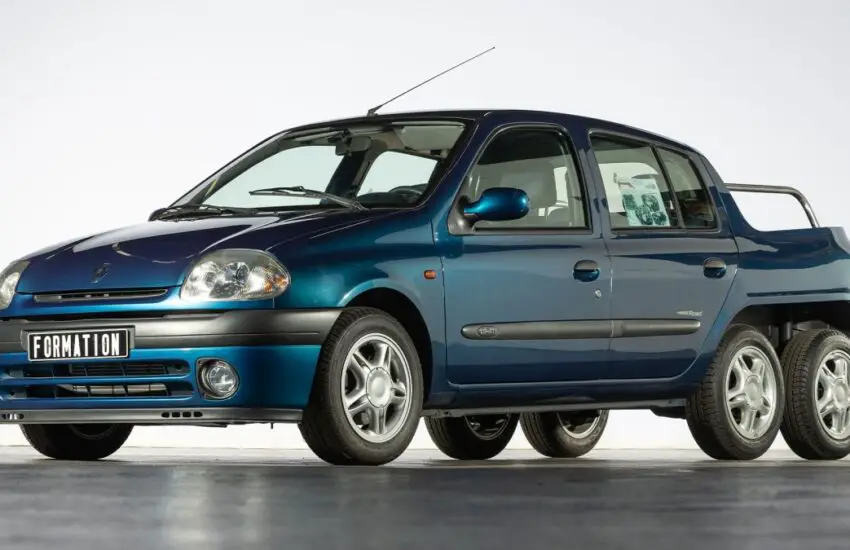
While many automakers showcase their greatest hits, Renault’s heritage collection has always marched to the beat of a different drum. This unique assemblage highlights not just the brand’s commercial successes but its bold experiments and conceptual forays. A significant portion of this eccentric fleet is now being prepared for a landmark auction, offering a rare glimpse into the French automaker’s inventive spirit.

Beyond the Mainstream: A Celebration of Automotive Curiosity

The vehicles crossing the block are far from ordinary production models. This auction celebrates Renault’s role as a laboratory on wheels. Expect to see pioneering electric and hybrid prototypes from decades past, avant-garde concept cars that predicted future design trends, and limited-run models that were commercial curiosities in their day. This is a collection built on engineering daring and creative risk-taking.

Highlights from the Collection’s Quirky History

Among the lots, several models stand out for their sheer originality. One likely highlight is the Renault Espace F1, a minivan concept fitted with a Formula 1 engine—a symbol of outrageous engineering. Others may include early electric vehicles like the Zoom, which explored urban mobility solutions, or the quirky Renault Avantime, a coupe-MPV hybrid that defied categorization. Each car tells a story of a “what if” moment in automotive history.

The Significance of Preserving Automotive Diversity

Auctions like this do more than transfer ownership; they preserve the rich tapestry of automotive development. By bringing these unconventional vehicles into public view and private collections, their legacy is secured for future generations. It underscores that a brand’s heritage is not defined solely by sales charts, but also by its capacity for innovation and its courage to venture off the beaten path.

Lexus LFA Electric Revives Soul with Simulated Sensations

The Electric Supercar’s New Heartbeat

The transition to electric power presents a unique challenge for legendary performance cars: preserving their soul. For the anticipated electric successor to the iconic Lexus LFA, engineers are tasked with a mission that goes beyond raw acceleration. The directive is clear—to create an electric vehicle that delivers profound emotional resonance and driving pleasure, ensuring the machine connects with the driver on a sensory level.

Engineering Emotion into Silence

At the core of this project is the development of a sophisticated artificial soundscape. Project leaders have confirmed that the electric LFA will not be silent. Instead, it will feature a meticulously crafted synthetic engine note. This auditory signature is designed not merely as a noise, but as a responsive audio feedback system that enhances the perception of power, rpm, and throttle input, aiming to replicate the visceral thrill of the original V10.

Simulated Shifts for Tactile Engagement

Beyond sound, Lexus engineers are exploring simulated gear changes. This technology would introduce deliberate pauses in power delivery, mimicking the tactile jolt and auditory cue of a traditional sequential gearbox. The goal is to reintroduce a layer of driver involvement and mechanical interaction often lost in single-gear electric powertrains, making the acceleration curve feel more engaging and controlled.

A Bridge Between Eras

This approach represents a fascinating philosophical shift. Rather than purely embracing the seamless, silent thrust of typical EVs, the electric LFA project seeks to curate a hybrid experience. It leverages electric instant torque and performance while selectively reintroducing the sensory cues that define a passionate driving experience. The result aims to be a supercar that honors its combustion-engine heritage through innovative digital means, setting a new benchmark for emotional connectivity in the electric age.

Zilvia.net Shuts Down, Ending 27-Year Nissan S-Chassis Legacy

The End of an Online Automotive Era

The digital landscape for car enthusiasts has lost a foundational pillar. Zilvia.net, the definitive online forum for Nissan S-Chassis owners and fans, has permanently closed its doors. This sudden shutdown marks the end of a 27-year run, leaving a significant void for a global community built around models like the 240SX, 180SX, and Silvia.

A Crucial Hub for Knowledge and Community

For nearly three decades, Zilvia.net served as much more than a simple message board. It was a comprehensive digital encyclopedia and a vibrant social hub. New owners seeking repair manuals, seasoned builders documenting complex engine swaps, and fans sharing photography all coexisted within its threads. The forum’s extensive archives contained solutions to virtually every mechanical issue, DIY guides for modifications, and decades of collective troubleshooting wisdom that became essential for maintaining these aging Japanese sports cars.

The Impact of the Sudden Closure

The forum’s disappearance highlights the fragility of digital community spaces that host irreplaceable historical data. Countless detailed build threads, technical photographs, and nuanced discussions have become inaccessible overnight. This loss extends beyond nostalgia; it represents a practical setback for owners who relied on this shared knowledge base for maintenance and restoration projects. The closure leaves enthusiasts to seek alternative platforms, though none carry the same depth of legacy or S-Chassis-specific focus that Zilvia.net cultivated over generations.

Preserving Automotive Heritage Online

The story of Zilvia.net underscores a broader challenge within niche automotive cultures. As centralised forums age and face technical or financial pressures, the specialised knowledge they guard is at risk. The community now faces the task of preserving this wealth of information elsewhere, ensuring that the technical expertise and historical context of the Nissan S-Chassis lineage are not lost to the digital void. The forum’s end is a poignant reminder of the internet’s evolving nature and the importance of archiving collective passion.

OBD2 Code P1469: A/C Evaporator Temperature Sensor Circuit Low

Understanding OBD2 Code P1469: The Technical Breakdown

When your vehicle’s onboard diagnostic system (OBD2) logs code P1469, it is signaling a specific electrical fault within the climate control system. Technically defined as “A/C Evaporator Temperature Sensor Circuit Low,” this code indicates that the Powertrain Control Module (PCM) or a dedicated HVAC control module has detected a voltage signal from the evaporator temperature sensor that is below the expected normal operating range. This sensor is critical for preventing the evaporator core from freezing, which can damage the A/C system and block airflow. A persistent P1469 code will often lead to compromised A/C performance, potentially causing the system to shut down to prevent damage.

Role of the A/C Evaporator Temperature Sensor

The A/C evaporator temperature sensor is a thermistor, typically with a negative temperature coefficient (NTC), mounted on or near the evaporator core inside the HVAC case. Its primary function is to monitor the temperature of the evaporator. This data is used by the PCM or HVAC module to:

  • Prevent Evaporator Freeze-Up: If the evaporator gets too cold (usually near 32°F/0°C), condensation can freeze on the fins, blocking airflow. The module will cycle the compressor clutch off to allow it to warm up.
  • Regulate Compressor Engagement: It helps optimize A/C system operation for efficiency and passenger comfort.
  • Protect System Components: Prevents liquid refrigerant from slugging the compressor, which can cause catastrophic failure.

How the PCM Detects a “Circuit Low” Condition (P1469)

The sensor is integrated into a 5-volt reference circuit. The PCM supplies a 5V reference signal to the sensor and monitors the return voltage. As the evaporator temperature changes, the sensor’s resistance changes, altering the return signal voltage. A “Circuit Low” code (P1469) is set when the PCM sees this return voltage consistently too close to 0 volts. This suggests a short to ground in the circuit or a failed sensor with extremely low resistance.

Common Causes and Symptoms of Code P1469

Diagnosing P1469 requires a systematic approach, starting with the most common and easily accessible faults. The issue is almost always electrical rather than mechanical within the refrigerant circuit itself.

Primary Causes of P1469

  • Faulty A/C Evaporator Temperature Sensor: The internal thermistor can fail, providing incorrect resistance and triggering a low voltage signal.
  • Damaged Wiring or Connectors: The wiring harness to the sensor can suffer from chafing, corrosion, or rodent damage, causing a short to ground (the most common cause of a “low” circuit code).
  • Poor Electrical Connections: Loose, corroded, or oxidized pins at the sensor connector or PCM connector can create excessive resistance or an intermittent short.
  • Failed PCM or HVAC Control Module: While less common, an internal fault in the module processing the signal can set this code. This should only be considered after all wiring and the sensor itself have been ruled out.

Recognizable Symptoms

Drivers and technicians may notice several key symptoms associated with P1469:

  • Inoperative or Intermittent Air Conditioning: The A/C may blow cool air initially but then warm up as the system shuts down to protect itself.
  • Poor Cooling Performance: The system may not reach or maintain the desired cabin temperature.
  • Illuminated Check Engine Light (CEL): P1469 is a non-emissions related code but will trigger the CEL.
  • Compressor Clutch Not Engaging: You may hear the clutch click on and off rapidly or not engage at all as a fail-safe.
  • No Obvious Symptoms: In some cases, the code may be stored as a pending or history code with no immediate noticeable effect on performance.

Step-by-Step Diagnostic and Repair Procedure

A proper diagnosis is essential to avoid unnecessary part replacement. Follow this logical sequence to pinpoint the root cause of P1469.

Step 1: Preliminary Checks and Visual Inspection

Begin with the basics. Using a quality OBD2 scanner, confirm the code P1469 is present and note if it is current or pending. Clear the code and perform a test drive with the A/C on max to see if it returns. Then, conduct a thorough visual inspection:

  • Locate the evaporator temperature sensor (consult service manual; often behind the glove box or under the dashboard).
  • Inspect the sensor connector for corrosion, bent pins, or moisture.
  • Trace the wiring harness as far as possible, looking for obvious damage, chafing against metal brackets, or signs of burning.

Step 2: Electrical Testing with a Multimeter

This is the core of the diagnosis. You will need a digital multimeter (DMM).

  • Test 1: Sensor Resistance: Disconnect the sensor. Measure its resistance across its two terminals. Compare the reading to the manufacturer’s specifications at the current ambient temperature. A reading of zero or extremely low ohms (e.g., below 100Ω at room temp) confirms a failed sensor.
  • Test 2: Circuit Voltage (Key On, Engine Off): With the sensor disconnected, probe the harness connector. One pin should have ~5V (reference voltage from PCM). Another should show continuity to ground. The signal wire should show ~5V with the sensor disconnected. If the 5V reference is missing, check for an open circuit back to the PCM.
  • Test 3: Check for Short to Ground: Set the DMM to continuity or resistance. Check the signal wire pin in the harness connector for a direct short to chassis ground. If there is continuity (beep or near 0Ω), you have a short in the wiring.

Step 3: Repair and Verification

Based on your findings:

  • Replace Faulty Sensor: If the sensor resistance is out of spec, install a new OEM or high-quality equivalent.
  • Repair Wiring: For damaged wires, solder and seal with heat-shrink tubing. Never use twist connectors. Replace entire harness sections if damage is extensive.
  • Clean Connectors: Use electrical contact cleaner and a small brush to clean all connector pins.

After repairs, clear the DTC with your scanner, start the engine, and run the A/C system for at least 10-15 minutes. Perform a road test to ensure the code does not return and that A/C performance is restored to normal.

Conclusion: Importance of Addressing P1469

While code P1469 may not seem as critical as an engine misfire code, ignoring it can lead to more significant and expensive problems. A continuously engaged compressor due to a faulty sensor signal can freeze the evaporator, leading to a blocked HVAC case, a damaged blower motor, or even hydrostatic lock and failure of the compressor itself. By understanding the circuit, methodically diagnosing the root cause—most often a wiring short or bad sensor—and performing a proper repair, you restore not only comfort but also the longevity and efficiency of your vehicle’s entire climate control system.

OBD2 Code P1468 Volkswagen: A Technical Guide to Diagnosis & Repair

Understanding OBD2 Code P1468 on Volkswagen Vehicles

When the check engine light illuminates in your Volkswagen and a scan tool reveals the diagnostic trouble code (DTC) P1468, you’re dealing with a specific fault within the vehicle’s evaporative emission control (EVAP) system. Officially defined as “Fuel Tank Ventilation System – Malfunction” or sometimes “EVAP Canister Purge Regulator Valve (N80) – Open Circuit,” this code is common across many VW Group models, including the Golf, Jetta, Passat, Tiguan, and Audi variants. The EVAP system is crucial for preventing fuel vapors from escaping into the atmosphere by storing them in a charcoal canister and later purging them into the engine to be burned. Code P1468 specifically indicates that the Engine Control Module (ECM) has detected an electrical or functional problem with the primary component responsible for this purging process.

Primary Causes and Symptoms of P1468

A P1468 code is triggered when the ECM’s diagnostic routine finds an issue with the circuit or performance of the EVAP canister purge valve, also known as the N80 valve. It’s important to note that while the code points to the “ventilation system,” the root cause is almost always linked to the purge valve circuit or the valve itself.

Common Causes of Volkswagen P1468

  • Faulty EVAP Canister Purge Valve (N80 Valve): The most frequent culprit. The valve can fail electrically (open or short circuit in its solenoid coil) or mechanically (stuck open or closed, torn diaphragm).
  • Damaged Wiring or Connectors: Corrosion, chafing, or rodent damage to the wiring harness connecting to the N80 valve can break the circuit.
  • Poor Electrical Connections: A loose, corroded, or oxidized connector at the purge valve or the ECM.
  • Blown Fuse: A dedicated fuse for the EVAP system solenoid circuit may be blown.
  • Faulty Engine Control Module (ECM): Rare, but a malfunction within the ECM itself could prevent it from properly controlling the valve.

Typical Symptoms of P1468

  • Illuminated Check Engine Light (MIL): The primary and often only initial symptom.
  • Failed Emissions Test: The vehicle will not pass a state emissions inspection with an active EVAP code.
  • Possible Rough Idle or Stalling: If the purge valve is stuck open, it can create a vacuum leak or an overly rich fuel mixture, leading to rough idle, hesitation, or even stalling, especially after refueling.
  • Fuel Odor: A less common symptom; if the ventilation system is blocked, vapors might not be properly managed.
  • No noticeable driveability issues: Many drivers experience no change in performance, making the check engine light the sole indicator.

Step-by-Step Diagnostic Procedure for P1468

Proper diagnosis is key to avoiding unnecessary parts replacement. Follow this systematic approach to pinpoint the exact cause of the P1468 code on your Volkswagen.

Step 1: Preliminary Checks and Code Verification

Begin by recording the freeze frame data associated with the code. Clear the DTC and perform a test drive to see if it returns immediately or under specific conditions (e.g., after refueling, at a certain engine temperature). A code that returns instantly points to a hard electrical fault. Visually inspect the N80 valve, its wiring harness, and connectors for obvious damage, corrosion, or disconnection. The purge valve is typically located on or near the engine’s intake manifold.

Step 2: Electrical Testing of the N80 Purge Valve

Disconnect the electrical connector from the purge valve. Using a digital multimeter (DMM), measure the resistance across the valve’s two terminals. A typical N80 valve should have a resistance between 15 and 35 ohms. A reading of infinite resistance (OL) indicates an open coil (failed valve). A reading near zero ohms indicates a shorted coil. Either result means the valve needs replacement. Also, check for continuity between each terminal and the valve body to ensure there is no internal short to ground.

Step 3: Checking Power and Ground Circuits

With the connector still disconnected and the ignition switched ON, use the DMM to check for voltage at the harness connector. One pin should show battery voltage (12V), supplied via a fuse. If no voltage is present, trace the circuit back to check the relevant fuse. Next, check the ground circuit. With the ignition OFF, use the DMM in continuity mode to check between the suspected ground pin in the harness and a known good engine ground. It should have continuity.

Step 4: Functional Testing of the Valve

If the valve passes the electrical tests, it may be mechanically stuck. You can perform a basic functional test by applying 12 volts directly to the valve terminals (use fused jumper wires). A distinct and solid “click” should be heard as the valve opens. You can also blow through the ports; with no power applied, air should NOT pass through. When 12V is applied, air SHOULD pass through. A valve that clicks but doesn’t change airflow is mechanically faulty.

Step 5: Advanced Diagnostics with a Scan Tool

Using a professional-grade OBD2 scanner or VW-specific diagnostic tool (like VCDS), you can perform output tests to command the N80 valve to activate. Listen for the audible click. You can also monitor the EVAP system readiness monitors and look at related data PIDs, such as “Purge Valve Duty Cycle,” to see if the ECM is attempting to control it.

Repair Solutions and Important Considerations

Once the faulty component is identified, the repair is generally straightforward. However, using quality parts and ensuring system integrity is crucial.

Replacing the EVAP Canister Purge Valve (N80)

This is the most common repair. Ensure you purchase an OEM or high-quality aftermarket valve specific to your VW model and engine code. The valve is usually held by one or two bolts and has two ports for hoses and an electrical connector. Label the hoses before disconnecting them. Install the new valve, reconnect the hoses and electrical connector securely. Clear all DTCs and perform a drive cycle to complete the repair verification.

Repairing Wiring Harness Damage

If the wiring is damaged, repair it using proper solder and heat-shrink tubing—avoid simple crimp connectors or electrical tape in the engine bay. Ensure the repair is sealed from moisture.

Post-Repair Protocol and System Integrity

After repair, clear the code and ensure the check engine light remains off. The EVAP monitor will need to complete a drive cycle for your vehicle to be ready for an emissions test. It’s also good practice to inspect the related EVAP hoses for cracks or brittleness while you have access to the system, as leaks can cause other codes (like P0442). A successful repair of P1468 will restore proper EVAP system function, ensuring your Volkswagen runs efficiently and meets emission standards.