
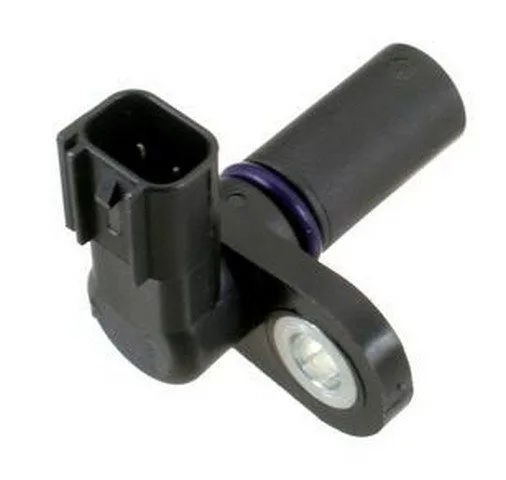
P000C Slow Response Camshaft Position, Bank 2

Code P000C: Definition and Symptoms

Trouble code P000C is a generic powertrain code that indicates a slow response from the intake camshaft position (A), bank 2. It occurs when the powertrain control module (PCM) detects a discrepancy between the actual position of the camshaft and its desired position during phase changes.

Symptoms of Code P000C

  • Illuminated check engine light
  • Reduced performance and power loss
  • Increased fuel consumption and emissions
  • Abnormal noises from the engine
  • Rough idle or stalling

Possible Causes of Code P000C

Several failures can be the cause of this code:

  • Engine Oil: Level too low, poor quality, or insufficient pressure.
  • Camshaft Position Sensor (CMP): Faulty or dirty.
  • VVT Oil Control Solenoid: Stuck, faulty electrical circuit, or clogged screen.
  • VVT Actuator: Mechanically stuck or worn.
  • Mechanical Problems: Stretched timing chain, damaged guides or tensioners.
  • Electrical Problems: Cut wiring, corroded or loose connectors.
  • Faulty PCM: A rare cause, to be considered as a last resort.

Diagnosis and Troubleshooting of Code P000C

⚠️ Warning: These steps are general. Always consult the manufacturer-specific procedures for your vehicle.

1. Preliminary Checks

  • Check the engine oil level and condition. Dirty oil or a low level is a common cause.
  • Visually inspect the wiring and connectors of the CMP sensor and VVT solenoid for any signs of damage or corrosion.
  • Consult the manufacturer’s Technical Service Bulletins (TSBs) for known issues.

2. Camshaft Position Sensor (CMP) Test

Hall Effect Sensor (3 wires): With the engine running, measure the output signal with a multimeter set to DC Volts. The voltage should fluctuate. A flat reading indicates a faulty sensor.
Permanent Magnet Sensor (2 wires): Measure the output voltage in AC Volts. A zero or low reading indicates a fault.

3. VVT Control Solenoid Test

  • Resistance Test: Disconnect the connector and measure the resistance between the solenoid pins. Compare the obtained value with the manufacturer’s specifications.
  • Visual Inspection: Remove the solenoid and inspect its filter/screen for any clogging by metallic debris.

4. Electrical Circuit Checks

Using a multimeter, verify that the solenoid and sensor are receiving proper 12V power and a good ground (no abnormal voltage drop).

5. Mechanical Inspection

If all electrical tests are conclusive, the problem is likely mechanical. Inspect the timing chain tension and check the VVT actuator for any signs of wear or blockage.

Conclusion and Call to Action

Code P000C is a fault that should not be ignored, as it can lead to performance loss and engine damage in the long term. An accurate diagnosis is essential to avoid replacing parts unnecessarily.

Don’t feel comfortable performing these checks yourself? Entrust the diagnosis of your vehicle to a professional equipped with advanced diagnostic tools for an accurate diagnosis and reliable repair.

P000D B Camshaft Position, Slow Response, Bank 2

What is the P000D Code?

The P000D error code is a generic powertrain code that means “Camshaft Position B Slow Response, Bank 2”. It applies to vehicles equipped with a Variable Valve Timing (VVT) system. This problem indicates that the Powertrain Control Module (PCM) has detected a slower than expected response in adjusting the position of the exhaust camshaft (B) on the engine’s bank 2 side.

Symptoms of the P000D Code

Common symptoms associated with this fault code include:

  • Illuminated check engine light
  • Decreased engine performance and power
  • Increased fuel consumption
  • Abnormal noises coming from the engine
  • Increased pollutant emissions

Possible Causes of the P000D Code

Several components can be the source of this fault:

  • Insufficient engine oil level or poor quality: Defective lubrication is a common cause.
  • Faulty Camshaft Position (CMP) sensor: The sensor provides incorrect data to the PCM.
  • Defective or clogged VVT control solenoid: It no longer properly regulates the oil flow.
  • Worn or stuck VVT actuator (phaser): It can no longer adjust the camshaft position.
  • Timing chain problem: Excessive slack, worn guides or tensioners.
  • Wiring or connector issues: Short circuit, corrosion, or poor contact.
  • Rare PCM failure: The computer itself is at fault.

How to Diagnose and Repair the P000D Code?

1. Preliminary Checks

Always start by checking the engine oil level and condition. Dirty oil or a low level is a simple and common cause. Then perform a visual inspection of the wiring, CMP sensor connectors, and VVT solenoid for any apparent damage.

2. Testing the Camshaft Position (CMP) Sensor

Using a multimeter, check the sensor’s output signal. A Hall effect sensor (3 wires) should produce a fluctuating digital signal, while a permanent magnet sensor (2 wires) produces an AC signal. A lack of signal indicates a faulty sensor that needs replacement.

3. Testing the VVT Control Solenoid

Disconnect the solenoid connector and measure its internal resistance (ohms). Compare the reading to the manufacturer’s specifications. An infinite resistance (open circuit) or an out-of-spec value means the solenoid is faulty. Clean or replace it if necessary.

4. Checking Electrical Circuits

Verify that the solenoid and sensor are receiving proper 12V power and a good ground using your multimeter. A faulty circuit will need to be repaired.

5. Mechanical Inspection

If the electrical tests are conclusive, the problem is likely mechanical. It could be a worn VVT actuator or a timing chain issue (too much slack, broken guides). This inspection is complex and may require disassembling engine components.

Conclusion and Call to Action

The P000D code is a medium to high severity problem that should not be ignored, as it risks damaging the engine. If basic checks (oil, visual inspection) do not resolve the issue, it is highly recommended to consult a professional mechanic. Accurate diagnosis of VVT systems often requires specialized tools and access to specific vehicle technical data.

Need help diagnosing this code on your vehicle? Consult your manufacturer’s technical service bulletins now or call an expert for an accurate diagnosis.

The fuel volume regulator control command P000E has exceeded the learning limit

What is the P000E code?

The diagnostic trouble code P000E is a generic powertrain code indicating that the fuel volume regulator control has exceeded the programmed learning limit in the Powertrain Control Module (PCM). This code applies to many vehicles equipped with the OBD-II standard, including Land Rover, Ford, Alfa Romeo, Toyota, and other brands.

Specifically, the PCM has detected that it can no longer properly regulate the fuel flow sent to the engine via the volume regulator (metering valve). This system is primarily found on common rail diesel injection engines. Warning: any work on a high-pressure fuel system requires great caution.

Operation of the Fuel Volume Regulator

The regulator is an electronic valve, usually located between the tank and the injection rail. It consists of a solenoid actuated by the PCM and a valve that restricts the fuel flow. An integrated or separate sensor measures the volume in real time. Under normal conditions, the valve is wide open. When the PCM needs to reduce the flow, it applies a variable voltage to partially close the valve. Excess fuel is returned to the tank via a return line.

Severity of the P000E Code

High urgency. A P000E code directly affects performance, fuel economy, and can damage the injection system. It must be diagnosed and repaired quickly.

Symptoms of the P000E Code

  • ➤ Noticeable decrease in engine performance and power
  • ➤ Excessive black smoke from the exhaust
  • ➤ Decreased fuel efficiency (over-fueling)
  • ➤ Rough idle or stalling
  • ➤ Possible illumination of the Malfunction Indicator Lamp (MIL)
  • ➤ Potential appearance of other related fault codes

Possible Causes of the Fault

  1. 🔧 Faulty fuel volume regulator (most common cause)
  2. 🔧 Defective or clogged fuel volume sensor
  3. 🔧 Fuel pump problem (insufficient pressure or flow)
  4. 🔧 Faulty electrical circuit (open wiring, short circuit, corroded connector)
  5. 🔧 PCM programming error or faulty module

How to Diagnose the P000E Code?

Required Tools:

  • • An OBD-II diagnostic scanner
  • • A digital multimeter (DVOM)
  • • A pressure gauge to test fuel pressure
  • • The manufacturer’s technical documentation (procedures and reference values)

Recommended Diagnostic Procedure:

  1. Connect the scanner and retrieve all fault codes and freeze frame data. Note them down and then clear the codes. Perform a road test to see if the P000E code returns.
  2. Consult the manufacturer’s Technical Service Bulletins (TSBs) for known issues on your model.
  3. If the code returns immediately, check the fuel pressure and flow with the pressure gauge. Strictly follow the safety instructions for high-pressure systems. Compare the measured values with those recommended by the manufacturer.
  4. If the pressure is good, use the multimeter to check the power supply (5V reference) and ground at the fuel volume sensor connector.
  5. If the power and ground are correct, test the resistance of the sensor itself. Consult the documentation for normal value ranges.
  6. Visually inspect the wiring and connectors between the sensor/regulator and the PCM for damage, corrosion, or poor connections.
  7. If all circuits are intact, the most likely cause is a faulty regulator or sensor. A PCM software error is rarer but possible.

Conclusion and Call to Action

The P000E code indicates a fuel regulation problem that should not be ignored. Although a basic diagnosis can be performed by an experienced DIYer, the complexity of Common Rail systems often requires the intervention of a professional equipped with specialized diagnostic tools and having access to manufacturer technical data.

💡 Tip: Do not drive for a long time with this code active to avoid damaging the catalytic converter or particulate filter. Have your vehicle diagnosed by an expert as soon as possible.

Fuel System Overpressure Valve P000F Activated

Code P000F: Fuel System Overpressure Valve Activated

Definition and Context

The error code P000F indicates the activation of the fuel system overpressure valve by the Powertrain Control Module (PCM) in response to detected excessive pressure in the circuit.

This issue primarily occurs in modern diesel engines equipped with common rail systems requiring extreme fuel pressures (up to 30,000 psi). The overpressure valve, typically located on the fuel rail or main line and controlled by an electronic solenoid, functions to protect the system by releasing excess pressure.

Severity and Symptoms

⚠️ Classified as a serious fault – Immediate intervention is necessary to prevent:

  • Costly damage to fuel system components
  • Impaired engine performance
  • Significant increase in fuel consumption

Characteristic symptoms:

  • 🔧 Engine light illuminated (MIL)
  • 🚗 Hard starting or failure to start
  • 📉 Power loss and weak acceleration
  • ⛽ Abnormally high fuel consumption
  • ⚠️ Appearance of related codes (P0087, P0190, etc.)

Main Causes

  1. Pressure regulation issues
    • Faulty fuel pressure regulator
    • Failed fuel volume regulator
  2. Faulty sensors
    • Fuel pressure sensor sending incorrect signal
  3. Obstructions
    • Clogged or blocked fuel filter
    • Bent, crushed, or damaged fuel lines
  4. Electrical failures
    • Short circuit or open circuit in wiring
    • PCM problem (rare case)

Step-by-Step Diagnosis

1. Preliminary Checks

  • 🔍 First search for and diagnose related fuel system codes
  • 🔄 Reset codes and test the vehicle to check for P000F reappearance

2. Visual Inspection

  • ✅ Inspect fuel lines: no bends, crushing, or leaks
  • ✅ Check electrical connectors: corrosion, damage, or loose wires

3. Fuel Pressure Test

  1. Use a high-pressure gauge suitable for manufacturer specifications
  2. Compare measured pressure with reference values
  3. Interpretation:
    • Normal pressure → Electrical problem (sensor, PCM)
    • Excessive pressure → Regulator failure or obstruction

4. Pressure Sensor Test

  1. Disconnect the sensor connector
  2. Measure reference voltage (KOEO) with a multimeter: expected 5V
  3. Test sensor ground
  4. If no voltage: check circuit to PCM

5. Pressure Regulator Check

  • 🔧 Test regulator with a multimeter (resistance, power supply)
  • 🔄 Replace if it doesn’t meet manufacturer specifications

6. Technical Service Bulletins (TSB) Consultation

  • Search for TSBs specific to your vehicle make and model

Recommended Repairs

  • 🔧 Replacement of faulty components:
    • Fuel pressure/volume regulator
    • Fuel pressure sensor
    • Clogged fuel filter
  • 🔌 Circuit repairs:
    • Replacement of damaged wires or corroded connectors
  • 🔄 PCM reset: After repair, clear codes and test the vehicle

Essential Safety Tips

  • ⚠️ High pressure: Always wear protective equipment (gloves, goggles)
  • 🔥 Fire risk: Avoid any sparks or heat sources near the fuel system
  • 📚 Documentation: Strictly follow manufacturer-specific procedures

Conclusion and Call to Action

An unresolved P000F code can lead to serious and costly damage to the fuel pump or injection rail. Optimal fuel pressure is crucial for your engine’s longevity and performance.

💡 Need professional help? Consult a certified mechanic promptly if the diagnosis exceeds your technical skills. Act quickly to avoid more expensive repairs!

P0010 – Camshaft Position Actuator “A” Circuit (Bank 1)

Code P0010: Camshaft Position Actuator Circuit (Bank 1) Issue

Fault code P0010 indicates an anomaly in the electrical circuit of the variable camshaft timing actuator (VVT/VCT system) for bank 1. Managed by the engine control module (PCM/ECM), this problem directly impacts engine performance and efficiency.

Function and Severity of Fault P0010

The VVT (Variable Valve Timing) system optimizes engine performance by continuously adjusting the camshaft position. Code P0010 appears when the voltage in the control solenoid valve (OCV) circuit is outside the expected parameters.

  • Severity Level: Moderate
  • Bank 1: The side of the engine containing cylinder number 1.

Risks if not repaired:

  • 🛑 Loss of power and increased fuel consumption
  • 💥 Premature wear of VVT system components (sprockets, camshafts)
  • ⚠️ Engine stalling or difficulty starting

Symptoms of Code P0010

  • 🚨 Check Engine Light illuminated
  • 🔧 Irregular idle and vibrations
  • 🐌 Poor acceleration and sluggish pedal response
  • 🔊 Abnormal knocking noises coming from the engine

Possible Causes of Code P0010

  1. Electrical Problems
    • Damaged, cut, or short-circuited wiring
    • Oxidized or loose connectors
    • Faulty solenoid valve (OCV) (bank 1)
  2. Mechanical Problems
    • OCV clogged by degraded engine oil or deposits
    • Insufficient oil pressure (oil pump, clogged filter)
  3. Electronic Failures
    • Calibration error or PCM/ECM module failure

Diagnosis and Repair of Code P0010

Initial Checks

  1. Visual Inspection
    • Check the VVT circuit wiring and connectors for any signs of corrosion or damage.
    • Check the engine oil level and condition. Replace it if it is black or contaminated.
  2. Solenoid Valve (OCV) Cleaning
    • Remove the OCV and clean it carefully with a specific product to remove deposits.

Advanced Tests

  • Resistance Test (OCV): Use a multimeter. A value between 6 and 15 Ω is generally normal (refer to the manual).
  • Voltage Test: Verify that the OCV receives 12V from the PCM with the ignition ON.
  • Oil Pressure Check: Using a pressure gauge, ensure the pressure is between 2 and 5 bars at idle.

Repair Solutions

  • Replacement of the faulty solenoid valve (OCV) (prefer original parts)
  • Repair or replacement of damaged wiring
  • PCM module software update if necessary

💡 Tip: After any repair, use an OBD2 scanner to clear the code and verify that it does not reappear after a drive cycle.

Prevention Tips

  • 🔧 Strictly adhere to the oil change intervals recommended by the manufacturer.
  • ⚠️ Use a quality engine oil with the recommended viscosity.
  • 🛠️ Avoid harsh cleaners on the OCV that could damage its internal components.

Conclusion

Code P0010 is often resolved by cleaning the solenoid valve or fixing a simple wiring issue. Always start with these simple and inexpensive checks. If the problem persists, do not hesitate to consult a professional mechanic for a thorough diagnosis of your VVT system.

Need help diagnosing your vehicle? Use our [tool] or [service] to get personalized advice.

P0011 – Camshaft Position “A” – Timing Over-Advanced or System Performance (Bank 1)

What does the P0011 code mean?

The P0011 code is a generic OBD-II trouble code related to the Variable Valve Timing (VVT) system. It indicates a timing issue with the “A” camshaft timing in bank 1. This fault is common in many car brands such as Toyota, Volkswagen, Honda, Chevrolet, Hyundai, Audi, Acura, etc.

Specifically, this code means that the intake camshaft (usually on cylinder #1 side) is too advanced compared to the expected position. The Engine Control Unit (ECU) detects a discrepancy between the actual camshaft position and the requested position, which can affect engine performance.

The VVT system adjusts valve timing in real-time to optimize torque, power, or fuel consumption. If the timing remains abnormally advanced, the P0011 code is stored in the ECU’s memory.


Symptoms of the P0011 code

When the P0011 code is present, you may observe one or more of the following symptoms:

  • Illumination of the check engine light (MIL) or diagnostic light
  • Hard starting or engine struggling to start
  • Unstable idle or irregular idle
  • Engine stalling at stop or low speed
  • Noticeable power loss in certain RPM ranges
  • Increased fuel consumption
  • Abnormal noises from the engine (in some cases)

Possible causes of the P0011 fault

Several causes can be at the origin of the P0011 code:

  • Incorrect timing of the camshaft due to a mechanical problem
  • Faulty VVT solenoid or stuck in open position
  • Engine oil problem: level too low, dirty or too viscous oil
  • Clogged oil circuit or continuous flow to the VVT actuator
  • Wiring fault or oxidized/damaged connector
  • Faulty Camshaft Position Sensor (CMP)
  • Slack timing chain or defective tensioner

Diagnosis and solutions to fix the P0011 code

Here are the recommended steps to diagnose and resolve a P0011 code:

✅ Preliminary checks

  1. Check engine oil level and condition: insufficient or poor-quality oil is a common cause.
  2. Replace oil and oil filter if necessary.

🔧 Technical checks

  1. Inspect the VVT solenoid:
    • Clean or replace if blocked or dirty
    • Test its electrical resistance with a multimeter
  2. Check wiring and connectors of the solenoid and CMP sensor.
  3. Verify the camshaft position sensor using a diagnostic tool.
  4. Inspect the power supply voltage of the VVT solenoid.

⚙️ Mechanical interventions

  1. Replace faulty components: solenoid, CMP sensor, etc.
  2. Check timing belt/chain alignment (alignment marks).
  3. Check timing chain tension and tensioner condition.

FAQ – P0011 Code

❓ Can I drive with a P0011 code?

It is not recommended to drive for a long time with this code. Although the vehicle may remain operational, you risk performance loss, excessive fuel consumption, or in some cases, engine damage.

❓ How much does the repair cost?

The cost varies depending on the cause:

  • Oil change: €50–150
  • VVT solenoid replacement: €150–400
  • Timing system repair: €500–1200

Conclusion

The P0011 code is a serious fault that should not be ignored. Although a simple oil change may sometimes solve the problem, a thorough diagnosis is often necessary. If you are unsure of the procedure, consult a professional mechanic to avoid unnecessary repairs or additional damage.

💡 Need help diagnosing your vehicle? Use an OBD2 scanner to read trouble codes and analyze live data. If the problem persists, do not hesitate to call a qualified mechanic.

P0012 – Camshaft Position “A” – Timing Over-Retarded (Bank 1)

Code P0012: Camshaft Position “A” – Timing Over-Retarded (Bank 1)

Meaning of Fault Code P0012

Fault code P0012 is a generic powertrain code (OBD-II). It indicates that the timing of camshaft “A” (typically the intake camshaft) on Bank 1 (the cylinder #1 side) is over-retarded compared to the position requested by the engine control module (PCM/ECM). This fault relates to the Variable Valve Timing (VVT or VCT) system, a technology that optimizes engine power and efficiency.

Symptoms of Fault Code P0012

When this fault code is stored, the Malfunction Indicator Lamp (MIL) illuminates on your dashboard. You may also observe one or more of the following symptoms:

  • Hard engine starting
  • Rough or unstable idle
  • Loss of power and/or hesitation during acceleration
  • Abnormally high fuel consumption
  • Abnormal noises coming from the timing cover

Possible Causes of Code P0012

Several malfunctions can cause the camshaft timing to be over-retarded:

  • Faulty or stuck VVT solenoid (most common cause)
  • Problem with the wiring or connector (open circuit, short circuit) to the solenoid
  • Insufficient engine oil pressure or degraded oil
  • Sludge or contamination of the VVT system by dirty oil
  • Mechanical problem with the VVT actuator or timing chain
  • Failure of the camshaft position sensor

Diagnosis and Solutions to Repair P0012

Diagnosis should start with the simplest checks:

  1. Check the engine oil level and quality: Low or degraded oil is often the cause. Perform an oil change if necessary.
  2. Visually inspect the wiring and connectors of the VVT solenoid for any signs of wear or corrosion.
  3. Test the VVT solenoid: Using a multimeter, check its resistance and operation. A sticking or blocked solenoid is a common failure.
  4. Check the oil pressure using a pressure gauge to ensure it is sufficient to operate the VVT system.
  5. Using a diagnostic tool, activate the solenoid and observe live data (timing parameters) to confirm its malfunction.

Replacing the VVT solenoid is the most common solution. Cleaning the old solenoid is rarely a lasting repair. If the problem persists, further investigation into the VVT actuator or timing chain tension may be necessary.

Conclusion and Call to Action

Code P0012 is a serious problem that should not be ignored, as it can damage the engine in the long term. While a skilled DIYer can perform some checks, the complexity of the VVT system often requires the intervention of a professional equipped with specialized diagnostic tools.

Looking for a reliable diagnosis or quality parts for your repair? Consult a partner garage or browse our online catalog to find the VVT solenoid that fits your vehicle.

P0013 – “B” Camshaft Position Actuator Circuit (Bank 1)

Code P0013 – Definition and Explanation

Fault code P0013 is a generic code related to the powertrain (OBD-II). It indicates a problem with the Camshaft Position Actuator Circuit “B” (Bank 1). This code pertains to variable valve timing systems (VVT or VCT) and is found in many brands (Toyota, Volkswagen, Honda, Chevrolet, Hyundai, Audi, Acura, etc.).

VVT System Operation

The VVT system optimizes engine performance and efficiency by continuously adjusting the camshaft position. The engine control module (PCM or ECM) controls an actuator, often an oil control valve (OCV) or solenoid valve, via two circuits:

  • Control Circuit (High): Sends a 12V PWM (pulse width modulation) signal to drive the solenoid.
  • Reference Circuit (Low): Serves as a return to the PCM.

The PCM continuously monitors these circuits. Code P0013 is triggered when it detects an anomaly (open circuit, short to ground, or short to voltage).

Designation “B” and “Bank 1”: Camshaft “B” typically refers to the exhaust camshaft. “Bank 1” indicates the cylinder bank that contains cylinder number 1.

Symptoms of Code P0013

When this fault is present, you may observe one or more of these symptoms:

  • 🔧 Check Engine Light On (malfunction indicator lamp)
  • 🔧 Poor Engine Performance: loss of power, hesitant acceleration.
  • 🔧 Irregular Idle or Rough Idle
  • 🔧 Abnormal Oil or Fuel Consumption
  • 🔧 In rare cases, the engine may enter limp mode

Possible Causes of the Fault

Several elements can cause code P0013:

  • 🚨 Faulty or Clogged Solenoid Valve / Oil Control Valve (OCV).
  • 🚨 Electrical Problem: damaged wiring, oxidized or loose connector, short circuit.
  • 🚨 Engine Oil of poor quality, low level, or clogged oil filter.
  • 🚨 Mechanical Problem with the camshaft phaser (VVT Actuator).
  • 🚨 Engine Control Module (PCM/ECM) Failure (less common).

Diagnosis and Solutions

To diagnose and resolve a P0013 code, follow these steps:

  1. Check the engine oil level and condition. Old or insufficient oil is a common cause.
  2. Visually inspect the wiring and connectors leading to the OCV solenoid for any damage or corrosion.
  3. Test the VVT solenoid with a multimeter (DVOM) by measuring its resistance. Compare the obtained value with the manufacturer’s specifications.
  4. Use a scan tool capable of activating the solenoid to check its operation (active test).
  5. If the electrical circuits and solenoid are in good condition, the problem may lie with the camshaft phaser itself or insufficient oil pressure.

⚠️ Recommendation: Always consult a repair manual specific to your vehicle for exact procedures and reference values. If you are not comfortable with these procedures, consult a professional mechanic.

Related Codes

Other codes related to the VVT system may appear: P0011, P0012, P0020, P0021, P0022.

Conclusion and Call to Action

Code P0013 often points to an electrical problem or a failure of the VVT solenoid. A methodical check of the circuits and components will help you identify the root cause and avoid costly repairs.

💡 Need help diagnosing your vehicle? Share your model and symptoms in the comments or check out our complete guide on VVT faults to learn more!

P0014 – Camshaft Position “B” – Timing Over-Advanced or System Performance (Bank 1)

Code P0014: Camshaft Position “B” – Timing Over-Advanced (Bank 1)

Fault code P0014 is a generic powertrain code (OBD-II). It indicates a problem with the Variable Valve Timing (VVT) or Camshaft Timing (VCT) system, specifically on engine Bank 1. This code is triggered when the timing of the “B” camshaft (typically the exhaust camshaft) is more advanced than the parameters set by the Powertrain Control Module (PCM/ECM).

Symptoms of Code P0014

When this fault appears, you may observe one or more of these symptoms:

  • An illuminated Malfunction Indicator Lamp (MIL) or “Check Engine” light on your dashboard.
  • Difficulty starting the engine.
  • Rough or unstable idle.
  • Engine hesitation or stalling.
  • Noticeable decrease in engine performance and torque.
  • Abnormally high fuel consumption.

Probable Causes of Fault P0014

Several malfunctions can be the source of this code:

  • Incorrect mechanical timing of the camshaft (due to a poorly installed or worn timing belt).
  • A faulty VVT solenoid, stuck in the open or closed position.
  • Insufficient engine oil pressure or poor oil delivery to the VVT actuator.
  • A clogged oil filter or poor-quality engine oil (incorrect viscosity).
  • Damaged, corroded electrical wiring, or loose connectors at the solenoid.
  • The VCT actuator unit itself being mechanically faulty.

Diagnosis and Solutions for Repairing Code P0014

Resolving this issue is primarily mechanical. Here is a recommended diagnostic procedure:

  1. Check the engine oil level and condition: Dirty oil or a low level is a common cause. Perform an oil change if necessary using the viscosity recommended by the manufacturer.
  2. Visually inspect the wiring and connectors of the VVT solenoid for any signs of damage, corrosion, or poor connection.
  3. Test the VVT solenoid: Using a diagnostic tool, activate the solenoid to check its proper operation. You can also remove it and clean it with a specific cleaner to remove any deposits that might be blocking it.
  4. Check the oil pressure with a pressure gauge to ensure it is sufficient to operate the VVT system.
  5. Verify the timing belt alignment according to the precise marks indicated by the manufacturer. A timing belt that has jumped one or more teeth can cause this fault.

Important Note: For an accurate diagnosis, it is highly recommended to consult the specific procedures for your vehicle in a repair manual and use an advanced diagnostic tool. If basic checks do not resolve the problem, seek help from a professional mechanic.

Related Fault Codes

Other codes related to the VVT system may appear: P0010, P0011, P0012, P0020, P0021, P0022.

Call to Action: Code P0014 should not be ignored. Incorrect timing can damage your engine in the long term. If you are not comfortable with these procedures, consult a partner garage today for a professional diagnosis and reliable repair.

P0015 – Camshaft Position “B” – Timing Over-Retarded (Bank 1)

Code P0015: Camshaft Position B Over-Retarded (Bank 1)

The fault code P0015 is a generic powertrain code (OBD-II) that indicates a problem with the Variable Valve Timing (VVT or VCT) system. Specifically, it signals that the position of the “B” camshaft on engine Bank 1 (cylinder #1 side) is over-retarded compared to its optimal position commanded by the Powertrain Control Module (PCM/ECM).

Symptoms of Code P0015

When this fault appears, you may observe one or more of the following symptoms:

  • Hard starting of the vehicle
  • 🔁 Rough or unstable idle
  • 📉 Loss of power and hesitation during acceleration
  • ⚠️ Illumination of the Malfunction Indicator Lamp (MIL)
  • ⛔ Potential activation of limp mode

Possible Causes of Fault P0015

Several components can cause an over-retarded camshaft timing:

  • 🔧 Engine oil problem: level too low, poor quality, or clogged oil filter
  • Faulty or stuck VVT solenoid (in the open position)
  • 🔌 Electrical issue: damaged wiring, corroded or disconnected connector on the solenoid
  • 🛢️ VVT control piston seized or clogged
  • Mechanical timing problem: incorrectly timed timing belt or chain

Diagnosis and Solutions to Fix Code P0015

To diagnose and resolve a P0015 code, follow this procedure:

  1. Check the engine oil level and condition. An oil change with quality oil and a new filter is often a good starting point.
  2. Visually inspect the wiring and connector of the Bank 1 VVT solenoid for any damage or corrosion.
  3. Test the VVT solenoid using a diagnostic tool to check its electrical operation and opening/closing. A stuck or sluggish solenoid is a common cause.
  4. Check the oil pressure to ensure it is sufficient to operate the VVT mechanism.
  5. If the above components are in good condition, the problem may lie with the VVT actuator (piston) itself, which could be seized and require cleaning or replacement.

💡 Tip: This fault often requires advanced diagnostic tools and mechanical expertise. If you do not feel capable of performing these tests, it is recommended to entrust the diagnosis to a professional.

Codes Related to P0015

Other codes related to the variable timing system may appear:

  • P0010 – VVT Solenoid Malfunction (Bank 1)
  • P0011 – Camshaft Position Over-Advanced (Bank 1)
  • P0012 – Camshaft Position A Over-Retarded (Bank 1)
  • P0014 – Camshaft Position B Over-Advanced (Bank 1)
  • P0020 – VVT Solenoid Malfunction (Bank 2)

Need help diagnosing your vehicle?

Feel free to consult a partner garage or purchase a repair manual specific to your model to get detailed testing procedures and precise reference values.