P0173 Fuel Trim Malfunction (Bank 2)

Code P0173: Definition and Meaning

P0173 Fuel Trim Malfunction (Bank 2) is a generic diagnostic trouble code (DTC) related to the powertrain, applicable to all vehicles equipped with the OBD-II standard. It signals a malfunction in the air/fuel mixture control system (stoichiometric ratio) managed by the vehicle’s computer (PCM – Powertrain Control Module).

Specifically, this code is triggered when the PCM detects that the “fuel trims” have reached their maximum limit for adding fuel. The module attempts to compensate for an actual or perceived condition of a too-rich mixture (excess fuel). When it can no longer correct the fault, it stores the P0173 code for the engine’s bank 2. A similar code, P0170, may appear to indicate the same malfunction on bank 1.

This code is particularly common in certain car manufacturers, especially Mercedes-Benz and Volkswagen (VAG Group).

Symptoms of Code P0173

When code P0173 is stored in the PCM’s memory, several symptoms can alert the driver:

  • Illumination of the Malfunction Indicator Lamp (MIL) on the dashboard.
  • Poor fuel economy (over-fueling).
  • Hard starting and engine stalling.
  • Hesitation, jerking, or misfiring at idle or during acceleration.
  • Black smoke from the exhaust (indicating a too-rich mixture).
  • Loss of engine power.

Possible Causes of the Malfunction

Several failures can be the origin of code P0173. Here are the most common causes, listed by probability:

  • Faulty or dirty Mass Air Flow sensor (MAF sensor): This is the most common cause, especially on Mercedes-Benz, Volkswagen, Audi, and other European brands. A bad signal from the MAF sensor skews the mixture calculation.
  • Air leaks (in the intake system): An unmetered air leak downstream of the mass air flow sensor (vacuum leak, cracked or disconnected air hose) disrupts the mixture.
  • Faulty Oxygen sensor (lambda sensor): A worn or malfunctioning lambda sensor on bank 2 providing erroneous readings can mislead the PCM.
  • Fuel pressure problem: A faulty fuel pressure regulator (internal or external leak) can cause excessively high pressure and a rich mixture.
  • Specific turbo-related problems: A leak in the turbocharger pressure pipes or hoses.
  • Oil intrusion into electrical connectors: An oil leak problem can contaminate the connectors of the lambda sensors or other sensors (camshaft, crankshaft), distorting their signals.
  • Specific problems with Mercedes-Benz: Failure of the camshaft adjustment solenoids or, on some models, a cracked engine crankcase ventilation hose or faulty check valve (often subject to a recall).

Diagnosis and Solutions to Resolve Code P0173

The diagnostic procedure must be methodical to identify the root cause without unnecessarily replacing parts.

1. Checking the Mass Air Flow sensor (MAF)

Using a diagnostic tool, observe the live data from the MAF sensor (in g/s). Compare the read values with the manufacturer’s specifications. For example, for a Mercedes-Benz 1.8L engine:

  • Stable idle: ~3.5 – 5.0 g/s
  • 2500 RPM no load: ~9 – 12 g/s
  • Wide Open Throttle (WOT): > 90 g/s

If the values are inconsistent, clean the sensor with a specialized product or replace it. Warning: Prefer OEM quality parts; low-end sensors are often the source of recurring problems.

2. Searching for Air Leaks

Visually and manually inspect the entire air intake circuit, from the air filter to the manifold. Check the tightness of the hoses, connections, air filter housing, and intake manifold. Use a smoke test to detect invisible micro-leaks.

3. Checking the Fuel System

Check the fuel pressure using a pressure gauge. Verify that the pressure is stable and conforms to specifications. Test the pressure regulator for a possible internal leak (via the vacuum hose).

4. Inspection of Lambda Sensors and Their Circuits

Using the diagnostic tool, analyze the signal and response of the lambda sensors (bank 1 and bank 2). Physically inspect their electrical connectors for any signs of corrosion, oil, or damage.

5. Specific Checks (especially for Mercedes-Benz)

On affected models, inspect the engine crankcase ventilation hose located under the intake manifold. Check its integrity and test the check valve. Also, check the condition and operation of the variable camshaft timing solenoids.

Conclusion and Call to Action

Code P0173 indicates a problem with the air-fuel mixture management, often related to a faulty MAF sensor or an air leak. Diagnosis requires a logical approach and the use of a diagnostic tool to analyze live data.

If you do not have the necessary equipment or expertise, it is highly recommended to entrust the diagnosis to a professional mechanic, particularly one familiar with European brands. Avoid replacing parts at random, as this can be costly and ineffective. Accurate diagnosis is the key to permanently resolving this code and restoring your vehicle’s optimal performance.
P0174 System Too Lean (Bank 2)

What is the P0174 code?

The P0174 error code is a generic OBD-II code that indicates a fuel mixture too lean in the engine’s bank 2. This diagnosis means the engine is receiving too much air compared to fuel. Bank 2 refers to the side of the engine that does not contain cylinder number 1, typically in V configurations (V6, V8). Understanding and resolving a P0174 code is crucial for restoring vehicle performance and avoiding long-term engine damage.


PCM Operation and P0174 Code Triggering

The Powertrain Control Module (PCM) or engine control module (ECM) continuously adjusts the air-fuel mixture based on data from various sensors, including the oxygen sensor (lambda sensor) upstream of bank 2. The ideal, or “stoichiometric,” air-fuel ratio is 14.7:1. When the PCM detects excess oxygen in the exhaust gases (indicating a lean mixture), it attempts to compensate by increasing the fuel injection time (positive fuel trim). If this correction reaches its limits and the mixture remains lean, the PCM records the P0174 fault code and illuminates the Malfunction Indicator Lamp (MIL).


Symptoms of the P0174 Code

A mixture that is too lean manifests through several noticeable symptoms:

  • 🚨 Loss of engine power and hesitant acceleration.
  • Increased fuel consumption (the PCM injects more fuel to compensate).
  • 💥 Engine knocking or pinging, especially under load.
  • ⚠️ Check Engine Light illuminated on the dashboard.
  • 🔄 Rough or unstable idle.

Possible Causes of the P0174 Code (Bank 2)

  1. Engine vacuum leak (most common cause):
    • Cracked, loose, or aged air intake hoses.
    • Faulty or worn intake manifold gaskets.
    • Loose brake booster or other accessory fittings.
    • Test: The most effective method to locate a leak is to use a professional smoke tester.
  2. Dirty or faulty Mass Air Flow (MAF) sensor:
    • A dirty MAF sensor (often due to an over-oiled air filter) sends incorrect values to the PCM.
    • Solution: Clean it carefully with a specialized MAF sensor electronic cleaner. Never use compressed air or a cloth.
  3. Fuel delivery problem:
    • Weak or failing fuel pump.
    • Clogged fuel filter.
    • Dirty or partially clogged fuel injectors.
    • Test: Measure fuel pressure using a pressure gauge and compare it to the manufacturer’s specifications.
  4. Faulty oxygen (O2) sensor:
    • Although less frequently the cause, an aging lambda sensor in bank 2 can provide inaccurate data to the PCM, causing it to correct the mixture incorrectly.
  5. Other less common causes:
    • Leak in the Evaporative Emission Control (EVAP) system.
    • Faulty fuel pressure regulator.
    • Problem with engine temperature sensors.

Diagnosis and Solutions for Repairing the P0174 Code

  1. Inspect and repair vacuum leaks: This is the first step. Visually inspect all hoses and connections. An inspection with a smoke tester is highly recommended to find invisible leaks.
  2. Clean or replace the MAF sensor: Disconnect the electrical connector, spray the cleaner onto the filament or sensitive grid. Let it dry completely before reconnecting. If the problem persists, replacement may be necessary.
  3. Check the fuel system: Test the fuel pressure. Replace the fuel filter if it is old. A fuel injector cleaning can be beneficial.
  4. Diagnose the oxygen sensor: Use an advanced OBD2 scanner to observe the live data from the bank 2 lambda sensor. A flat or slow curve often indicates a worn-out sensor.

Pro tip: After any repair, clear the code with your diagnostic tool and perform a drive cycle to see if the P0174 fault reappears.


Mistakes to Absolutely Avoid

  • Replacing the O2 sensor without prior diagnosis: It is rarely the root cause. Accurate diagnosis will save you time and money.
  • Ignoring small vacuum leaks: Even a tiny crack can be enough to disrupt the air-fuel mixture and trigger the P0174 code.
  • Using a low-quality or over-oiled air filter: The oil can contaminate and damage the MAF sensor.

Estimated Repair Costs

Problem / Repair Average Cost (Parts + Labor)
MAF sensor cleaning (DIY) €10 – €30
MAF sensor replacement €100 – €300
Vacuum leak repair (intake manifold gasket) €150 – €500
Fuel pump replacement €400 – €800
Oxygen (O2) sensor replacement €150 – €400

Specific Cases and Advanced Tips

  • Ford V8 (4.6L / 5.4L): It is very common to see P0171 (bank 1) and P0174 (bank 2) codes appear simultaneously. This almost always points to a vacuum leak common to both banks (like the central intake manifold gasket) or a problem with the MAF sensor affecting the entire engine.
  • Analyzing live data (short-term and long-term fuel trims) via a good OBD2 scanner is key to guiding the diagnosis. Consistently positive trims (above +10%) confirm a lean mixture.

Conclusion and Call to Action

The P0174 System Too Lean Bank 2 code is a common problem, often related to an air leak or a dirty MAF sensor. A methodical diagnostic approach, starting with a search for leaks, allows the problem to be resolved effectively without unnecessarily replacing parts.

Need help diagnosing this code? Equip yourself with a diagnostic tool to analyze your vehicle’s data. If the diagnosis is beyond your skills, do not hesitate to consult a professional for an accurate diagnosis and guaranteed repair.

P0175 Engine Too Rich (Bank 2)

P0175 Engine Too Rich (Bank 2): Diagnosis and Solutions

The diagnostic trouble code (DTC) P0175 Engine Too Rich (Bank 2) is a generic powertrain code applicable to most OBD-II equipped vehicles. It indicates that the Engine Control Unit (ECU) has detected, via the oxygen sensor (lambda sensor) on bank 2, an overly rich air-fuel mixture, meaning a proportion of fuel that is too high relative to air. Although generic, the interpretation and resolution of this code can vary significantly between manufacturers and models.

Understanding Code P0175: Engine Too Rich (Bank 2)

Specifically, the lambda sensor on bank 2 measures an excess of fuel or a lack of oxygen in the exhaust gases. On V-type engines (V6, V8, V10), the engine is divided into two “banks” of cylinders. Bank 2 refers to the side of the engine that does not contain cylinder number 1. It is crucial to consult the specific repair manual for your vehicle to definitively identify bank 2. This code is the perfect counterpart to code P0172 (Too Rich Bank 1), and it is not uncommon for both to appear simultaneously if there is a problem common to both banks.

Symptoms of Code P0175

It is common for the vehicle to show no noticeable symptoms while driving, as the problem is often partially corrected by the ECU’s adaptive fuel trim system. However, some symptoms may appear:

  • An increase in fuel consumption
  • Engine misfires at low RPM
  • Hesitant engine performance or loss of power
  • A gasoline smell from the exhaust
  • Exhaust smoke may be darker
  • The Malfunction Indicator Lamp (MIL) illuminates on the dashboard

Possible Causes of Code P0175

An overly rich mixture on bank 2 is generally caused by an excess of fuel or a lack of air. The causes are numerous and must be investigated methodically:

  • Dirty or faulty Mass Air Flow (MAF) sensor: This is an extremely common cause. A dirty sensor sends an incorrect signal to the ECU, which then does not supply the correct amount of fuel. The use of over-oiled oiled air filters is a common cause of contamination.
  • Vacuum leak (engine vacuum): An unmetered air leak (after the MAF sensor) unbalances the mixture.
  • Fuel pressure too high: A faulty pressure regulator or a problem with the fuel pump can cause over-fueling of the injectors.
  • Faulty or dirty fuel injectors: Leaking injectors or injectors that stay open too long flood the cylinder with fuel.
  • Faulty bank 2 oxygen sensor (lambda sensor): Although it is the component reporting the problem, it can also be the cause if it sends an erroneous signal.
  • Faulty Engine Coolant Temperature (ECT) sensor: If it indicates a cold engine when it is actually hot, the ECU continues to enrich the mixture.
  • Problem with the Positive Crankcase Ventilation (PCV) system: A stuck PCV valve or a faulty hose.
  • Exhaust leak upstream of the oxygen sensor (less common).

Diagnosis and Solutions for Repairing Code P0175

A logical approach is essential to resolve this code without unnecessarily replacing parts. Always start with a thorough visual inspection.

Diagnostic Steps:

  1. Visual Inspection: Examine all air hoses and ducts for cracks, looseness, or disconnections. Check the PCV hose and valve.
  2. Cleaning the MAF sensor: Using a specific electronic cleaner (never use an overly aggressive brake cleaner), gently spray the sensor’s filament or hot film. Let it dry completely before reinstalling it.
  3. Fuel pressure test: Connect a pressure gauge to the fuel rail and verify that the pressure meets the manufacturer’s specifications, both at idle and during fuel cut-off.
  4. Reading live data (data stream): Use an OBD2 scanner to observe real-time data:
    • The “trims” (Long Term Fuel Trim and Short Term Fuel Trim) for bank 2. Strongly negative values (e.g., -15% to -25%) confirm that the ECU is actively trying to reduce fuel delivery to compensate for the rich mixture.
    • The MAF sensor signal (g/s) and the oxygen sensor signal (around 0.8V when rich).
    • The engine temperature reported by the ECT sensor.
  5. Injector testing: Check the sealing and flow rate of the injectors on bank 2. Ultrasonic cleaning may be necessary.
  6. Oxygen sensor testing: Using a multimeter and an oscilloscope, verify that the bank 2 sensor rapidly alternates between rich and lean once the engine is warm.

Conclusion and Call to Action

The code P0175 Engine Too Rich (Bank 2) points to an imbalance in the air-fuel mixture. Although often related to a simple dirty MAF sensor, its causes can be multiple. A methodical diagnostic approach, starting with the simplest and least expensive checks, is the key to an effective repair.

🚗 Not comfortable with these procedures? Diagnosing this code can be complex. Entrust the expertise for your vehicle to a professional mechanic equipped with advanced diagnostic tools to quickly identify and resolve the problem and ensure proper repairs.

P0176 Fuel Composition Sensor Circuit Malfunction

P0176 Fuel Composition Sensor Circuit Malfunction

The trouble code P0176 indicates a malfunction in the fuel composition sensor circuit. This generic OBD-II code applies to most vehicles equipped with this standard, including Ford, BMW, Chevrolet, Volkswagen, Honda, Mazda, and many others.

What is the P0176 Code?

The P0176 code is a generic powertrain-related code that signals a problem with the fuel composition sensor circuit (also known as the flexible fuel sensor). It is part of a series of codes including P0177, P0178, and P0179, all triggered by the Engine Control Module (ECM) when this circuit malfunctions.

Role of the Fuel Composition Sensor

The fuel composition sensor measures the percentage of ethanol present in the gasoline of flexible fuel engines. Since this percentage varies with each refueling, the system must constantly adapt to maintain optimal performance and controlled fuel consumption. The sensor sends a signal to the ECM, which then adjusts the ignition timing and injection duration for more efficient combustion, thereby improving performance, reducing pollutant emissions, and optimizing fuel economy.

Symptoms of the P0176 Code

The severity of this code is moderate, but it should not be ignored. Common symptoms include:

  • 📈 Increased fuel consumption
  • ⚡ Poor engine performance
  • 🔧 Check engine light illuminated
  • 🛑 Engine stalling or cutting out

Possible Causes of the P0176 Fault

Several causes can be at the origin of this code:

  • Faulty or improperly tightened fuel cap
  • Contaminated or poor-quality fuel
  • Faulty fuel composition sensor
  • Corroded or damaged electrical connector
  • Defective, cut, or short-circuited wiring
  • Damaged or obstructed fuel line
  • Problem with the ECM (less common)

Common Repairs

Depending on the identified cause, repairs may include:

  • Replacing the fuel cap
  • Draining and replacing contaminated fuel
  • Cleaning oxidized connectors
  • Repairing or replacing damaged wiring
  • Replacing defective fuel lines
  • Replacing the fuel composition sensor
  • Updating or replacing the ECM (as a last resort)

Diagnostic Procedure

⚠️ Important Tip: Before any intervention, consult the available Technical Service Bulletins (TSBs) for your vehicle (make, model, year, engine). This can quickly guide you to a known cause.

Basic Steps:

  • Check the condition and tightness of the fuel cap.
  • Visually inspect the fuel for possible contamination.
  • Inspect the electrical connections of the sensor and ECM (corrosion, security).
  • Examine the wiring and fuel lines for obvious damage.

Advanced Steps (require a multimeter and technical data):

With the ignition off and the sensor connected, check the power supply and ground of the circuit by referring to the manufacturer’s specifications. The ground should be at 0 volts, the power supply at 5V or 12V depending on the vehicle. If these values are correct, the sensor is likely faulty.

If a lack of power supply or ground is detected, perform a continuity test (with power off) on the cables. Abnormal resistance or lack of continuity indicates faulty wiring that needs to be repaired or replaced.

Conclusion and Call to Action

The P0176 code is often related to an electrical problem or unsuitable fuel. Although of moderate severity, it affects performance and fuel consumption. If basic checks are not sufficient, do not hesitate to consult a professional equipped with a diagnostic tool for a precise and lasting resolution.

ℹ️ This article is for informational purposes only. Exact procedures and values vary by vehicle. Always refer to the specific technical documentation for your model.

Fuel Composition Sensor Circuit Range / Performance

P0177 Fuel Composition Sensor Circuit Range/Performance

P0177 is a generic powertrain diagnostic trouble code (DTC) applicable to all OBD-II compliant vehicles. This fault code is specific to Flex-Fuel vehicles. It indicates that the Powertrain Control Module (PCM) has detected a signal from the fuel composition sensor that is outside its normal operating range. Repair steps may vary depending on the vehicle’s make and model.

What is the P0177 code?

The fuel composition sensor, also known as the Flex-Fuel Sensor (FFS), measures the percentage of ethanol present in the fuel. The PCM uses this information to accurately calculate the air/fuel mixture and ignition timing, thus ensuring optimal performance and good fuel economy.

The FFS generates a frequency signal (Hz) that directly corresponds to the ethanol percentage. The higher the percentage, the higher the frequency. If the PCM receives a signal outside the specified range (typically between 40 Hz and 125 Hz), it stores the P0177 code and illuminates the Check Engine light.

Symptoms of the P0177 code

Symptoms associated with this code may include:

  • Illuminated Check Engine Light
  • Lack of power during acceleration
  • Reduced fuel economy
  • Unstable idle or possible stalling at stop
  • Overall degraded performance

If the conditions persist over two consecutive drive cycles, the PCM may activate a limp mode, limiting ignition advance and engine speed to protect the catalytic converter. Therefore, it is recommended to perform diagnostics as soon as possible.

Possible Causes of the P0177 Code

Several factors can trigger this code:

  • Electromagnetic Interference: This is a common cause. An aftermarket audio amplifier power wire, faulty ignition cables, worn spark plugs, or faulty coils can generate electrical noise that disrupts the FFS signal.
  • Faulty Fuel Composition Sensor (FFS): The sensor itself may be faulty and sending an incorrect signal.
  • Wiring Problems: Damaged wires, corroded or loose connectors in the FFS circuit can corrupt the signal.
  • Faulty PCM: Although rare, a problem with the engine control module could be the cause.

Diagnosis and Repair Procedures

Diagnosing the P0177 code should begin with a thorough visual inspection. Look for any signs of damaged wiring or corroded connectors, paying close attention to recent modifications or the installation of aftermarket audio equipment whose power cables might run near the FFS harness.

Using a scan tool, check the live frequency value of the FFS. A value consistently outside the 40-125 Hz range, especially at 30 Hz or 145 Hz (the absolute limits), confirms the problem.

If interference is suspected, test by temporarily disconnecting any aftermarket equipment. To rule out an ignition problem, inspect the spark plugs, wires, and coils. If the sensor is suspect, resistance and reference voltage tests according to manufacturer data are necessary. As a last resort, and after eliminating all other causes, replacement of the FFS or, very rarely, reprogramming of the PCM may be considered.

Related Codes

Other codes related to the fuel composition sensor circuit may appear:

  • P0176: Fuel Composition Sensor Circuit Malfunction
  • P0178: Fuel Composition Sensor Circuit Low Input
  • P0179: Fuel Composition Sensor Circuit High Input

Conclusion and Call to Action

The P0177 code, although uncommon, should not be ignored. Accurate diagnosis is essential to avoid damaging the catalytic converter and to restore your vehicle’s performance and fuel consumption.

Are you experiencing the P0177 code on your Flex-Fuel vehicle? Our team of experts is available to help you diagnose and resolve the issue effectively. Contact us for personalized advice or to schedule an appointment at our workshop.

P0178 Fuel Composition Sensor Circuit Low Input

Code P0178: Low Input in Fuel Composition Sensor Circuit

The error code P0178 is a generic powertrain code indicating a low voltage input in the fuel composition sensor circuit. This sensor, also called a flexible fuel sensor, is crucial for flex-fuel vehicles. It analyzes the percentage of ethanol in the gasoline, data that fluctuates with each refueling. The Engine Control Module (ECM) uses this signal to precisely adjust ignition timing and injection duration, thereby optimizing combustion, performance, fuel consumption, and emissions.

Symptoms of Code P0178

The severity of this code is moderate. Ignoring this fault can lead to excessive fuel consumption and damage the catalytic converter. Common symptoms include:

  • Check Engine light illuminated
  • A noticeable increase in fuel consumption
  • Poor engine performance (hesitation, power loss)
  • Engine stalling, especially at idle
  • Rich air/fuel mixture

Possible Causes of Code P0178

This code is often triggered by an electrical problem. The most frequent causes are:

  • A faulty fuel composition sensor (the most common cause)
  • Defective or damaged wiring (chafed, cut, burnt wires)
  • A corroded or loose electrical connector at the sensor or ECM
  • A faulty or missing fuel tank cap (causing a pressure loss)
  • Contaminated fuel (water, impurities)
  • A damaged or restricted fuel line
  • A failing Engine Control Module (ECM) (rare)

Diagnosis and Repairs for Code P0178

IMPORTANT TIP: Before starting, consult the Technical Service Bulletins (TSBs) for your vehicle. This may reveal known issues and direct solutions, saving you valuable time.

Basic Diagnostic Steps

  1. Visual Inspection: Check the condition of the fuel cap. Visually inspect the wiring, connectors, and fuel lines for any obvious signs of damage, corrosion, or disconnection.
  2. Fuel Check: Check for contaminants or water in the fuel tank.
  3. Connector Cleaning: Thoroughly clean the sensor and ECM connector terminals with an electrical contact cleaner.

Advanced Diagnostic Steps

These steps require a digital multimeter and the specific wiring data for your vehicle.

  1. Voltage and Ground Test: With the engine off, sensor and ECM connected, check the sensor’s supply voltage and ground using a multimeter. Refer to the repair manual for expected values (often 5V or 12V for supply, 0V for ground).
  2. Continuity Test: If the voltage or ground is incorrect, perform a continuity test on the wires with the power off. High resistance or no continuity indicates a broken or corroded wire that needs repair.
  3. Replacement: If the supply, ground, and wiring are good, the fuel composition sensor is most likely faulty and needs to be replaced.

Common Repairs for Code P0178

  • Replacement of the fuel composition sensor
  • Repair or replacement of damaged wiring
  • Cleaning of corroded electrical connectors
  • Replacement of the fuel cap
  • Draining the tank and replacing contaminated fuel
  • Replacement of damaged fuel lines
  • Resetting or replacing the ECM (as a last resort)

Conclusion and Call to Action

Code P0178 usually points to a simple electrical problem, such as a bad sensor or a corroded connector. While some basic checks can be done at home, advanced electrical diagnosis often requires the expertise of a professional and specialized equipment.

Unsure about diagnosing this issue yourself? Avoid costly repairs resulting from misdiagnosis. [Contact a professional mechanic] to get an accurate diagnosis and reliable repair for your P0178 code.

Disclaimer: This article is for informational purposes only. Exact repair procedures vary by vehicle. Always consult your vehicle manufacturer’s official repair manual before undertaking any repairs.

P0179 High Input from Fuel Composition Sensor Circuit

Code P0179: High Input in Fuel Composition Sensor Circuit

The error code P0179 is a generic powertrain code indicating that the Engine Control Module (ECM) has detected an abnormally high voltage in the fuel composition sensor circuit. This sensor, also known as the flex fuel sensor, is crucial for optimizing performance and fuel consumption in flexible fuel vehicles.

Role of the Fuel Composition Sensor

The fuel composition sensor analyzes the percentage of ethanol present in the gasoline. This data is transmitted to the ECM, which adjusts the ignition timing and injection duration in real-time for optimal combustion. This helps maintain ideal performance, reduce pollutant emissions, and maximize fuel economy, especially after each refueling.

Symptoms of Code P0179

The severity of this code is moderate. Ignoring this fault can lead to increased fuel consumption and long-term damage to the catalytic converter. Symptoms include:

  • 🚨 Check Engine Light illuminated
  • ⛽ Noticeable increase in fuel consumption
  • ⚡ Sluggishness or loss of power during acceleration
  • 🔁 Occasional engine stalling

Possible Causes of Fault P0179

A high voltage input is generally a sign of an electrical issue. The most common causes are:

  • 🔌 Faulty wiring, short circuit, or damaged wiring (most common cause)
  • 🤖 Fuel composition sensor failure
  • 🔋 Corroded, oxidized, or loose electrical connector
  • 🛢️ Contaminated fuel (water, impurities)
  • 🧴 Faulty fuel tank cap
  • 🛠️ Damaged or clogged fuel line
  • 💻 Rare ECM module failure

Diagnosis and Repair Procedures

✅ Preliminary Steps (DIY)

Tip: First check the Technical Service Bulletins (TSB) for your vehicle. This can save you time on a known issue.

  1. Check the fuel cap: Ensure it is tightly closed and its seal is not damaged.
  2. Visual inspection: Examine the sensor’s wiring and connector for any obvious signs of damage, corrosion, or disconnection.
  3. Fuel check: Verify the presence of water or contaminants in the tank.

🔧 Advanced Steps (Require a Professional)

These checks require a digital multimeter and the specific electrical diagrams for your vehicle.

  1. Power and ground test: With the key in the ON position (engine off), check the sensor’s power supply voltage and ground. The ground should be at 0 volts, and the supply is typically 5V or 12V depending on the vehicle.
  2. Continuity test: Turn off the ignition and test the continuity of the wires between the sensor and the ECM. Abnormal resistance indicates a broken or damaged wire.
  3. Sensor test: If the power supply and wiring are good, the fuel composition sensor is most likely faulty and needs replacement.

Common Repairs for Code P0179

  • Repair or replace faulty wiring
  • Clean corroded terminals and connectors
  • Replace the faulty fuel composition sensor
  • Drain and replace contaminated fuel
  • Replace the fuel cap
  • Replace the ECM (as a last resort)

🔧 Need help diagnosing your P0179 code? This article is an informative guide. For accurate diagnosis and safe repairs, always consult a qualified mechanic or use the specific technical data for your vehicle model.

P017A, P017B, P017C, P017D, P017E, P017F ISO/SAE Reserved

Understanding Reserved ISO/SAE Fault Codes (P017A-P017F)

Reserved ISO/SAE fault codes, such as the P017A to P017F series, indicate a communication problem within your vehicle’s network. Unlike a faulty mechanical component, these codes often signal that an electronic system is not meeting the strict communication standards defined by the International Organization for Standardization (ISO) and the Society of Automotive Engineers (SAE). Diagnosing these codes requires understanding this complex regulatory landscape.

What are ISO and SAE?

SAE International, an American organization founded in 1905, and ISO, a global federation established in 1947, collaborate to set standards ensuring the interoperability and reliability of automotive electronic systems. Their guidelines govern data communication, interference minimization, and the diagnosis of vehicles equipped with the OBD-II standard.

The Crucial Role of the CAN Bus

The key protocol subject to these standards is the Controller Area Network (CAN bus). This network is the communication highway that allows different electronic modules (PCM, ABS, airbags, etc.) to exchange data in real-time. A modern vehicle can house up to 70 controllers. If the main module (PCM) detects a communication error or non-compliance with ISO/SAE protocols on this bus, a reserved code is stored.

Symptoms and Causes of ISO/SAE Codes

Possible Symptoms

  • No visible symptoms (the most puzzling).
  • Various drivability issues (stalling, loss of power).
  • Illumination of the check engine light or other warning indicators.
  • Erratic operation of comfort equipment (seats, windows).

The presence of other fault codes is a valuable clue for diagnosis.

Potential Causes

  • Wiring Problems: Cut wires, corroded connectors, rodent damage.
  • Power Supply Issues: Weak battery, faulty alternator, poor grounds.
  • Controller Failure: A faulty electronic module can disrupt the entire network.
  • Faulty Software: Programming error requiring a software update.

Step-by-Step Diagnostic Procedure

Diagnosing an ISO/SAE code like P017A-P017F is methodical. Follow these steps:

1. Visual Inspection and Basic Checks

Start with a thorough inspection of all accessible CAN network wiring and connectors, looking for obvious signs of damage, corrosion, or rodent bites. Check the battery’s state of charge and the quality of the terminal connections. Low voltage is a frequent cause of communication problems.

2. Using an OBD-II Scanner

Connect a scanner capable of reading codes from the various modules. Note and prioritize all stored codes, not just the ISO/SAE code. These associated codes are your best starting point. Consult the manufacturer’s Technical Service Bulletins (TSBs) for known issues with your model.

3. Wiggle Test and Advanced Diagnostics

Clear the codes and perform a road test to see if the fault returns. If it does, perform a “wiggle test”: with the engine idling, gently shake the wiring harnesses and tap the connectors to try to reproduce an intermittent fault. If the problem persists, further analysis with an oscilloscope to inspect the signal integrity on the CAN bus will likely be necessary.

4. Isolating the Problem

If the previous steps have not identified the cause, suspect a faulty controller. Diagnosis may require disconnecting modules one by one (following appropriate safety procedures) to see which one causes the fault to disappear when removed from the network.

Examples of Reserved ISO/SAE Codes

The P017A-P017F series is just one example among many codes reserved for these standards. Other series include P016A-P016F, P019A-P01FF, P04AB-P04FF, and many more. Each code points to a specific communication problem, but their diagnosis follows the same fundamental logic.

Conclusion and Call to Action

Reserved ISO/SAE codes can be complex, but a logical and methodical approach allows them to be resolved. Always start with the basics: inspection, battery, and associated codes.

Are you facing a recurring P017A-P017F code or another network communication problem? Don’t get stuck. Consult a qualified technician with the proper diagnostic equipment to analyze the CAN bus and identify the precise source of the interruption.

P0180 Fuel Temperature Sensor A Circuit Malfunction

Code P0180: Fuel Temperature Sensor A Circuit Malfunction

The diagnostic trouble code P0180 is a generic powertrain code applicable to most OBD-II equipped vehicles (Nissan, Ford, Fiat, Chevrolet, Mercedes, Dodge, etc.). It indicates that the Powertrain Control Module (PCM) has detected an abnormal voltage signal from the Fuel Temperature Sensor “A” circuit. The severity of this code is high, as it directly affects the fuel injection strategy calculation on flexible-fuel (Flex-Fuel) vehicles.

Role and Operation of the Fuel Temperature Sensor

The fuel temperature sensor is typically integrated into a unit called the “fuel composition sensor.” Its role is twofold:

  • Measure the fuel temperature
  • Analyze its composition (ethanol content, presence of water or other contaminants)

The sensor sends an electrical signal in the form of a square wave to the PCM:

  • The wave’s frequency indicates the degree of fuel contamination.
  • The pulse width (modulation) reflects the fuel temperature, typically between 1 and 5 milliseconds.

If the PCM detects a temperature outside the programmed range or an abnormal deviation from the ambient temperature, code P0180 is stored, and the Malfunction Indicator Lamp (MIL) may illuminate.

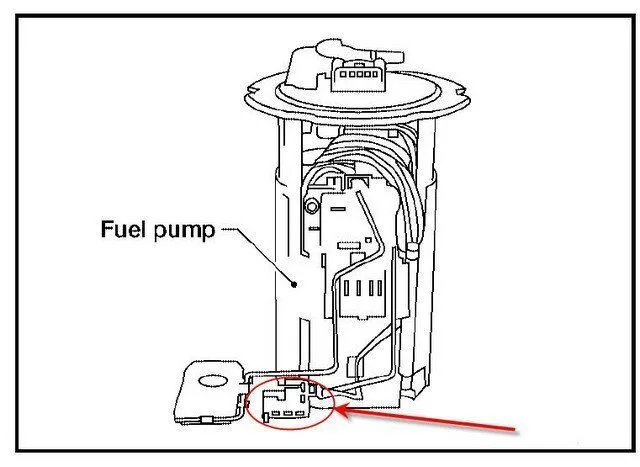
Diagram of a fuel temperature sensor

Symptoms of Code P0180

This code may initially show no noticeable symptoms, but the following signs can appear:

  • Illumination of the Malfunction Indicator Lamp (MIL)
  • Presence of other diagnostic trouble codes related to fuel composition
  • Abnormal mixture richness that can affect performance and fuel consumption

Possible Causes of the P0180 Fault

  • Faulty fuel temperature/composition sensor
  • Wiring problem (short circuit, open circuit, corroded or damaged connectors)
  • Failure of a related sensor (ambient temperature sensor, intake air temperature sensor)
  • PCM failure or programming error

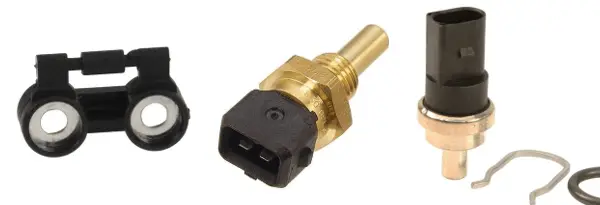
Different types of fuel temperature sensors

Diagnosis and Repair Procedures

Before any intervention, consult the manufacturer’s Technical Service Bulletins (TSBs). It might be a known issue with a documented solution.

Required Tools:

  • OBD2 diagnostic scanner
  • Digital multimeter (DVOM)
  • Oscilloscope (ideally integrated into some scanners)
  • Infrared thermometer
  • Technical documentation (AllData DIY, etc.)

Diagnostic Steps:

  1. Visual Inspection: Check the condition of the wires and connectors. Look for signs of corrosion, burning, or damage.
  2. Voltage Tests: Using the multimeter, check for the presence of the reference voltage (5V) and ground at the sensor connector. If absent, trace these circuits back to the PCM.
  3. Sensor Test: Disconnect the connector and measure the sensor’s resistance according to the manufacturer’s specifications.
  4. Data Comparison: Using the oscilloscope, observe the live signal. Compare the read temperature with the actual fuel temperature measured by the infrared thermometer. A discrepancy indicates a faulty sensor.

Important Note: Always disconnect the PCM before measuring resistances to avoid damaging it.

Conclusion and Call to Action

Code P0180 is a serious fault that should not be ignored, as it can disrupt the air-fuel mixture and potentially damage the catalytic converter over time. If the diagnostic procedures are beyond your skill level, consult a professional mechanic equipped with the necessary tools and expertise. To clear the code after repair, use a scanner and verify that all readiness monitors have passed.

P0181 Fuel Temperature Sensor A Circuit Range / Performance

Code P0181: Fuel Temperature Sensor A Circuit Range/Performance

The trouble code P0181 is a generic powertrain code, signaling a problem with the fuel temperature sensor signal. It indicates that the Powertrain Control Module (PCM) has detected a voltage from the Fuel Temperature Sensor A circuit that is outside its normal operating range. This code applies to most OBD-II equipped vehicles (Nissan, Ford, Fiat, Chevrolet, Toyota, Dodge, etc.), although specific diagnostic procedures may vary.

Role and Operation of the Fuel Temperature Sensor

The fuel temperature sensor is typically integrated into the fuel composition sensor. This assembly is located between the fuel tank and the fuel rail. Its role is crucial: it analyzes the fuel composition (ethanol content, presence of water, contaminants) and measures its temperature.

The sensor sends an electrical signal in the form of a square wave to the PCM:

  • Vertical Part (Frequency): Indicates the percentage of fuel contamination.
  • Horizontal Part (Pulse Width): Measures the fuel temperature. A wider pulse means a higher temperature, typically between 1 and 5 milliseconds.

If the PCM detects an illogical fuel temperature (out of range or inconsistent with ambient temperature), it records the P0181 code and may illuminate the Malfunction Indicator Lamp (MIL) after several drive cycles.

Symptoms of Code P0181

The severity of this code is high because fuel temperature is essential for calculating the injection strategy, especially on flex-fuel vehicles. Symptoms include:

  • Malfunction Indicator Lamp (MIL) illuminated.
  • Possible presence of other codes related to fuel composition.
  • Sometimes no visible symptoms are noticeable.
  • Disrupted air-fuel mixture ratio.

Possible Causes of Fault P0181

Several elements can be the origin of this error code:

  • Faulty Fuel Temperature/Composition Sensor: The most common cause.
  • Wiring Problems: Open circuits, short circuits, or damaged/corroded connectors.
  • Poor Reference Voltage (5V) or Ground at the sensor.
  • PCM Failure: A faulty control module or a programming error is rarer.
  • Problems with correlated sensors (ambient temperature, intake air temperature).

Diagnosis and Repair Procedures

WARNING: Always consult the manufacturer’s Technical Service Bulletins (TSBs) to check for a known issue with a documented solution.

To diagnose a P0181 code, you will need an OBD2 scanner, a digital multimeter (DVOM), possibly an oscilloscope, and an infrared thermometer.

  1. Visual Inspection: Start by carefully inspecting the wiring and connectors associated with the sensor. Look for signs of damage, corrosion, or burning.
  2. Voltage Check: Using the DVOM, check for the presence of the reference voltage (5V) and ground at the sensor connector (engine off).
    • If the voltage is absent, test the circuits back to the PCM connector.
    • If the voltage is absent at the PCM, suspect a faulty PCM.
  3. Sensor Test: If the power supply is good, measure the sensor’s resistance and compare it to the manufacturer’s specific values. Note: Always disconnect the sensor connector before measuring resistance.
  4. Test with Oscilloscope: For precise analysis, observe the live signal with an oscilloscope. Compare the actual fuel temperature (measured with an infrared thermometer) with the sensor reading displayed on the oscilloscope. A significant discrepancy indicates a faulty sensor.
  5. Replacement and Final Test: After replacing the sensor or repairing the wiring, clear the codes with your scanner and perform a road test to verify that the fault does not reappear and that all OBD-II monitors reach a “ready” status.

Conclusion and Call to Action

Code P0181 often points to a failing fuel temperature sensor or a wiring problem. A methodical diagnosis is essential to avoid replacing parts unnecessarily.

Are you experiencing this trouble code? Don’t let this problem affect your engine’s performance. If the diagnostic procedures are beyond your expertise, consult a professional mechanic for a reliable and lasting repair.