
P0360 Ignition Coil J Primary/Secondary Circuit Malfunction

What does it mean?

This diagnostic trouble code (DTC) is a generic powertrain code, meaning it applies to OBD-II equipped vehicles. Although generic, specific repair steps may vary by make/model.

The COP (coil-on-plug) ignition system is what’s used on most modern engines. There’s an individual coil for each cylinder that’s controlled by the PCM (powertrain control module)

It eliminates the need for spark plug wires by placing the coil right above the spark plug. Two wires are dedicated to each coil. One is a battery feed typically from the electrical distribution center. The other wire is the coil control circuit from the PCM. The PCM grounds/ungrounds this circuit to activate or deactivate the coil. The coil control circuit is monitored by the PCM for faults

If an open or short circuit is detected in the #10 coil control circuit, a P0360 may set. Additionally, depending on the vehicle, the PCM may also shut off the fuel injector for that cylinder as well.

Symptoms

Symptoms of a P0360 DTC may include:

MIL (malfunction indicator lamp) illumination
Engine misfire may be present or intermittent

Causes

Potential causes of a P0360 code include:

Short to voltage or ground on COP control circuit
Open in COP control circuit
Loose connection at coil or broken connector locks
Faulty coil (COP)
Defective powertrain control module

Possible Solutions

Is the engine currently misfiring? If not, the problem is likely intermittent. Try testing the wiring at coil #10 and along the wiring harness to the PCM. If manipulating the wiring causes a surface misfire, repair the wiring issue. Check for poor connection at the coil connector. Verify the harness isn’t improperly routed or rubbing against anything. Repair if necessary

If the engine is currently running poorly, stop the engine and disconnect the wiring connector from coil #10. Then start the engine and check for a control signal to coil #10. Using an oscilloscope will give you a visual pattern to observe, but since most people don’t have access to one, there’s a simpler way. Use a voltmeter set to AC Hertz scale and see if there’s a Hz reading between 5-20, indicating the driver is working. If there’s a Hz signal, replace ignition coil #10. It’s likely faulty. If you detect no frequency signal from the PCM on the ignition coil control circuit, indicating the PCM isn’t grounding/ungrounding the circuit (or if there’s no visible pattern on the oscilloscope if you have one), leave the coil disconnected and check DC voltage on the control circuit at the ignition coil connector. If there’s significant voltage on this wire, there’s a short somewhere. Find the short and repair it.

If there’s no voltage on the control circuit, turn off the ignition. Disconnect the PCM connector and check continuity of the control circuit between the PCM and the coil. If there’s no continuity, repair the open circuit or short to ground in the circuit. If continuity is present, check resistance between ground and the ignition coil connector. There should be infinite resistance. If there isn’t, repair the short to ground in the coil control circuit

NOTE: If the ignition coil control wire isn’t open or shorted to voltage or ground and there’s no trigger signal to the coil, suspect a faulty PCM coil driver. Also keep in mind that if the PCM driver has failed, there may be a wiring issue that caused the PCM failure. It’s a good idea to perform the above verification after PCM replacement to check there won’t be a repeat failure. If you find the engine isn’t misfiring, the coil is triggering properly but P0360 keeps resetting, the PCM coil monitoring system may be faulty.

P0361 Malfunction in Primary/Secondary Circuit of Ignition Coil K

What does it mean?

This diagnostic trouble code (DTC) is a generic powertrain code, meaning it applies to vehicles equipped with OBD-II. Although generic, specific repair steps may vary by brand/model.

The COP (coil-on-plug) ignition system is what is used on most modern engines. There is an individual coil for each cylinder that is controlled by the PCM (powertrain control module).

It eliminates the need for spark plug wires by placing the coil right above the spark plug. Two wires are dedicated to each coil. One is a battery supply typically from the electrical distribution center. The other wire is the coil control circuit from the PCM. The PCM grounds/ungrounds this circuit to activate or deactivate the coil. The coil control circuit is monitored by the PCM for faults.

If an open or short circuit is detected in the #11 coil control circuit, a P0361 may set. Additionally, depending on the vehicle, the PCM may also shut off the fuel injector for that cylinder as well.

Symptoms

Symptoms of a P0361 DTC may include:

MIL (malfunction indicator lamp) illumination
Engine misfire may be present or intermittent

Causes

Potential causes of a P0361 code include:

Short to voltage or ground on the COP control circuit
Open in the COP control circuit
Loose connection at the coil or broken connector locks
Faulty coil (COP)
Defective powertrain control module

Possible solutions

Is the engine currently misfiring? If not, the problem is likely intermittent. Try testing the wiring at the #11 coil and along the wiring harness to the PCM. If manipulating the wiring causes a surface misfire, repair the wiring issue. Check for poor connection at the coil connector. Verify the harness isn’t improperly routed or rubbing against anything. Repair as necessary.

If the engine is currently running poorly, stop the engine and disconnect the wiring connector from the #11 coil. Then start the engine and check for a control signal at the #11 coil. Using an oscilloscope will give you a visual pattern to observe, but since most people don’t have access to one, there’s a simpler way. Use a voltmeter on the AC Hertz scale and see if there’s a Hz reading between 5 and 20, which indicates the driver is working. If there is a Hertz signal, replace the #11 ignition coil. It’s probably bad. If you detect no frequency signal from the PCM on the ignition coil control circuit, indicating the PCM is not grounding/ungrounding the circuit (or if there’s no visible pattern on the oscilloscope if you have one), leave the coil disconnected and check DC voltage on the control circuit at the ignition coil connector. If there is significant voltage on this wire, there is a short somewhere. Find the short and repair it.

If there is no voltage on the control circuit, turn off the ignition. Disconnect the PCM connector and check continuity of the control circuit between the PCM and the coil. If there is no continuity, repair the open circuit or short to ground in the circuit. If continuity is present, check resistance between ground and the ignition coil connector. There should be infinite resistance. If there isn’t, repair the short to ground in the coil control circuit.

NOTE: If the ignition coil control circuit wire is not open or shorted to voltage or ground and there is no trigger signal to the coil, suspect a faulty PCM coil driver. Also keep in mind that if the PCM driver has failed, there may be a wiring issue that caused the PCM failure. It’s a good idea to perform the above verification after PCM replacement to check that there won’t be a repeat failure. If you find the engine isn’t misfiring, the coil is being triggered properly but P0361 is continuously resetting, there’s a possibility that the PCM coil monitoring system is faulty.

P0362 Ignition Coil L Primary/Secondary Circuit Malfunction

What does it mean?

This diagnostic trouble code (DTC) is a generic powertrain code, meaning it applies to OBD-II equipped vehicles. Although generic, specific repair steps may vary by make/model.

The COP (coil-on-plug) ignition system is what’s used on most modern engines. There’s an individual coil for each cylinder that’s controlled by the PCM (powertrain control module).

It eliminates the need for spark plug wires by placing the coil right above the spark plug. Two wires are dedicated to each coil. One is a battery feed typically from the electrical distribution center. The other wire is the coil control circuit from the PCM. The PCM grounds/ungrounds this circuit to activate or deactivate the coil. The coil control circuit is monitored by the PCM for faults.

If an open or short circuit is detected in the #12 coil control circuit, a P0362 may set. Additionally, depending on the vehicle, the PCM may also shut down the fuel injector for that cylinder as well.

Symptoms

Symptoms of a P0362 DTC may include:

• MIL (malfunction indicator lamp) illumination
• Engine misfire may be present or intermittent

Causes

Potential causes of a P0362 code include:

• Short to voltage or ground on COP control circuit
• Open in COP control circuit
• Loose connection at coil or broken connector locks
• Faulty coil (COP)
• Defective powertrain control module

Possible Solutions

Is the engine currently misfiring? If not, the problem is likely intermittent. Try testing the wiring at coil #12 and along the wiring harness to the PCM. If manipulating the wiring causes a surface misfire, repair the wiring issue. Check for poor connection at the coil connector. Verify the harness isn’t improperly routed or rubbing against anything. Repair as needed.

If the engine is currently running poorly, stop the engine and disconnect the wiring connector from coil #12. Then start the engine and check for a driver signal at coil #12. Using an oscilloscope will give you a visual pattern to observe, but since most people don’t have access to one, there’s a simpler way. Use a voltmeter on the AC Hertz scale and see if there’s a Hz reading between 5-20, which indicates the driver is working. If there’s a Hertz signal, replace ignition coil #12. It’s likely bad. If you detect no frequency signal from the PCM on the ignition coil control circuit, indicating the PCM is not grounding/ungrounding the circuit (or if there’s no visible pattern on the oscilloscope if you have one), leave the coil disconnected and check DC voltage on the control circuit at the ignition coil connector. If there’s significant voltage on this wire, there’s a short somewhere. Find the short and repair it.

If there’s no voltage on the control circuit, turn off the ignition. Disconnect the PCM connector and check continuity of the driver circuit between the PCM and the coil. If there’s no continuity, repair the open circuit or short to ground in the circuit. If continuity is present, check resistance between ground and the ignition coil connector. There should be infinite resistance. If there isn’t, repair the short to ground in the coil control circuit.

NOTE: If the ignition coil driver signal wire isn’t open or shorted to voltage or ground and there’s no trigger signal to the coil, suspect a faulty PCM coil driver. Also keep in mind that if the PCM driver has failed, there may be a wiring problem that caused the PCM failure. It’s a good idea to perform the above verification after PCM replacement to check that there won’t be a repeat failure. If you find the engine isn’t misfiring, the coil is being triggered properly but P0362 keeps resetting, there’s the possibility that the PCM coil monitoring system is faulty.

P0363 misfire detected – fuel supply disabled

P0363 misfire detected – fuel supply disabled

What does this mean?

This diagnostic code (DTC) is a generic powertrain code, meaning it applies to OBD-II equipped vehicles (BMW, Mini, Mazda, Ford, Hyundai, Chevrolet, etc.). Although generic, specific repair steps may vary by make/model.

When I find a stored P0363 code, I immediately know the Powertrain Control Module (PCM) has detected a misfire and disabled the fuel injector for the affected cylinder. I might also think – with relative certainty – that the vehicle in question is of European origin.

The PCM monitors variations in the Crankshaft Position Sensor (CPS) and Camshaft Position Sensor(s) (CMPS) input signals to determine if a misfire is present, and which cylinder is misfiring. Initially, when a misfire is detected, the Malfunction Indicator Lamp (MIL) may flash rapidly for a period and then stop (instead of staying on). The flashing MIL is intended to make the driver aware that current driving conditions, combined with a cylinder misfire, could damage the catalyst. Regardless of the MIL flashing, a misfire code should be stored; although it might be stored as a pending code.

In some vehicles (typically European varieties), when the PCM detects multiple ignition cycles with a misfire code, it will disable fuel delivery to the affected cylinder. This is usually accomplished by disabling the ground pulse to the fuel injector for that particular cylinder. It’s a good idea to interrupt fuel delivery to the specific cylinder because excess fuel can cause catalytic converter failure. However, for the novice technician, this can also cause confusion during testing. Learn more about the reason for this in the troubleshooting section.

When a misfire has been detected, a cylinder misfire code has been stored, and fuel delivery to the affected cylinder has been disabled, a P0363 code will be stored and an MIL may be illuminated. One or more cylinder misfire codes usually accompany this code.

Other misfire codes include P0300, P0301, P0302, P0303, P0304, etc.

Code Severity and Symptoms

A stored P0363 code is in reaction to one or more stored cylinder misfire codes which should be treated as severe in nature.

Symptoms of this code may include:

  • Rough or jerky engine operation, especially under acceleration
  • Decreased engine performance
  • Other misfire-related codes will likely be stored
  • MIL flash is a possibility

Possible causes for setting this code include:

  • Faulty spark plug(s)
  • Faulty ignition coil(s) or coil pack(s)
  • Moisture or oil in the spark plug well(s)
  • Cracked or torn spark plug wire(s) or spark plug boot(s)
  • Bad fuel injector(s)

Diagnostic and Repair Procedures

A good starting point is always to check Technical Service Bulletins (TSBs) for your particular vehicle. Your problem may be a known issue with a known fix published by the manufacturer and can save you time and money when diagnosing.

A diagnostic scanner and an accurate source of vehicle information (like All Data DIY) will be necessary to diagnose a P0363 code.

Since a P0363 code is essentially a reaction to a stored cylinder misfire code, you will need to diagnose all stored cylinder misfire codes (P0301 to P0312) before attempting to diagnose this code. While there are many tools designed to test ignition coil, spark plug, and fuel injector function, the simple method of swapping components between cylinders has proven effective for me for more years than I care to admit. This isn’t always possible with fuel injectors, but it works well with ignition coils and spark plugs, which fail much more regularly than fuel injectors. For more advice on diagnosing cylinder misfire codes, see the appropriate entry in the OBD II codes.

You will always need the scanner to retrieve stored codes and freeze frame data. The scanner is also used to clear codes after writing them down for reference as the diagnostic process continues. Once you have accomplished these tasks, clear the codes and you are ready to start swapping components for testing purposes. Obviously, spark plugs will need to be replaced in sets if the vehicle in question is near the recommended replacement interval. Nevertheless, locate the faulty part before performing any maintenance. When replacing an ignition coil for a particular cylinder, replacing the spark plug is recommended (unless the spark plugs were recently replaced). This will save you time in the long run.

The issue that creates a ton of confusion is that when some technicians find there is no ground pulse to the injector for the cylinder in question, they treat it as a malfunction instead of a reaction (caused by the PCM) to a misfire. This can make you chase your tail if you are unfamiliar with the fuel disable system used in some models.

If P0363 is stored without finding cylinder misfire codes, suspect a faulty PCM or PCM programming error.

Additional Diagnostic Notes:

The P0363 code must be cleared before the ground pulse is restored to the injector for the cylinder in question
When using the swapping method to test spark plugs, be careful when removing plugs from aluminum cylinder heads. The threads (in the aluminum) are very fragile and can be damaged if not allowed to cool properly.

P0364 Reserved

P012F ISO/SAE reserved

P0365 Camshaft Position Sensor “B” Circuit, Bank 1

What does it mean?


This diagnostic trouble code (DTC) is a generic powertrain code. It is considered generic because it applies to all makes and models of vehicles (1996-newer), although specific repair steps may vary slightly by model. Therefore, this engine code article applies to BMW, Toyota, Subaru, Honda, Hyundai, Dodge, Kia, Mitsubishi, Lexus, etc.

This P0365 code indicates that a problem has been detected in the camshaft position sensor circuit.

Since it says circuit, it means the problem could be in any part of the circuit – the sensor itself, the wiring, or the PCM. Do not just replace the CPS (camshaft position sensor) and assume it will definitely fix it.

Symptoms


Symptoms may include:

Hard starting or no start
Rough running / misfires
Loss of engine power
Check engine light illuminated

Causes


A P0365 code could mean that one or more of the following events have occurred:

A wire or connector in the circuit could be grounded / shorted / broken
The camshaft position sensor may have failed
The PCM may have failed
There is an open circuit
The crankshaft position sensor may have failed

Possible Solutions


With a P0365 OBD-II fault code, diagnosis can sometimes be tricky. Here are some tips to try:

Visually inspect all wiring and connectors in the “B” circuit
Check the wiring continuity of the circuit
Check the operation (voltage) of the camshaft position sensor
Replace the camshaft position sensor if necessary
Also check the crankshaft position circuit
Replace the circuit wiring and/or connectors as needed
Diagnose/replace the PCM as required

Related camshaft fault codes: P0340, P0341, P0342, P0343, P0345, P0347, P0348, P0349, P0366, P0367, P0368, P0369, P0390, P0366, P0392, P0393, P0394.

P0366 Camshaft Position Sensor B Circuit Range/Performance, Bank 1

What does it mean?

This is a generic diagnostic trouble code (DTC) for the powertrain, meaning it applies to all makes/models from 1996 and newer. Specific troubleshooting steps vary by vehicle.

This P0366 code essentially means that the Powertrain Control Module (PCM) has detected a problem with the “B” camshaft signal. This DTC relates to engine bank 1, which is the cylinder bank that contains cylinder #1.

The Camshaft Position Sensor (CPS) sends a specific signal to the PCM for Top Dead Center on the compression stroke as well as signals indicating the cam sensor position. This is accomplished via a reluctor wheel attached to the camshaft that passes by the cam sensor. Whenever the signal sent to the PCM does not match what it should be, this code is set. NOTE: This code can also be set by extended cranking periods.

Symptoms

The car will likely run with this code set, as it is often intermittent and also because the PCM can often run the vehicle in “limp-in/limp-home” mode even with a cam sensor signal problem. There may be no noticeable symptoms other than:

Poor fuel economy (if the engine runs)
No-start condition possible
Check Engine Light illuminated

Causes

A P0366 code can mean that one or more of the following has occurred:

Cam sensor wiring routed too close to spark plug wiring (causing interference)
Faulty wiring connection to the cam sensor
Faulty wiring connection to the PCM
Faulty “B” cam sensor on bank 1
Damaged reluctor wheel

Possible Solutions

NOTE: In some cases, this engine code is set on vehicles that do not actually have a camshaft position sensor. In these cases, it essentially means the engine is misfiring due to faulty spark plugs, spark plug wires, and often coils.

Often, replacing the sensor fixes this code, but not necessarily. Therefore, it is important to check the following:

Check that wiring is not routed too close to secondary ignition components (coil, spark plug wires, etc.)
Visually inspect the sensor wiring for any burn marks, discoloration indicating melting, or chafing
Visually inspect the cam sensor for any damage
Visually inspect the reluctor wheel through the cam sensor port (if possible) for any missing teeth or damage
If the reluctor is not visible from outside the engine, visual inspection can only be performed by removing the camshaft or intake manifold (depending on engine design)
If everything checks out, replace the sensor.

Related Camshaft Fault Codes: P0340, P0341, P0342, P0343, P0345, P0347, P0348, P0349, P0365, P0367, P0368, P0369, P0390, P0366, P0392, P0393, P0394.

P0367 Camshaft Position Sensor B Circuit, Bank 1

What does it mean?

This is a generic powertrain diagnostic trouble code (DTC), meaning it applies to all makes/models from 1996 onward. However, specific troubleshooting steps vary by vehicle.

The automotive fault code P0367 is one of several generic malfunction codes related to the camshaft position sensor (CPS). Fault codes P0365 through P0369 are all generic CPS-related codes indicating different reasons for failure.

In this case, code P0367 indicates the sensor signal is too weak or not strong enough. The signal is weak enough to be vague and difficult to interpret. P0367 refers to the “B” sensor on Bank 1. Bank 1 is the engine side containing cylinder #1.

Description and correlation of crankshaft and camshaft position sensors

In today’s vehicles, it’s important to understand what these sensors are and how they interact. All distributorless ignition vehicles use crank and cam sensors to replace the module and trigger wheel found in an electronic distributor.

The crankshaft position sensor (CPS) signals the engine control module the location of the pistons relative to top dead center in preparation for fuel injection and spark plug firing.

The camshaft position sensor (CMP) signals the position of the camshaft intake lobe relative to the CPS signal and the opening of the intake valve for fuel injection on each cylinder.

Description and location of sensors

Crank and cam sensors provide an “on/off” signal. Both are either Hall effect or magnetic.

A Hall effect sensor uses an electromagnetic sensor and a reluctor. The reluctor is shaped like small cups with squares cut out on the sides, making it look like a fence. The reluctor rotates while the sensor is stationary and mounted very close to the reluctor. Whenever a post passes by the sensor, a signal is produced, and when the post passes, the signal turns off.

A magnetic sensor uses a fixed sensor and a magnet attached to the rotating part. Whenever the magnet passes by the sensor, a signal is produced.

Locations

A Hall effect crank sensor is located on the harmonic balancer at the front of the engine. The magnetic sensor may be located on the side of the engine block where it uses the center of the crankshaft for a signal, or it may be in the bell housing where it uses the flywheel as a trigger.

The camshaft sensor mounts at the front or rear of the camshaft.

Note: For GM vehicles, this code description is slightly different; it refers to low CMP sensor circuit input conditions.

Symptoms

Symptoms may include:

Check engine light (malfunction indicator) illuminated with P0367 code set
Lack of power
Stumbling
Hard starting

Potential causes

Causes of this DTC may include:

Faulty “B” camshaft position sensor
“B” sensor harness open or shorted
Poor electrical connections
Faulty starter
Bad wiring to starter
Weak battery

Diagnostic and repair procedures

Consult technical service bulletins (TSBs) for anything related to this code. TSBs are a list of complaints and failures handled at the dealership level and the recommended fixes from manufacturers.

Check battery condition. A weak battery can cause the code to set.
Check all starter wiring. Look for corrosion, loose connections, or frayed insulation.
Check the connector on the “B” camshaft sensor. Look for corrosion and bent pins. Apply dielectric grease to the pins.
Check the starter for excessive draw indicating a weak starter.
Replace the camshaft position sensor.

CMP camshaft position sensor

P0368 Low Camshaft Position Sensor “B” Circuit

What does it mean?

This is a generic powertrain diagnostic trouble code (DTC), meaning it covers all makes/models from 2003 onward. The code appears more common on VW, Kia, Hyundai, Chevrolet, Toyota, and Ford vehicles, but any brand vehicle can be affected. Specific troubleshooting steps vary by vehicle.

These vehicles may have a single camshaft in-block or a single overhead camshaft (SOHC) or dual (DOHC), but this code is strictly concerned with the incoming signal from the Bank 1 “B” camshaft position sensor(s) missing, typically during engine startup. It is an electrical circuit fault. Bank #1 is the engine bank that contains cylinder #1.

The PCM uses the “B” camshaft position sensor to tell it when the crankshaft sensor signal is correct, when a given crankshaft position sensor signal is timed to cylinder #1 for timing, and it is also used for fuel injector timing/injection start.

Codes P0365 or P0366 may also be present alongside P0368. The only difference between these 3 codes is the duration of the issue and the type of electrical problem experienced by the sensor/circuit/engine controller. Troubleshooting steps may vary by manufacturer, camshaft position sensor type, and wire colors.

Symptoms

Symptoms of a P0368 engine code can include:

Check Engine Light illuminated
Bucking or Surging
Stalling, but may restart if the issue is inconsistent
May run fine until restarted; will not restart

Potential Causes

Typically, causes for this code are:

Open in the ground circuit to the “B” camshaft position sensor
Open in the signal circuit between the “B” camshaft position sensor and the PCM
Short to 5 volts in the camshaft position sensor signal circuit
Faulty camshaft position sensor – internal short to voltage

Diagnostic and Repair Procedures

A good starting point is always searching for a Technical Service Bulletin (TSB) for your specific vehicle. The vehicle manufacturer may have a PCM flash/reprogram to cover this issue, and it’s worth checking before discovering you’ve taken a long/wrong path.

Next, locate the “B” camshaft and crankshaft position sensors on your specific vehicle. Since they share common power and ground circuits, and this code focuses on the camshaft position sensor’s power and ground circuits, it makes sense to check them for any damage to either.

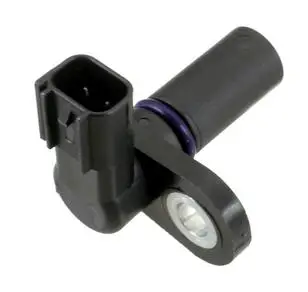
Example photo of a Camshaft Position Sensor (CMP):

Once located, visually inspect the connectors and wiring. Look for chafing, rubbing, bare wires, burns, or melted plastic. Separate the connectors and carefully inspect the terminals (the metal parts) inside the connectors. See if they look corroded, burnt, or perhaps greenish compared to the normal metallic color you’re probably used to seeing. You can get electrical contact cleaner at any auto parts store if terminal cleaning is needed. If not available, find 91% rubbing alcohol and a soft plastic-bristled brush to clean them. Then let them air dry, get some dielectric silicone compound (same as used for bulb sockets and spark plug wires), and apply it where the terminals make contact.

If you have a scan tool, clear the diagnostic codes from memory and see if this code returns. If not, the connections were likely your problem.

If the code returns, we’ll need to test the sensor and its associated circuits. There are generally 2 types of camshaft position sensors: Hall effect or magnetic sensor. You can usually tell which you have based on the number of wires from the sensor. If there are 3 wires from the sensor, it’s a Hall effect sensor. If it has 2 wires, it will be a magnetic pickup type sensor.

This code will only set if the sensor is a Hall effect sensor. Disconnect the harness going to the camshaft position sensor. With a digital voltmeter (DVOM), test the 5V power circuit going to the sensor to ensure it’s powered (red lead to the 5V/12V power circuit, black lead to a good ground). Check with a wiring diagram or diagnostic chart whether this sensor is supplied with 5 volts or 12 volts. If there are 12 volts at the sensor when there should be 5 volts, repair the wiring from the PCM to the sensor for a short to 12 volts, or possibly a faulty PCM.

If that’s okay, with a DVOM, check that the camshaft position sensor signal circuit is at 5V (red lead to the sensor signal circuit, black lead to a good ground). If there is no 5 volts at the sensor, or if you see 12 volts at the sensor, repair the wiring from the PCM to the sensor, or again a faulty PCM.

If that’s fine, check that you have a good ground at each sensor. Connect a test light to the positive 12V battery (red terminal) and touch the other end of the test light to the ground circuit going to the camshaft sensor circuit ground. If the test light does not illuminate, that would indicate the circuit problem. If it lights up, wiggle the wiring harness going to each sensor to see if the test light flickers, indicating an intermittent connection.

Related camshaft fault codes: P0340, P0341, P0342, P0343, P0344, P0345, P0346, P0347, P0348, P0349, P0365, P0366, P0367, P0369, P0390, P0391, P0392, P0394.

P0369 Camshaft Position Sensor “B”, Intermittent Circuit

What does it mean?

This is a generic powertrain diagnostic trouble code (DTC), meaning it covers all makes/models from 2003 onward. The code appears more commonly on Dodge, Chrysler, Ford, Honda, Jeep, BMW, and Acura vehicles, but any brand vehicle can be affected. Specific troubleshooting steps vary by vehicle.

These vehicles may have a single camshaft in-block or a single overhead camshaft (SOHC) or dual overhead camshafts (DOHC), but this code strictly concerns the incoming signal from the Bank 1 “B” camshaft position sensor(s) missing at a point when it shouldn’t be. This is an electrical circuit fault and is intermittent in nature. It is not present all the time. Bank #1 is the engine bank that contains cylinder #1.

The PCM uses the camshaft position sensor to tell it when the crankshaft sensor signal is correct, when a given crankshaft position sensor signal is synchronized on cylinder #1 for timing, and it is also used for fuel injector timing/injection start.

P0340 or P0341 codes may also be present alongside P0369. The only difference between these 3 codes is the duration of the issue and the type of electrical problem encountered by the sensor/circuit/engine controller. Troubleshooting steps can vary by manufacturer, camshaft position sensor type, and wire colors.

Symptoms

Symptoms of a P0369 engine code may include:

  • Check Engine Light illuminated
  • Intermittent stumbling or surging
  • Intermittently stalls but restarts immediately

Potential Causes

Typically, the causes for this code are:

Intermittent open in the “B” camshaft position sensor power circuit
Intermittent short to ground in the “B” camshaft position sensor power circuit
Intermittent open in the ground circuit to the camshaft position sensor
Intermittent open in the camshaft position sensor signal circuit
Intermittent short to 5 volts in the camshaft position sensor signal circuit
Intermittent short to ground in the camshaft position sensor signal circuit
Damage to the camshaft position sensor tone ring
Crankshaft position sensor occasionally producing intermittent signals

Diagnostic and Repair Procedures

A good starting point is always searching for a Technical Service Bulletin (TSB) for your specific vehicle. The vehicle manufacturer may have a PCM flash/reprogram to address this issue, and it’s worth checking before discovering you’ve taken a long/wrong path.

Next, locate the camshaft and crankshaft position sensors on your specific vehicle. Once located, visually inspect the connectors and wiring. Look for chafing, rubbing, bare wires, burns, or melted plastic. Disconnect the connectors and carefully inspect the terminals (the metal parts) inside the connectors. See if they appear corroded, burnt, or perhaps greenish compared to the normal metallic color you’re used to seeing. You can get electrical contact cleaner at any auto parts store if terminal cleaning is needed. If not available, find 91% isopropyl alcohol and a soft plastic-bristled brush to clean them. Then let them air dry, get some dielectric silicone compound (same as used for bulb sockets and spark plug wires), and apply a small amount where the terminals make contact.

If you have a scan tool, clear the diagnostic codes from memory and see if this code returns. If not, the connections were likely your problem.

If the code returns, we’ll need to test the “B” sensor and its associated circuits. The next steps will be determined by the type of sensor you have: Hall effect or magnetic sensor. You can usually tell which you have based on the number of wires from the sensor. If there are 3 wires from the sensor, it’s a Hall effect sensor. If it has 2 wires, it will be a magnetic pickup type sensor.
Hall Effect Sensor

If it’s a Hall effect sensor, disconnect the harness going to the camshaft and crankshaft position sensors. With a digital volt-ohm meter (DVOM), test the 5V power circuit going to each sensor to ensure it’s powered (red wire to the 5V power circuit, black wire to a good ground). If there’s no 5 volts at the sensor, repair the wiring from the PCM to the sensor, or possibly a faulty PCM.

If that’s okay, with a DVOM, check that you have 5V on each signal circuit going to each sensor to ensure it has a signal circuit (red wire to the sensor signal circuit, black wire to a good ground). If there’s no 5 volts at the sensor, repair the wiring from the PCM to the sensor, or possibly a faulty PCM.

If that’s okay, check that you have a good ground at each sensor. Connect a 12V test light and touch the other end of the test light to the ground circuit going to each sensor. If the test light doesn’t illuminate, that would indicate the circuit problem. If it does light up, wiggle the wire harness going to each sensor to see if the test light flickers, indicating an intermittent connection.

Magnetic Pickup Sensor

If it’s a magnetic pickup type sensor, we can check the sensor itself to see if it’s functioning properly. We’ll test it for:

Resistance
A/C voltage output
Short to ground

With the sensor disconnected, connect the two leads of your ohmmeter to the 2 terminals of the camshaft/crankshaft position sensor. Read the ohms resistance and compare it to your vehicle’s specifications: typically 750 – 2000 ohms. While still on ohms, disconnect 1 lead of your ohmmeter from the sensor and connect it to a good vehicle ground. If you get an ohms reading other than infinite or OL, the sensor has an internal short to ground. Remember not to touch the metal part of the leads with your fingers, as this could affect your readings.

Reconnect both leads of your DVOM to the 2 terminals of the camshaft/crankshaft position sensor. Set your meter to read A/C voltage. While cranking the engine, read the A/C voltage output on your DVOM. Compare to the manufacturer’s specifications for your vehicle. A good rule of thumb is typically 0.5 V AC.

Related camshaft fault codes: P0340, P0341, P0342, P0343, P0344, P0345, P0346, P0347, P0348, P0349, P0365, P0366, P0367, P0368, P0390, P0391, P0392, P0393.