
P0569 Cruise Control Signal Malfunction

What does it mean?

This is a generic diagnostic trouble code (DTC) for the powertrain and generally applies to OBD-II equipped vehicles with cruise control. This may include, but is not limited to, vehicles from Peugeot, Ford, Nissan, Chevrolet, Hyundai, VW, Audi, Citroen, etc. Although generic, the exact repair steps may vary depending on the year, make, model, and powertrain configuration.

In the vehicle’s cruise control option, there are many functions. The operator can not only set a specific vehicle speed, which can be automatically maintained using many sensors, switches, modules, among many other components, but you can also change the speed electronically (i.e., “set -” & “resume +”), temporarily change the speed while remembering the previous speed (e.g., overtaking vehicles, unexpected stopping/slowing down), among others.

Since most of the functions mentioned in the description of P0569 and related codes (P0565, P0566, P0567, P0568, P0570, etc.) are contained within a switch/component, it should be fairly straightforward to locate the input mechanisms (buttons, switches, conversations, etc.) involved. That said, some common names for these components are: Multifunction Switch, Steering Wheel Controls, Cruise Control Switch, Cruise Control Module, Accessory Switch, etc.

What happened, in the case of this code, is that the ECM (Engine Control Module) detected one or more malfunctions in the signal circuit. In other words, something went wrong in the circuit of the function mentioned in the description.

When the ECM detects a signal malfunction in one or more of the many cruise control functions, it illuminates the CEL (Check Engine Light) with P0569 and/or related codes. Most likely, the use of this function will be disabled and/or will behave abnormally.

The P0569 code is set when the ECM detects a signal malfunction in the system’s COAST signal.

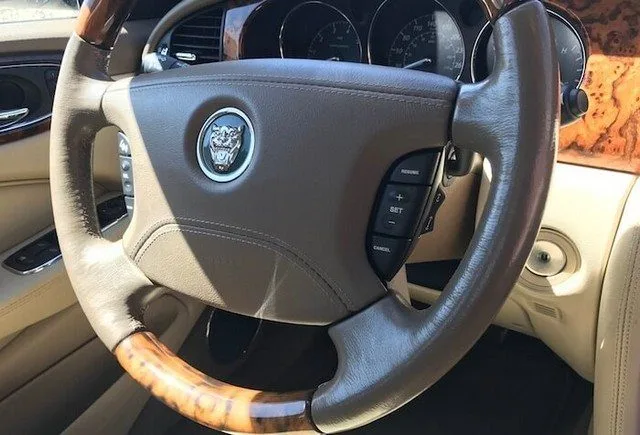
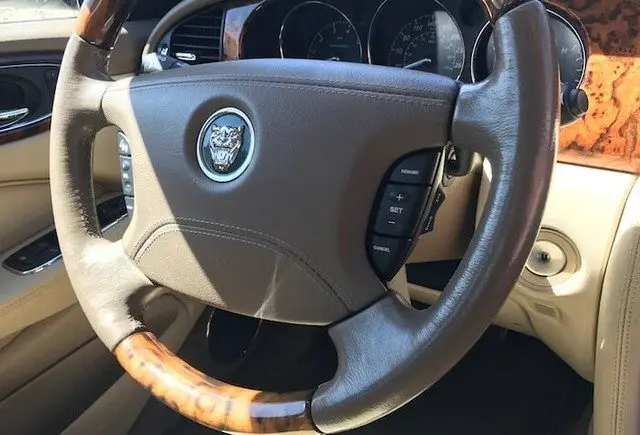
An example of cruise control buttons on a steering wheel:
How severe is this DTC?

The severity would be considered moderately low. Even if you lose all cruise control functionality, you can still operate safely. Regarding additional damage if not monitored, this would be the rare case where you might be able to neglect it if, say, your vehicle is old and you can live without cruise control, or you cannot afford to repair the vehicle.

That said, it is possible that neglecting ANY electrical issue long enough could lead to additional damage.
What are some of the symptoms of the code?

Symptoms of a P0569 fault code may include:

The cruise control indicator light on the dashboard does not illuminate or is steady
Inoperative cruise control
Unable to set the cruise control to the desired speed or the speed is irregular
Certain functions in the cruise control system are non-operational (e.g., Resume, Set, +, -, Coast, Accelerate)
Controls do not work consistently

What are some common causes of the code?

Causes

of this P0569 code may include:

Faulty and/or damaged cruise control switch or buttons inside the switch
Connector(s) not making a proper and effective electrical connection
Wire(s) in the cruise control harness have been stripped and/or damaged, causing a short circuit, open resistance, etc.
Cruise control switch assembly contaminated by liquid (coffee, soda, juice, etc.)
ECM problem
Faulty cruise control module
BCM (Body Control Module) problem
Overheated parts causing malfunction

What are the troubleshooting steps for P0569?
Basic Step #1

The first thing I would do here is visually inspect the cruise control switch/module. Sometimes buttons are missing, soda has jammed the button in one position, buttons are loose and not making proper electrical connections. That said, ensure that the buttons controlling the cruise functions move freely and are not contaminated by potentially damaging particles and/or dirt. You will also want to record ALL malfunctions or anomalies in the cruise functions.
Basic Step #2

Does the cruise control indicator light up in the instrument cluster when the cruise control is manually activated? If not, you may want to check if there is a fuse for the circuit. This information should be found in the make and model’s service manual. Replace any blown fuses with new, manufacturer-approved fuses.
Basic Step #3

To access the cruise control switch/module harness, generally, you will need to remove some dashboard parts (e.g., steering column cover, airbag module in the steering wheel, etc.). To locate the specific wire involved in the fault, you will certainly need an appropriate wiring diagram for your vehicle. These vary significantly for many reasons. Always obtain the proper service information BEFORE performing anything too invasive.
Basic Step #4

It’s a good idea to ensure that your ABS (anti-lock braking system) is in good working order and that no ABS light is illuminated on the dashboard. The ABS uses many sensors, including speed sensors that, if malfunctioning, could trick the computers into thinking the vehicle is traveling faster or slower than the actual speed.
P0567 Cruise Control Resume Signal Malfunction

Code P0567: Definition and Context

P0567 is a generic OBD-II code related to the cruise control’s “Resume” signal circuit. It indicates that the ECM (Engine Control Module) has detected an electrical anomaly in this circuit. This code primarily affects cruise control functions, especially speed resumption after braking or overtaking.


Severity

  • Moderate level: The vehicle remains usable, but cruise control may be disabled.
  • Secondary risk: Ignoring the issue could, rarely, worsen electrical faults (e.g., short circuits, ECM damage).

Common Symptoms

  • Cruise control inoperative or operating erratically.
  • Cruise control indicator light off or flashing on the dashboard.
  • “Resume,” “+,” “–” buttons unresponsive.

Possible Causes

  1. Mechanical/electrical failures:
  • Faulty cruise control switch (sticky buttons, oxidized contacts).
  • Damaged wires (exposed cables, short circuits).
  • Poorly secured or corroded connectors.
  1. Electronic issues:
  • Failure of the ECM or BCM (Body Control Module).
  • Defective cruise control module.
  1. External factors:
  • Spilled liquid on the switch (e.g., coffee, soda).
  • Overheating of electronic components.

Diagnostic Steps

  1. Visual inspection:
  • Check the switch (steering wheel or dashboard) for physical damage or dirt.
  • Test the buttons to ensure they operate freely.
  1. Fuse check:
  • Consult the vehicle manual to locate the cruise control fuse. Replace if necessary.
  1. Accessing the wiring harness:
  • Remove necessary components (e.g., steering wheel airbag, covers) to inspect wires and connectors.
  • Use a model-specific wiring diagram to identify the “Resume” signal wire.
  1. Checking related systems:
  • Ensure the ABS is functioning correctly (speed sensors affect cruise control).

Recommended Solutions

  • Cleaning/Repair: If the switch is contaminated, clean it with an appropriate product.
  • Replacement: Replace the switch, module, or damaged wires.
  • Electronic diagnosis: Use an OBD-II scanner to check related codes (e.g., P0565, P0570) and analyze real-time data.

Practical Tips

  • Avoid invasive repairs without an accurate electrical diagram.
  • Consult a certified mechanic if basic tests do not resolve the issue.
  • For recent vehicles, check for ECM software updates (some software bugs can simulate a P0567).

Summary

P0567 indicates a problem in the cruise control’s “Resume” circuit. Although not urgent, it requires inspection to prevent electrical complications. Start with simple checks (fuses, switch) before moving to complex tests.

P056A Cruise Control Increase Distance Signal

What does it mean?

This is a generic diagnostic trouble code (DTC) for the powertrain and generally applies to OBD-II equipped vehicles with cruise control. This may include, but is not limited to, vehicles from Peugeot, Ford, Nissan, Chevrolet, Hyundai, VW, Audi, Citroen, etc. Although generic, the exact repair steps may vary depending on the year, make, model, and powertrain configuration.

In the vehicle’s cruise control option, there are many functions. The operator can not only set a specific speed for the vehicle, which can be automatically maintained using many sensors, switches, modules, among many other components, but you can also change the speed electronically (i.e., “set -” & “resume +”), temporarily change the speed while remembering the previous speed (e.g., overtaking vehicles, unexpected stopping/slowing down), among others.

Since most of the functions mentioned in the description of P056A and related codes (P0565, P0566, P0567, P0568, P0570, etc.) are contained within a switch/component, it should be fairly straightforward to locate the input mechanisms (buttons, switches, conversations, etc.) involved. That said, some common names for said components are: Multifunction Switch, Steering Wheel Controls, Cruise Control Switch, Cruise Control Module, Accessory Switch, etc.

What happened, in the case of this code, is that the ECM (Engine Control Module) detected one or more malfunctions in the signal circuit. In other words, something went wrong in the circuit of the function mentioned in the description.

When the ECM detects a signal malfunction in one or more of the many cruise control functions, it illuminates the CEL (Check Engine Light) with P056A and/or related codes. Most likely, the use of this function will be disabled and/or will behave abnormally.

The P056A code is set when the ECM detects a malfunction in the INCREASE DISTANCE signal of the adaptive cruise control (ACC) system.

NOTE: ACC systems are not only complex in their design but also require special tools and/or diagnostic procedures to properly correct any present faults.

An example of cruise control buttons on a steering wheel:

How severe is this DTC?

The severity would be considered moderately low. Even if you lose all cruise control functionality, you can still operate safely. Regarding additional damage if left unaddressed, this would be the rare case where you might be able to neglect it if, say, your vehicle is old and you can live without cruise control, or you cannot afford to repair the vehicle.

That said, it is possible that neglecting ANY electrical issue long enough could lead to additional damage.
What are some of the symptoms of the code?

Symptoms of a P056A trouble code may include:

The cruise control indicator light on the dashboard does not illuminate or is steady
Inoperative cruise control
Unable to set the cruise control to the desired speed or the speed is irregular
Certain functions within the cruise control system are non-operational (e.g., Resume, Set, +, -, Coast, Accelerate)
Controls do not work consistently

What are some common causes of the code?

Causes

of this P056A code may include:

Faulty and/or damaged cruise control switch or buttons inside the switch
Connector(s) not making a proper and effective electrical connection
Wire(s) in the cruise control harness have been stripped and/or damaged, causing a short circuit, open circuit, resistance, etc.
Cruise control switch assembly contaminated by liquid (coffee, soda, juice, etc.)
ECM problem
Faulty cruise control module
BCM (Body Control Module) problem
Overheated parts causing malfunction

What are the troubleshooting steps for P056A?
Basic Step #1

The first thing I would do here is visually inspect the cruise control switch/module. Sometimes buttons are missing, soda has jammed the button in one position, buttons are loose and not making the proper electrical connections. That said, ensure that the buttons controlling the cruise functions move freely and are not contaminated by potentially damaging particles and/or dirt. You will also want to record ALL malfunctions or anomalies of the cruise functions.
Basic Step #2

Does the cruise control indicator light illuminate in the instrument cluster when the cruise control is manually activated? If not, you may want to check if there is a fuse for the circuit. This information should be found in the make and model’s service manual. Replace any blown fuses with new, manufacturer-approved fuses.
Basic Step #3

To access the cruise control switch/module harness, as a rule, you will need to remove some dashboard parts (e.g., steering column cover, airbag module in the steering wheel, etc.). To locate the specific wire involved in the fault, you will certainly need the appropriate wiring diagram for your vehicle. These vary considerably for many reasons. Always obtain the proper service information BEFORE performing anything too invasive.
Basic Step #4

It’s a good idea to ensure that your ABS (anti-lock braking system) is in good working order and that no ABS warning light is illuminated on the dashboard. The ABS uses many sensors, including speed sensors which, if malfunctioning, could trick the computers into thinking the vehicle is traveling faster or slower than the actual speed.

P056B Cruise Control Distance Reduction Signal

What Does It Mean?

This is a generic powertrain diagnostic trouble code (DTC) and generally applies to OBD-II equipped vehicles with cruise control. This may include, but is not limited to, vehicles from Peugeot, Ford, Nissan, Chevrolet, Hyundai, VW, Audi, Citroen, etc. Although generic, the exact repair steps may vary depending on the year, make, model, and powertrain configuration.

In the vehicle’s cruise control option, there are many functions. The operator can not only set a specific speed for the vehicle, which can be automatically maintained using many sensors, switches, modules, among many other components, but you can also change the speed electronically (i.e., “set -” & “resume +”), temporarily change the speed while remembering the previous speed (e.g., overtaking vehicles, unexpected stopping/slowing down), among others.

Since most of the functions mentioned in the description of P056B and related codes (P0565, P0566, P0567, P0568, P0570, etc.) are contained within a switch/component, it should be fairly straightforward to locate the input mechanisms (buttons, switches, controls, etc.) involved. That said, some common names for these components are: Multifunction Switch, Steering Wheel Controls, Cruise Control Switch, Cruise Control Module, Accessory Switch, etc.

What happened, in the case of this code, is that the ECM (Engine Control Module) detected one or more malfunctions in the signal circuit. In other words, something went wrong in the circuit of the function mentioned in the description.

When the ECM detects a signal malfunction in one or more of the many cruise control functions, it illuminates the CEL (Check Engine Light) with P056B and/or related codes. Most likely, the use of this function will be disabled and/or will behave abnormally.

The P056B code is set when the ECM detects a malfunction in the DECREASE DISTANCE signal of the adaptive cruise control (ACC) system.

NOTE: ACC systems are not only complex in their design but also require special tools and/or diagnostic procedures to properly correct any existing faults.

An example of cruise control buttons on a steering wheel:


P056B Cruise Control Buttons on the Steering Wheel
How Severe Is This DTC?

The severity would be considered moderately low. Even if you lose all cruise control functionality, you can still operate safely. Regarding additional damage if not monitored, this would be the rare case where you might be able to neglect it if, say, your vehicle is old and you can live without cruise control, or you cannot afford to repair the vehicle.

That said, it is possible that neglecting ANY electrical issue long enough could lead to additional damage.
What Are Some of the Symptoms of the Code?

Symptoms of a P056B trouble code may include:

The cruise control indicator light on the dashboard does not illuminate or is stuck
Inoperative cruise control
Unable to set the cruise control to the desired speed or the speed is erratic
Certain functions in the cruise control system are non-operational (e.g., Resume, Set, +, -, Coast, Accelerate)
Controls do not work consistently

What Are Some Common Causes of the Code?

Causes

of this P056B code may include:

Faulty and/or damaged cruise control switch or buttons inside the switch
Connector(s) not making a proper and effective electrical connection
Wire(s) in the cruise control harness have been scraped and/or damaged, causing a short circuit, open circuit, resistance, etc.
Cruise control switch assembly contaminated by liquid (coffee, soda, juice, etc.)
ECM problem
Faulty cruise control module
BCM (Body Control Module) problem
Overheated parts causing malfunction

What Are the Troubleshooting Steps for P056B?
Basic Step #1

The first thing I would do here is visually inspect the cruise control switch/module. Sometimes buttons are missing, soda has jammed the button in one position, buttons are loose and not making the proper electrical connections. That said, ensure that the buttons controlling the cruise functions move freely and are not contaminated by potentially damaging particles and/or dirt. You will also want to note ALL malfunctions or anomalies in the cruise functions.
Basic Step #2

Does the cruise control indicator light up in the instrument cluster when the cruise control is manually activated? If not, you may want to check if there is a fuse for the circuit. This information should be found in the make and model’s service manual. Replace any blown fuses with new, manufacturer-approved fuses.
Basic Step #3

To access the cruise control switch/module harness, typically, you will need to remove some dashboard parts (e.g., steering column cover, airbag module in the steering wheel, etc.). To locate the specific wire involved in the fault, you will certainly need the appropriate wiring diagram for your vehicle. These vary significantly for many reasons. Always obtain the proper service information BEFORE performing anything too invasive.
Basic Step #4

It is a good idea to ensure that your ABS (anti-lock braking system) is in good working order and that no ABS light is illuminated on the dashboard. The ABS uses many sensors, including speed sensors that, if malfunctioning, could trick the computers into thinking the vehicle is traveling faster or slower than the actual speed.

P056C, P056D, P056E, P056F ISO/SAE Reserved

P011E, P011F ISO/SAE reserved

P0574 Cruise Control – Vehicle Speed Too High

What does it mean?

This is a generic diagnostic trouble code (DTC) for the powertrain and generally applies to OBD-II equipped vehicles with cruise control. This may include, but is not limited to, vehicles from Peugeot, Ford, Nissan, Chevrolet, Hyundai, VW, Audi, Citroen, etc. Although generic, the exact repair steps may vary depending on the year, make, model, and powertrain configuration.

In the vehicle’s cruise control option, there are many functions. The operator can not only set a specific speed for the vehicle, which can be automatically maintained using many sensors, switches, modules, among many other components, but you can also change the speed electronically (i.e., “set -” & “resume +”), temporarily change the speed while remembering the previous speed (e.g., overtaking vehicles, unexpected stopping/slowing down), among others.

Since most of the functions mentioned in the description of P0574 and related codes (P0565, P0566, P0567, P0568, P0569, etc.) are contained within a switch/component, it should be fairly straightforward to locate the input mechanisms (buttons, switches, controls, etc.) involved. That said, some common names for these components are: Multifunction Switch, Steering Wheel Controls, Cruise Control Switch, Cruise Control Module, Accessory Switch, etc.

What happened, in the case of this code, is that the ECM (Engine Control Module) detected one or more malfunctions in the signal circuit. In other words, something went wrong in the circuit of the function mentioned in the description.

When the ECM detects a signal malfunction in one or more of the many cruise control functions, it illuminates the CEL (Check Engine Light) with P0574 and/or related codes. Most likely, the use of this function will be disabled and/or will behave abnormally.

The P0574 code is set when the ECM detects that the vehicle’s speed is significantly higher than the desired speed as set by the cruise control system.

P0574 Cruise Control Buttons on the Steering Wheel
How severe is this DTC?

The severity would be considered moderately low. Even if you lose all cruise control functionality, you can still operate safely. Regarding additional damage if not addressed, this would be a rare case where you might be able to neglect it if, say, your vehicle is old and you can live without cruise control, or you cannot afford to repair the vehicle.

That said, it is possible that neglecting ANY electrical issue long enough could lead to additional damage.
What are some of the symptoms of the code?

Symptoms of a P0574 trouble code may include:

The cruise control indicator on the dashboard does not light up or is stuck
Cruise control inoperative
Unable to set the cruise control to the desired speed or the speed is erratic
Certain functions in the cruise control system are non-operational (e.g., Resume, Set, +, -, Coast, Accelerate)
Controls do not work consistently

What are some common causes of the code?

Causes

of this P0574 code may include:

Cruise control switch or buttons inside the switch, faulty and/or damaged
Connector(s) not making a proper and effective electrical connection
Wire(s) in the cruise control harness have been chafed and/or damaged, causing a short circuit, open circuit, resistance, etc.
Cruise control switch assembly contaminated by liquid (coffee, soda, juice, etc.)
ECM problem
Faulty cruise control module
BCM (Body Control Module) problem
Overheated parts causing malfunction

What are the troubleshooting steps for P0574?
Basic Step #1

The first thing I would do here is visually inspect the cruise control switch/module. Sometimes buttons are missing, soda has jammed a button in one position, buttons are loose and not making proper electrical connections. That said, ensure that the buttons controlling the cruise functions move freely and are not contaminated by potentially damaging particles and/or dirt. You will also want to record ALL malfunctions or anomalies of the cruise functions.
Basic Step #2

Does the cruise control indicator light up in the instrument cluster when the cruise control is manually activated? If not, you may want to check if there is a fuse for the circuit. This information should be found in the make and model’s service manual. Replace any blown fuses with new, manufacturer-approved fuses.
Basic Step #3

To access the cruise control switch/module harness, typically, you will need to remove some dashboard parts (e.g., steering column cover, airbag module in the steering wheel, etc.). To locate the specific wire involved in the fault, you will certainly need the appropriate wiring diagram for your vehicle. These vary significantly for many reasons. Always obtain the proper service information BEFORE performing anything too invasive.
Basic Step #4

It is a good idea to ensure that your ABS (Anti-lock Braking System) is in good working order and that no ABS light is illuminated on the dashboard. The ABS uses many sensors, including speed sensors, which, if malfunctioning, could trick the computers into believing the vehicle is traveling faster or slower than the actual speed.

P0572 Cruise Control / Brake Switch A, Circuit Low

What Does It Mean?

This is a generic diagnostic trouble code (DTC) for the powertrain and generally applies to OBD-II vehicles. Vehicle brands may include, but are not limited to, Chevrolet, GMC, VW, Audi, Dodge, Jeep, Volkswagen, Volvo, Peugeot, Ram, Chrysler, Kia, Mazda, Harley, Cadillac, etc.

The ECM (Engine Control Module), among many other modules, not only monitors the various sensors and switches involved in the proper functionality of the engine, but it also ensures to maintain the comfort of our creatures in place (e.g., cruise control).

Many factors can alter your vehicle’s speed when driving on the road. Some of the new adaptive cruise control (ACC) systems actually adjust vehicle speeds based on the environment (e.g., overtaking, slowing traffic, lane departure, emergency maneuvers, etc.).

Beyond the point, with this fault, they refer to the malfunction of the cruise control/brake switch circuit “A”. The proper functioning of the brake switch is an integral part of your cruise control operation. Since one of the many ways to deactivate or turn off cruise control is to press the brake pedal, you will want to take care of it. Especially if you use cruise control in your daily commutes. In this case, the designated letter – “A” – may refer to a specific wire, connector, harness, etc. To determine which one this code refers to, you will need to consult the appropriate manufacturer-specific service manual. If you are having trouble finding what you need, it is always a good idea to look for a wiring diagram for the cruise control. These diagrams, often, can provide you with valuable information (sometimes the location, specifications, wire colors, etc.).

The P0572 cruise control/brake switch A circuit low and related codes (P0571 and P0573) are defined when the ECM (Engine Control Module) detects a malfunction in the cruise control/brake switch circuit “A”. In this case, it means there is a low voltage condition detected in the circuit.

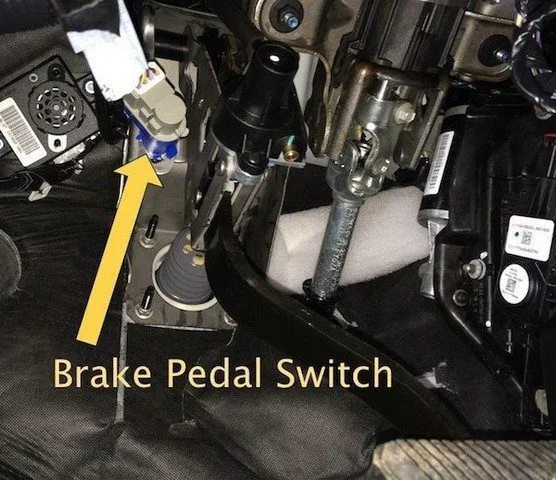
Example of a Brake Switch and Its Location:

How Severe Is This DTC?

Usually, with cruise control systems, I would say the severity is set to low. But in this case, I will go with moderately severe. The fact that there is a possibility that this fault could cause a malfunction of the brake switch, or vice versa, is a significant concern.

One of the other functions of your brake switch is to provide the signal to turn on your rear brake lights to inform other drivers of your deceleration/braking. That said, its operation is quite important when considering the overall safety of the driver.
What Are Some of the Symptoms of the Code?

Symptoms of a P0572 Diagnostic Code May Include:

Cruise control completely inoperative
Irregular cruise control operation
Certain functions not working as they should (e.g., set, resume, accelerate, etc.)
Cruise control on but without engagement
No brake lights if the brake light switch is faulty

What Are Some of the Common Causes of the Code?

Causes

of This P0572 Cruise Control Code May Include:

Faulty cruise control/brake switch
Wiring issue (e.g., pinched on the brake pedal, chafed, etc.)
ECM (Engine Control Module) problem (i.e., internal short circuit, open circuit, etc.)
Debris/dirt mechanically interfering with the brake switch operation
Misadjusted brake switch
Brake switch out of its mount

What Are the Diagnostic and Troubleshooting Steps for P0572?

The first step in the troubleshooting process for any malfunction is to check the Technical Service Bulletins (TSBs) for known issues with the specific vehicle.

Advanced diagnostic steps become very vehicle-specific and may require the appropriate advanced equipment and knowledge to operate accurately. We include the basic steps below, but refer to a repair guide specific to the year/make/model/powertrain for steps specific to your vehicle.
Basic Step #1

The first thing I would do in this case is probably take a look under the dashboard and inspect the brake switch right away. It is usually mounted on the brake pedal arm itself. I have sometimes seen the driver’s foot completely knock the switch off its mount, so I mean if it is not mounted properly and/or completely broken, you will be able to tell immediately and potentially save yourself time and shop fees.

So, that said, if that is the case, I would recommend replacing the cruise control/brake switch with a new one. Be sure to follow the manufacturer-specific brake switch installation and adjustment procedures to avoid damaging the sensor or even causing more problems.
Basic Step #2

Check the affected circuit. Refer to a wiring diagram in your service manual to determine the color codes and circuit designation for the cruise control/brake switch A. Often, to rule out the possibility that the fault is present in the harness itself, you can disconnect one end from the brake switch and the other from the ECM. Using a multimeter, there are many tests you can perform. A common test is a continuity test. The specifications provided by the manufacturer are necessary to compare actual values to desired ones. Generally, you will check the resistance of the particular circuit to determine any open circuits, high resistances, etc., present. If you perform this test, it would be a good idea to inspect the connector pins, the switch, and the ECM. Sometimes, moisture can seep in and cause intermittent connections. If there is corrosion, use an electrical connection cleaner to remove it before reconnecting everything.
Basic Step #3

Take a look at your ECM (Engine Control Module). It is important to note that sometimes with cruise control, it is the BCM (Body Control Module) that monitors and adjusts this system. Identify which one your system uses and physically inspect for any water intrusion. Anything suspicious here? Take the vehicle to your reputable shop/dealer.

P0573 Cruise Control/Brake Switch A Circuit High

What does it mean?

This is a generic diagnostic trouble code (DTC) for the powertrain and generally applies to OBD-II vehicles. Vehicle brands may include, but are not limited to, Chevrolet, GMC, VW, Audi, Dodge, Jeep, Volkswagen, Volvo, Peugeot, Ram, Chrysler, Kia, Mazda, Harley, Cadillac, etc.

The ECM (Engine Control Module), among many other modules, not only monitors the various sensors and switches involved in the proper functionality of the engine but also ensures to maintain the comfort of our creatures in place (e.g., cruise control).

Many factors can alter your vehicle’s speed when driving on the road. Some of the new adaptive cruise control (ACC) systems actually adjust vehicle speeds based on the environment (e.g., overtaking, slowing traffic, lane departure, emergency maneuvers, etc.).

Beyond the point, with this fault, they refer to the malfunction of the cruise control/brake switch “A” circuit. The proper operation of the brake switch is an integral part of your cruise control’s function. Since one of the many ways to deactivate or turn off cruise control is by pressing the brake pedal, you’ll want to address this. Especially if you use cruise control in your daily commutes. In this case, the designated letter – “A” – may refer to a specific wire, connector, harness, etc. To determine which one this code refers to, you will need to consult the appropriate manufacturer-specific service manual. If you’re having trouble finding what you need, it’s always a good idea to look for a wiring diagram for the cruise control. These diagrams can often provide valuable information (sometimes location, specifications, wire colors, etc.).

The P0573 cruise control/brake switch A circuit high and related codes (P0571 and P0572) are defined when the ECM (Engine Control Module) detects a malfunction in the cruise control/brake switch “A” circuit. In this case, it means there is a high electrical condition detected in the circuit.

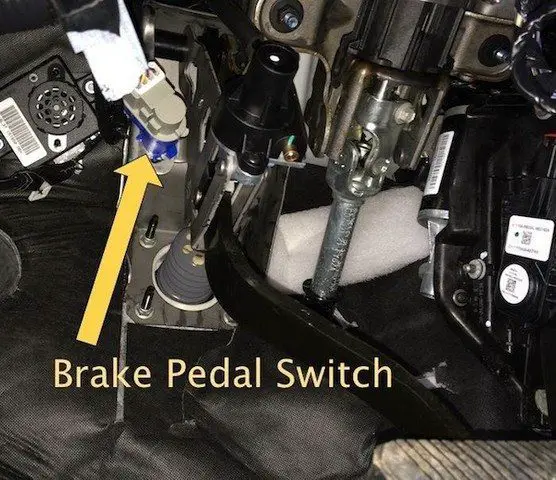
Example of a brake switch and its location:


P0573 Brake Switch

How severe is this DTC?

Usually, with cruise control systems, I would say the severity is set to low. But in this case, I’ll go with moderately severe. The fact that there is a possibility this fault could cause a malfunction of the brake switch, or vice versa, is a significant concern.

One of the other functions of your brake switch is to provide the signal to turn on your rear brake lights to inform other drivers of your deceleration/braking. That said, its operation is quite important when considering overall driver safety.

What are some of the symptoms of the code?

Symptoms of a P0573 diagnostic code may include:

  • Cruise control completely inoperative
  • Erratic cruise control operation
  • Certain functions not working as they should (e.g., set, resume, accelerate, etc.)
  • Cruise control on but not engaging
  • No brake lights if the brake light switch is faulty

What are some common causes of the code?

Causes of this P0573 cruise control code may include:

  • Faulty cruise control/brake switch
  • Wiring issue (e.g., pinched on the brake pedal, chafed, etc.)
  • ECM (Engine Control Module) problem (i.e., internal short, open circuit, etc.)
  • Debris/dirt mechanically interfering with the brake switch operation
  • Misadjusted brake switch
  • Brake switch out of its mount

What are the diagnostic and troubleshooting steps for P0573?

The first step in the troubleshooting process for any malfunction is to check the Technical Service Bulletins (TSBs) for known issues with the specific vehicle.

Advanced diagnostic steps become very vehicle-specific and may require the appropriate equipment and advanced knowledge to operate accurately. We include the basic steps below but refer to a repair guide specific to the year/make/model/powertrain for steps tailored to your vehicle.

Basic Step #1

The first thing I would do in this case is probably take a look under the dashboard and inspect the brake switch right away. It is usually mounted on the brake pedal arm itself. I’ve sometimes seen the driver’s foot completely knock the switch off its mount, so I mean if it’s not mounted properly and/or completely broken, you’ll be able to tell immediately and potentially save yourself time and shop fees.

So, that said, if that is the case, I would recommend replacing the cruise control/brake switch with a new one. Be sure to follow the manufacturer-specific installation and adjustment procedures for brake switches to avoid damaging the sensor or even causing more problems.

Basic Step #2

Check the affected circuit. Refer to a wiring diagram in your service manual to determine the color codes and circuit designation for the cruise control/brake switch A. Often, to rule out the possibility that the fault lies in the harness itself, you can disconnect one end at the brake switch and the other at the ECM. Using a multimeter, there are many tests you can perform. A common test is a continuity test. Specifications provided by the manufacturer are necessary to compare actual values to desired ones. Generally, you will check the resistance of the particular circuit to determine any open circuits, high resistances, etc., present. If you perform this test, it would be a good idea to inspect the connector pins, the switch, and the ECM. Sometimes, moisture can seep in and cause intermittent connections. If corrosion is present, use an electrical connection cleaner to remove it before reconnecting everything.

Basic Step #3

Take a look at your ECM (Engine Control Module). It’s important to note that sometimes with cruise control, it’s the BCM (Body Control Module) that monitors and adjusts this system. Identify which one your system uses and physically inspect for any water intrusion. Anything suspicious here? Take the vehicle to your reputable shop/dealer.

P0570 Cruise Control Accelerator Signal Malfunction

What Does It Mean?

This is a generic diagnostic trouble code (DTC) for the powertrain and generally applies to OBD-II equipped vehicles with cruise control. This may include, but is not limited to, vehicles from Peugeot, Ford, Nissan, Chevrolet, Hyundai, VW, Audi, Citroen, etc. Although generic, the exact repair steps may vary depending on the year, make, model, and powertrain configuration.

In the vehicle’s cruise control option, there are many functions. The operator can not only set a specific speed for the vehicle, which can be automatically maintained using many sensors, switches, modules, among many other components, but you can also change the speed electronically (i.e., “set -” & “resume +”), temporarily change the speed while remembering the previous speed (e.g., overtaking vehicles, unexpected stopping/slowing down), among others.

Since most of the functions mentioned in the description of P0570 and related codes (P0565, P0566, P0567, P0568, P0569, etc.) are contained within a switch/component, it should be fairly straightforward to locate the input mechanisms (buttons, switches, controls, etc.) involved. That said, some common names for these components are: Multifunction Switch, Steering Wheel Controls, Cruise Control Switch, Cruise Control Module, Accessory Switch, etc.

What happened, in the case of this code, is that the ECM (Engine Control Module) detected one or more malfunctions in the signal circuit. In other words, something went wrong in the circuit of the function mentioned in the description.

When the ECM detects a signal malfunction in one or more of the many cruise control functions, it illuminates the CEL (Check Engine Light) with P0570 and/or related codes. Most likely, the use of this function will be disabled and/or will behave abnormally.

The P0570 code is set when the ECM detects a signal malfunction in the ACCEL (acceleration) signal of the system.

An example of cruise control buttons on a steering wheel:
P0570 Cruise Control Buttons on the Steering Wheel
How Severe Is This DTC?

The severity would be considered moderately low. Even if you lose all cruise control functionality, you can still operate safely. Regarding additional damage if not monitored, this would be a rare case where you might be able to neglect it if, say, your vehicle is old and you can live without cruise control, or you cannot afford to repair the vehicle.

That said, it is possible that neglecting ANY electrical issue long enough could lead to additional damage.
What Are Some of the Symptoms of the Code?

Symptoms of a P0570 fault code may include:

    Cruise control indicator on the dashboard does not illuminate or is stuck
    Cruise control inoperative
    Unable to set cruise control to the desired speed or speed is erratic
    Certain functions in the cruise control system non-operational (e.g., Resume, Set, +, -, Coast, Accelerate)
    Controls do not work consistently

What Are Some Common Causes of the Code?

Causes

of this P0570 code may include:

    Cruise control switch or buttons inside the switch, faulty and/or damaged
    Connector(s) not making proper and effective electrical connection
    Wire(s) in the cruise control harness have been chafed and/or damaged, causing a short circuit, open circuit, resistance, etc.
    Cruise control switch assembly contaminated by liquid (coffee, soda, juice, etc.)
    ECM problem
    Faulty cruise control module
    BCM (Body Control Module) problem
    Overheated parts causing malfunction

What are the troubleshooting steps for P0570?
Basic Step #1

The first thing I would do here is visually inspect the cruise control switch/module. Sometimes buttons are missing, soda has jammed the button in one position, buttons are loose and not making proper electrical connections. That said, ensure the buttons that control the cruise functions move freely and are not contaminated by potentially damaging particles and/or dirt. You will also want to record ALL malfunctions or anomalies of the cruise functions.
Basic Step #2

Does the cruise control indicator light up in the instrument cluster when cruise control is manually activated? If not, you may want to check if there is a fuse for the circuit. This information should be found in the brand and model’s service manual. Replace any blown fuses with new, manufacturer-approved fuses.
Basic Step #3

To access the cruise control switch/module harness, typically, you will need to remove some dashboard parts (e.g., steering column cover, airbag module in the steering wheel, etc.). To locate the specific wire involved in the fault, you will certainly need an appropriate wiring diagram for your vehicle. These vary significantly for many reasons. Always obtain the proper service information BEFORE performing anything too invasive.
Basic Step #4

It’s a good idea to ensure your ABS (Anti-lock Braking System) is in good working order and that no ABS light is illuminated on the dashboard. ABS uses many sensors, including wheel speed sensors, which, if malfunctioning, could trick the computers into thinking the vehicle is moving faster or slower than the actual speed.

P0575 Cruise Control Input Circuit

What Does It Mean?

This is a generic powertrain diagnostic trouble code (DTC) and generally applies to OBD-II equipped vehicles with cruise control. Vehicle makes may include, but are not limited to, Chevrolet (Chevy), Toyota, Ford, Harley, Dodge, Ram, Ford, etc.

The ECM (Engine Control Module) spends most of its time ensuring your engine runs as it should while keeping the manufacturer’s emissions, fuel economy, performance, noise, and comfort functions at acceptable levels. Cruise control is a great feature for long trips since you don’t need to control the vehicle’s speed. The ECM can handle it as long as the cruise control is free from any faults. If you’re reading this, your cruise control has likely stopped working. A good sign that the cruise control has been completely disabled by the ECM is that the cruise control indicator light on the dashboard does not illuminate when you try to activate it.

Generally, this fault code means that the command input has experienced an electrical malfunction originating from many potential causes. The cruise control input circuit P0575 and related codes (P0576 and P0577) are defined when the ECM detects a malfunction in the cruise control input circuit; in this case, it means there is a general, non-specific malfunction.

Cruise Control Switches:


P0575 Brake Switch
How Severe Is This DTC?

This particular code is actually a minor issue that does not require immediate repair because engine performance will not suffer, allowing the vehicle itself to be operational. Not being able to use cruise control is the only major problem with this type of code.

That said, it is important to note that when the ECM displays a P0575, or any other P code for that matter, the vehicle may not be able to pass an emissions test. This is why clearing the code after each repair is essential before performing a new test. The mechanic will not be able to identify the exact problem if it is ignored, and it could lead to more serious issues in the future.
What Are Some of the Symptoms of the Code?

The most common symptom regarding the P0575 code is the fact that the cruise control itself or one of its functions stops working. Other potential symptoms may include:

CEL (Check Engine Light) will illuminate after a few driving cycles once the ECM has detected a problem
Irregular or intermittent operation of cruise control functions
The cruise control indicator light is constantly on or does not illuminate

What Are Some of the Common Causes of the Code?

Causes

of this P0575 cruise control code can include:

The most common cause of abnormal voltage/resistance level in the cruise control input circuit is a faulty cruise control switch, which could be caused by spilled liquids short-circuiting the device and/or the circuits inside.
Wiring problem (e.g., open circuit, short to ground, short to power, etc.)
ECM (Engine Control Module) issue (i.e., internal short circuit, open, etc.)
Open or short-circuited cruise control switch(es)
Damaged connectors in the cruise control system
Blown fuses, which could indicate a much more serious problem. (e.g., short circuit, voltage spikes, faulty control module(s), etc.)

What Are the Diagnostic and Troubleshooting Steps for P0575?

The first step in the troubleshooting process for any malfunction is to check the Technical Service Bulletins (TSBs) for known issues with the specific vehicle.

Advanced diagnostic steps become very vehicle-specific and may require the appropriate advanced equipment and knowledge to operate accurately. We include the basic steps below, but we refer to a repair guide specific to the year/make/model/powertrain for steps tailored to your vehicle.
Basic Step #1

After recording the active P0575 code with your OBD-II DTC scanner, you should perform a thorough inspection of the connectors, wiring, and other parts of the vehicle’s cruise control. It is also important that any damaged connectors (e.g., broken tabs, heat damage, corroded, etc.) are replaced, reconnected, or repaired as necessary. You will need to clear the code and perform a test drive; try using the cruise control functions now. If everything works after the repair, you must ensure that the CEL (Check Engine Light) does not come back on. Otherwise, if it illuminates again and the code has been recorded in the ECM again, continue your diagnostics.
Basic Step #2

Test the cruise control switch (AKA: multifunction switch). Refer to your brand and model’s service manual for the desired values and diagnostic procedures specific to your vehicle. Most of the time, this will involve using your DVOM (or multimeter) to record the electrical values present. After comparing your actual values to those desired by the manufacturer, you will be able to identify the switch as the problem or rule it out as a possibility.
Basic Step #3

If the switch is found to be faulty, replacing it may not be an easy task, given that there may be airbags in the way of replacement. That said, it could be as simple as removing 1 or 2 steering column covers to access the switch. If you have identified it as your problem, found it faulty, and replaced it following the steps specific to your vehicle, test the vehicle after clearing the active codes.

This article is strictly for informational purposes only, and the technical data and service bulletins for your specific vehicle should always take priority.