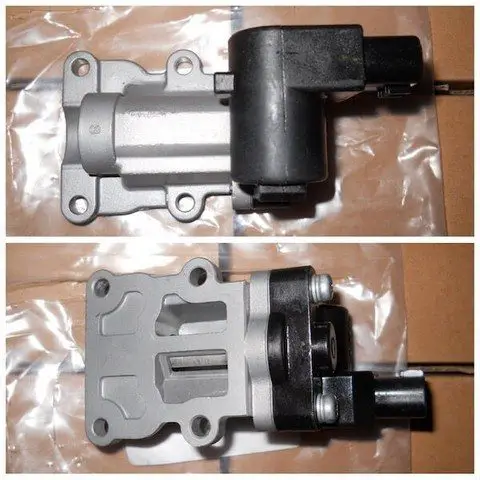
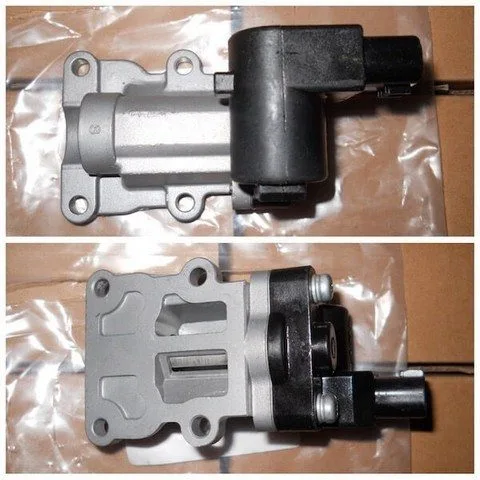
P0505 IAC Malfunction

What does it mean?

The idle air control valve regulates the engine’s idle speed. At idle, the throttle plate is of course closed. The IAC is computer-controlled and allows only a certain amount of air to bypass the throttle plate. This metered air controls the idle speed. The IAC has a “plunger” or “shutter” that moves to open or close the air bypass passage.

The more air the IAC allows to bypass the throttle plate, the higher the idle speed. The PCM (Powertrain Control Module) uses the IAC valve to maintain the correct idle speed under varying engine demands. It may be a three or four-wire sensor depending on the model.

The PCM monitors the voltages in the IAC circuits, and if it detects an incorrect voltage on one or more of the IAC motor circuits, it will set P0505. NOTE: Issues with the IAC would only be noticeable at idle or when the throttle is closed.

Symptoms

Symptoms may include:

MIL (Malfunction Indicator Lamp) illumination
Engine stalls and cannot idle unless the accelerator is pressed
Intermittent stalling when releasing the accelerator
Engine may idle too high

Causes

Potential causes of a P0505 code include:

Damaged IAC motor connector (check the connector and pins for damage and moisture)
One or more IAC circuits open or shorted to ground
One or more IAC circuits shorted to voltage
IAC has failed
PCM has failed

Possible solutions

This should be a fairly straightforward diagnosis. Start by clearing the error codes. Then disconnect the IAC and start the engine (this may cause other IAC codes to set; just ignore them for now). If the P0505 code does not reset, replace the IAC. It is internally shorting one of the IAC circuits. If the code returns after disconnecting the IAC and starting the engine, then you know it’s not the IAC motor. Visually inspect the wiring harness to the PCM. You may need to visually inspect the harness by removing all the wire insulation. It’s possible the wires are shorted together or with other wires in the harness.

If there are no wiring issues and the code keeps returning with the IAC disconnected, you can check the PCM by removing the IAC wires from the PCM connector (or cutting the wires at a point where they can be easily repaired), then start the engine (if you’re unsure, don’t do this. Take it to a qualified professional). Now, if the code does not reset, there is a problem with the wiring. Check continuity on all IAC wires. Any resistance indicates an issue. Check voltage on everything (at this point, there should be no voltage on the wires since they are cut at one end and disconnected at the IAC). Repair if necessary. But if the P0505 code resets after removing the IAC wires from the PCM connector (or cutting them), replace the PCM, as there is an internal issue with the IAC control circuit.

Other related DTCs: P0506, P0507
P0506 Idle Air Control System RPM Lower Than Expected

What does it mean?

This P0506 code is one that is sometimes triggered on vehicles equipped with electronic throttle control. In other words, they do not have a regular accelerator cable from the accelerator pedal to the engine. They rely on sensors and electronics to control the throttle.

In this case, the P0506 DTC (diagnostic trouble code) is triggered when the PCM (powertrain control module) detects an engine idle speed lower than the desired (preprogrammed) speed.

Potential Symptoms

The only thing you will likely notice is that the idle is lower than normal, so it will probably be rougher. There are also other symptoms. Of course, when trouble codes are set, the MIL (malfunction indicator lamp, such as the check engine light) illuminates.

A P0506 DTC trouble code can be caused by one or more of the following:

  • A vacuum leak
  • An air restriction in the intake or exhaust air path
  • A faulty positive crankcase ventilation (PCV) valve
  • Damaged/failed/dirty throttle body
  • Internal engine problem
  • PCM has failed

Possible Solutions

This DTC is more of an informational code, so if there are other codes set, diagnose them first. If there are no other codes, inspect for vacuum leaks, restrictions, and damage. If there are no symptoms other than the DTC itself, simply clear the code and see if it returns.

Other related DTCs: P0505, P0507

P0507 Idle Air Control System RPM Higher Than Expected

What does P0507 mean?

This diagnostic trouble code (DTC) is a generic powertrain code, meaning it applies to vehicles equipped with OBD-II. Although generic, specific repair steps may vary by make/model. Anecdotally, this code appears to be more common on Chevrolet, VW, Nissan, Audi, Hyundai, Honda, Mazda, and Jeep vehicles.

This P0507 code is one that is sometimes triggered on vehicles with electronic throttle control. In other words, they don’t have a regular accelerator cable from the accelerator pedal to the engine. They rely on sensors and electronics to control the throttle.

In this case, the P0507 DTC (diagnostic trouble code) is triggered when the PCM (powertrain control module) detects an engine idle speed higher than the desired (pre-programmed) speed. For GM vehicles (and possibly others), if the idle speed is more than 200 RPM higher than expected, this code will be set.

An example of an idle air control valve (IAC):

Symptoms

potential

You will most likely notice that the idle speed is higher than normal. There are also other symptoms. Of course, when trouble codes are set, the MIL (malfunction indicator lamp, such as the check engine light) illuminates.

Causes

A P0507 DTC trouble code can be caused by one or more of the following:

A vacuum leak
Air intake leak after the throttle body
EGR valve leaking vacuum
A faulty positive crankcase ventilation (PCV) valve
Damaged/failed/dirty throttle body
Failing EVAP system
Faulty IAC (idle air control) valve or faulty IAC circuit

Possible Solutions

This DTC is more of an informational code, so if there are other codes set, diagnose them first. If there are no other codes, inspect the air intake system for air or vacuum leaks and damage. If there are no symptoms other than the DTC itself, simply clear the code and see if it returns.

If you have an advanced scan tool that can interact with the car, command the idle higher and lower to see if the engine responds correctly. Also check the PCV valve to see if it’s stuck and needs replacement. Check the IAC (idle air control) valve if applicable, verify its operation. If available, try swapping in a new throttle body to see if that resolves the issue. On Nissan Altimas and possibly other vehicles, the problem may be resolved by having the dealer perform an idle relearn procedure or other relearn procedures.

P0508 Idle Air Control System Circuit Low

What Does It Mean?

This diagnostic trouble code (DTC) is a generic powertrain code, meaning it applies to all vehicles from 1996 onwards (Dodge, Chrysler, Hyundai, Jeep, Mazda, etc.). Although generic, specific repair steps may vary by make/model.

When your OBD-II equipped vehicle has a malfunction indicator light (MIL) and a stored code P0508, it means the powertrain control module (PCM) has detected a problem with the idle air control (IAC) circuit, in this case a value lower than expected.

The IAC system centers around a linear servo motor that controls a piston regulating the amount of air allowed to bypass the throttle plate and enter the intake manifold. Controlling the amount of air bypassing the throttle plate helps manage engine idle speed. When the throttle is closed (at idle), very little air is allowed into the engine through the throttle body. The engine cannot maintain idle with this small amount of air and would likely stall. An auxiliary air (vacuum) source must be provided for the engine to keep idling with the throttle closed. Of course, this auxiliary vacuum source would harm engine performance and fuel efficiency when the throttle is open (during acceleration). Hence the need for a fully adjustable vacuum source controlled by the PCM.

The IAC valve piston housing is manufactured with two separate openings allowing air to pass through. The IAC valve is typically bolted to the intake manifold, on or near the throttle body. It’s positioned so that when open (piston retracted from the opening), ambient air can flow through into the manifold, and when closed (piston blocking the opening), ambient air cannot pass through.

An example of an idle air control (IAC) valve:

The IAC is rarely fully open or closed but remains constantly moving; controlled by the PCM. The PCM uses input signals from oxygen sensors, throttle position sensors, and various other sensors to determine how much air should bypass the throttle plate. When voltage and ground signals to the IAC valve are adjusted (by the PCM), the valve responds accordingly. If engine RPM levels don’t match programmed desired limits, a P0508 code will be stored and an MIL may illuminate.

Related idle air control system circuit trouble codes include:

P0509 Idle Air Control System Circuit High
P0511 Idle Air Control Circuit
P0518 Idle Air Control Circuit Intermittent
P0519 Idle Air Control System Performance

Severity and Symptoms

A malfunctioning idle air control system can cause engine stalling or idling at unexpectedly high RPM. This code should be treated as severe and addressed urgently. Symptoms of a P0508 code may include:

High engine RPM level
Engine stalling, especially at idle
Unusual noises from the throttle body area
Other IAC-related codes

Causes

Possible causes of this code include:

Faulty IAC motor/valve
Engine vacuum leak
Open or shorted IAC control wires or connectors
Carbon buildup in throttle body or IAC valve
PCM programming error or faulty PCM

Diagnostic and Repair Procedures

A good starting point is always checking technical service bulletins (TSBs) for your specific vehicle. Your issue might be a known problem with a published manufacturer fix, potentially saving time and money during diagnosis.

To diagnose a P0508 code, I would need a diagnostic scanner, digital volt/ohmmeter (DVOM), and reliable vehicle information source (All Data DIY would suffice).

I might start by inspecting all electrical wires and connectors in the IAC system, repairing any damaged, corroded, or burnt ones. I’d also check the engine for vacuum leaks that could contribute to uncontrollable engine RPM levels. If vacuum leaks are found, repair them and recheck the system.

Next, I’d connect the scanner to the vehicle’s diagnostic connector and retrieve all stored codes and freeze frame data. I prefer writing this down in case the code is intermittent. Then I’d clear the codes and test drive the vehicle to see if it resets. Obviously, if other IAC-related codes are stored, those need diagnosis and repair first. Also check all technical service bulletins and safety recalls for the vehicle and specific malfunction. After completing repairs, drive the vehicle normally and let the PCM enter readiness mode before declaring the problem fixed.

As a simple method to test the IAC system when engine idle speed is very high, I carefully unbolt (preserving the gasket or seal) the IAC valve from the engine and use a shop rag and my fingers to control engine idle speed. If I can control a high idle condition after removing the IAC valve, I know the IAC system isn’t functioning properly. If I cannot control idle speed, I suspect a major vacuum leak exists. Major engine vacuum leaks can include PCV valves/hoses, vacuum hoses, brake booster, check valve or hoses, stuck open EGR valve, leaking EGR gasket, or leaking intake manifold gasket.

Consult your vehicle information source for the recommended method of testing the IAC motor with the DVOM. Replace the IAC motor/valve if it doesn’t meet manufacturer specifications.

Additional Diagnostic Notes:

Disconnect all associated controllers before testing circuit resistance with the DVOM

P0509 High Idle Air Control Circuit

What Does It Mean?

This diagnostic trouble code (DTC) is a generic powertrain code, meaning it applies to all vehicles from 1996 onwards (Dodge, Chrysler, Hyundai, Jeep, Mazda, etc.). Although generic, specific repair steps may vary by make/model.

When your OBD-II equipped vehicle has a malfunction indicator lamp (MIL) and a stored code P0509, it means the powertrain control module (PCM) has detected a problem with the idle air control (IAC) circuit, in this case a higher than expected value.

The IAC system centers around a linear servo motor that controls a piston regulating the amount of air allowed to bypass the throttle plate and enter the intake manifold. Controlling the amount of air bypassing the throttle plate helps manage engine idle speed. When the throttle is closed (at idle), very little air is allowed into the engine through the throttle body. The engine cannot continue idling with this small amount of air and would likely stall. An auxiliary air source (vacuum) must be provided for the engine to keep idling with the throttle plate closed. Of course, the auxiliary vacuum source would harm engine performance and fuel efficiency when the throttle plate is open (during acceleration). Hence the need for a fully adjustable vacuum source controlled by the PCM.

The IAC valve piston housing is manufactured with two separate openings allowing air to pass through. The IAC valve is typically bolted to the intake manifold, on or near the throttle body. It’s positioned so that when open (piston retracted from the opening), ambient air can flow through and enter the manifold, and when closed (piston blocking the opening), ambient air cannot pass through.

An example of an idle air control (IAC) valve:

The IAC is rarely fully open or closed but remains constantly moving; controlled by the PCM. The PCM uses input signals from oxygen sensors, throttle position sensor, and various other sensors to determine how much air should bypass the throttle plate. When the voltage and ground signals to the IAC valve are adjusted (by the PCM), the valve responds accordingly. If engine RPM levels don’t match the programmed desired limits, a P0509 code will be stored and an MIL may illuminate.

Related idle air control system circuit trouble codes include:

P0508 Idle Air Control System Circuit Low
P0511 Idle Air Control Circuit
P0518 Intermittent Idle Air Control Circuit
P0519 Idle Air Control System Performance

Severity and Symptoms

A malfunctioning idle air control system can cause engine stalling or idling at unexpectedly high RPM. This code should be treated as severe and addressed urgently. Symptoms of a P0509 code may include:

High engine RPM level
Engine stalling, especially at idle
Unusual noises from the throttle body area
Other IAC-related codes

Causes

Possible causes of this code include:

Faulty IAC motor/valve
Engine vacuum leak
Open or shorted IAC control wires or connectors
Carbon buildup in throttle body or IAC valve
PCM programming error or faulty PCM

Diagnostic and Repair Procedures

A good starting point is always checking technical service bulletins (TSBs) for your specific vehicle. Your issue might be a known problem with a published manufacturer fix, potentially saving time and money during diagnosis.

To diagnose a P0509 code, I’d need a diagnostic scanner, digital volt/ohmmeter (DVOM), and reliable vehicle information source (All Data DIY would suffice).

I might start by inspecting all wiring and electrical connectors in the IAC system, repairing any damaged, corroded, or burnt ones. I’d also check the engine for vacuum leaks that could contribute to uncontrollable RPM levels. If vacuum leaks are found, repair them and recheck the system.

Next, I’d connect the scanner to the vehicle’s diagnostic connector and retrieve all stored codes and freeze frame data. I prefer writing this down in case the code is intermittent. Then I’d clear the codes and test drive the vehicle to see if it resets. Obviously, if other IAC-related codes are stored, I’d need to diagnose and repair them first. Also check all technical service bulletins and safety recalls for the vehicle and specific malfunction. After completing repairs, drive the vehicle normally and let the PCM enter readiness mode before declaring the problem fixed.

As a simple method to test the IAC system when engine idle speed is very high, I carefully unbolt (to preserve the gasket or seal) the IAC valve from the engine and use a shop rag and my fingers to control engine idle speed. If I can control a high idle condition after removing the IAC valve, I know the IAC system isn’t functioning properly. If I cannot control idle speed, I suspect a major vacuum leak is present. Major engine vacuum leaks can include PCV valves/hoses, vacuum hoses, brake booster, check valve or hoses, stuck open EGR valve, leaking EGR gasket, or leaking intake manifold gasket.

Consult your vehicle information source for the recommended method of testing the IAC motor with the DVOM. Replace the IAC motor/valve if it doesn’t meet manufacturer specifications.

Additional Diagnostic Notes:

Disconnect all related controllers before testing circuit resistance with the DVOM

P050A Cold Start Idle Air Control System Performance

What does it mean?

This generic powertrain diagnostic trouble code (DTC) generally applies to many OBD-II vehicles. This may include, but is not limited to, vehicles from Hyundai, Subaru, Suzuki, Mazda, VW, Honda, Kia, Cadillac, Nissan, Audi, etc.

A stored P050A code means that the Powertrain Control Module (PCM) has detected a problem with the Idle Air Control (IAC) system. The term cold start refers to an engine driving strategy that is implemented only when the engine is at (or below) ambient temperature.

Controlled by the PCM, the IAC valve is responsible for regulating the airflow through the throttle body and into the engine’s intake manifold when the engine is idling.

With the throttle plate closed, very little air is allowed to enter the engine through the throttle bore. The engine does not idle smoothly with this tiny amount of air. A constant vacuum supply would be inefficient for promoting a steady idle because variations in atmospheric pressure and engine temperature require different degrees of intake air. An automatically adjustable method for varying the idle air is required. The IAC valve meets this requirement.

The IAC is an electronically controlled valve mounted on the throttle body. It consists of a single housing with an electric motor and a pair of small air chambers. The two open chambers have a cone-shaped valve and a seat between them. The IAC is mounted near the throttle bore so that one chamber is aligned with an intake opening outside the throttle plate. This chamber is called the inlet chamber. The second chamber (outlet chamber) is positioned to be aligned with an intake opening inside the throttle plate. When the valve is pushed flush into the seat, no air can pass between the two chambers. When the valve is lifted from the seat by the electric motor, ambient air can be drawn through the inlet and outlet chambers and into the intake manifold.

Idle Air Control (IAC) Valve:

The PCM uses input data from the crankshaft position sensor and the camshaft position sensor to calculate engine speed. The engine idle speed is programmed for a specific RPM level, and the PCM uses the IAC motor to achieve it. If the actual engine speed is higher than the desired speed, a voltage signal is sent by the PCM to the IAC motor. The motor extends the valve into the seat, and the airflow to the engine is restricted; the RPM level decreases accordingly. Similarly, if the actual engine speed is lower than the desired speed, the PCM sends the opposite voltage signal. The motor retracts the valve from the seat, and more air is allowed into the intake; the RPM level is increased. Since the desired RPM level is precisely and aggressively targeted by the PCM, the valve is moved in very small increments, continuously.

If the PCM cannot effectively control the engine speed level during a cold start, a P050A code will be stored, and a Malfunction Indicator Lamp (MIL) may be illuminated. Several failures will likely be required for the MIL illumination.
How severe is this DTC?

A P050A code should be considered severe because engine driveability may suffer from the conditions that caused it to be stored.
What are some of the symptoms of the code?

Symptoms of a P050A engine code may include:

High or low engine RPM level
The engine may stall at idle
It may be necessary to press the accelerator pedal for the engine to start
Unusual tapping or clicking noise from the IAC motor

What are some of the common causes of the code?

Causes

of this code may include:

Faulty or dirty IAC valve
Vacuum leak
Open or shorted circuits or connectors
Faulty Engine Coolant Temperature (ECT) sensor

What are the P050A troubleshooting steps?

If any ECT-related codes are stored, diagnose and repair them before attempting to diagnose P050A.

Some vehicle applications will present an audible tap or pop when conditions are right for this code to be stored. If you are working on a product from a Ford motor company vehicle with a stored P050A code and this noise is heard, suspect that the IAC is faulty.

A reliable vehicle information source, a diagnostic scanner, and a Digital Volt/Ohmmeter (DVOM) will all be needed to diagnose a P050A code.

Component testing procedures and specifications, wiring diagrams, connector face views, connector pinout diagrams, and diagnostic flowcharts can be found in your vehicle information source. These items will be necessary for successful diagnosis.

A visual inspection of the IAC valve and all associated wiring and connectors may allow for a quick diagnosis. Look for steam damage on the wiring harness on top of the engine.

If the IAC valve and seat are fouled with carbon, the valve will not seat properly. The valve can be cleaned on some vehicles, but follow the manufacturer’s recommendations carefully.

Use the DVOM (ohms) to test the IAC motor. Disconnect the motor from the harness and use the test leads to measure resistance. If the IAC motor does not meet specifications, it is bad.

If the IAC motor meets specifications, reconnect the IAC motor connector. Probe the input voltage circuit and the ground of the IAC connector using the DVOM test leads. If the voltage is within specifications and a ground is present, suspect that the IAC valve/motor is faulty.

Search for applicable Technical Service Bulletins (TSBs). If you find a TSB that matches the vehicle type, codes, and symptoms you are experiencing, it will assist you in your diagnosis.

P050B Cold Start Ignition Timing Performance

Meaning of Code P050B

  • Definition: Malfunction of the ignition timing system during cold start (engine at or below ambient temperature).

  • Role of the PCM: The Powertrain Control Module (PCM) adjusts ignition timing based on data from sensors (CKP, CMP, ECT, TPS, MAF).

  • Problem: The PCM fails to control ignition timing, leading to risks of engine damage or reduced performance.


Severity of Code P050B

  • ⚠️ Classified as severe:

    • Risk of damage to the catalytic converter.

    • Decreased engine performance.

    • Increased fuel consumption.


Common Symptoms

  • 🔧 Check engine light on (MIL).

  • 🛑 Unstable idle or engine stalling.

  • 💥 Knocking noise (ping) during acceleration.

  • 📉 Overly rich air-fuel mixture (black smoke from exhaust).

  • ⚠️ Related codes (e.g., CKP, CMP, ECT).


Possible Causes

  1. Faulty sensors:

    • ECT sensor (engine coolant temperature).

    • CKP sensor (crankshaft position) or CMP sensor (camshaft position).

  2. Electrical issues:

    • Open/short circuits (CKP, CMP, ECT).

    • Oxidized, damaged, or contaminated connectors (e.g., oil).

  3. Significant vacuum leaks.

  4. PCM failure (rare).


Diagnostic Steps

1. Preparation

  • Required tools:

    • OBD-II scanner with built-in oscilloscope.

    • Digital multimeter (DVOM).

    • Technical documentation (wiring diagrams, test procedures).

  • Preliminary checks:

    • Diagnose/repair related codes (e.g., ECT, CKP, CMP).

    • Visually inspect vacuum lines, wiring harnesses, and connectors.


2. Sensor Tests (CKP/CMP)

  • With oscilloscope:

    1. Connect test leads:

      • Positive → Sensor signal circuit.

      • Negative → Sensor ground.

    2. Start the engine (cold start).

    3. Expected result: Regular waveform (no spikes or interruptions).

    4. Detected issue: Irregular waveform → Faulty sensor or connection.

  • With DVOM:

    1. Measure reference voltage (KOEO, sensor disconnected):

      • Expected: 5 volts (unless manufacturer specifies otherwise).

    2. Test sensor ground.

    3. If no voltage:

      • Check circuit to PCM.

      • If voltage at PCM but not at sensor → Open circuit.


3. ECT Sensor Test

  1. Disconnect the connector.

  2. Measure resistance with DVOM.

  3. Compare with manufacturer specifications (e.g., 2,000–3,000 Ω at 20°C).

  4. If out of specification → Replace sensor.


4. Vacuum Leak Check

  • Inspect intake hoses, gaskets, and fittings.

  • Use smoke machine or brake cleaner to locate leaks (engine running).


5. Checking Technical Bulletins

  • Examples:

    • Jeep: Bulletin #18-011-13.

    • Jaguar: Bulletin #XJ303-014.


Recommended Repairs

  • 🔌 Clean/replace contaminated connectors.

  • 🔄 Replace faulty sensors (CKP, CMP, ECT).

  • 🔧 Repair damaged circuits or vacuum leaks.

  • 🔄 Reset PCM after repair.


Important Tips

  • Do not overlook vacuum leaks: they disrupt ignition timing.

  • Always use manufacturer information sources for technical specifications.

  • If in doubt about the PCM, consult a professional.

🚗 If the diagnosis is beyond your skills, seek help from a certified mechanic.

P050C Engine Coolant Temperature Performance at Cold Start

What Does It Mean?

This generic powertrain diagnostic trouble code (DTC) generally applies to many OBD-II vehicles. This may include, but is not limited to, vehicles from Jeep, Jaguar, Dodge, BMW, Land Rover, Toyota, VW, Ford, Mitsubishi, Mazda, etc.

A stored P050C code means that the Powertrain Control Module (PCM) has detected a problem with the engine coolant temperature performance. Cold start is a term used to describe an engine driving strategy that is implemented only when the engine is at (or below) ambient temperature.

The engine coolant temperature is monitored by the PCM using one or more Engine Coolant Temperature (ECT) sensors. The ECT sensor consists of a brass (or plastic) housing with a thermistor inside. The housing is designed to be screwed into the engine block, cylinder head, or intake manifold; where the engine’s cooling passages are located. When the thermostat opens, the coolant flows past the tip of the ECT sensor (where the thermistor is located). The ECT sensor receives a reference voltage and a ground, but the sensor completes the circuit. When the engine coolant temperature increases, the resistance of the thermistor decreases. The result of this decrease in circuit resistance is a higher voltage input to the PCM. When the engine coolant temperature decreases, a reverse action occurs and the circuit voltage decreases. The PCM receives these variations in circuit voltage as changes in engine coolant temperature.

Some vehicle applications use multiple ECT sensors. A common location for a secondary ECT sensor is in one of the radiator tanks. The PCM compares the input signals between the ECT sensors to determine if the engine coolant is flowing effectively.

In most cases, the engine coolant temperature is also compared to the ambient temperature under cold start conditions. The ambient temperature sensor operates similarly to the ECT sensor and is normally located near the grille.

If the PCM detects a difference between the ECT sensors and/or the ambient temperature sensor that exceeds the maximum threshold, under cold start conditions, a P050C code will be stored and a Malfunction Indicator Lamp (MIL) may be illuminated. Several ignition cycles (with a failure) may be required for the MIL to illuminate.

Cold Car:

How Severe Is This DTC?

A lack of engine coolant efficiency can lead to poor drivability under cold start conditions, decreased fuel efficiency, and poor heating performance. A P050C code should be considered serious and rectified as soon as possible.
What Are Some of the Symptoms of the Code?

Symptoms of a P050C engine code can include:

Rich exhaust
Cold driveability issues
No heat inside the passenger compartment
Codes associated with the ECT sensor

What Are Some of the Common Causes of the Code?

Causes

of this code can include:

Faulty primary or secondary ECT sensor
Faulty ambient temperature sensor
Shorted or open circuits or connectors
Bad thermostat
Low coolant level

What Are the P050C Troubleshooting Steps?

Diagnose and repair codes associated with the ECT before attempting to diagnose P050C.

Start by ensuring the engine is full of coolant and not overheating. If it is full of coolant and not overheating, a visual inspection of the wiring and connectors of the ECT sensor system would be my next concern.

When diagnosing a P050C code, I would have access to a reliable vehicle information source, an infrared thermometer with a laser pointer, a diagnostic scanner, and a digital volt/ohmmeter (DVOM).

You will need diagnostic flowcharts, wiring diagrams, connector pinout views, connector pinout diagrams, and component testing procedures and specifications to accurately diagnose a P050C code. This information can be found in your vehicle information source.

Connect the scanner to the vehicle’s diagnostic port. Retrieve all stored codes and freeze frame data and note them in a safe place. This can be helpful for further diagnostic process. Clear the codes and test drive the vehicle to see if the code resets.

If the P050C is immediately reset, turn the key on with the engine off (KOEO) and reconnect the scanner. Use the infrared thermometer to check the actual coolant temperature at the appropriate location near the ECT sensors. Observe the ECT data on the scanner and see if including only the relevant items for a faster and more accurate data response. If the ECT displayed on the scanner does not match the actual coolant temperature, follow the diagnostic steps below.

If a crazy ECT is displayed on the scanner data display (like -38 degrees):

With KOEO, test the ECT reference voltage and ground
Disconnect the ECT sensor connector
Probe the reference circuit using the DVOM’s positive test lead
The negative test lead should be used to probe the ground circuit of the same connector
The DVOM display should reflect the reference voltage (usually 5 volts)

You can use the DVOM to test individual coolant and ambient air sensors using the manufacturer’s specifications and testing procedures. Sensors that do not match the specifications should be considered faulty.

Search for applicable Technical Service Bulletins (TSBs). The information found in the correct TSB will help you a lot in your diagnosis

P050D Cold Start Idle

What does it mean?

This generic powertrain diagnostic trouble code (DTC) generally applies to many OBD-II vehicles. This may include, but is not limited to, vehicles from Chevrolet, GMC, Dodge, Cadillac, Chrysler, Jeep, etc.

So, you need to diagnose a stored P050D code. This means that the Powertrain Control Module (PCM) has detected a rough engine idle during a cold start. A cold start is a term used to describe an engine driving strategy that is implemented only when the engine is at (or below) ambient temperature.

The engine speed is monitored (by the PCM) using the input signal data voltage from the Crankshaft Position Sensor (CKP) and the Camshaft Position Sensor (CMP).

The idle RPM level is also controlled by the PCM. To accomplish this continuous task, the intake airflow must be regulated under closed throttle conditions. The PCM regulates the engine’s intake air at idle with an electronically controlled device called an Idle Air Control (IAC) valve. If air enters the engine that is not regulated by the PCM, it can cause a rough engine idle on cold start and a P050D code to be stored. If lean exhaust codes or codes related to the IAC accompany the P050D, diagnose and repair them before attempting to diagnose the P050D.

An engine misfire can also contribute to rough idle under cold start conditions. If misfire codes are stored, you will also want to diagnose and repair them before diagnosing a P050D. Chances are that if you fix the misfire, you will also repair the rough idle on cold start.

If the rough idle occurs only under cold start conditions, a faulty Engine Coolant Temperature (ECT) sensor may be the cause of your problem. The engine driving strategy is very different under cold start conditions. If the PCM receives an inaccurate engine temperature signal on a cold start, a rough idle can be created due to insufficient fuel supply or incorrect ignition timing advance. An ECT sensor code may also be recorded. As you probably guessed, you will need to diagnose and repair any ECT sensor-related codes before the P050D.

If, under cold start conditions, the PCM detects a rough idle that cannot be stabilized within the programmed parameters, a P050D code will be recorded and a Malfunction Indicator Lamp (MIL) may illuminate. Several ignition cycles (with a fault) may be required for the MIL to illuminate.

Idle Air Control (IAC) Valve:

How severe is this DTC?

A rough idle or poor idle quality under cold start conditions could be an indicator of a more serious problem. A P050D code should be addressed as soon as possible and considered severe.
What are some of the symptoms of the code?

Symptoms of a P050D engine code may include:

Rich / Lean exhaust
Cold driving problems
Other driving-related codes
Engine whistling or suction noise

What are some of the common causes of the code?

Causes

of this code may include:

Vacuum or air intake leaks
Faulty spark plugs, spark plug boots, or ignition coils
Insufficient fuel pressure / volume
Faulty ECT sensor
Shorted or open circuits or connectors

What are the P050D troubleshooting steps?

Diagnose and repair any other engine driving-related codes before attempting to diagnose the P050D.

You will need a reliable source of vehicle information, a diagnostic scanner, and a digital volt/ohmmeter (DVOM) to accurately diagnose a P050D code.

Your vehicle information source can provide you with diagnostic flowcharts, wiring diagrams, connector face views, connector pinout diagrams, and component testing procedures and specifications that will help you accurately diagnose a P050D code.

Retrieve all stored codes and freeze frame data by connecting the scanner to the vehicle’s diagnostic port. Note this information as it will be useful during the diagnostic process. Then, clear the codes and let the engine cool down completely before performing a road test of the vehicle.

If the code does not reset and the PCM enters readiness mode, you may be dealing with an intermittent code. In some cases, the conditions that led to the code being stored may need to worsen before an accurate diagnosis can be made.

If the code resets immediately, start by focusing on the factors that have the most impact on cold driving.
Excessive air intake

Too much air entering the intake, at a time when it demands a richer fuel mixture, can create a rough idle.

Check for vacuum leaks. Hoses and intake lines should not be cracked or collapsed. Listen for whistling or suction noises and remember to listen around the throttle body, intake manifold gasket, brake booster, and PCV valve.

The air intake hose (from the air filter housing to the throttle body) should have no cracks or holes.

The IAC valve plays an important role in cold driving. Make sure the valve and seat are clean and free of debris.

Ensure the throttle plate is clean and free of carbon coking.

Check the EGR valve position; it must be closed at idle. If it is open, it creates a vacuum leak.
Low fuel pressure

Make sure the fuel tank contains good, clean fuel.

If the fuel pressure is low, check that the fuel filter is not clogged.
Engine misfire

A misfire will also create a rough idle on cold start. Misfires are much more likely to occur once the engine has reached its normal operating temperature, but I have witnessed cases where a misfire could only be detected under cold start conditions.

Check the spark plugs, spark plug boots, and ignition coils for signs of oil or water/coolant contamination.

Technical Service Bulletins (TSBs) that match the vehicle in question, as well as the code and symptoms presented, should assist in your diagnosis.

P050E Cold Start Engine Exhaust Temperature Too Low

What does it mean?

This generic powertrain diagnostic trouble code (DTC) generally applies to many OBD-II vehicles. This may include, but is not limited to, vehicles from Ford (Mustang, Escape, EcoBoost, etc.), Dodge, Jeep, Land Rover, Nissan, VW, etc.

When a P050E code is stored, it means the Powertrain Control Module (PCM) has detected an exhaust temperature below the minimum threshold during a cold start. A cold start is a term used to describe a driving strategy used only when the engine is at (or below) ambient temperature.

Based on my professional experience, exhaust gas temperature is only monitored in vehicles equipped with clean diesel propulsion systems.

This code is more common in geographical regions with extremely cold climates.

Exhaust temperature changes are essential for reducing emissions in today’s clean diesel engines. The PCM must monitor the exhaust temperature to ensure the desired action is taken to accomplish these drastic temperature changes.

Diesel Exhaust Fluid (DEF) injection systems are responsible for introducing DEF into the catalytic converter and other areas of the exhaust system. These DEF mixtures cause the necessary increase in exhaust temperatures to burn harmful hydrocarbons and trapped nitrogen dioxide particles in the exhaust system. The DEF injection system is controlled by the PCM.

During a cold engine start, the exhaust temperature should be equal to or close to ambient temperature. If the PCM detects that the exhaust temperature is below ambient temperature, a P050E code will be stored and a Malfunction Indicator Lamp (MIL) may illuminate. In most cases, multiple failures will be required for the MIL to illuminate.

Cold Car:

How severe is this DTC?

When a P050E code is stored, DEF injection is likely to be disabled. This code should be classified as severe and rectified urgently.
What are some of the symptoms of the code?

Symptoms of a P050E engine code may include:

Decreased engine performance
Decreased fuel efficiency
Excessive black smoke from the exhaust
Associated DEF codes

What are some common causes of the code?

Causes

of this code may include:

Faulty exhaust temperature sensor
Burned or damaged exhaust temperature sensor wiring
Moisture trapped inside the exhaust has frozen
PCM programming error or faulty PCM

What are the P050E troubleshooting steps?

I would probably start my diagnosis by researching applicable Technical Service Bulletins (TSBs). If I can find one that matches the vehicle I’m working on, the symptoms presented, and the codes that are stored, it is likely to help me diagnose P050E accurately and quickly.

I will need a diagnostic scanner, an infrared thermometer with a laser pointer, a digital volt/ohmmeter (DVOM), and a reliable source of vehicle information to diagnose this code.

The vehicle information source will provide me with diagnostic flowcharts for the P050E, wiring diagrams, connector face views, connector pinout charts, and component testing procedures/specifications. This information will be essential for arriving at an accurate diagnosis.

After a visual inspection of the exhaust temperature sensor wiring and connectors (focusing on wiring routed near high-temperature areas), I would connect the scanner to the vehicle’s diagnostic port and retrieve all stored codes and relevant data. The scanner code data may be useful later in my diagnosis. I would write it down and keep it in a safe place. Now, I would want to clear the codes and test the vehicle (during a cold start) to see if the code resets. The test drive should also displace any moisture that may have been previously trapped in the exhaust system.

Use the DVOM to test the exhaust temperature sensor:

Set the DVOM to the ohms setting
Disconnect the sensor from the wiring harness
Use the manufacturer’s specifications and testing procedures to test the sensor
Discard the sensor if it does not meet the manufacturer’s specifications

If the exhaust temperature sensor is good, test the reference voltage and ground at the exhaust temperature sensor:

With the key on and engine off (KOEO), access the exhaust temperature sensor connector
Set the DVOM to the appropriate voltage setting (reference voltage is typically 5 volts)
Probe the reference pin of the exhaust temperature connector with the DVOM’s positive test lead
Probe the ground pin of the same connector with the DVOM’s negative test lead
The DVOM should read a 5-volt reference (+/- 10%)

If reference voltage is found:

Use the scanner’s data stream display to observe the exhaust temperature
Compare the exhaust temperature displayed on the scanner to the actual temperature you detected using the IR thermometer
If the two differ by more than the maximum allowable threshold, suspect a faulty exhaust temperature sensor
If both are within specifications, suspect a faulty PCM or a PCM programming error

If reference voltage is not found:

With KOEO, connect the DVOM’s negative test lead to a battery ground (with the positive test lead still probing the reference voltage pin of the same connector) to see if you have a voltage problem or a ground problem
A voltage problem will need to be traced back to the PCM
A ground problem will need to be traced back to the appropriate ground junction

The exhaust temperature sensor is often confused with an oxygen sensor
Be cautious when working around a hot exhaust